

From the expansive drawing board to the grand stage–and back to a tiny desk.
Music often starts out as a simple melody being hummed, thoughts scribbled into a notebook–a rhythm stuck in their head. Some of those ideas grow into sold-out concerts, festivals, and global tours. But no matter how big the spotlight, there’s something magical about returning to a small, intimate space, where the music exists for itself and the connection between an artist and their material. NPR’s Tiny Desk Concert offers exactly that: a cluttered office desk, a few microphones, and a room that encourages presence over production–vulnerability over spectacle. Here, artists, whether they are just starting out or already adored worldwide, can strip back the layers and simply play.
Since its debut in 2008, Tiny Desk has welcomed a large range of performers, each bringing their unique voice into the space. Few platforms have managed to redefine the live music experience quite like NPR’s Tiny Desk Concert.
Tiny Desk was an idea derived from NPR Music Editor Stephen Thompson’s own frustration with being unable to properly hear the music at South by Southwest, an annual festival conference, over the noise of the crowd. He mused that artists should just perform right at former “All Songs Considered” host Bob Boilen’s desk.
So that’s what they did.
Its format dismantles the traditional hierarchy between an artist and their audience. Rather than a traditional concert, each Tiny Desk session unfolds in an actual workspace, a corner of NPR’s office transformed into a performance spot. The “stage” is a single desk surrounded by shelves stacked with records, books, office knickknacks, and tiny keepsakes that give the space its cozy, lived-in feel. A small audience of NPR employees gathers just a few feet away, while cameras capture the scene as it unfolds, and the resulting videos are later uploaded on their website and shared on YouTube, allowing millions to experience the concert’s intimacy from afar. The setup often feels charmingly improvised: full bands squeeze into the tight area, percussionists with their equipment behind the desk, and string instrument players standing shoulder-to-shoulder just to fit in the frame.
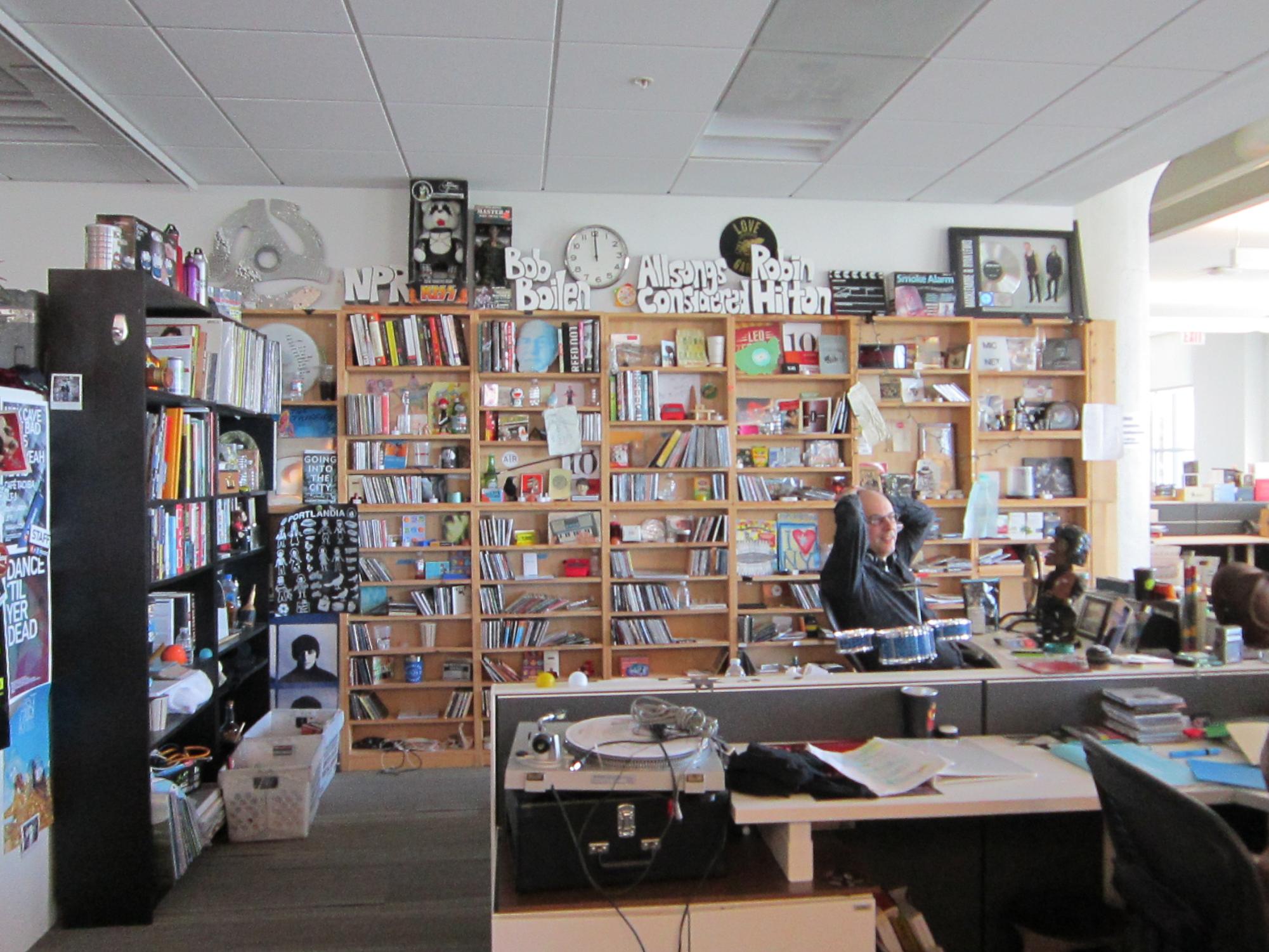
The desk has become more than furniture: it’s become a stage that invites experimentation and authenticity. For musicians who have performed in stadiums and on festival stages, it’s a chance to reconnect with the heart of their craft, performing for the joy of playing and the intimacy of listening rather than for the applause. Even during the COVID-19 pandemic, they continued their mission, rebranding under Tiny Desk (Home) Concerts and having artists record their own virtual performances from home.
This simplicity and freedom to just play is precisely what makes it powerful. Tiny Desk performances reintroduce intimacy into the art of concerts that’s often limited by distance. Listeners don’t just see a celebrity performing; they see a person fully present in the moment.
The appeal of Tiny Desk isn’t just the music itself–it’s in the experience. In a world filled with overproduction, these performances remind us how powerful it can be to slow down and truly hear. The raw vocals–every breath or pause–become part of the story, inviting the audience to witness something real. It becomes a place of return, reminding people that although music can thrive in grandeur, closeness and connection are just as valuable. This desk allows even the biggest names to find a space to share something profoundly human.
A Stage for the New Era
The definition of celebrity is being redefined with this new generation. Celebrities used to seem like untouchable beings that were very distant from ‘normal’ people, whereas famous people in recent times have direct communication with fans and can build their own foundation. Thus, modern audiences tend to favor celebrities who hold a sense of ‘realness’ that sets them apart from others, showing that they are just as human as the general public. Generation Z celebrities or famous personalities in particular tend to have a more easygoing, free, and friendly personality that makes them feel like a real person rather than an idyllic figure.
YouTube has become a stage for reimagining and humanizing celebrities. Many similar personality-driven series on the same platform, such as Hot Ones, Allure, Chicken Shop Date, and Royal Court, thrive on the same idea of peeling back the curtain on the person behind the persona. By placing celebrities in unscripted, often humorous or intimate settings, they break down deeply ingrained social barriers, allowing them to shine through in unexpected ways.
Tiny Desk Concert allows public figures to bridge the gap and further connect with their audiences–it’s part of a broader movement to make the typical celebrity seem more relatable and thus appealing to the public. What sets Tiny Desk apart within this movement is the method by which it fosters that same sense of closeness. While these shows achieve this effect through their specific formats, Tiny Desk builds connection through artistic expression over conversation.
Often, music can be the most honest form of communication. In this setting, artists’ presence, craft, and emotion speak for their character. Unlike an interview or social media post–where words can be shaped to fit an image–music resists total control. It carries emotion through tone, rhythm, and the physical act of performance. While actors may convincingly project emotion, an insincere or detached performance is almost impossible to hide. When artists play at the Tiny Desk, their communication extends beyond lyrics; it lives in their mannerisms, their voice, and the way their body instinctively moves with the sound. Listeners pick up on these subtle cues and slight shifts, revealing truth in ways that conversation rarely can. The listener isn’t simply hearing a song; it becomes a conversation of feeling.
At the Tiny Desk, this honesty becomes especially visible with no elaborate lighting, no distant stage, and no overwhelming instrumentation. The room’s close acoustics catch everything: the scrape of a guitar string, the shuffle of feet, even quiet laughter between bandmates. These small, unscripted moments expose the humanity behind the music. In this space, the artist’s presence, craft, and emotion become direct reflections of their character, offering the audience not just entertainment but a brief, unguarded glimpse into who they are.
Few artists embody this cultural shift more than Chappell Roan. Known for her larger-than-life aesthetic and bold self-expression, Chappell Roan represents a kind of authenticity that doesn’t conform to expectations–it challenges them. Her artistry celebrates individuality, and her public persona reflects the same fearless transparency.
Her Tiny Desk performance captured that essence beautifully, allowing her personality to truly shine. Even without the elaborate production of her live shows, her performance still captured her campy, colorful image. It is often seen as the best place for somebody to listen to her vocals, carrying a rawness that highlighted not just her technical skill but also her ability to be fun, free, and powerful.
Her presence between songs showed off her candid humor, bringing her closer to the audience and making her seem not like a distant star, but like a real person sharing a piece of herself. Even as her following has grown, she’s resisted the pressure to sanitize her personality or play into the idea of being “marketable.” She remains unafraid to speak her mind or stand her ground, placing her in a position that faces controversy while simultaneously commanding deep respect from the public. Ironically, that refusal to craft a perfect image has become her image, one built on honesty, integrity, and self-ownership.
Chappell Roan’s image mirrors what Tiny Desk stands for, serving as a reminder that in this new generation of celebrity, the most radical thing an artist can do is simply be themselves. Her refusal to conform to industry standards and her ability to show vulnerability embody why the series resonates so strongly with modern audiences.
Tiny Desk has become a symbol, reflecting the broader cultural desire to see public figures not as polished icons, but as multidimensional people. By giving both large and small artists the freedom to show up as they are, Tiny Desk has ushered forward a new era of performance and a new generation of celebrities.
A Stage for Unknown Artists
While Tiny Desk has featured many major stars, from Billie Eilish to Doechii, its heart has always been in spotlighting artists whose names aren’t yet widely known.
Each year, NPR hosts the Tiny Desk Contest, inviting unsigned and emerging musicians to submit original performances for a chance to play their own Tiny Desk Concert. The result is a diverse showcase of voices and sounds that might otherwise go unheard in the mainstream music industry.
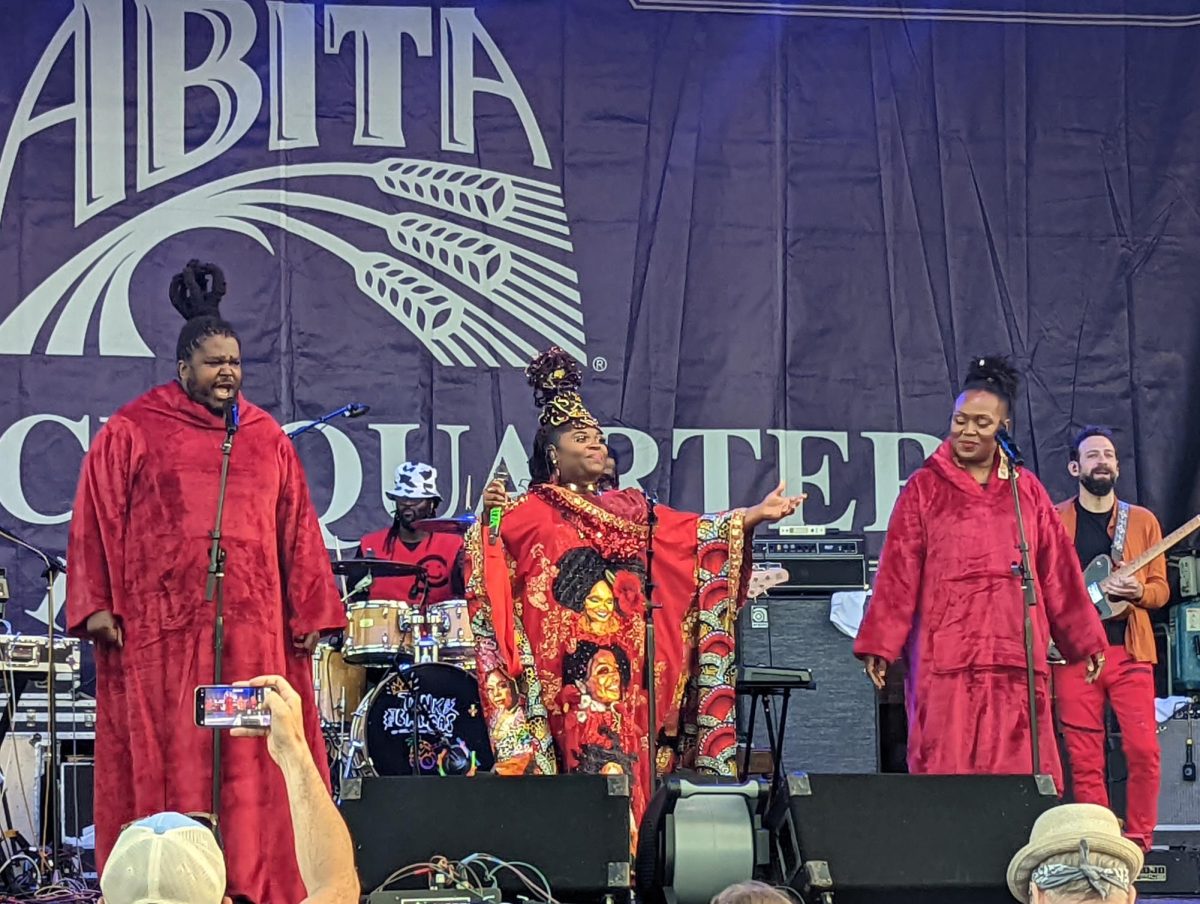
Tank and the Bangas, for example, won the 2017 Tiny Desk Contest with a performance that blurred the lines between spoken word, funk, and soul. Their infectious energy and originality transform them from a New Orleans secret to gaining wider recognition, catalyzing their transition into a national phenomenon.
Similarly, Gaelynn Lea, who won in 2016, captivated audiences with her haunting violin loops and heartfelt lyrics about disability and beauty. Before her performance, Lea was relatively unknown outside of her local scene. After it aired, she became a celebrated voice for accessibility and representation in music.
Other artists, like Anderson .Paak and H.E.R., used the platform to deepen their connection with audiences at pivotal moments in their careers. When they were first gaining popularity, their Tiny Desk appearances helped to amplify their reach to a larger audience. Paak’s 2016 performance remains a fan favorite–his charisma and live drumming transforming the small office into his own jam session. For H.E.R., her 2018 Tiny Desk performance offered a raw showcase of her artistry, earning her new respect as both a musician and storyteller.
Tiny Desk has also given global acts a breakthrough moment. The Argentinian duo Ca7riel and Paco Amoroso, for instance, saw a large spike in streams and visibility following their set in 2024, leading them to open for Kendrick Lamar’s tour in 2025. What began as a local buzz became an international wave, extending the desk’s reach far beyond the United States.
The 2025 Tiny Desk Contest winner, Ruby Ibarra, performed a song entitled “Bakunawa,” inspired by Philippine mythology and the birth of her first child–making it both very personal and deeply connecting. Her Tiny Desk Concert video in particular was praised for its passionate and authentic performance, featuring multilingual lyrics in English, Tagalog, and Bisaya—an intergenerational collaboration with other Filipina artists of different genres and backgrounds.
Through these performances, Tiny Desk reminds us that talent, honesty, and emotion are still the most compelling forces in music. Music doesn’t need to be loud to be heard. Behind that crowded desk, under the soft glow of the office lights, forms a connection between sound and soul. In a world that often feels overproduced and artificial, Tiny Desk offers a return to something sacred.
When artists play at the Tiny Desk, their communication extends beyond lyrics; it lives in their mannerisms, their voice, and the way their body instinctively moves with the sound. Listeners pick up on these subtle cues and slight shifts, revealing truth in ways that conversation rarely can. The listener isn’t simply hearing a song; it becomes a conversation of feeling.