

Most concepts can be compiled into a singular definition–simple to understand and easy to use. But food sovereignty and food security are not most concepts; they have multiple layers and vary from person to person. Similarly, Riverdale Neighborhood House has its own complexities, yet it remains unconfined by the challenges it faces.
For those who have interacted with Riverdale Neighborhood House (RNH), including myself, we have experienced the intricacies of each component that affects a community first hand. We have seen that food isn’t only something that is consumed for survival, but it is created and shared in order to connect different people of different backgrounds; we have learned ways in which we can actively sustain the environment while still being in the absence of arable land, and we have acquired an understanding of cultures that aren’t solely of those we directly know.
Grace Dodge, founder of the greenhouse lending library that eventually grew into RNH, became one of the first women appointed to a position in the New York City Board of Education in 1886. Since then, RNH has expanded its corridors as a settlement house with educational opportunities for the youth, support for greater projects, a third-space for the community to interact within, and distributions of fresh food for the neighborhood–all at little to no cost to the community! RNH’s garden consists of 18 raised beds and over 10 additional beds around the campus. Since being built in April of 2021, RNH utilizes this area, along with a multitude of other recreational and educational public services, to foster unity between people of all different ages. The moments that I have spent with RNH have opened my eyes in such a way that replenishes hope; it has given me a moment to cherish the smallest, often overlooked, moments and has reminded me to not let life pass me by.
Cultivating Experiences
For me, my journey with RNH took shape when I was accepted into their Food & Farm Internship. On the first day, I recall the overwhelming amount of information that was given to us: interns had to run and manage a youth market, learn how to harvest the produce, know where all of the produce in the garden was, weigh and record the produce, and learn how to perform various types of transactions. These were the “basics” that we needed to learn in order to efficiently keep up with the pace that the organization needed to provide for its community. Little did I know that these tasks that I needed to learn wouldn’t be an obligation; they were more of an ongoing project, one in which we were able to receive support from each other and the community. Throughout the process, people I had never met were willing enough to work through it with me. Whether it was a simple reassuring comment telling me to take my time or a customer requesting me to help them pick out some of the produce we had for sale, I had never felt obliged to know what to do perfectly from the beginning. Instead, the customers alongside the other interns supported me; they taught me instead of telling me what to do, and they created an environment in which I felt comfortable to make mistakes when I opened up to trying new things.
The primary events that made up this internship were weekly youth markets, occasional field trips, a community cafe, and food distributions. During the youth markets, interns had the ability to learn about new produce, ranging from Fairy Tale eggplant and Acorn squash to varying types of herbs, such as lemon balm and Thai basil. In cases with the unique-looking produce, such as penguin-shaped eggplants and deformed slicer tomatoes, we did receive curious looks from customers, yet it was exciting to be able to teach them about the produce’s variation.
Estefany Balbuena, an intern who particularly favored running the youth market, noted that “getting to meet new people from all ages and getting to work with peers made working the market easy and way more fun.” She highlights that “RNH is a place where creativity shines. Everyday it has something new, like paintings, drawings, posters, you name it, and RNH does it ten times better.” With her primary personal interest having always been in the culinary arts, she was surprised to see her own interest in the gardening world develop.
The field trips also made up a special part of the internship. Not only did they allow us to connect with different parts of the Bronx and other ecological internships, but they provided new insight on environmental injustices. We visited the Van Cortlandt Alliance’s garden, helped clear trails at Wave Hill, assisted with tending to the Taqwa and La Isla Community Gardens, and learned about The Billion Oysters Project at Governor’s Island.
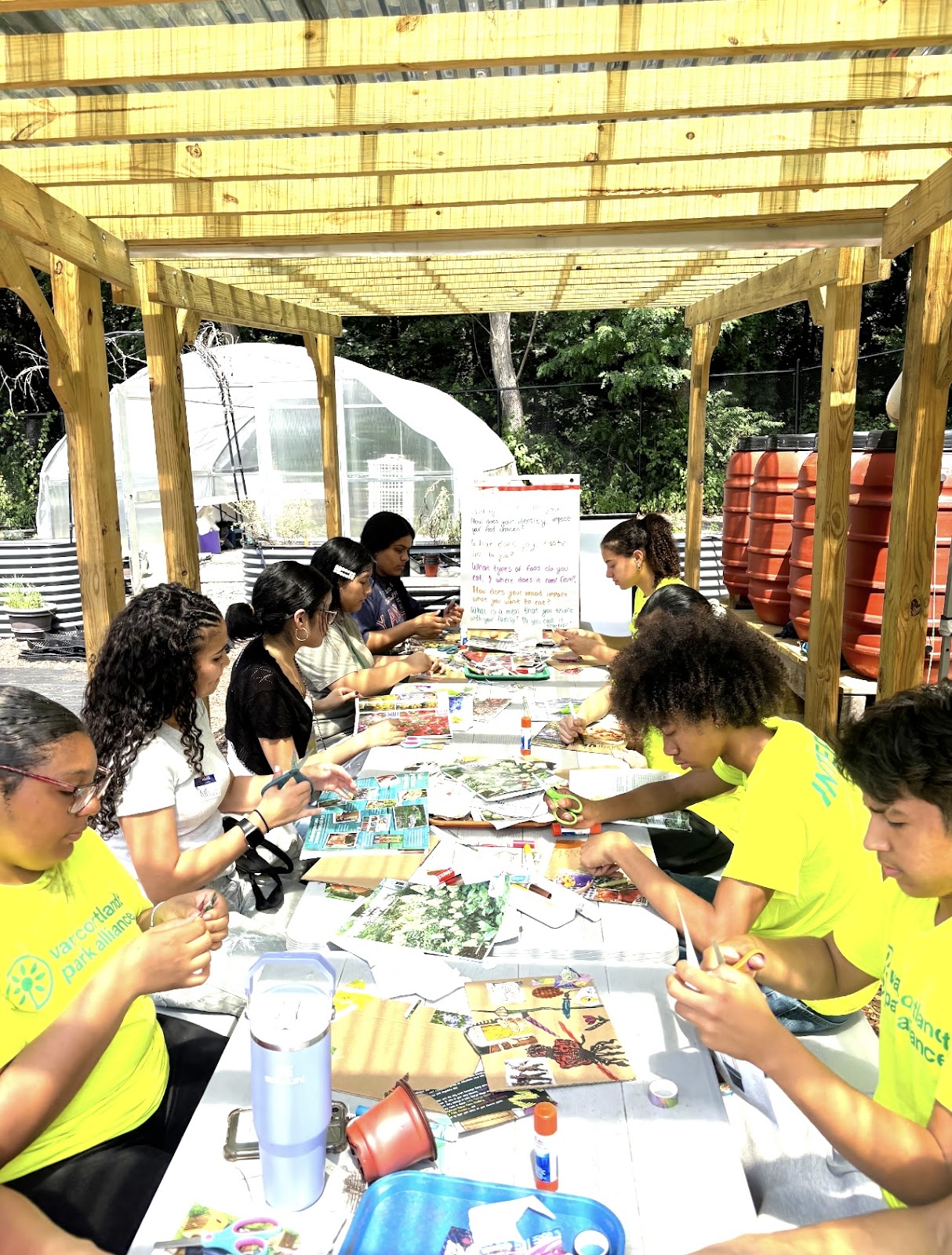
In addition to the trips, the community cafe was one of my favorite projects we worked on alongside RNH. Over the span of a few days, the interns were able to take on various roles: from creating conversational games, designing flyers to cooking and setting up the outdoors dining area for the community cafe, the interns had put hours into the planning of the event and effectively executed one of the most popular events known by RNH regulars.
Despite the rush and overwhelming number of tasks needed to be completed for the cafe, we were able to give away various types of sandwiches; one particular sandwich included a pesto made from the basil from RNH’s garden. We also served different types of scones, gazpacho, and an all-around favorite, the shiso syrup limeade–all for free!
Jayren Santos ’26, a Bronx Science student who also was selected for this internship, recalls favoring the community cafe experience because of how it connected everyone. “RNH has shown me the injustices people have faced when it comes to food security or poverty, and it changed so many people’s lives for the better. It did for me.” As someone who wants to pursue a career in law, Santos recounts that his experience in this particular activity has advanced his interest in fighting for better public policy.
Food for Thought
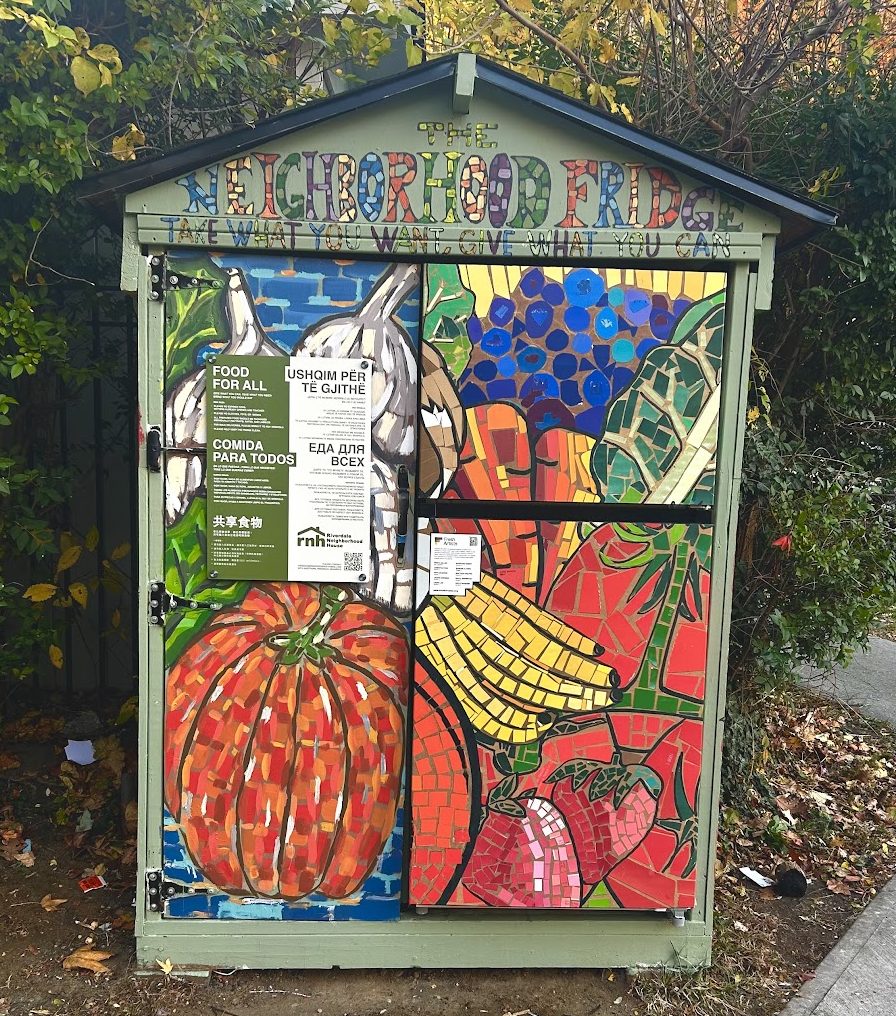
Arro Mandell, the Food Systems Manager at RNH, was one of the program facilitators for this Food & Farm internship. During the internship, they mainly helped acclimate the interns with assigned tasks having to do with food, whether that be the weekly food distributions or restocking the neighborhood fridge. “Since we started having weekly food distributions, many people have started stopping by RNH to hang out,” they noted. It has become a place where “we check up on each other” and provide support amidst difficult times.
Although there were limits on the amount of food everyone could take, this part of the internship enabled me to get a sense of what the current state of the world has had on a local level and the power of being grateful for what you have. Currently, the problem isn’t solely that big corporations have monopolized the produce industry against smaller, local farms by taking away their customers or plastering their company’s image on the packaging of locally produced goods. Instead, prices have been on the rise and there are currently attempts being made to hinder the support system that nonprofits such as RNH provide to local community members. Since 2024, inflation has affected merely every type of good sold at grocery stores; from the prices of fruits and vegetables rising 1.3% to the prices of products such as meats, fish, poultry, and eggs rising a whopping 5.2%, it has become impossible for many people to attain quality goods at a reasonable price. Relative to other sectors affected by inflation, such as energy, food has experienced the highest inflationary rates within the past year.
As of August 7th, 2025, President Donald Trump signed an Executive Order on ‘Improving Oversight of Federal Grantmaking’ in order to “end the offensive waste of tax dollars.” This includes cutting federal grants to nonprofits biasedly deemed “unnecessary” in order to save taxpayer dollars. Agendas such as these alongside ever-growing inflationary rates exacerbate the food crisis at hand by limiting the localization of ongoing solutions, which is needed due to the complexities of the oppressive food system. Despite policies like these, RNH has continued to serve as an outlet in which residents of Riverdale and local visitors can easily retrieve produce.
While food distributions allowed the interns to interact face-to-face with the community, the neighborhood fridge was a separate approach to provide food to nearby passers-by. During the internship, interns were able to prepare and package food that would then be used to restock the fridge. Every Thursday during the internship, if there was leftover produce, we would bring unsold produce to the fridge. If there was one thing that I would never forget, it was the eagerness of the group of people waiting at the fridge every Thursday at promptly 6 p.m. to have a first-hand look at what was being offered. Being able to see some of the same faces each week helped me feel a stronger sense of community within a few weeks than I’ve ever felt before.
It was astonishing to see how everyone played their part; one person helped clear the fridge while another would place their own homemade meals on the shelves to share with the community. As Mandell highlights, “The neighborhood fridge is a step towards taking more control over what happens with our food. It’s a way of saying that we are responsible for the welfare of our whole community, not just the people who live with us.” Not only has this redefined what community means to me, but it has reshaped what it has the potential to become.
Looking back, I am able to reflect on all the cherished memories: from the first meal we prepared together as interns, to the the oil that splattered onto me during a cooking demonstration I did on flautas, to the homemade hummus we made and finally to the family dinner we prepared during the last day of the internship. Even through the complexities of some dishes, I found that the cooking component of this internship enabled me to feel more interested in where we sourced much of the food.
Harvesting Growth
During the internship, we were introduced to the 2,200 square foot pollinator path, a strip of land designated for a three-bin compost system. In being exposed to this, we were able to construct improvements for the system and sift compost that would then be used for the garden. Although disturbing to many, the compost system and the pollinator path act as a home to many different types of insects, ranging from orange-legged swift spiders to millipedes. Ariana Kazansky, the Garden & Environmental Program Manager at RNH and the second facilitator of the Food & Farm 2025 internship, helped us engage with the environmental component of the internship.
As a facilitator, Kazansky helped educate the interns on harvesting produce, organizing the market, and utilizing certain cooking techniques. Starting her interest in gardening at the age 13, Kazansky effectively transformed how the people of Riverdale appreciate produce, working as someone who is “able to educate and inspire others in the community to gain an interest and knowledge of the connection between plants, the environment, and community.” In contrast to the gardens we visited throughout the internship, Kazansky describes the RNH garden as “a garden for the community, but not a community garden.” Although the vegetables and herbs grown at the garden are intended to be sold, in part, to local residents, the RNH garden is unique in that it does not operate solely on a basis of mutual and moral responsibility. Instead, as Kazansky continues, it “is a dual purpose educational and production space that serves school programs from preschool through college” and, most importantly, “hosts volunteer and educational opportunities for community members of all ages.”
By acting as a source of healthy and accessible produce for the seasonal farmers’ youth market, neighborhood fridge, and community programming, the RNH Garden is a turning point for what the current social environment has turned into. Instead of placing excessive financial strain on those who want access to local produce but may not be able to afford it in such an economic state, RNH has consistently empathized with those who interact with it.
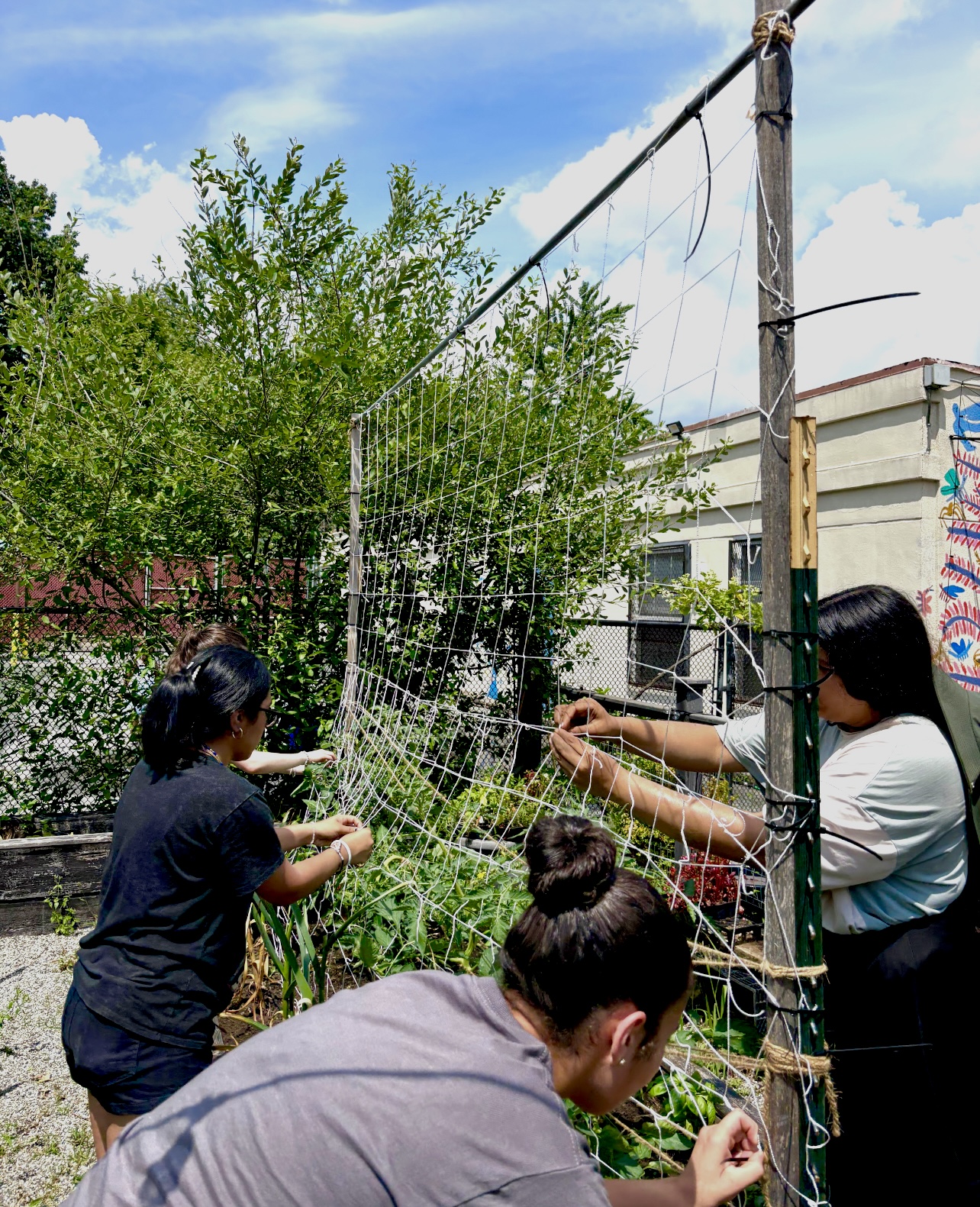
Through our engagement in hands-on experiences and inclusive discussions, the gardening component of the internship enabled us to experience something new, something “magical,” as Kazansky describes. If there were one concept from this internship that Kazansky and Mandell would have liked for us to internalize, it would be the different ways in which food is being underappreciated. Food is a basic human need, but it is also a way in which people can foster their own connections and take control of their own lives with the current food system in place. Both facilitators upheld RNH’s value of resolution through cooperation by adhering to the idea that food insecurity is a crisis that cannot be resolved by a few, but instead, demands collaboration for effective and enduring solutions.
Food security, while objectively immeasurable, provides the hope that people can eventually rely on themselves and on those who they can confide in. Unfortunately, the current food system does not offer that as it hinders transparency, accountability, and equity. In an attempt to revive this trust within society, the interns decided to take action.
Sweet, Savory, and Served Together
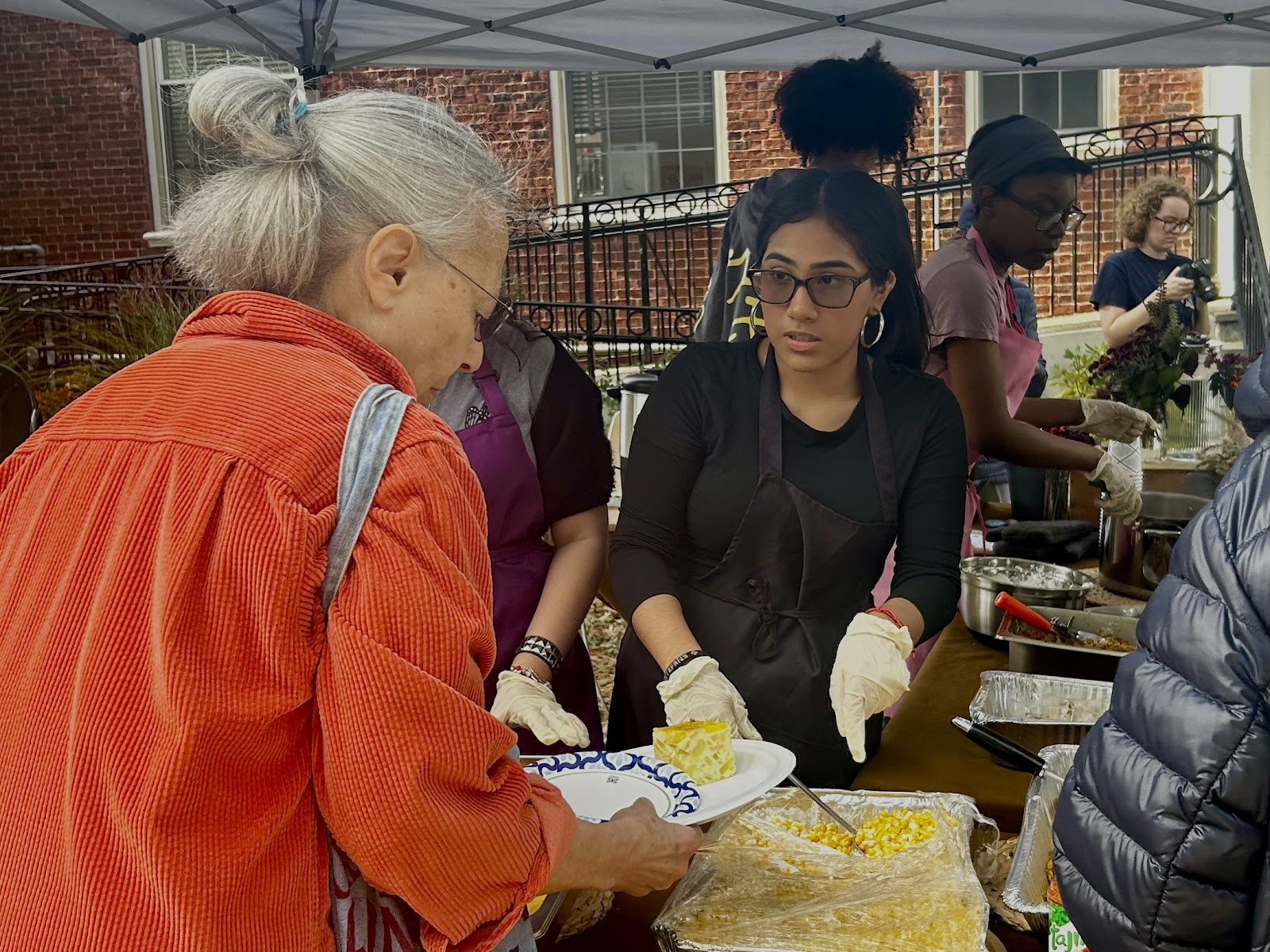
The community cafe was an all-around favorite, both for the interns and the neighborhood–people appreciated the delicious food being given away for free and the interns found a passion in the process of making it happen. As a result of our dedication, five interns, including myself, were able to propose creating our own community cafe club. After pitching the idea to the summer internship program facilitators and other RNH directors, it was settled: we may no longer be interns, but we were still supported by RNH through this new official club! Each month, we plan on celebrating certain holidays through the cafe’s activities and cultural dishes. The first community cafe organized by this committee was on October 19th, 2025 when we followed a fall theme. We served dishes such as tortilla de patatas and arroz con leche to celebrate Hispanic Heritage Month, and Sweet Potato Soup to reflect Indigenous Peoples’ Day.
As a whole, the ability to connect with RNH has enabled me, along with the other youth interns and community members, to seek mutual understanding. So, while some things can be simply confined to fit a specific description, it is impossible to encapsulate what RNH means. It is a multifaceted organization characterized by infinite opportunities; it is a mutually-beneficial support system; it is a refreshing reminder of what humanity means; but, most importantly, Riverdale Neighborhood House is a safe-place, a sanctuary, a home.
The neighborhood fridge is a step towards taking more control over what happens with our food. It’s a way of saying that we are responsible for the welfare of our whole community, not just the people who live with us.