

The Long-Awaited Drought
The orange and blue flashing lights flare throughout the renowned Madison Square Garden. The seats are filled to the brim with 19,500 excited fans awaiting the result of this playoff game.
The New York Knicks had finally done it.
The Boston Celtics were defeated in Game 6 on May 16th, 2025 ending the playoff series at 4-2 with a final score of 119-81. This marked the first time since the 1999-2000 season that the Knicks reached the Eastern Conference Finals. In the past, they were given chances against the Indiana Pacers in 2013, 2023 and 2024. However, they had finally ended the twenty five year drought and reached the Conference Finals.
This historical win led to an uproar for longtime fans. Desire Djabre ’27 expressed his excitement about the win. “The run to the Conference Finals last year was honestly surreal. After watching [The Knicks] for so many years where they were the worst team in the East, seeing them get this close to the Finals made me hopeful for the future of the team even though they didn’t get it done that year,” Djabre said.
History
Founded in 1946, the New York Knicks are one of the oldest franchises in the NBA. They were a charter member of the Basketball Association of America (formally known as the BAA), which later merged with the National Basketball League in 1949 to form the NBA. Playing their home games at Madison Square Garden, the Knicks quickly became synonymous with New York City itself, representing the city’s toughness, resilience, and global cultural influence.
The “Knicks,” formally known as the “Knickerbockers,” originate from the Dutch settlers who came to New Amsterdam in the 1600s. After Washington Irving’s satirical novel A History of New York from the Beginning of the World to the End of the Dutch Dynasty’in 1809, under the pseudonym Diedrich Knickerbocker, the popularization of the word “Knickerbocker” would continue to hold significance for him as a New Yorker. Knickerbocker, who had origins tracing back to the ancestry of the Dutch settlers, became popularly associated with New York City as Irving continued to publish more novels. Therefore, the city’s symbol in the 19th and 20th centuries was “Father Knickerbocker,” who wore a cotton wig, a three-cornered hat, buckled shoes and knickered pants.
Following the popularity, the name was used for the first time in the sports atmosphere with the first organized baseball team in history, which was based in Manhattan — the “New York Knickerbockers” or the “Knickerbocker Nine.” Alexander Cartwright was a founding member of the New York Knickerbockers Base Ball Club during the 1840s and one of the major contributors to the origins of modern American baseball by guiding the foundation of New York’s most prominent baseball clubs.

The National Basketball Association of America made the final decision to crown the Knicks with the name “Knickerbockers,” an idea that was inspired by Ned Irish’s decision to create the founding name. The name continued to transform from Father Knickerbocker (who had been the symbol of New York City) to later being shortened to its current name, the Knicks.
From the beginning of the franchise, the Knicks had established a competitive identity among other teams in the NBA. However, after reaching the NBA Finals three consecutive times from 1951 to 1953, they fell short of achieving a championship each year during that era.
The 1951 NBA Finals marked the first time that the Knicks ever made an appearance in the finals. The Eastern Conference champions, the New York Knicks, faced the Rochester Royals (now known as the Sacramento Kings), the Western Conference champions. They played a best-of-seven game series in which Rochester was given the home court advantage. This series culminated in an important Game 7, marking the first time in NBA history for a team to tie a series at 3-3 after the Knicks had previously lost the first three games of the series. However, the Rochester Royals ultimately won the intense final game at a score of 79-75, which solidified their championship victory.
During this period of the Knicks’ successes in achieving NBA finals appearances, they repeatedly failed to receive a win. The team seemed to stagnate another seventeen years before they were able to reach the NBA finals.
History was made when the Knicks won their first championship on May 8th, 1970.
Led by a strong core of Willis Reed, Walt “Clyde” Frazier, Bill Bradley, and Dave DeBusschere, the team used their strategic ball movement, defensive discipline, and offensive firepower to boost their success. To cap the season off, Willis Reed’s iconic return in Game 7 of the 1970 NBA Finals – despite having a severe leg injury – marked one of the most famous moments in sports history and sparked inspiration for fans to celebrate their first victory.
After a quiet stretch in the late 1970s and early 1980s, the Knicks resurged as a dominating force in the late 1980s and early 1990s under head coach Pat Riley and, later on, Jeff Van Gundy. The Knicks were able to form a defensive-oriented identity that demonstrated their ability to use gritty physical play and toughness to intimidate competition. The team was led by Patrick Ewing, Charles Oakley, John Starks, and later on Allan Houston, all of whom contributed to the Knicks being contenders within the Eastern Conference. They solidified their reputation as a resilient franchise when they reached the NBA Finals once again in 1994 and made history in 1999 when they became the first eighth seed to advance to the finals. This meant that they entered the playoffs as the lowest ranked team in their conference but still managed to defeat the higher-seeded teams in order to advance; this was an extremely rare case and highlighted the team’s resilience and competitiveness.
In the 2000s and early 2010s, an inconsistency arose within the organization. Frequent roster changes, coaching changes, and instability prevented their long-term momentum and highlighted their inability to recapture the same spark that was prevalent in the past. However, there were brief moments of excitement, most notably ‘Linsanity’ in 2012, when Jeremy Lin’s unexpected breakout captivated fans worldwide, along with Carmelo Anthony’s arrival and the team’s playoff resurgence in the 2010s. Entering a new era in the late 2010s and approaching the 2020 era (during the COVID-19 pandemic), the Knicks aimed to rebuild and organize with a renewed focus on maintaining player development, defense, and representing the culture of the Knicks’ identity. While they lacked any championship wins, the Knicks’ energetic fan base and historic legacy make them one of the NBA’s most recognizable and culturally significant teams in the league.
Leading Into the Recent Successes
In the 2024-2025 season, under head coach Tom Thibodeau, the Knicks were able to develop a strong reputation for their physical defense and relentless effort to echo their own identity as a championship-contending team.
The modern era of the Knicks has expanded from the past strategic approaches. After years of understanding the growing weaknesses of the team, they have been able to train smart. By prioritizing and utilizing all the components and players of the team, they work together in a manner that outperforms any other team in the league. Currently in the 2025-2026 season, the team’s most common regular season starting lineup consists of Jalen Brunson, Mikal Bridges, OG Anunoby, Karl-Anthony Towns, and Josh Hart.
The buzz around the Knicks in recent years sparked with the success of the NBA Cup Championship in 2025. The Emirates NBA Cup has been occurring as an annual tournament since 2023, and the Knicks were able to gain their first championship title since 1973, clearing yet another long awaited drought in their recent success.
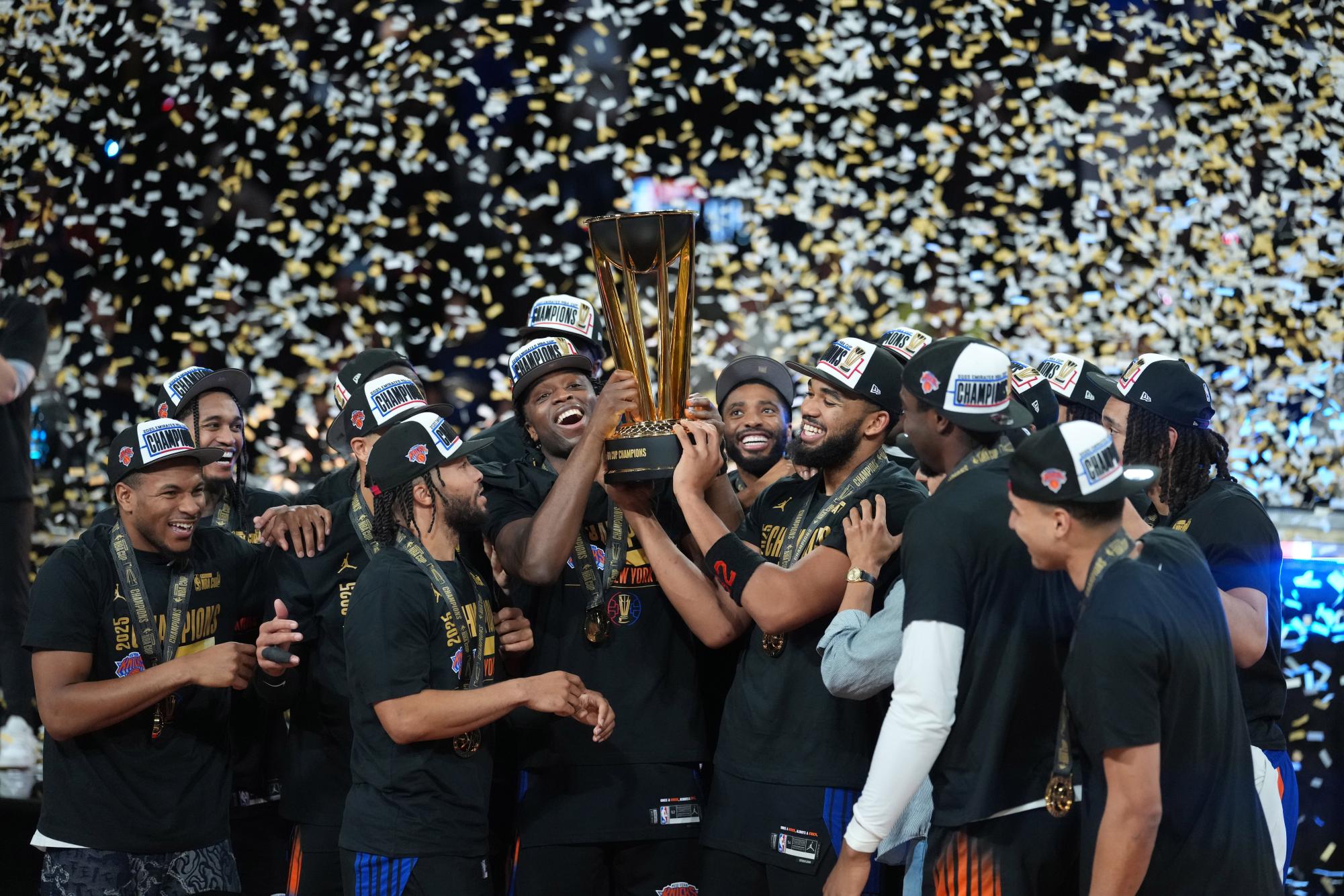
Though it may be hard to believe, the Knicks haven’t made it to the NBA Finals since 1999; they also hadn’t made it to the conference finals since 2000 prior to their accomplishment during the 2024-2025 season. This 25-year drought marked the 3rd longest drought, behind the Washington Wizards (46 years) and Charlotte Hornets (37 years).
Fan Impact
The long-term and recent fans have contributed immensely to the success of the team since its beginning. Madison Square Garden comes alive on game nights, as the fans are not only knowledgeable about their players and team but also vocal and unafraid to express their orange and blue pride. The atmosphere around the Garden is defined greatly by the fans’ intensity, loyalty, and deep connection to the team.
I interviewed several Bronx Science students with a series of questions to analyze the impact that being a Knicks fan has had on their life, as well as the hopes and potential they see for the team and what has drawn them to remain so loyal as fans.
Q: How long have you been a Knicks fan, and what originally drew you to the team?
A: Tyler Smolensky ’27 said, “I’ve been a Knicks fan for six years. Growing up in New York City, Madison Square Garden was close to where I lived which drew me to the team. The Garden has always had a special place in my heart when it comes to basketball.”
Q: What is your favorite Knicks memory as a fan?
A: Desire Djabre ’27 said, “My favorite memory as a Knicks fan is probably the 3 that DiVincenzo hit in Game 2 against the Sixers in the first round of the 2024 playoffs. either that or the win against the Celtics in Game 6 in the second round last year.”
Q: Have you ever attended a game at Madison Square Garden? If yes, what stands out most about the atmosphere?
A: Liliana Mejia ’27 said, “I’ve only attended one game at MSG, in January of 2024 against the Orlando Magic. Even though we lost that game, I think the energy at MSG is always unmatched and Knick fans bring a certain level of excitement about the game that is so fun to be a part of.”
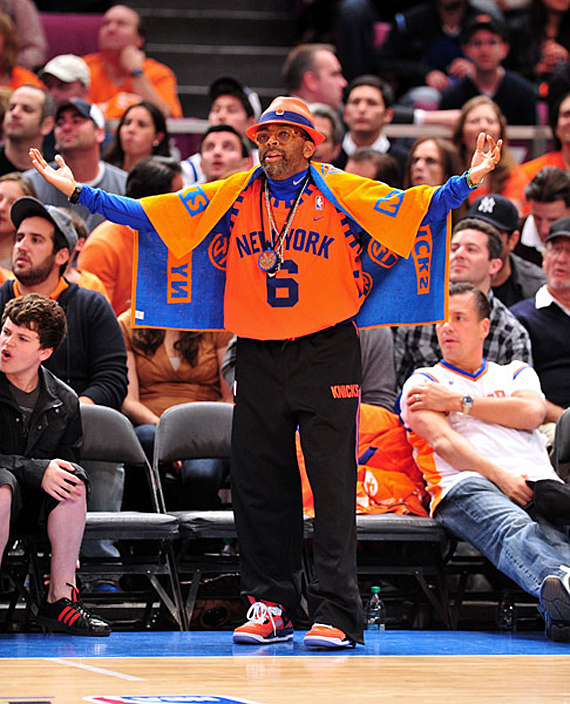
Through these students’ perspectives, the loyalty, passion, and emotional connection that fans have to the franchise is clear. Whether it means growing up near Madison Square Garden, remembering the unforgettable playoff and championship moments, or understanding the unmatched energy of games, these fans show how the culture of the Knicks extends beyond the court. From wearing Knicks apparel as a symbol of New York identity to debating games in schools, neighborhoods and online, New Yorkers have shown that the team has become a cultural presence rather than just a basketball franchise. These off-court traditions and shared experiences demonstrate how the culture of the Knicks is deeply woven into the lives of its fans, giving them a shared feeling of belonging.
The long history of dedication, memories, and overall hope for the team’s success in the future demonstrates that the Knicks fandom is not just about basketball but also their pride and commitment to the team of orange and blue.
From wearing Knicks apparel as a symbol of New York identity to debating games in schools, neighborhoods and online, New Yorkers have shown that the team has become a cultural presence rather than just a basketball franchise.