

Long Island City, often shortened to simply “LIC,” is a rapidly changing neighborhood. Along with its stunning views of Manhattan skyscrapers across the East River, the area has developed its own impressive skyline over the past few years. In less than a decade, LIC went from being somewhere filled with factories abandoned since the 1970s to a place overflowing with glass highrises and luxury buildings. Developers were looking to build thriving business districts outside of Manhattan, and LIC was prime real estate.
Several rezoning efforts resulted in a hodgepodge of clashing neighborhoods haphazardly strewn together; small family businesses contend with insuperable chains, posh glass towers guarded by doormen stand a couple blocks away from massive NYCHA complexes such as the Queensbridge and Ravenswood houses. Northern Boulevard, Jackson Avenue, and Queens Boulevard are major roads in the neighborhood, lined with storefronts that seem to change daily, the area molting into something unrecognizable every few years. Vernon Boulevard, another notable street in LIC, remains more industrial, a piece of the neighborhood that serves as a reminder of what it once was. Towards the Northern end of Vernon, in a sea of factories littered by a few soulless highrises, lies an unassuming structure that stands out upon second glance. That structure, triangular in shape – some of its walls made of red brick, others concrete – is the Noguchi museum.
Free to enter for all New York city public school students, the museum is an unsung urban oasis. Its serene garden and quiet galleries nestled away from the turbulence of the heart of LIC create the perfect environment in which to gain inspiration. The sculptures housed there are unusual; the contemporary art of today’s times is often colorful, bold, sleek, and modern — while the sculptures in the Noguchi appear more organic. Critical online reviews lament the absence of artist’s statements — short explanations of the work’s meaning — next to pieces, the “boring” sculptures, and lack of color in the museum. While these may seem like flaws, all these aspects of the museum were intentionally implemented by its founder, Isamu Noguchi.
Noguchi opened the doors to his museum in 1985, displaying works made during as early as the 1920s; yet forty years later, the site still feels ahead of its time. Noguchi was revered in the art world for his ability to stretch the boundaries of reality through his sculptures. In many of his pieces, he abstracted familiar objects, stripping them of all things superficial and leaving behind only their essence and basic forms. In doing so, he created something new entirely, provoking the viewer to consider the fundamental significance of the original reference.
Noguchi created sculptures that had a function — they could be sat on, played with, touched — during a time when most art pieces sat dormant behind glass, their only purpose to look pretty. His view of art as something that people could directly interact with, see every day, and even benefit from was radically different from how art was traditionally viewed throughout history; art used to be something only commissioned by the wealthy, with paintings and sculptures being viewed as status symbols. Noguchi wanted people to coexist with, and appreciate art in every aspect of life.
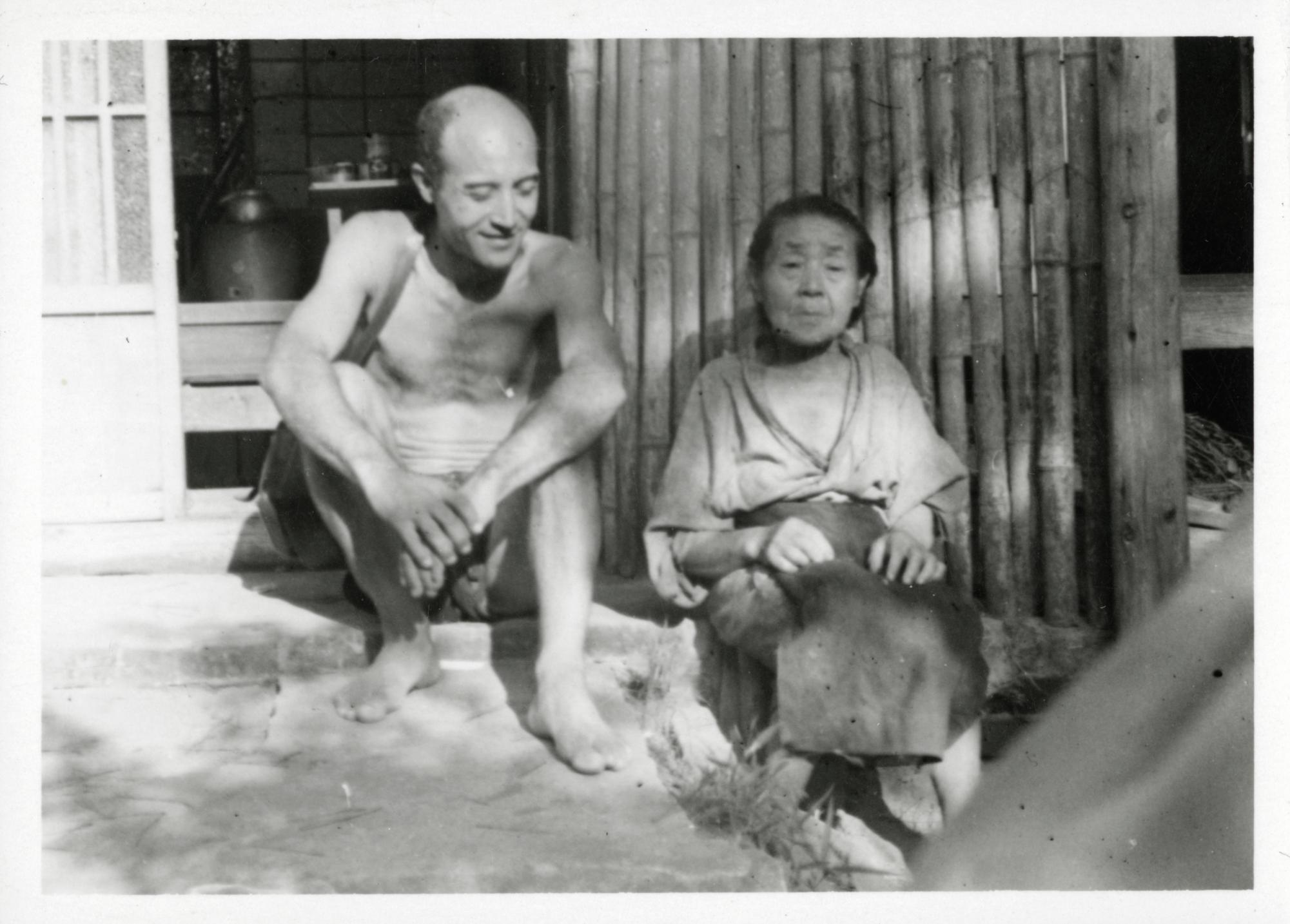
“We are merely the instruments through which the imagination awakens. Memory reveals the possible, drawing on our unconscious. Everything harks back to times past.” – Isamu Noguchi
勇 – or “Isamu” when transliterated into English – is a masculine Japanese given name meaning “courage.” It is the name which journalist and East Village native Léonie Gilmour and Japanese poet Yonejirō (Yone) Noguchi gave to their son. Born in Los Angeles three months after his parents separated, Noguchi spent his infancy in America with his mother. The pair then moved to Japan to reunite with Yone, sailing to Yokohama–where they found that Yone had married a Japanese woman. Although Noguchi never built a strong connection with his father, he remained close with his mother throughout his life.
During his early childhood in Japan, Noguchi’s mother uplifted his artistic talent; Gilmour encouraged him to tend to the garden of their family home, and put him in woodworking apprenticeships – both experiences may have influenced his later work. At fourteen years old, Noguchi was sent to Rolling Prairie, Indiana to attend the now-closed Interlaken School, an all-boys boarding academy. Instead of using the Japanese name his parents gave him, Noguchi briefly went by ‘Sam Gilmour,’ presumably to better fit in with his peers during his American schooling.
After graduating from high school, Noguchi moved to New York to pursue medicine at Columbia University. At the same time, he participated in a sculpture class at the Leonardo da Vinci Art School on the Lower East Side, which Noguchi’s mother encouraged him to join. His mentor at the time, Italian-American sculptor Onorio Ruotolo, provided Noguchi with a studio space near Union Square – a gift that empowered Noguchi to drop out of Columbia and focus on his art career full-time.
As gained more experience in the art of sculpture, Noguchi was granted a fellowship at the John Simon Guggenheim Memorial Foundation, an opportunity that allowed him to travel to Paris and London – where he met even more mentors. Perhaps the most pivotal person Noguchi met during the fellowship was Romanian sculptor Constantin Brâncuși, who is regarded as one of the most influential pioneers of the modernist art movement. It was during Noguchi’s apprenticeship to Brâncuși that he developed his own distinct style – distancing himself from the classical realism so-often imposed on art students, which focuses on depicting reality exactly as is – and explored modernism, particularly abstraction.
Of Brâncuși, Noguchi wrote, “He showed me how to square a block out of limestone. This is how I learned of the honesty of sculpture as a prerequisite for overcoming the easy attractions of clay modeling – a moral duty I have never forgotten.” Noguchi found a unique and admirable finality in working with stone that is not present with clay; while clay can be molded into new shapes over and over again until it dries, breaks made into stone are definite – one must have a clear vision for the piece prior to beginning, and “mistakes” are to be made with confidence. Noguchi saw in every stone a predestined final form, which he sought to uncover through sculpture.
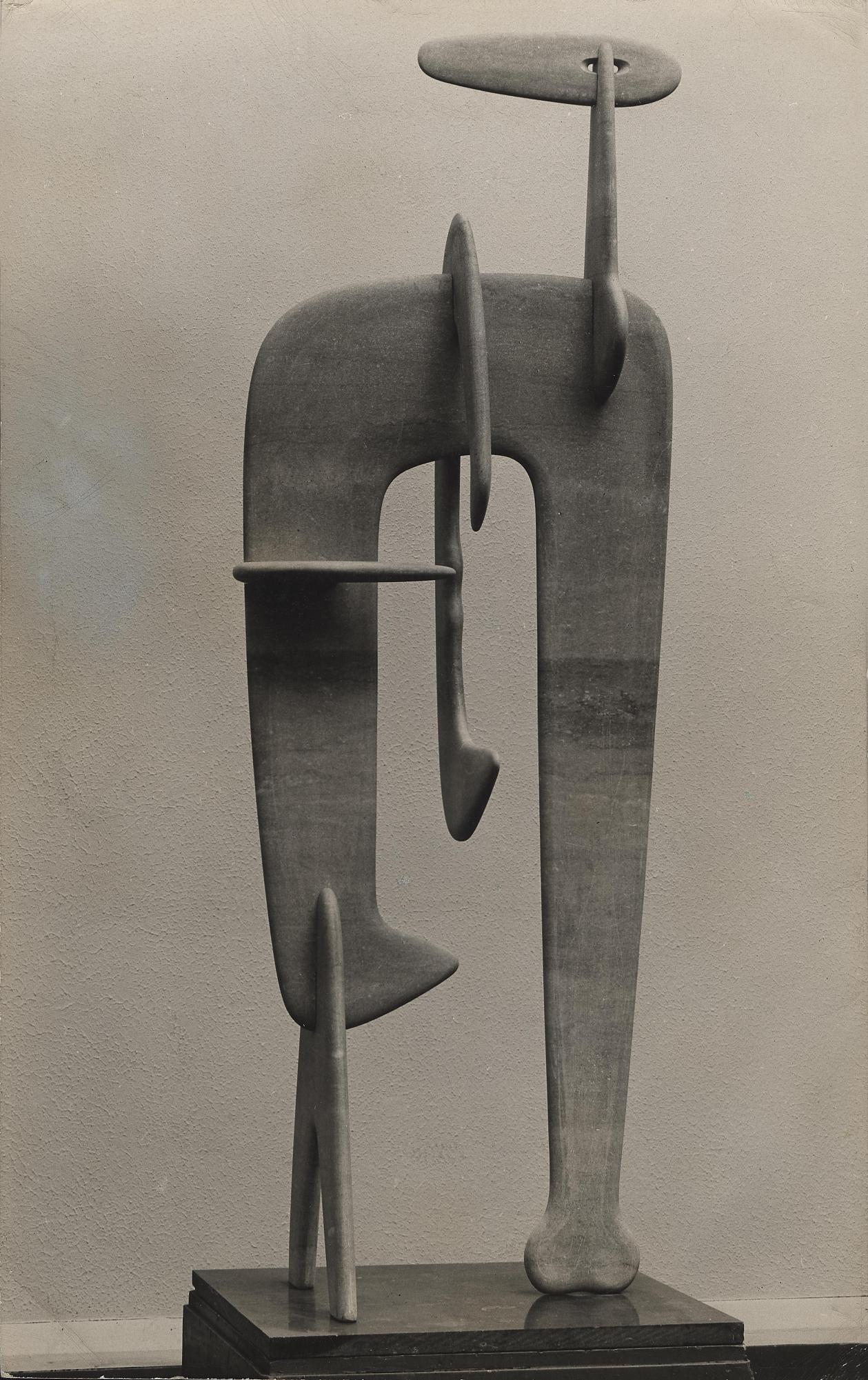
“A gift comes from the past, the residue of what we have already done. The unwanted part. Then one day there is revealed to us another potential which we are now ready for. To find from our own past the needed confidence: out of violence comes a calm.” – Isamu Noguchi
When Noguchi first began his artistic career, he was commissioned to make clay busts for a living – work which he did out of financial necessity rather than enjoyment. Out of the hundreds of portraits he made, one of the most significant of Noguchi’s busts was that of Martha Graham. Graham, a prominent choreographer in the world of contemporary dance and ballet, went on to be a lifelong friend of Noguchi.
For years, Graham’s performances lacked backdrops and stage decorations; she eschewed traditional gaudy sets and props because of their tendency to detract from the dancers’ movements and the meaning of the production. In this way, Noguchi and Graham had similar creative philosophies; thus, an artistic partnership blossomed between them – for decades, Noguchi designed countless minimalistic, contemporary stage designs for Graham. Of Noguchi, Graham once said, “I realized that he had the astringency, that everything was stripped to essentials rather than being merely decorative. Everything he does means something.”
Noguchi continued to dabble in set design for other notable choreographers like George Balanchine and Ruth Page – although he often credited Graham as his favorite dancer to collaborate with, once saying, “She uses [the props] as extensions of her own anatomy.” Noguchi’s exploration of the intersection of dance and sculpture in his early career influenced the way he viewed his later work: something that could interact with space, and especially the viewer, through movement.
As Noguchi experimented with set design for many famous names in the dance world, his avant-garde sets continued to garner attention and criticism from commentators – many said that his abstract designs for theatrical productions like Shakespeare’s King Lear detracted from the classical qualities of the stories. Life magazine even published an article entitled “A Weird Kind of ‘Lear,’” which centered around this especially controversial version of the play; the article details British theater critics’ comparison of Noguchi’s set design to a ham bone, fervently accusing him of committing “artistic mayhem.”
In regards to this, a spokesperson for the Noguchi Museum said, “Noguchi did not let critics dissuade him from bold experimentation. Over his six-decade career, Noguchi remained committed to a practice modeled on hybridity, openness, and curiosity, even if critics were not always receptive to his work.” In the program notes of the infamous King Lear performance, the production team – including Noguchi –asserted that “Our object in this production has been to find a setting and costumes which would be free of historical or decorative associations so that the timeless, universal and mythical quality of the story may be clear. We have tried to present the places and the characters in a very simple and basic manner, for the play to come to life through the words and the acting.” Throughout his life’s work, Noguchi explored the fundamental, essential qualities of his subject matter beyond its surface-level aesthetics, regardless of the criticism that he received.
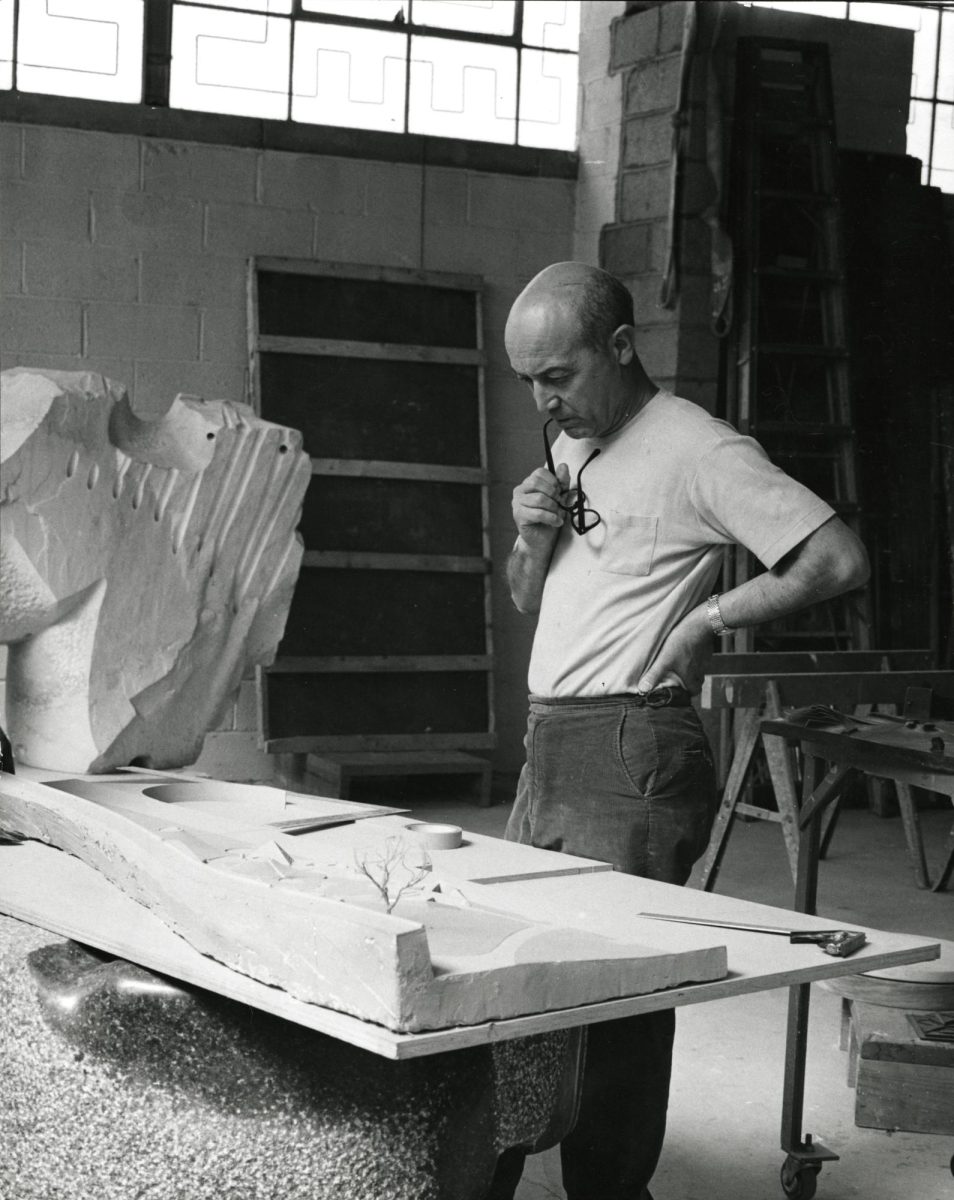
“Sometimes, out of despair, when we have given up, the stone itself sends a message—should one say, bit by bit—so that we may receive it. Finally everything falls into place and emerges with a precision so remarkable it cannot be chance.” – Isamu Noguchi
After years of experimentation with sculpture on a smaller scale, Noguchi began to think about how his work could serve the public. While he had already explored the idea of functional sculptures, Noguchi wanted his work to act as a metaphysical tool for the viewer’s imagination. Throughout his career, he made dozens of playground models deemed as “radical”; instead of classic jungle gyms, Noguchi envisioned public parks that utilized landscaping and terrain modifications to create natural slides, amphitheaters, fields, and seating. Fascinated by the innate curiosity and vivid imaginations of children, Noguchi wanted to see how kids could create their own elaborate games even in a simple, abstract playground.
Despite pitching his models to the New York City Department of Parks and Recreation – then led by the infamous urban planner Robert Moses – several times, Noguchi’s ideas were shut down, and even ridiculed. Noguchi did not let dismissal stifle his creativity; writing about his rejected Riverside Park Playground idea, Noguchi once said, “We were fascinated by the potential achievement of our ideas and seemed not to have the least qualms about the obstacles placed in our path.”
During World War II, the U.S. government forced over a hundred thousand Japanese American citizens into internment camps on the west coast, fearing their loyalties lied with Japan. Intending to better the lives of the internees, Noguchi voluntarily moved into the Colorado River Relocation Center in Poston, Arizona – where he envisioned building a park and establishing art programs for its residents. His short stint in the camp left Noguchi feeling alienated from the rest of the internees, disconnected from his Japanese heritage, and frustrated by the lack of resources and funding needed to realize his ambitious projects; after having left the camp, Noguchi returned to New York with a new zeal for sculpture and perspective on the purpose of art.
“One imagines possibilities; much later one begins to know what to make of them.” – Isamu Noguchi
It is often said that any publicity is good publicity – perhaps this was true in Noguchi’s case; in spite of all the critics buzzing about their aversions to his work, Noguchi was gaining recognition in the art world, and influential companies were commissioning him. Noguchi first made the sculpture ‘News‘, a 22 by 17 foot stainless steel frieze towering over 50 Rockefeller Plaza; the piece is a tribute to the importance of a free press, depicting a group of journalists on the façade of the site of the former Associated Press building. Then, Noguchi designed the ‘Chassis Fountain‘ for the Ford Motor Company’s building at the 1939 New York World’s Fair. Noguchi once wrote, “I have looked upon every new job as another opportunity to break new ground.” It became clear that Noguchi was making a name for himself in the industry, becoming a respected artist whose work was in high demand.
In the midst of this commercial success, Noguchi played with new ideas for making art functional. The public art that Noguchi was commissioned to make were pieces that people simply walked past, never directly interacting with. Noguchi explored the idea of art that could fill people’s homes, becoming a personal part of their everyday lives – even something they could physically interact with daily. Noguchi once said, “The experience of sculpture is not only by sight. The tactile quality of sculpture is surely as important as the visual to cause thought.” Thus, Noguchi sought to “cause thought” through furniture. First, he created a mid-century modern table for then president of the MoMA, Conger Goodyear; it was known as the ‘Articulated Table‘, with a base made of rosewood carved into organic shapes, and a glass tabletop. Noguchi continued to make similar coffee tables in this contemporary style in a collaboration with the Herman Miller Company, creating a catalogue which includes some iconic pieces still sold today.
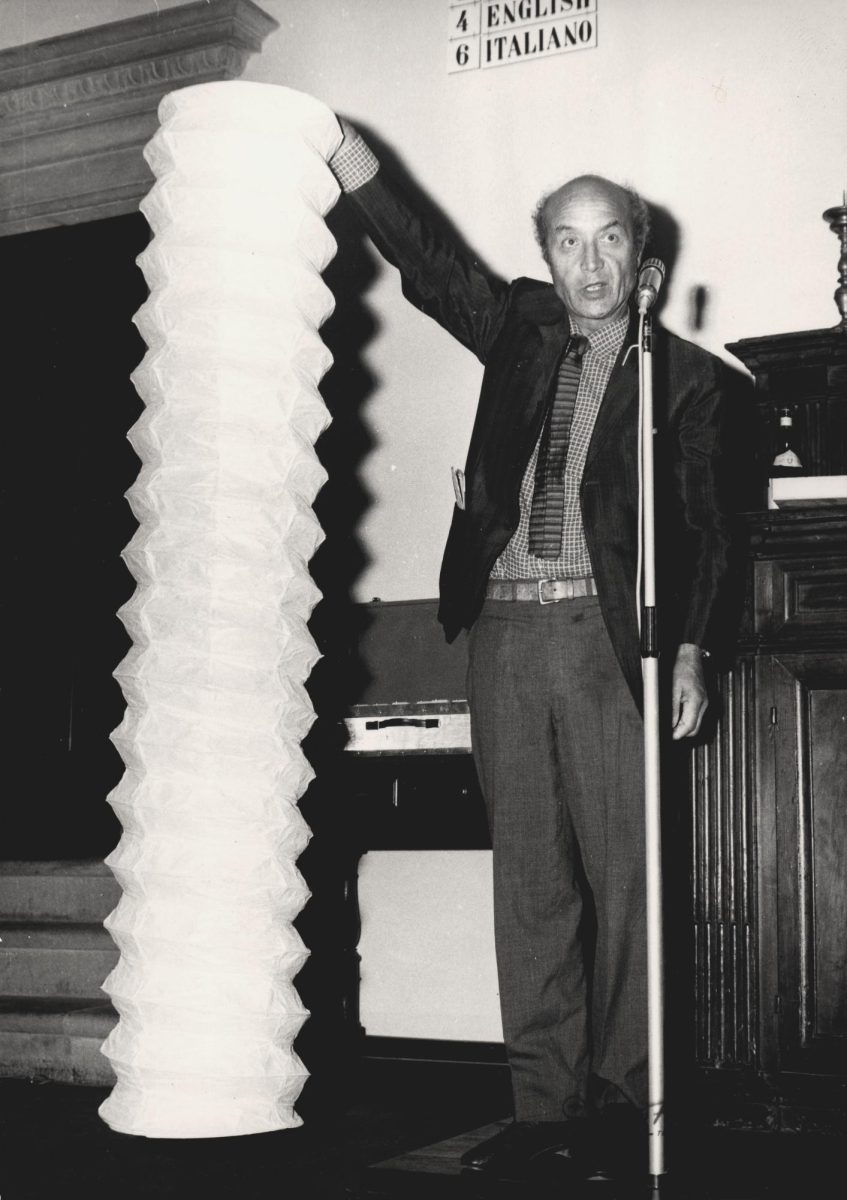
Noguchi became fascinated with sculptures which emitted light – he named his earliest prototypes ‘Lunars.’ Noguchi eventually scrapped his Lunars for being too fragile, and searched for ways to make robust sculptures which appeared to glow from within; he found inspiration for improving upon the Lunars when traveling in Gifu, Japan – a town known for its traditional methods of lanternmaking. Thus, Noguchi conceived the ‘Akari’ lamps – a name meaning “light as illumination” in Japanese – which he described as “poetic, ephemeral, and tentative.” The lanterns are still handmade today, crafted from mulberry washi paper and bamboo, and designed to be collapsible for storage. Noguchi’s Akari continue to be a hot commodity, selling for up to thousands of dollars depending on the design.
“To counter the passing, I would seek the enduring. From the depth of time-consuming hardness to find the lasting and essential, by using modern tools on the oldest medium, there is an attempt to push the discovery of sculpture onward a notch.” – Isamu Noguchi
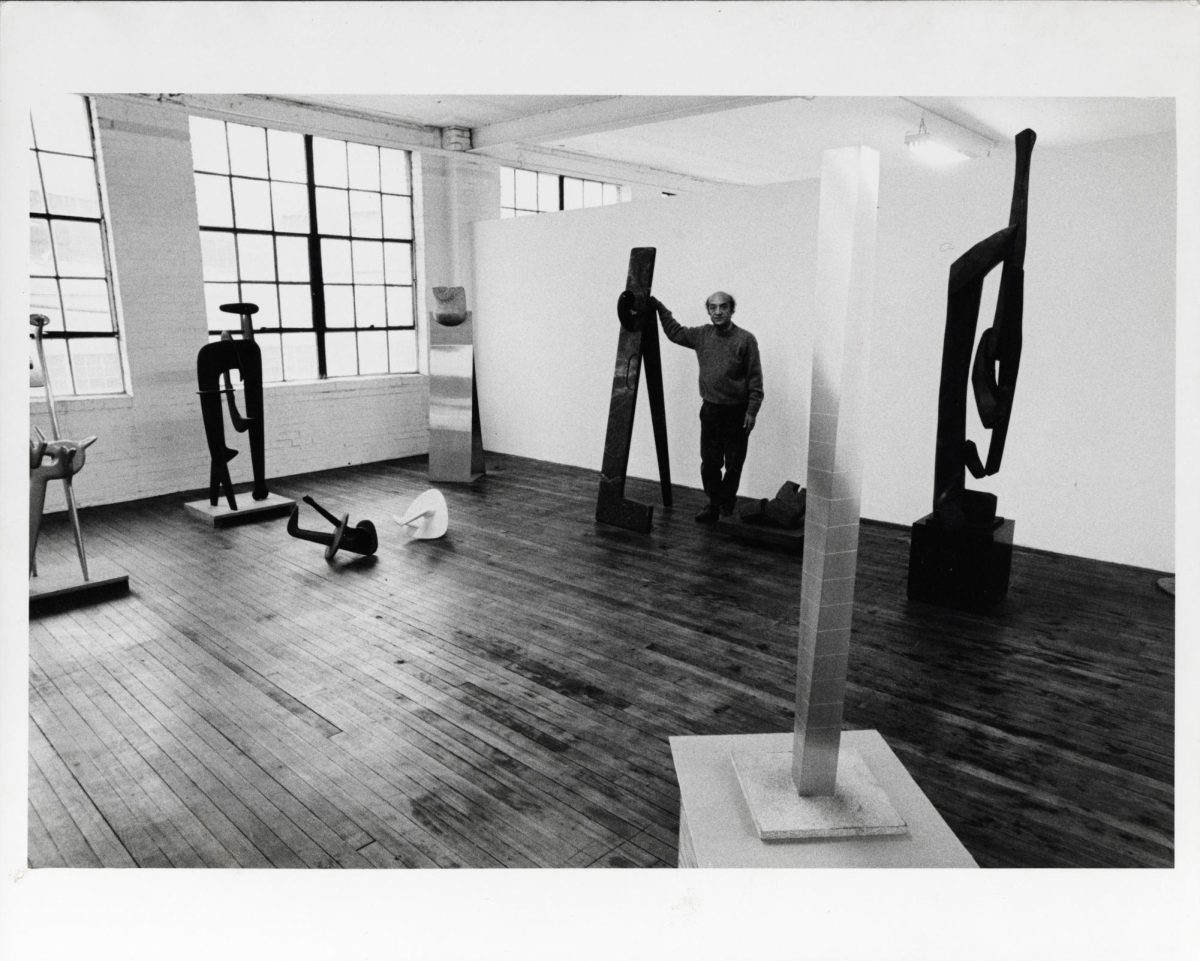
Drawn to the many stone and metal factories in the area, Noguchi established a studio in Long Island City, Queens. After ten years of being based there, Noguchi required more space and purchased the former factory next door. Tired of repeatedly transporting his work between temporary gallery shows and storage, Noguchi had an idea to create a permanent house where he could show the entire breadth of his life’s work, all in one place. Thus, the Isamu Noguchi Garden Museum opened its doors in the newly purchased space.
Designed to be a place of education and creativity; the community at the museum works hard to keep Noguchi’s vision alive today, running art programs and providing opportunities for people to get involved with sculpture throughout the year. Noguchi restored the former factory to create all of the galleries, landscaped the garden, and arranged the totality of his work exactly to his tastes – the entire property is his creative vision incarnate, and Noguchi’s spirited determination seems to radiate off of each piece.
“Call it sculpture when it moves you so.” – Isamu Noguchi