

A black screen. The squeal of wood creaking in repetition. A man’s quiet moaning. Emerald Fennell’s blockbuster film “Wuthering Heights” opens with a gruesome scene — a man being hanged on stage in front of a giddy Victorian crowd.
The spectators range in age from bright-eyed children to grumpy elderly persons bent over walking sticks, but all wear clothes stained with the Northern English grime and sport greasy hair that is matted to their sweaty pale foreheads. As the camera pans to two boys, each around eight years old, we hear one say, “He’s got a stiffy!” and point to the corpse. The heartless crowd begins to laugh at the sexual nature of the grotesque display, proceeding to rejoice and embrace one another on the cobblestone streets.
In highlighting within the first few frames both the dark thrill and the covert sexuality of Emily Brontë’s 19th-century thriller romance novel Wuthering Heights, Fennell forces viewers to confront their own motivations for seeing the film. Many modern theater-goers, instead of preparing themselves to face the psychological trauma underlying the story, were attracted by a racy, heart-wrenching romance between Catherine and Heathcliff, lovers separated by class and family abuse. The opening image tackles this misguided attitude with a metaphor and a warning: in a film about intergenerational trauma and revenge, the “stiffy” — the suggestive, romantic scenes between hot young actors — is what media coverage and public excitement is focused on.
In the remainder of the two hour film, through carefully curated dialogue, symbolic imagery, and composition, Fennell introduces countless reflective analogies such as the hanging scene. She forces viewers repeatedly to address our preconceived notions of literature, social structures, love, and abuse, as she portrays the beloved novel’s characters in astute realism with modern refinements.
After Emerald Fennell’s debut film in 2020, Promising Young Woman, won her an Oscar in screenwriting and Saltburn, her 2023 sophomore opus, broke the internet for its scandalous originality, the British actress, writer, and filmmaker achieved star status. Warner Bros. virtually wrote Fennell a blank check for “Wuthering Heights,” granting her the same creative freedom that made her previous works into masterpieces. The eerily obsessive, aesthetically sharp tone that Fennell’s original works have become known for was fertilized with a budget geared toward extravagant set design and jarring wardrobe pieces.

The film’s soundtrack, mostly composed of originals written by Charli XCX, a popular British singer-songwriter, reflects the same passion and surrealist feeling present in the film’s visuals. Charli uses string instruments like the cello alongside her signature auto-tuned vocals, often layering in sharp, shriek-like backing vocals for contrast in the 12-track 2026 album release entitled (of course) Wuthering Heights. Although Charli produced a pop album, often heard now on radio stations and in trending TikTok audios, the mood her songs add to the film is fittingly uncomfortable. Her single ‘House, featuring John Cale,’ features the chorus “I think I’m gonna die in this house,” lyrics which sparked a social media trend, introducing viewers to the film’s setting in a dramatic and astonishing way.
Fennell’s version is admittedly far from an exact cinematic rendering of Brontë’s novel, featuring a mix of original dialogue, character swaps, and imaginative sexual scenes. After recalling her lifelong admiration for Brontë and the story, Fennell told reporter Emily Zemler with the Los Angeles Times, “I care so deeply about this that I couldn’t hope to ever make a perfect adaptation because I know my own limits.” Instead, she aimed to immortalize the experience she had at age 14, reading Catherine and Heathcliff’s story and wondering what Emily Brontë must have written between the lines.
So far, movie-goers’ reactions to the risqué, digressive interpretation have been split: the film stayed in the Number 1 box office spot for weeks, buoyed by an audience of women, who made up 76% of the opening weekend tickets; while many other die-hard Brontë fans either refused to go to theaters or left scathing reviews. One unnamed source wrote that the film was “aggressively provocative and tonally abrasive” after seeing it for the first time, and others commented on its “strangeness.”
To be fair, Fennell never claimed to create a perfect adaptation; the movie’s title is “Wuthering Heights” in quotation marks, creating an intentional buffer zone between the two artists’ iterations. Of the additional spicy scenes, Fennell explained, “I think they’re part of the book of all of our heads. With all the love and respect and adoration I have for the book, I also wanted to make my own version that I needed to see.” Although this is understandable, some have argued that the tension of covert, mutually unrequited love in the novel is somewhat lost in the hot, racy atmosphere of the film.
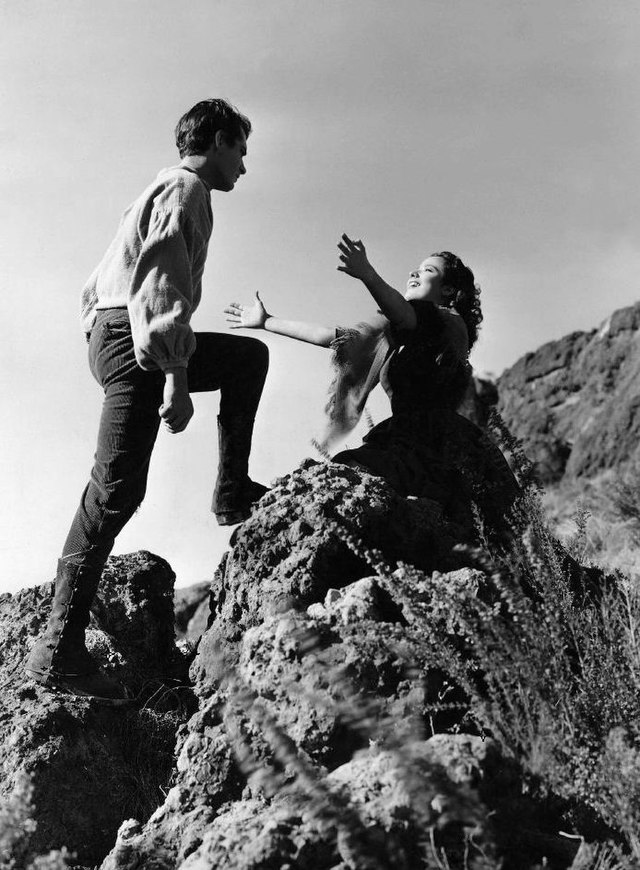
This is not the first time that Wuthering Heights has received mixed public reactions. From the outset of their careers, the Brontë sisters’ writing was criticized by society. Emily and her sisters, Anne and Charlotte Brontë, published their novels and poetry under the masculine-sounding pseudonyms Currer, Ellis, and Acton Bell, in order to quell the stigma that bound women authors generally in the 19th century. Many readers of their time theorized that all of their writings collectively were written by one man, and the sisters never wrote at all. (This claim has been debunked many times.)
Even with the buffer of anonymity, 19th-century critics of Wuthering Heights were unforgiving. According to Henry Oliver in the popular literary Substack The Common Reader, a critic from the Quarterly Review called it “too odiously and abominably pagan to be palatable to the most vitiated class of English readers.” This reaction was shared by readers who expected Brontë’s work to mirror the comparatively tame, ladylike Jane Eyre and other cheerful prose written by her sisters. Instead, the violent brutality and obsessive tendencies in the characters that Emily Brontë brought to life gave her story an almost masculine bluntness, and reified the fear of women writers depreciating their own femininity.
Brontë’s Wuthering Heights follows the explosive, narcissistic Catherine Earnshaw and Heathcliff, a “dark-skinned” orphan adopted by her father, as they grow up in an abusive household and fall deeply in love. The societal inequality between the two becomes glaringly obvious when they are old enough to marry, and after Catherine marries the rich, white Edgar Linton for his fortune and social status, Heathcliff vows to get revenge on the Earnshaw and Linton bloodlines. The cycle of abuse that began with Mr. Earnshaw and was perpetuated by Heathcliff ends with Catherine’s daughter Cathy choosing to marry Hareton, a parallel for Heathcliff in the latter half of the story.
Brontë comments on class and race, intergenerational trauma, and domestic abuse through the relationships between extremely complicated characters. Mr. Earnshaw, the patriarch of the Wuthering Heights household, returns from Liverpool with Heathcliff and tells his wife that he brought the boy “‘as a gift of God; though it’s a dark, almost as if it came from the devil.’” This dialogue is an explicit criticism of the white man as a God-like figure in global imperialism and the domestic sphere. The novel itself is recounted by Nelly, the Earnshaws’ housekeeper and nurse, who ruminates on the difference in her treatment as a child in comparison to that of Catherine and Heathcliff, and provides insight into the workings of the servants at the Linton estate. These characters are not mere stereotypes but multifaceted, memorable personalities who add value to the story while highlighting real societal issues.
The novel’s radicality is striking even now. Modern and Victorian audiences alike marvel at the fact that Brontë, a Victorian-era woman sheltered for her whole life by her father and brother, published a critical commentary on the hierarchies of the 1800s. As George Henry Lewes, an English literature critic and philosopher, wrote in 1850, “Books, coarse even for men, coarse in language and coarse in conception, the coarseness apparently of violence and uncultivated men — turn out to be the productions of two girls living almost alone, filling their loneliness with quiet studies, and writing these books from a sense of duty, hating the pictures they drew, yet drawing them with austere conscientiousness! There is matter here for the moralist or critic to speculate on.”
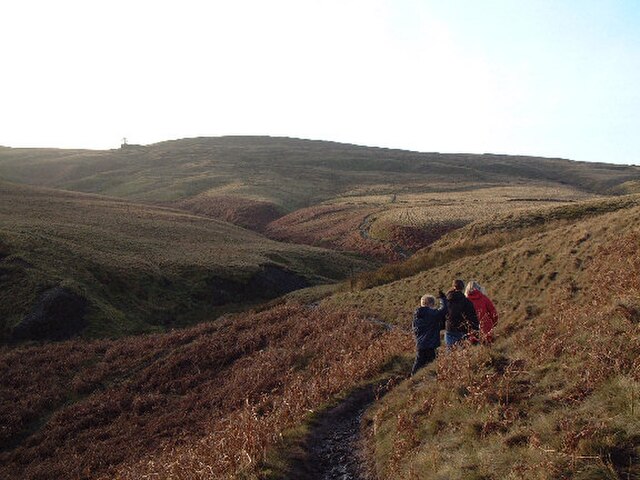
Even before her novel gained popularity, Brontë’s poetry solidified her name in the world of literary genius. Having grown up on the misty moors of Yorkshire, Brontë and her sister Anne wrote poems and plays about an imaginary world called Gondal, a more interesting and cheerful realm than their own childhood home. Although Charlotte, their elder sister, destroyed most of the Gondal saga, the stories live on in Anne’s and Emily’s journals, where the girls wrote about their made-up characters as if they were real friends in the girls’ lives. When she outgrew Gondal, at around 16 years old, Emily began writing the poetry that Charlotte eventually published together with her sisters’ works in a collection wntitled Poems by Currer, Ellis, and Acton Bell (1846). This time, instead of happily fantastical stories, Brontë’s poetry was dark and solemn, and often featured reflective depictions of the natural world.
One untitled poem, featured below, displays Brontë’s ability to depict nature in exquisite detail while telling a story through an unmistakably human perspective.
Tell me tell me smiling child
What the past is like to thee?
An Autumn evening soft and mild
With a wind that sighs mournfully
Tell me what is the present hour?
A green and flowery spray
Where a young bird sits gathering its power
To mount and fly away
And what is the future happy one?
A sea beneath a cloudless sun.
A mighty glorious dazzling sea
Stretching into infinity
Wuthering Heights, set in the English moors that Brontë knew so well, contains both the eerily solemn mood and the immersive natural descriptions that the author explored in her poetry. The environment around the Heights estate is critically renowned for serving as more than a background for the tale, but being alive as if a character in itself. This dark, fantastical tone that defines the original Wuthering Heights is one element that Fennell’s new adaptation nails perfectly. Through elaborate set design, the director incorporates the mood of the moors into her adaptation, allowing the ecosystem to shift alongside the characters’ struggles. Moreover, Fennell’s version inspects the same radical, society-defying themes that Brontë introduced two centuries ago.
However, despite unmistakable similarities, Fennell herself admitted to Fandango, “You can’t adapt a book as dense and complicated and difficult as this book. I can’t say I’m making Wuthering Heights. It’s not possible.” Some of Fennell’s most obvious changes are the complete omission of the second generation — Catherine’s daughter Cathy, and nephews, Hareton and Linton — as well as Catherine’s older brother, Hindley; the decision to make Catherine blond and to cast Heathcliff as white (played by Jacob Elordi) rather than dark-skinned; and the inclusion of many explicit love scenes between the two protagonists. It seems as though the director’s justification for these alterations was mostly a lack of adequate time to explore the story in its entirety and a desire to imagine her own additions.
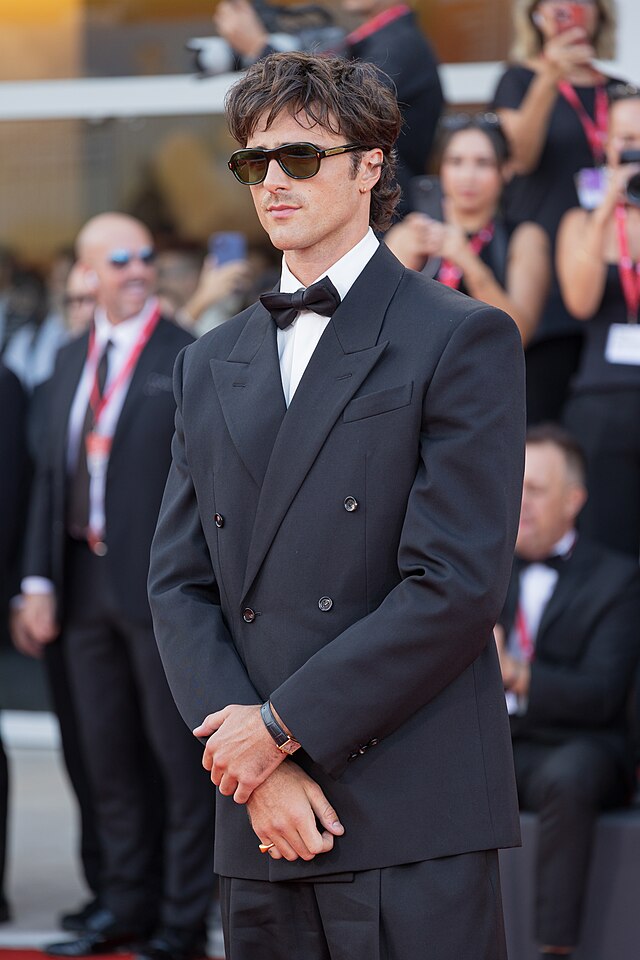
(Photo Credit: LucaFazPhoto, CC BY-SA 4.0 <https://creativecommons.org/licenses/by-sa/4.0>, via Wikimedia Commons)
Although many fans are upset about the changes, when I viewed the film, I interpreted them differently. Many scenes in the movie that star Catherine and Heathcliff alone are scenes that, in Brontë’s novel, occurred between Cathy (the second) and Hareton — the lovers’ parallels in the next generation. One of these scenes — Catherine teaching Heathcliff how to read and the latter becoming annoyed and frustrated — struck me, as it had precise literary accuracy to an entirely different passage of the book. Moreover, Catherine’s striking blond hair and gorgeous appearance match Brontë’s descriptions of the second Catherine, while Heathcliff’s pale skin and presumably European descent match Hareton’s ethnicity and not Heathcliff’s. I interpreted the film as a combination of the two sections in Brontë’s novel; a rendering of one of Fennell’s favorite classics working within modern restraints. Instead of depicting the abuse cycle in two parts, Fennell incorporated the characters into each other, creating a constrained yet entertaining abridged rendition.
Some of these changes simply make the film more palatable to a modern audience: for example, instead of killing Isabella Linton’s dog in a passionate rage, Heathcliff ensnares Isabella in a toxic, lustful relationship where she deigns herself to crawl on all fours like a dog with a collar and chain in his hand. Though disturbing, this scene changes the way viewers perceive Heathcliff’s character from a brutal, convoluted villain to a tortured lover.
The vibe that Fennell created, working alongside talented actors, set designers, and pop artists, was born of her imagination and modeled on the imagination of an equally radical Victorian-era visionary. The gruesome, surrealist imagery invoked by the film marks a societal shift: modern audiences want to watch things that make us feel uncomfortable. This is why, despite the controversy around Fennell’s choices, I believe that her adaptation will go down in history as an important literary cinematization and societal critique.
Instead, the violent brutality and obsessive tendencies in the characters Brontë brought to life gave her story an almost masculine bluntness, and reified the fear of women writers depreciating their own femininity.