
Scientific discovery rarely begins with a breakthrough. More often, it starts with a question. At Bronx Science, students learn that research is not about quickly arriving at the “right” solution, but about learning to navigate uncertainty while pursuing discoveries that extend beyond the classroom and improve lives.
Each year, the Regeneron Science Talent Search (STS) recognizes high school seniors who embody that spirit of inquiry. Widely regarded as the nation’s oldest and most prestigious science and mathematics competition for high school seniors, the program honors original research that demonstrates intellectual rigor, creativity, and real-world significance.
Administered by the Society for Science, a nonprofit founded in 1921 to promote scientific literacy and expand access to STEM education, the Regeneron Science Talent Search represents a century-long effort to cultivate scientific curiosity, empowering young researchers to contribute meaningfully to society. At Bronx Science, where a rigorous three-year research program makes independent inquiry central to the academic experience, this recognition continues a longstanding tradition of innovation and discovery.
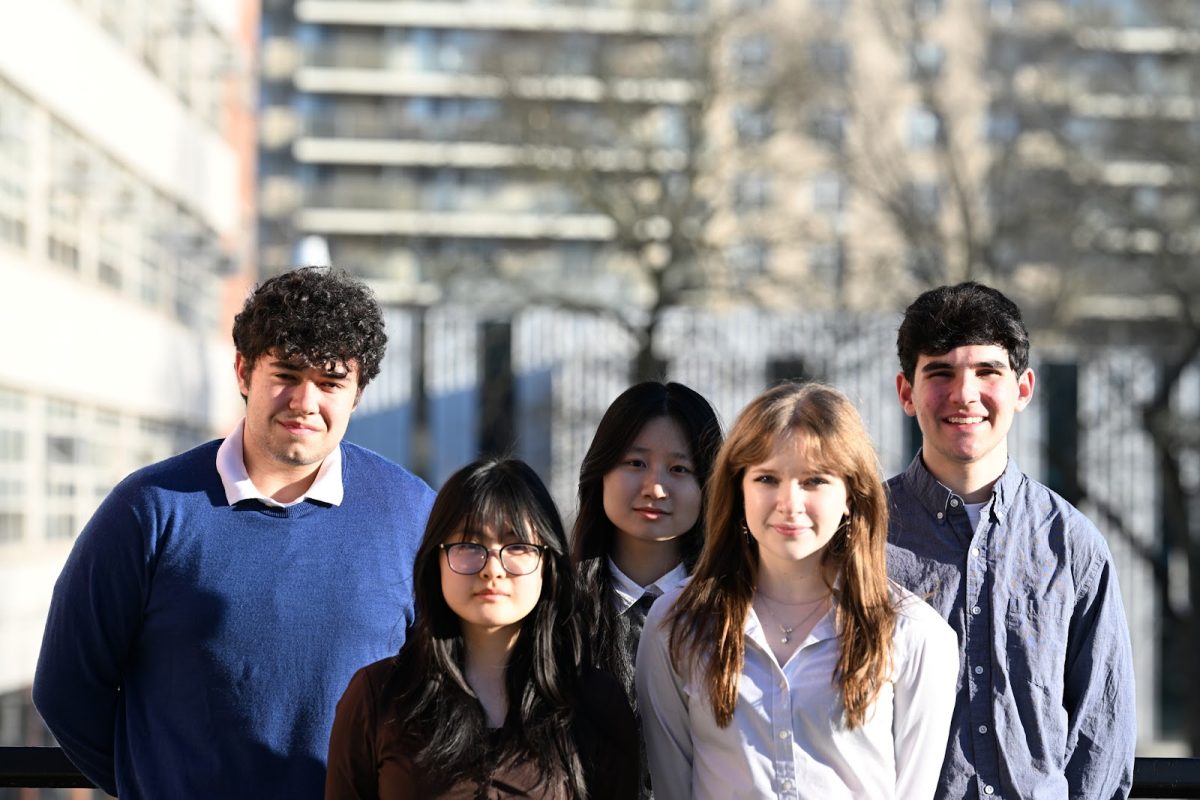
On January 7th, 2026, the Society for Science announced this year’s 300 scholars, selected from more than 2,600 applicants nationwide. Each scholar and their school received a $2,000 award in recognition of their achievement. Among this year’s scholars are five seniors from Bronx Science — Liah Igel ’26, Aaron Krasinski ’26, Sam Land ’26, Helen Lin ’26, and Xi Zhen Wu ’26 — whose research reflects not only scientific achievement, but a commitment to addressing complex challenges across medicine, neuroscience, spaceflight, and public health.
Behind each Regeneron submission are years of sustained exploration. Projects often span one to three years and demand persistence, independence, and intellectual growth. Dr. Vladimir Shapovalov, a mathematics and computer science research teacher who had two students recognized as 2026 Regeneron Scholars, described the work as fundamentally “student-driven,” guided through questioning rather than direct instruction.
The structure of the Bronx Science program in particular encourages teachers to work closely with students over multiple years, enabling them to witness both the intellectual and personal development of their students. Dr. Shapovalov described Krasinski as “a visionary” and highlighted Land’s compassion for patients. Dr. O’Leary commended Igel’s ingenuity and attention to detail throughout her research journey.
Dr. Khaled Mahmoud, Biology Research teacher and advisor to Wu, emphasized that students are evaluated not only on results, but on how they refine questions, troubleshoot setbacks, and grow as thinkers. Through the process, students learn to engage with scientific literature, collaborate with professional mentors, and take ownership of their ideas.
Although the scholars’ projects span diverse scientific fields, each project is driven by the same goal: using science to better understand the world and improve the lives of others.
Aaron Krasinski’s project is entitled ‘A Novel Deep Learning Approach to the Health Crisis of Industrial Production in Space: Neural Network Classification and Glymphatic Biomarker Analysis of Spaceflight Associated Neuro-Ocular Syndrome for Pre-Flight Crew Screening.’
His research in spaceflight medicine addresses a critical challenge in long-duration space missions. Astronauts on extended flights often develop Spaceflight Associated Neuro-Ocular Syndrome (SANS), a condition that impairs one’s vision and threatens mission safety. Krasinski developed an artificial intelligence model that analyzes brain imaging biomarkers to predict which astronauts may be susceptible before they leave Earth.
By identifying structural differences in the brain’s glymphatic system — a system responsible for clearing waste and regulating fluid balance — his model achieved 89 percent predictive accuracy. The findings could help NASA improve astronaut screening and develop preventative medical treatments, a critical step as space agencies plan missions to the Moon and Mars.
Krasinski, who initially found it intimidating to work alongside NASA researchers and doctors, said the experience taught him to navigate both complex technical challenges and the ethical responsibilities of medical AI. He described the recognition as validation that his ideas could withstand expert scrutiny and contribute to real-world solutions.
Sam Land’s project is entitled ‘Novel Characterization of COMT Gene Polymorphism Effects on Resting-State fMRI Network Segregation: A Breakthrough for Personalized Mental Health Treatment.’
His work in computational neuroscience and genetic data analysis tackles a problem affecting millions worldwide: the variability of mental health treatment outcomes. Despite widespread use of psychiatric medications, up to 40 percent of patients do not respond adequately to initial treatments.
Land investigated whether genetic variations in the COMT gene influence brain network connectivity and treatment responsiveness. Using a dataset of more than 11,000 teenagers, he applied advanced statistical modeling to identify differences in cognitive control and attention networks. His findings suggest that genetic testing may one day guide the curation of personalized mental health treatments, reducing costly trial-and-error approaches and improving care for underserved populations.
Land spent hundreds of hours teaching himself advanced programming and statistical methods. He said the most significant challenge, however, came when his findings appeared to oppose existing theoretical frameworks. His sex-specific findings proved especially striking, as they “directly contradicted what experts in the field had concluded about female brain network organization.” For Land, the experience underscored that scientific research is not simply technical work, but a responsibility to challenge established thinking in order to address society’s needs.
Liah Igel’s project is entitled ‘Human Cell-Based Assay and Mouse Tissue Analysis To Study FSHR Signaling in Parkinson’s Disease.’
Her research bridges endocrinology and neuroscience, exploring whether hormonal signaling may play a role in neurodegeneration. Igel’s project focused on follicle-stimulating hormone (FSH), a reproductive hormone she had previously studied in the context of women’s health, and its potential contribution to Parkinson’s disease.
By developing a human cell-based reporter assay and studying a mouse model of Parkinson’s disease, she demonstrated that exposure to FSH is associated with motor impairment and increased vulnerability of dopaminergic neurons. Her work suggests a previously underexplored neuroendocrine pathway and introduces a tool, the reporter assay, that could be used to evaluate future therapies and investigate FSH biology in a wide range of contexts.

Igel, who spent multiple summers conducting laboratory research, described learning to “be comfortable with uncertainty” as one of the most transformative aspects of the scientific process. Rather than fearing mistakes, she learned to see them as opportunities for discovery.
When Igel learned she had been named a scholar, she felt both gratitude and happiness that her research was being recognized for its urgency and relevance. She hopes that her project contributes to future research in neurodegeneration and women’s health.
Helen Lin’s project is entitled ‘Human Intervertebral Disc Degeneration, Sex and Aging Increase Alpha-1 Antitrypsin Expression in Intervertebral Discs.’
Her work in orthopedics examines the inflammatory mechanisms involved in the degeneration of spinal discs. Spinal discs normally function as “cushions” between bones in humans’ spines, but their degeneration can cause chronic pain and reduced mobility. By analyzing protein expression in human spinal tissue samples, Lin found that levels of the protein alpha-1-antitrypsin were significantly higher in severely degenerated discs than in healthier ones, potentially reflecting the body’s attempt to respond to inflammation and tissue damage. Her findings suggest that immune mechanisms play an important role in disc degeneration and could inform future therapies aimed at slowing disease progression rather than simply treating symptoms and pain.
Lin’s interest in spinal health stems from personal experience with scoliosis and a desire to address conditions that affect millions. She noted that the research process strengthened her ability to communicate complex ideas clearly and sharpened her independent critical thinking skills, particularly when navigating the variability of human tissue samples and identifying patterns across scientific literature.
Xi Zhen Wu’s project is entitled ‘Exploring the Potential of Inhaled Tadalafil Liposomes for Pulmonary Arterial Hypertension.’
Her research focuses on pharmaceutical nanotechnology and improved drug delivery for pulmonary arterial hypertension (PAH), a rare but serious condition affecting blood vessels in the lungs. Current treatments can require excessively frequent dosing and may cause gastrointestinal side effects.
Wu investigated the use of liposome-encapsulated tadalafil for inhalation therapy, testing whether the microscopic lipid structures could deliver medication directly to deep lung tissue. Her findings showed successful deep lung deposition and controlled drug release, suggesting a potential pathway for more efficient treatment with fewer doses and reduced side effects.
Wu described early challenges in mastering specialized laboratory equipment and working through failed trials that often required hours of repeated experimentation. Her recognition as a Regeneron Scholar highlights the broader significance of studying rare conditions, demonstrating how narrowly targeted research generates insights with meaningful medical impact.
Outside the laboratory, the scholars pursue interests that reflect their broader commitments. Krasinski pursues independent engineering projects and mentors peers through Science Olympiad; Land leads robotics and machine learning initiatives while teaching students programming and design; Igel serves as Editor-in-Chief of The Science Survey and teaches chess; Lin volunteers extensively in healthcare settings and environmental education; and Wu volunteers at a hospital and practices Taekwondo while supporting English language learners. Together, these pursuits reflect a shared desire to apply scientific thinking beyond research and contribute meaningfully to their communities.
The Regeneron Science Talent Search honors scientific excellence, but its deeper significance lies in the habits of mind it cultivates: curiosity, resilience, ethical responsibility, and a commitment to improving human life. As the Bronx Science Class of 2026 scholars prepare to continue their work in college and beyond, they carry forward not only the skills of research but the understanding that science is, at its core, an act of service: a way of asking better questions in order to build a better world.
On January 7th, 2026, the Society for Science announced this year’s 300 scholars, selected from more than 2,600 applicants nationwide. Each scholar and their school receives a $2,000 award in recognition of their achievement. Among this year’s scholars are five seniors from Bronx Science — Liah Igel ’26, Aaron Krasinski ’26, Sam Land ’26, Helen Lin ’26, and Xi Zhen Wu ’26 — whose research reflects not only scientific achievement, but a commitment to addressing complex challenges across medicine, neuroscience, spaceflight, and public health.