

When I asked my cousin, Amina Mimoune, a neurologist practicing in Algeria, how she would explain the menstrual cycle to someone outside clinical medicine, she paused. This was not because the answer was complicated, but because it had been oversimplified for decades. “The problem,” she said, “is that people still think of hormones as background noise rather than as active signals.” In neurology, she explained, nothing meaningful happens without signaling, and the brain is no exception. Hormones function less like distant messengers and more like conductors, continuously modulating the tempo and coordination of neural activity. To treat them as incidental is to misunderstand how the brain maintains coherence over time.
Across roughly thirty days, hormonal concentrations fluctuate in a pattern that is both predictable and biologically consequential. Estrogen and progesterone do not operate only within the reproductive system. They bind to receptors distributed throughout the brain, modulating neurotransmitter systems that shape learning, emotional regulation, and stress response. Over the course of a menstrual cycle, neural circuits undergo subtle reorganization, shifting cognitive emphasis. This process is gradual and cyclical, unfolding beneath conscious awareness, yet it meaningfully alters how information is processed and prioritized.
Estrogen is often the most discussed hormone in this process, and for good reason. Evidence shows that rising estrogen levels are associated with increased synaptic density (and therefore increased cognitive function) in regions such as the hippocampus and prefrontal cortex, areas central to memory formation and executive functioning (Barth et al., 2015). When estrogen peaks, studies consistently report improvements in learning efficiency and social attunement (Barth et al., 2015). These changes rarely announce themselves dramatically, appearing, rather, as a sense of cognitive ease, when information connects more readily and communication feels less effortful. Tasks that require flexible thinking, like a change in plans or a deadline, often feel less resistant. The brain, during these phases, is biased toward integration and outward engagement.
This does not imply that estrogen produces a universally superior cognitive state. It more so reflects a shift in which certain capacities are more accessible. Neuroscience increasingly emphasizes that cognition is not a single faculty, but a collection of processes that are differentially recruited depending on internal conditions. Estrogen doesn’t alter intelligence necessarily, but the weighing of mental resources. The same individual moves through these shifts without losing continuity, even as emphasis changes.
Progesterone alters this landscape in a quieter, but equally significant way. By interacting with GABA receptors (protein structures in the brain that bind with the primary neurotransmitter responsible for calming neural activity), progesterone shifts the brain toward inhibitory processing, increasing sensitivity to stress and fatigue while slowing certain forms of cognitive output (Barth et al., 2015). Mimoune was careful to push back against the idea that this phase represents decline. “In neurology,” she said, “slower does not mean worse. It means the brain is prioritizing different information.” According to her, progesterone’s dominant phases often heighten emotional awareness and internal monitoring, capacities that tend to be undervalued in environments that reward speed over reflection. Rather than optimizing for rapid output, the brain may be optimizing for regulation, consolidation, and error detection.

These shifts feel disorienting, precisely because they do not align with how performance is typically measured. Modern academic and professional systems reward consistency of output more than appropriateness of response. The expectation is not only that individuals perform well, but that they also perform consistently at all times. Neurological reality does not support that assumption. For women, cognition does not fracture or disappear. It recalibrates in response to internal biological cues, often in ways that clash with rigid expectations of productivity and efficiency.
This recalibration often becomes noticeable long before it is understood. Iris Auyeung ’26, a student at Bronx Science, described recognizing patterns in her academic experience without having language or explanation for them. “There are times when everything feels mentally organized,” she said, “and other times when the same workload feels heavier even though nothing changed.” The material was familiar and the expectations were constant. But what varied was her internal state. Learning about the neurological effects of hormones reframed that experience. What feels like inconsistency can be justified by physiology responding to internal cues, rather than a lapse in discipline or focus. For her, the explanation offered clarity and comfort rather than an excuse.
Such experiences are often dismissed because they do not fit prevailing models of cognition. Educational psychology has historically emphasized stable traits and averaged performance. Hormonal variation complicates that framework by introducing predictable but nonuniform change. When these dynamics are ignored, individuals are left to interpret biological signals as personal shortcomings. Knowledge does not eliminate fluctuation, but it alters how fluctuation is understood.
Scientific literature increasingly supports that interpretation. A comprehensive review published in Physiology and Behavior emphasized that hormonal fluctuations actively reshape neural networks across the menstrual cycle rather than introducing random variability (Barth et al., 2015). The authors argued that excluding hormonal dynamics from cognitive models leads to incomplete conclusions about how the brain functions over time. In this context, variability is not a flaw in the system but a feature of how cognition adapts. Treating it as irrelevant noise obscures meaningful structure.
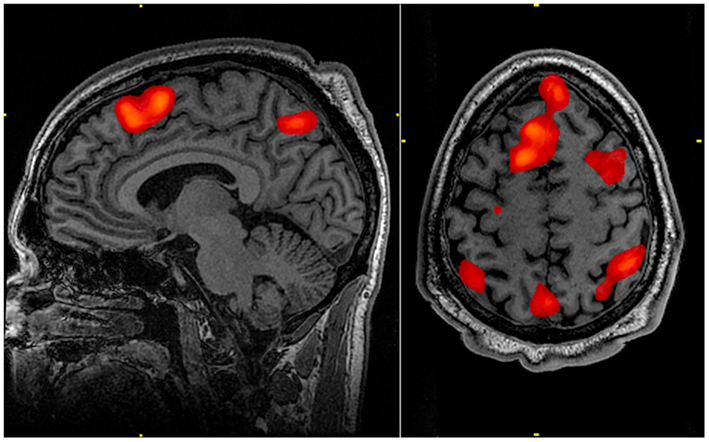
More recent research strengthens this position. A 2024 study published in Nature Mental Health used high resolution brain imaging to track structural and functional changes across menstrual phases (Pritschet et al., 2024). Researchers observed consistent shifts in brain connectivity associated with estrogen levels, particularly in regions involved in emotional regulation and cognitive control. These changes followed repeatable patterns across cycles, suggesting cyclical neuroplasticity rather than instability. Importantly, the magnitude of these shifts was comparable to changes observed in response to learning or environmental stress, reinforcing their biological significance.
When I asked Mimoune why these findings have been slow to enter public understanding, she pointed to history rather than biology. For decades, women were excluded from neurological research because hormonal cycles were treated as confounding variables. Male physiology became the default model of stability, not because it was “neutral,” but because it was simpler to study. “If stability is defined too narrowly,” she said, “anything rhythmic looks like disruption.” Neuroscience is now in the process of correcting that assumption, but institutional habits change slowly.
The cultural implications of that correction are significant. Hormonal change has long been framed as volatility or unreliability, a narrative that data does not support. What research reveals instead is a system designed for flexibility, one that distributes cognitive strengths across time rather than concentrating them into a single mode. Identity remains continuous, even as emphasis shifts. What changes is not who a person is, but which cognitive tools are foregrounded.
Understanding this matters because interpretation shapes experience. Without context, physiological variation is easily misread as weakness or failure and becomes intelligible. For students, this knowledge can reduce self doubt. For medicine, it offers a more accurate framework for understanding mental health across hormonal cycles, including how vulnerability and resilience fluctuate over time. Precision in explanation can prevent misattribution of symptoms and expectations.
Importantly, acknowledging biological variation does not impose limits. Historically, ignoring hormonal influence has constrained women by holding them to standards derived from male physiology and treating deviation as deficiency. Incorporating this science expands the definition of normal rather than narrowing it. As Mimoune put it, “Explaining a system does not excuse it. It respects it.” Respect, in this sense, means allowing biology to inform interpretation, rather than forcing bodies to conform to abstract ideals of constancy.
What this research ultimately challenges is not how women are understood, but how cognition itself is defined. If mental function is measured only by consistency, then any system built on modulation will appear deficient. The menstrual cycle exposes that flaw. It reveals a brain optimized not for sameness, but for responsiveness, one that treats change as information rather than error.
Estrogen doesn’t alter intelligence necessarily, but the weighing of mental resources.