

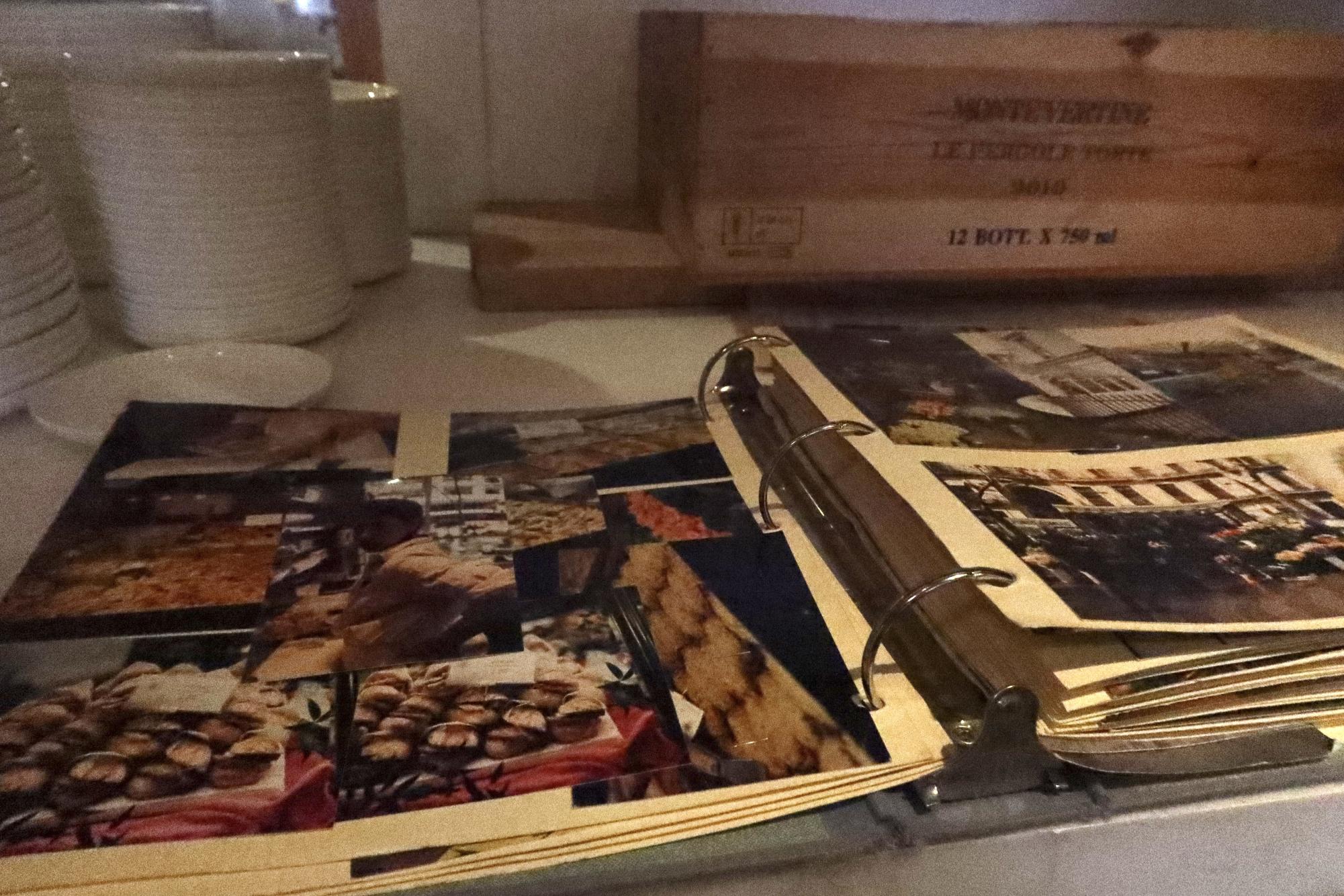
For Eli Zabar, a celebrated figure in the New York food industry, starting a business begins not with a mission statement or defining a target audience; instead, it begins with a scrapbook.
While we are standing in one of his restaurants, ‘Eli’s Table,’ Zabar pulls out a large scrapbook that is colored a deep shade of brown. He flips it open without preamble, revealing hundreds of aged photographs where flowers spill out from storefronts, eggs are stacked together in large baskets, and photos of architecture–arches, crown molding, and tile floors–are scattered across the book.
“If I hadn’t done food,” Zabar said to me, “I would’ve been a builder.” And in a way, he is. Zabar has the mind of a builder; from the ground up, each step is outlined, researched, and only after careful consideration is it implemented–with purpose.
Take 80th Street and 3rd Avenue, home to three of Zabar’s stores: Eli’s Market, Eli’s Flowers, and Eli’s Tables.
Each store has a commanding presence, and it all comes from their design. For a passerby, traveling from 79th to 80th Street, Eli’s Flowers immediately catches the eye; as many as half of the flowers and herbs being sold are arranged outside the store, in a cascade-like effect that is both meticulous and overflowing. This overflow, Eli explains, is intentional. He points to photographs of European flower shops in his scrapbook as he speaks, many of them similar in design to his. In planning and designing his stores, Zabar visited many locations in Europe to gather stylistic inspiration. He went around taking pictures of stores, food, and people, in order to develop a vision for what he wanted. Flowers piqued his interest; he took many photos of stores where flowers weren’t tucked away within the folds of the store, but flowed out from the store, inviting customers in.
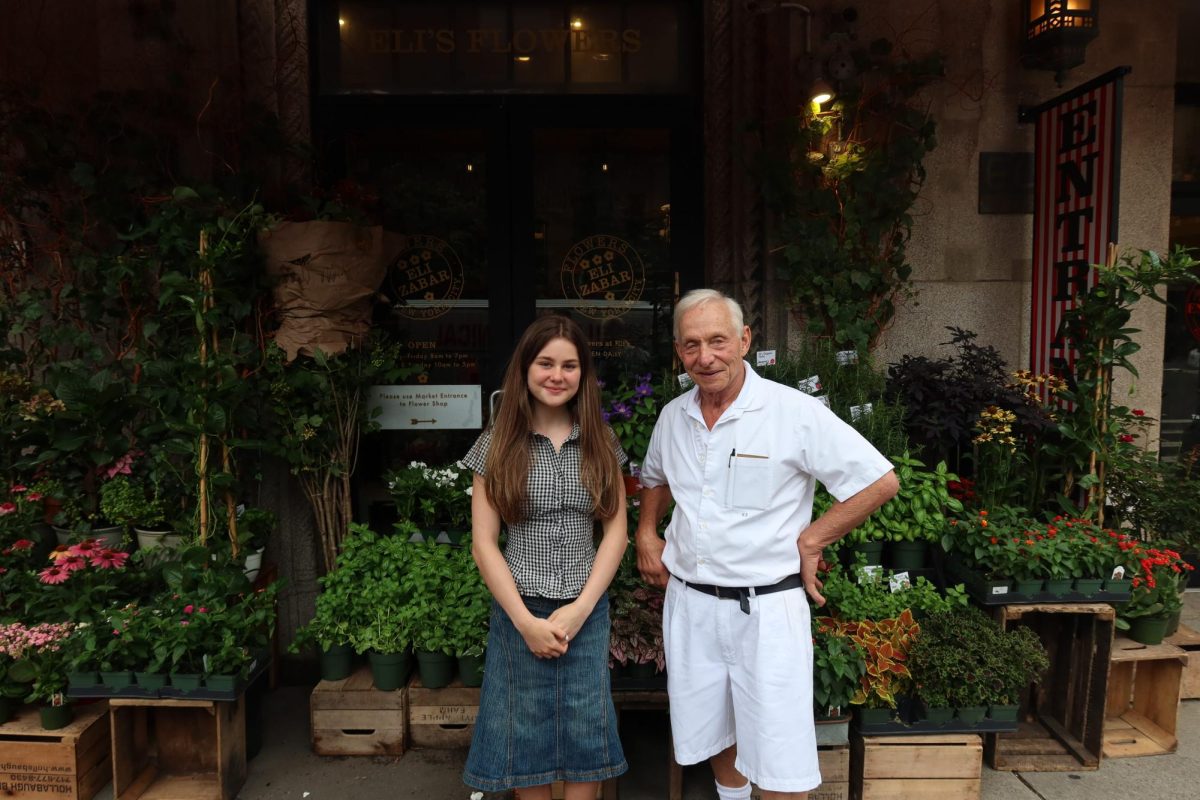
The flowers serve as the hook in Zabar’s stores, drawing customers in. Once they’re inside, Zabar creates an authentic experience that keeps the customer interested–and much of this has nothing to do with food.
It is the experience around the food that truly makes the difference. Say that Zabar still made the same food, but he sold it in a different location. This location has dirty windows filled with aged decals and the lights are dim. Would you be as keen to walk inside? Likely you would not.
Contrast this with Eli Zabar’s stores. Green produce indicates freshness, and from the outside, you can see the people working inside, smiling. The lights are warm and inviting, and they create a cozy atmosphere. Immediately, you feel safer walking in, and allow the enveloping experience to lift your spirits.
If you ever find yourself near Eli’s Table, look down. On the ground there is an intricate mosaic of tiles, fitting in perfectly with the atmosphere of the restaurant. “This floor,” Zabar said, pointing down, “this floor you can find in Venice.” Many of Zabar’s stylistic inspirations, including this floor, came from Europe.
The arches in Eli’s Market were also inspired by European architecture–they were inspired by the food markets in regions like Italy and Spain, as shown in his scrapbook. In his store, the curves of the arches are often strategic, used to direct customers through a store, and they help to break up areas of the market for customers.
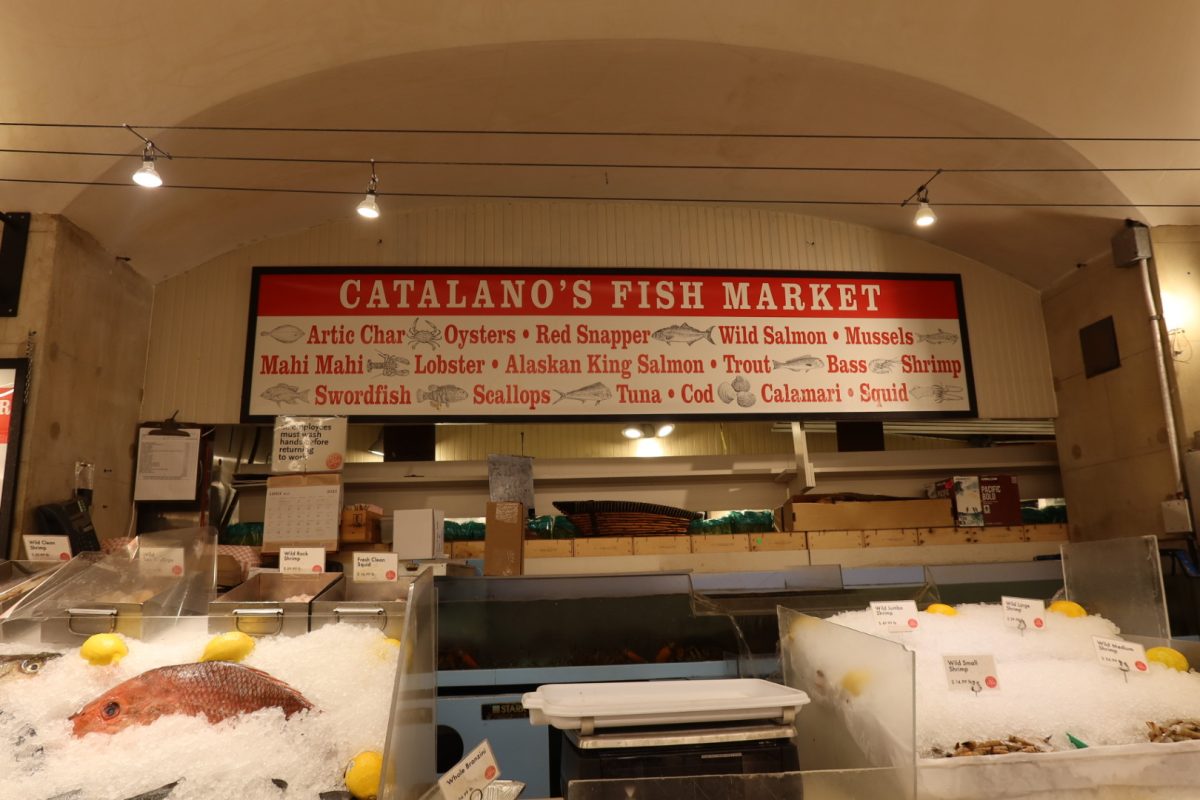
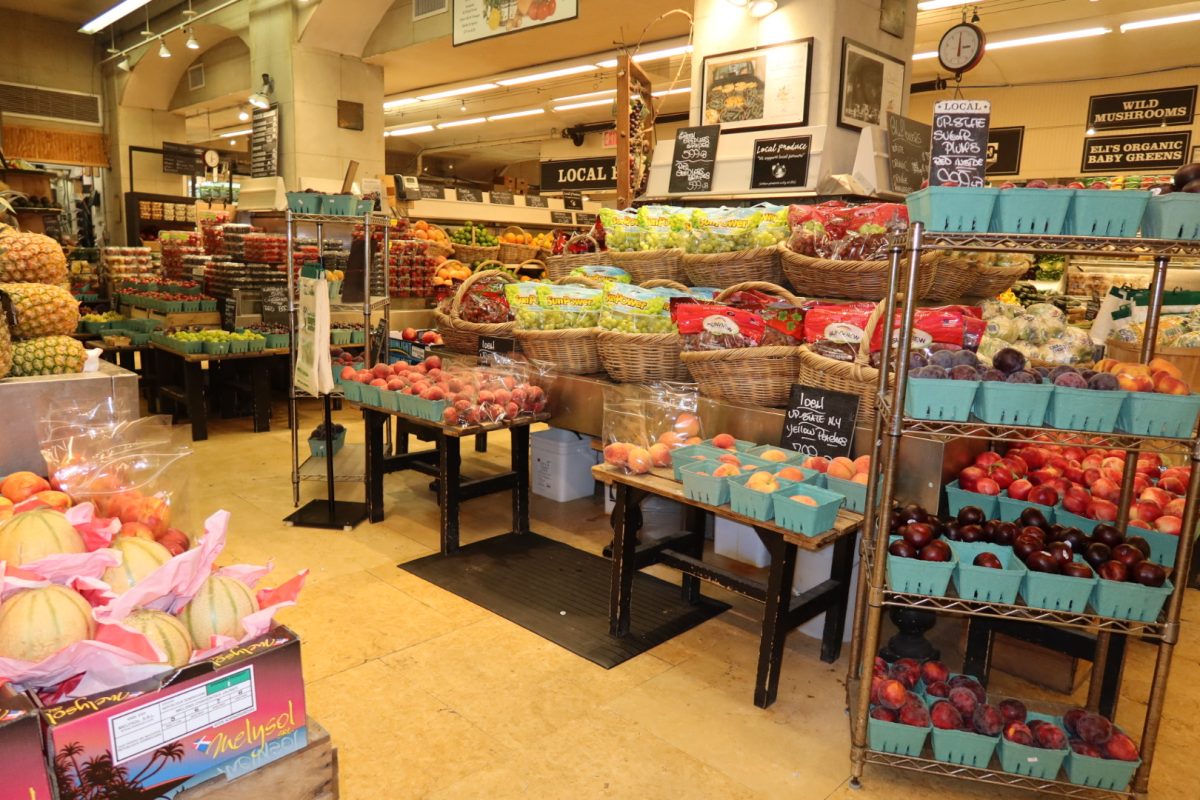
The lower level is an experience within itself. Taking the escalator down from Eli’s Flowers, customers are drawn to an overwhelming display of peaches. “You should run into things like an obstacle course,” Zabar said. It was true–I almost did. All of the aisles were packed with fresh produce.
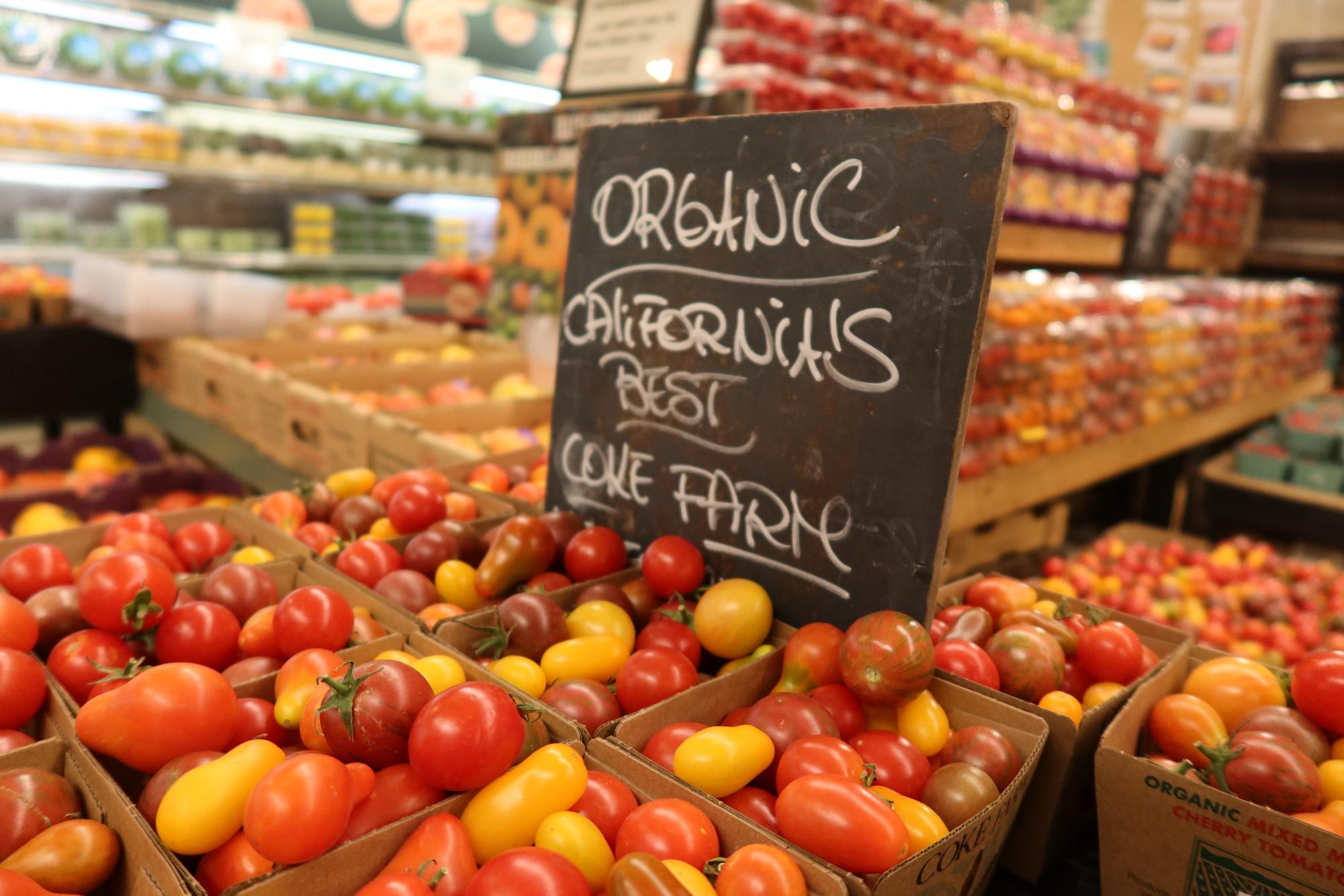
Eli Zabar produces many of his goods himself. In fact, he grows them locally–on New York City rooftops! Zabar established his first rooftop garden in 1995 atop The Vinegar Factory in Manhattan. Now, his rooftop space totals over 22,000 square feet. There, he grows one of his most famous fruits: tomatoes. He is known especially for his heirloom varieties–he grows only the best, he explained. Heirloom tomatoes, though more susceptible to disease than modern ones, have the rare purity that matters to Zabar. Modern tomatoes are a product of breeding various tomato varieties together to create hydride tomatoes–often, ones with desirable traits, as those are the ones that sell best. Zabar takes a different approach by selling heirloom varieties. He graphs “ancient tomatoes onto the root of a modern tomatoes” in order to reduce the risk of disease, but still keep their ‘untouched’ nature. However, they are not perfect. “A tomato has a spot of it?” Zabar shrugs. “So what? You cook it.”
For Zabar, purity and quality outweigh the seeming “perfection” of a modern tomato.
Purity is an idea that Eli Zabar carries through even the smallest details of his stores. In his travels to Europe, Zabar captured many photos of various stores’ displays –particularly of their display of eggs. While in a regular supermarket, eggs are bundled away in cartons of six or 12, the eggs in the European stores were bunched together by the hundreds in baskets. In Eli’s Market, the same technique is incorporated: on the top floor, there is a little basket filled with fresh, white eggs. The customers are able to see, not just buy the eggs. From a business perspective, this is incredibly smart. Walk into almost any grocery store in Manhattan, and you’ll see the same display: cartons of eggs stacked on top of one another. The egg basket in Eli’s Market is visually appealing and sparks curiosity. Why is it there? What is the story of these eggs? This fosters an emotional connection to the good and pushes the customer to keep exploring the “experience.”
As Eli Zabar walks me through the lower level of Eli’s Market, a staff member is wheeling a cart full of brown burlap sacks filled with fresh corn. Zabar stops the cart and pulls out a few of the corn cobs, which are still warm from the cornstalk. He cracks one open and hands me a piece. It is infinitely better than the plastic-wrapped, dry corn you find at a supermarket. At Zabar’s stores, the corn is local, fresh, and unprocessed; it is pure.
Eli Zabar’s success stems from his mindset, which, in his words, is “slightly arrogant.” “I’m right, you’re wrong,” he said. It is the confidence and knowledge with which he approached his business that made it stand out from a regular grocery store. He invented his own rules around what he should do in his store. His success is why I am writing to say that the details matter. Every detail.
In Europe, Zabar noted not just the food or displays, but also the people. While in London, he noted the smart looking uniforms worn by the sales assistants. It was a small note, but even this is reflected in his stores today. All of his staff wear clean, white uniforms. And all of them greet you with a smile. It’s not just about tradition, it is about mood and professionalism. Every customer is cared for, which is a huge part of what makes Zabar’s stores such an incredible experience.
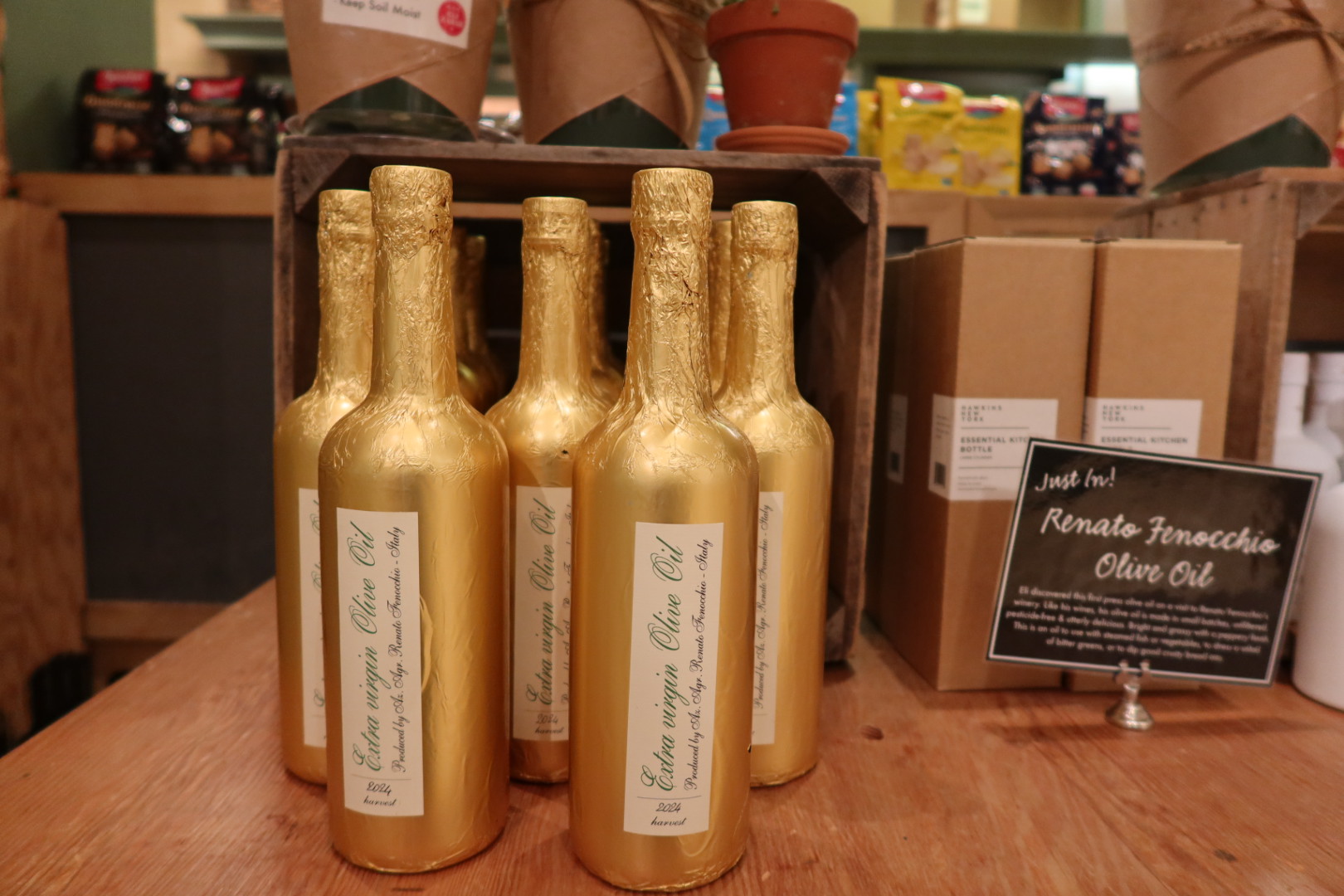
Even the olive oil is cared for. “The enemy of olive oil is light,” Zabar said, pointed to the arrangement of oils wrapped in aluminum foil on a table. “And it hates heat.” While many oils are put in glass bottles and stored away on shelves, Zabar prioritizes quality, even if this means that it looks unusual.
The customers were cared for too. “What is a family of two going to do with a whole cauliflower?” Zabar muses, explaining his reasoning for selling smaller portions of vegetables to his customers.
Ultimately, Zabar’s core values and philosophies can be traced back to a small, worn scrapbook. Filled with adventures, research, and memories, this book represents the first ideas for his business: smiling people, eggs in baskets, and grand arches. Each of these pictures became not just something that could be, but something that became. While many other markets settle to just sell product, Eli Zabar doesn’t settle for simple. He settles for pure. Walking through his markets today is like stepping through the layers of history that built this place up. Purity is tangible in Eli Zabar’s stores, and his scrapbook helped with the plan for creating a distinct and iconic chain of New York institutions.
So, a scrapbook really did start it all.
Eli Zabar’s success stems from his mindset, which, in his words, is “slightly arrogant.” “I’m right, you’re wrong,” he said. It is the confidence and knowledge with which he approached his business that made it stand out from a regular grocery store. He invented his own rules around what he should do in his store. His success is why I am writing to say that the details matter. Every detail.