
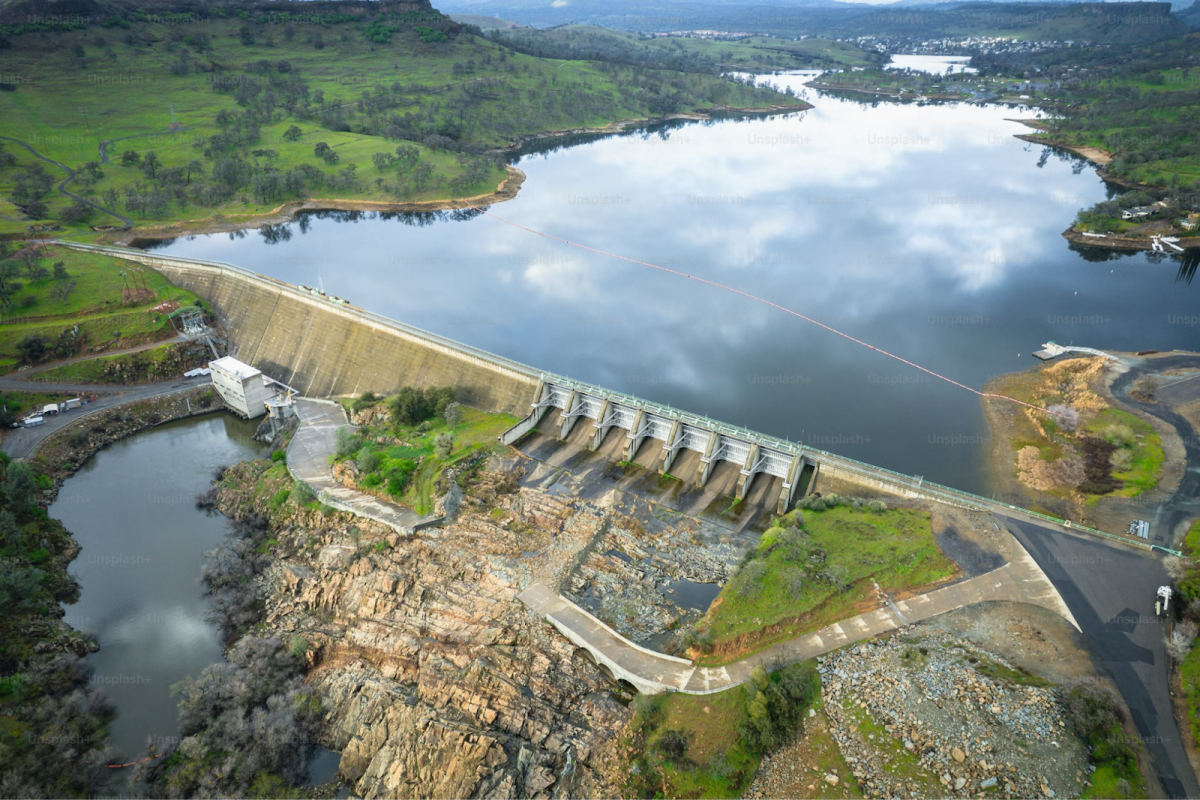
The Grand Ethiopian Renaissance Dam, also known as the GERD, was built in September of 2025 as the largest hydroelectric project in all of Africa. Situated on the Blue Nile river in northeast Ethiopia, the GERD is 170 meters tall and has an energy capacity of 6000 megawatts (MW). For comparison, the average “large dam” has an installed capacity of around 100 to 500 MW.
To put that further into perspective, one singular megawatt of energy can power 1,000 homes. You can do the math.
Dams, barriers constructed across large waterways to control and store water, are extremely common in Africa, playing a crucial role in African energy production and infrastructure. They’re equally prevalent in Asia, specifically in China (which is home to many of the largest dams in the world), and in South America, particularly in Brazil. The rest of the world’s largest dams are located in the United States, Canada, and Russia – three of the most significant global powers of today.
The GERD, which comes in as the 17th largest dam in the world, was no inexpensive project. Dams of this size cost billions of dollars – in this case, $5 billion US dollars – to build. The project was entirely funded by the Ethiopian government and Ethiopian citizens, using methods such as domestic bonds, public fundraising, and salary contributions. All of the money was managed internally by the Commercial Bank of Ethiopia and the Ethiopian Electric Power (EEP) company, who ensured that the capital could sustain the three-year construction period. Historically, one of the greatest factors that has prohibited African countries from large industrial development like this has been a lack of financial resources and investment, which makes the successful construction of the GERD all the more surprising.
Now that the dam is built and actively following through on its functions, multiple issues have emerged. The mechanism is completely owned and operated by the EEP, who is determined to use the resources for Ethiopia’s own benefit. The majority of resources the dam has generated have been put towards addressing Ethiopia’s chronic energy shortages, boosting industrial growth and manufacturing at unprecedented levels. Otherwise, the products of the dam have been exported to nearby countries like Sudan, Djibouti, and Kenya, with the goal of creating reliable foreign exchange in northeast Africa. However, the amount of resources that Ethiopia has shared (versus what they have kept) is un-proportional to the amount of damage the dam has started to cause in these neighboring nations.
As we consider this conflict, it is important to remember that Ethiopia self-funded the GERD. This has had two major implications: one, that the population developed a strong sense of national pride around the dam, and many now believe that the EEP has the sovereign right to manage it and benefit from its resources; and two, that Ethiopia’s neighbors – namely Sudan and Egypt – were never formally consulted about the GERD project when it launched in 2011 (since it is within Ethiopia’s country lines), and it is unclear whether Ethiopia was ever fully honest with either nation about its potential consequences before it was already operating.
It is worth noting that Egypt and Sudan attempted to create terms with Ethiopia for the GERD since the beginning of the project. Third parties – like the United States and the African Union – tried to organize negotiations in the region, but no trilateral agreement was ever reached.
Indeed, over the past decade, the GERD has welcomed a host of problems to the entire region. Each country in Northeast Africa depends on the Nile river for agriculture, drinking water, and industry. It is an integral part of the economy for Sudan and Egypt in particular, who leverage the Nile’s resources in order to attain global influence.
Since the creation of the GERD, these nations have reported that the dam is altering the flow of the water downstream. Egypt claims that this is causing alternating periods of water shortages and flooding, fundamentally changing the Nile’s typical flooding patterns from those that the nation has relied on for thousands of years. These claims were backed up in October of last year, when 1,200 families in Northern Egypt had to be displaced after streets were flooded in the Nile Delta. Egypt’s Ministry of Irrigation promptly attributed this chaos to the GERD, blatantly accusing the EEP of enabling “reckless, unilateral water releases” and engaging in “reckless dam management.” Ethiopia responded to these claims defensively, claiming that these unusual flooding patterns were a result of record monsoon rains.
Another influential factor in Egypt’s frustration is the historical significance of the Nile; multiple treaties have asserted that Egypt has a claim to “historic rights” over the river, though Ethiopia was not consulted during any of these agreements.
Compared to Egypt, Sudan has mixed opinions about the dam: while the GERD is actually regulating the Nile’s intense seasonal flooding and promoting a more regular water flow to the country, greatly improving quality of life and industry in Sudan, the government has expressed anxiety about the dam potentially failing, which would directly impact Sudan before any other nation. Additionally, Sudan has articulated their concerns for their own dam on the Blue Nile, the Roseires Dam, whose infrastructure is at risk for damage with such irregular water flow.
Sudan has also experienced its own fair share of flooding due to the rising water levels in the Blue Nile, which has been documented by citizens on social media through uploaded photos and videos. This content reveals that the flooding is far from manageable, causing major damage to homes and other infrastructure alike (which has also resulted in displaced families).
Although dams have been constructed on the Nile before (i.e. the Aswan High Dam in Egypt, which has a 2100 MW capacity), none can compare to the immense size of the GERD. Sudan and Egypt have pointed out the threats, but the reality is that the GERD’s magnitude provides equally as many opportunities for economic growth as it does opportunities for disaster. As a result, the requests made by both of these governments have not been to deconstruct the dam, but rather to redirect its profits towards the entire region. They have also requested that Ethiopia operate the dam as a collective with other nations in the region.
Sudanese foreign ministry spokesman Mansour Bold spoke directly to this point, publicly stating that “We are encouraging the African countries to put pressure on Addis Ababa to convince it to stop any unilateral measures regarding the dam in order to pave the way for an African solution to this problem.” The “African solution” in question being that the nations resolve the issues on their own, without the influence of uninvolved parties (more on this later). It is clear in Bold’s announcement that Sudan only wants to become involved in the management of the dam, not discard it altogether.
Egypt has been much more aggressive in their confrontation. Besides accusing Ethiopia of reckless behavior, they have claimed that their actions amount to a violation of international law (specifically the principle of equitable utilization). These legal standards for the GERD were established in 2015 under the Declaration of Principles between Sudan, Egypt, and Ethiopia, which is essentially the only agreement the countries made on the matter.
Now, this situation is being handled by external forces, primarily the United States. The hopes for an “African Solution” have faded into a distant dream, as U.S. president Donald Trump has declared that he will restore peace within northeast Africa.
Currently, the U.S. is backing Egypt in the conflict. In January of this year, Trump sent a letter to Egyptian President Abdel Fattah el-Sisi to resume the peace-making they started (and failed to complete) in 2019. Egypt actually announced their positive relationship with the United States in a statement long before Trump’s letter, stating: “Egypt reaffirms its support for President Trump’s vision of establishing just peace, security, and stability for all countries in the region and around the world.”
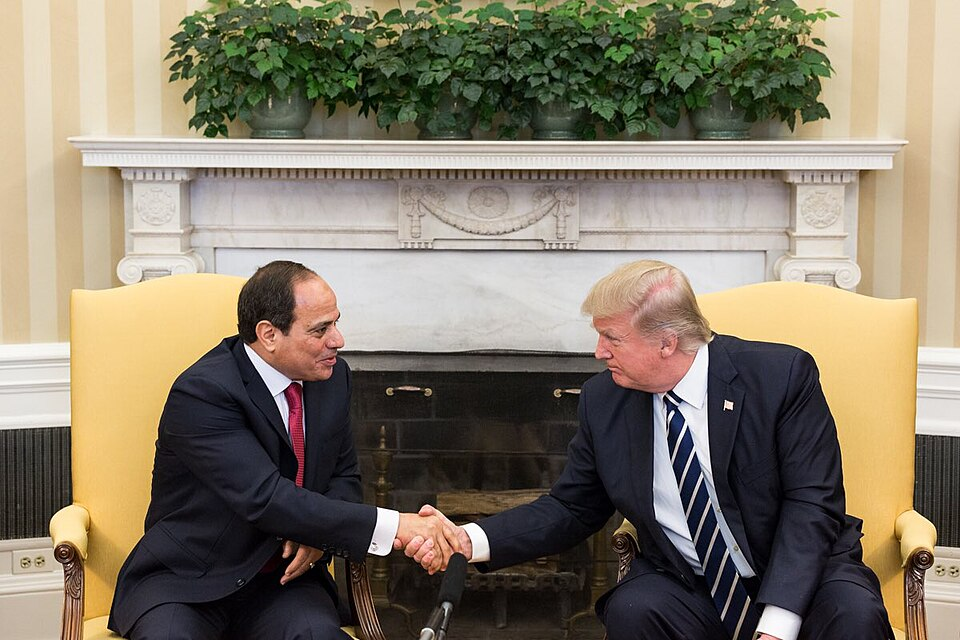
The restoration of U.S.-Egyptian ties did not come as a shock. When Biden came into office in 2020, he also tried to address the GERD issue. Success seemed within reach in the U.S.-Africa Leaders’ Summit in 2022, but the proposed agreement fell through after Egypt backed out, allegedly in hopes that they could get a more profitable deal if Trump returned to office. Clearly, their decision worked out.
Together, the two nations have begun to pose greater threats than ever before towards Ethiopia, including that of using military force to destroy the GERD. The Sudanese government has recently been very welcoming towards American support, partially because they do not want to risk any strain on their relationship with Egypt.
As of now, Sudan and Egypt are only demanding that Ethiopia finally agree to a legally-binding agreement about dam operations. In response, the Ethiopian government is only growing more hostile, frustrated by Trump’s bias when he claims to only want “peace”.
Though the possibilities for peace in the near future are slim, it is unlikely that the conflict will escalate much further than its current state. Despite how the GERD is capable of impacting both Sudan and Egypt, it is well within Ethiopian territory and difficult to strike from outside. Even if another nation were willing to take this risk, none of the African countries involved can currently afford a war of that magnitude, especially if the dam is destroyed (which would cause catastrophic flooding all along the Nile). Additionally, no one in this region wants to risk significant damage to the Nile, which continues to be their most valuable asset.
In a time where chaos is common and fervent, what is most important is ensuring that diplomatic disagreements do not escalate into violence. It seems as though the United States–although it claims to be a “peacemaker” – is feeding into Egypt’s most aggressive ambitions, and not actually making an effort to push mutually beneficial agreements with Ethiopia. What needs to happen is more direct, focused conversation between the leaders of each country, giving Egypt and Sudan ample opportunities to articulate grievances and offer suggestions for solutions. Discussions that are patient, honest, and inclusive are where progress begins. Ethiopia will continue playing on the defensive so long as the U.S. keeps up its biased involvement– they want a true “African solution”.
The GERD has significant potential to promote economic growth within the Northeast. If these nations cannot find common ground amongst themselves, they risk letting go of life-altering opportunities not just for the economy at large, but for each individual member of their populations.
Since the creation of the GERD, [Sudan and Egypt] have reported that the dam is altering the flow of the water downstream. Egypt claims that this is causing alternating periods of water shortages and flooding, fundamentally changing the Nile’s typical flooding patterns from those that the nation has relied on for thousands of years.