
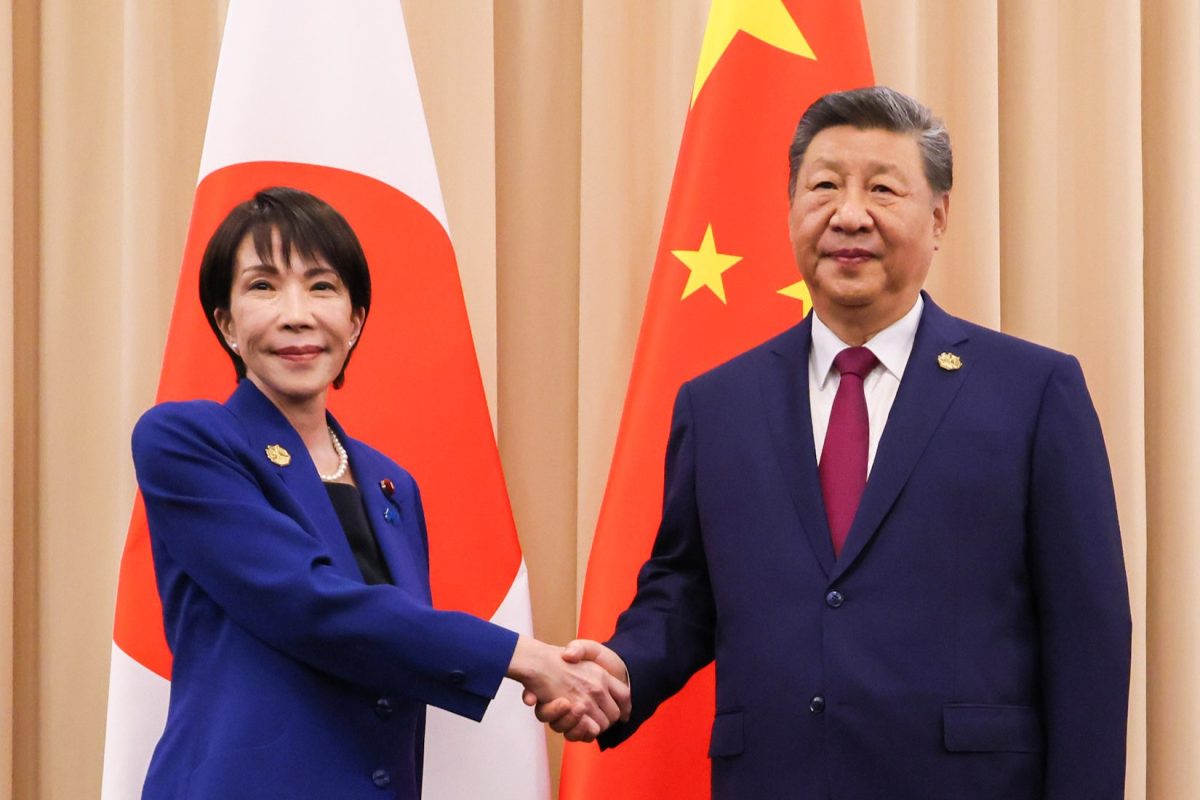
At the Asia-Pacific Economic Cooperation (APEC) Economic Leaders’ Meeting in Gyeongju, South Korea, on October 31st, 2025, the new Japanese prime minister, Sanae Takaichi, was seen shaking hands with China’s president, Xi Jinping, an act of respect rarely expressed by the rival countries.
However, that sense of camaraderie between the two political leaders was short-lived. A few weeks later, Jinping unleashed a storm of backlash against Japan. Takaichi was seen making defensive comments about Taiwan, viewing Taiwan as a self-governing democracy, a very controversial opinion to express. Jingping has always believed that Taiwan should be a part of Chinese territory, creating a constant conflict between Taiwan and China.
Takaichi has suggested that her country could intervene militarily if China makes a move to seize Taiwan, which is 70 miles away from Japanese territory, in an area vital for Japan’s economic survival due to shipping lanes. China’s U.N Ambassador Fu Cong commented, “if Japan dares to attempt an armed intervention in the cross-Strait situation, it would be an act of aggression,” following the statement with, “China will resolutely exercise its right of self-defense under the UN Charter and international law and firmly defend its sovereignty and territorial integrity.” With these remarks, it is extremely clear what China’s stance is on the vendetta and the sacrifices they are willing to make for their beliefs on Taiwan’s position as a part of China.

This comment made by Takaichi was claimed to “not be a change in government policy,” but rather to view China’s efforts in the use of force and warships as an existential threat that Japan might need to act on. However, China’s foreign ministry had remained unsatisfied with that reason, claiming that Takaichi had remained unashamed. Takaichi had broken the precedent of strategic opaqueness when it comes to their intentions in political matters. This could potentially put them at risk for further retaliation from China. The question is whether Japan would eventually regret making the initial comments about Taiwan.
Along with the military dangers brought by these threats, Japan could face many financial issues as well. China actually has an extreme impact on Japan’s economy. With the comments made by Takaichi, the Chinese government has urged citizens to stop visiting Japan and warned Chinese students studying in Japan of the risk of staying there. This decline will lower Japan’s tourism by 20-25% of all international tourists (about 7-8 million people annually). China has also threatened to restrict imports of Japanese seafood, while also dispatching Coast Guard ships to patrol near the uninhabited islands, known as Diaoyu in China and Senkaku in Japan, which both of the nations claim to control.
The wave of reprisals sent by China had made Japan “sit in submission,” showing off China’s confidence as a powerful nation. A blog posted by someone affiliated with China’s state broadcaster had stated issues, such as how China had defeated Japan in World War II, even when China was considerably more economically disadvantaged than it is currently. Due to these comments, Japan is concerned, sending a senior diplomat to Beijing in response to meet with Chinese officials and discuss the tensions the nations are experiencing.
The aggressive approach is not only affecting Japan; China is also facing retaliation from the public, as they were accused of “bullying” by a multitude of commentators and analysts, which also made other nations aware of China’s attempts at economic coercion and their growing assertiveness. A social media post made by a Chinese diplomat, which stated that Takaichi should be beheaded, was quickly deleted, causing widespread public criticism. Other media outlets had accused Ms. Takaichi of attempting to remilitarize Japanese society after maintaining a pacifist constitution ever since the end of World War II, while China’s Foreign Ministry announced that China’s premier, Li Qiang, would not meet Ms. Takaichi at a Group of 20 summit.
A poll published by Kyodo News has shown that 49 percent of respondents would support Japan if it militarily intervened over the issue of Taiwan, in contrast to 42 percent who expressed resistance to the idea. With these statistics in mind, it becomes clear how this division in opinions might prompt China to push Japan even further in its efforts to achieve its objectives, namely, for Japan to cease interfering with Taiwan and accept the “one-China principle.” This means that Japan would not be able to support Taiwanese independence, use economic pressure, diplomatic isolation, and military signaling to force Tokyo’s compliance.
However, it is believed that the tensions between Japan and China stem from a much deeper historical context than the situation on Taiwan. The Nanjing massacre, one of many feuds China faced in World War II, occurred in 1937. Hundreds of thousands of people, both citizens and soldiers, were murdered by the Imperial Japanese Army. Women and girls were also sexually assaulted while the city of Nanjing, the capital of Nationalist China, was left in ruins, which would take decades for the city and its citizens to recover from. With this event, China considers that Japan has never properly apologized for, showing the resentment China has consistently kept with Japan ever since Japan’s imperial rule.
The latest movie released in China supports this idea of grievance and bitterness that China feels about the Nanjing Massacre. The movie ‘Dead to Rights’ is about a postman named A Chang who secretly helped Chinese refugees seek shelter from the Japanese forces, risking his life evacuating them. This movie has gone viral, rousing many Chinese citizens to a standing ovation over the brutality their people have faced in the past, which not only fosters a sense of nationalism but also creates an even greater sense of resentment towards Japan over the issue.
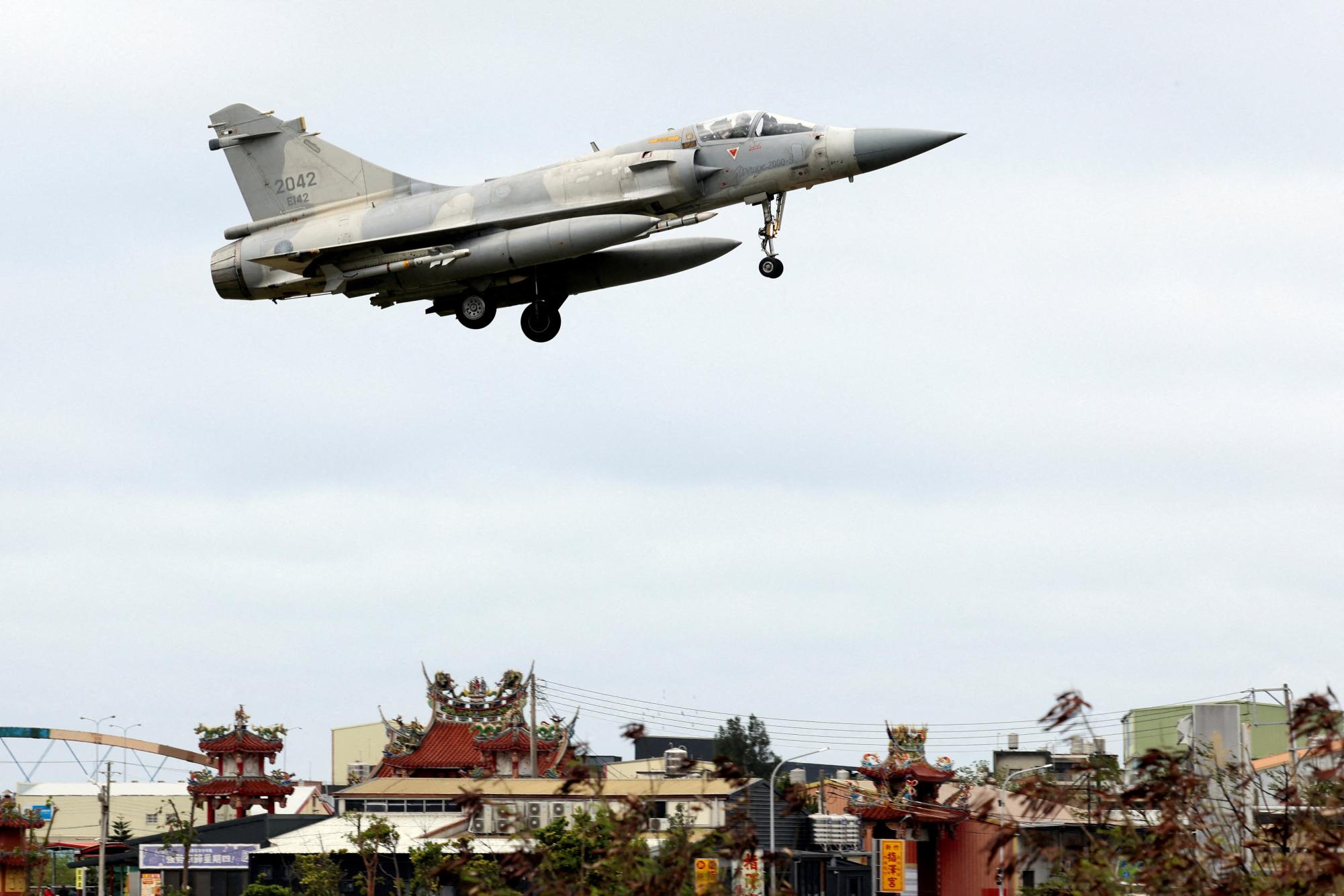
The United States also played an intricate and crucial role in the feud between Japan and China as the 6th Wing of Japan Air Self-Defense Force’s F-15 fighters were seen holding and join military drill with the U.S. B-52 bomber over the Sea of Japan on December 10th, 2025, showing the first sight of the continued alliance between the two nations since the start of the feud. Additionally, the U.S. is known to provide significant arms sales to Taiwan, such as missiles, drones, and artillery, that total up to $11 billion, under the Taiwan Relations Act, allowing Taiwan to be able to provide self-defense to its nation while also helping it to gain strategic ambiguity that aims to deter Chinese invasion. The U.S. has maintained an unofficial relationship with Taiwan on the topic of the nation’s independence, while also acknowledging China’s “One-China” policy, but not showing any endorsement of its sovereignty claims.
Currently, the U.S. is focused on implementing a trade deal agreed on by U.S. President Donald Trump and Mr. Jinping. The Trump administration had not criticized China over the dispute with Japan until the same week of the military drill, when the State Department stated, “China’s actions are not conducive to regional peace and stability.” The State Department also reassured the alliance with Japan by stating,” the U.S.-Japan Alliance is stronger and more united than ever.”
Ultimately, the brief moment of diplomatic warmth between Japan and China has revealed the fragility of their relationship, as Ms. Takaishi’s comments on Taiwan not only create tensions that expose unresolved historical grievances, economic dependencies, and strategic fears. However, it also demonstrates the willingness Japan has to break from strategic ambiguity, which signals its assertive role in East Asian security despite China’s economic pressure, which proves its confidence as a regional power. As nationalism rises on both sides and public opinion hardens, the question is no longer whether Japan will regret its initial comments, but whether either nation can prevent words, history, and economic coercion from escalating into regional instability.
Ultimately, the brief moment of diplomatic warmth between Japan and China has revealed the fragility of their relationship, as Ms. Takaishi’s comments on Taiwan not only create tensions that expose unresolved historical grievances, economic dependencies, and strategic fears.