

After a long, hectic day at work, one who boards the 6 train to Pelham Bay Park is met with the clash between the loud chatter of conversation, the screech of train wheels, and the loud engine of the locomotive. Though it is a jarring discord to someone who has never embarked, it is music to the ears of locals. From late afternoon to midnight hours, there is a hectic group of people conjoined by one desire: to get home. Stop after stop, crowds of people come in and out, creating a claustrophobic atmosphere. It is not until one stop that these crowds dissipate. That stop is Parkchester.
Parkchester, located in the South Bronx, was built in 1938 by the Metropolitan Life Insurance Company. For decades, Parkchester has been a circle of affordability and accessibility, sheltering the low-income and working class. With throngs of stores like Macy’s, Marshalls, Food Town, as well as a plethora of local family owned stores, it was the perfect haven for residents. Up until the pandemic struck.
When COVID-19 first surfaced, it was standard to see stores all over New York City shutting down in the face of slowed business and the rise of online shopping. What we didn’t foresee, or perhaps what we refused to see, was that many stores would not come back the same. The aftermath of the pandemic seemed to serve one purpose to the neighborhood; it had stripped the core of Parkchester.
Dried Out Ink
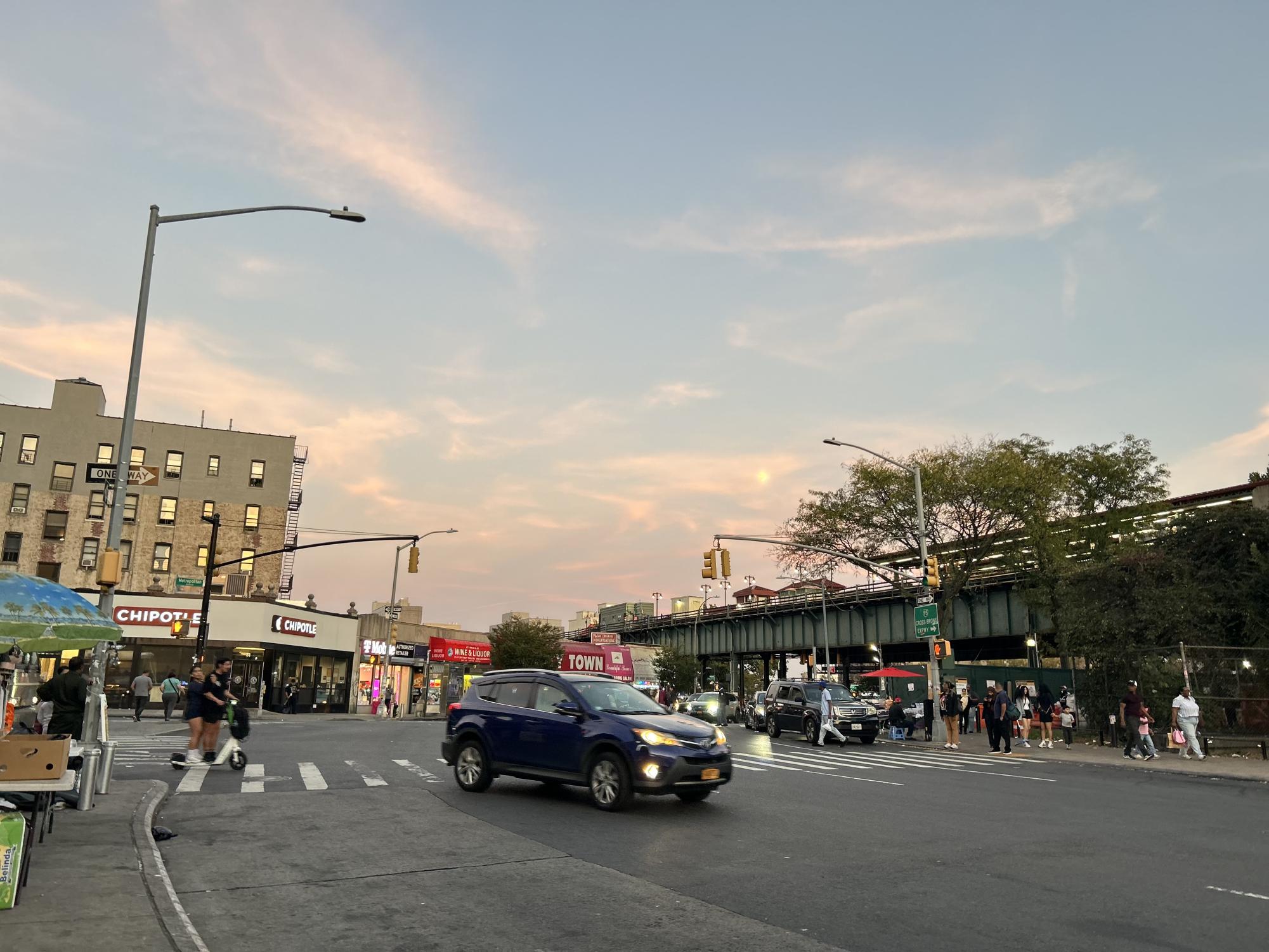
Stepping foot into Parkchester, the air is filled with the whiff of intermixing smells, including the soft delicacy of cakes, the citrusy aromatics of oranges and lemons, and the warm pungent smell of gyros. Food trucks and street vendors follow through streets, and right across are telemarketers dealing phones and iPads. Alongside Metropolitan Avenue, bursts of colors etched by the bright sky illuminate the stores scaling the roads, the green Starbucks marquee, the blue Chase bank, and the red McDonalds sign; the colors feel endless. Treading further, the colors begin to shift, as the orange and pink Dunkin Donuts compete with the blues of Auntie Anne’s. However, they are n match to the black “out of business” sign of the former Kid’s Place, a children’s apparel store, as its windows showcase the lost soul of the torn out walls.
Like legos being taken apart in bits and pieces, Kid’s Place is not the first of clothing stores to go out of business. From Carter’s, to H&M, to Rainbow, many stores have taken their leave from Parkchester, stealing away its former colors. Many of these stores were also family-owned shops and restaurants such as the Day and Night Coviens, a convenience store, which has since been replaced by Chipotle, or Halal Fried Chicken & Pizza, whose owners relocated and sold to another franchise.
As stores continue to slip away, residents are forced to adjust. Parents who were once accustomed to buying baby and children clothes along Metropolitan Avenue must shift to stores further afield in order to fulfill their needs. School uniforms, which once used to be seconds away, now are nowhere to be found. Instead, parents must resort to driving miles away, or hopping stop to stop on the train to find a store at a much higher price. The Bay Plaza is the answer to most of these issues. However, it’s nowhere near convenient when it comes to walking distance, and not simple without a few hours to spare. All in all, post-pandemic Parkchester hasn’t ceased changing, and with each store’s closing, the availability of daily necessities is being driven away.
What’s chasing them?
Despite the pandemic holding a heavy hand in this matter, much of the crisis has other root causes, churning the gears for storefronts to disappear. The first of which is housing. Commercial leases have shot up, leading to rising real estate and rent prices. Even after reopening, stores can’t earn enough to cover costs, and end up going out of business. AT&T branches, Portbella, and Bolton’s went out of business in recent years, each posting on their windows they were unable to pay back loans. Walgreens, despite typically being busy with constant foot traffic, nearly shared the same fate, before backing out at the last second. With so many stores closing using the same reasoning, landlords had to find another way to make revenue.
Landlords often earn more from advertising deals and tax credits when leaving their storefronts empty than they do renting to small businesses. What might look like neglect is actually a calculated choice: landlords waiting for higher-paying tenants or national chains that can meet their inflated prices. Additionally, instead of supporting the local shops that shaped Parkchester, many landlords choose to raise rents beyond what small businesses can afford after the pandemic, effectively pushing them out. They hold their storefronts secure, waiting for those bigger corporations. In a study from The Joint Center for Housing Studies at Harvard University, Erica Moszkowski explains how a vacancy tax may be applied to vacant storefronts or condominiums, helping to “decrease the vacancy rate and rents.” The incentive pushes landlords to fill in the space. The only let-down is that this would also mean that landlords are more likely to provide lower tenant quality, which would make stores close and reopen far more frequently. Moszkowski also explains how “a primary driver of retail vacancy in dense urban areas is the fact that landlords are willing to forgo rents today in order to preserve the option to lease their space to someone else (who might pay higher rents) tomorrow.” What this means for Parkchester is that landlords are willing to keep stores open if it drives big chain companies to move in and drive customers with it.
This leads to the last culprit: gentrification. With every “For Sale” sign, a piece of Parkchester’s identity is stripped away. Developers deliberately prioritize higher-income tenants and national brands that can afford the new pricing, pushing long-standing working-class residents toward instability. As leases expire, longtime residents face sharp rent hikes, and small landlords sell their building to large development companies eager to “modernize” the area. The best example of this is the closing of Boston Market, where people shopped for poultry. It was replaced with a Starbucks. Not only did Starbucks take over a place that served quality meat, but the location is now positioned directly in front of the train station, maximizing foot traffic and profit. Even more insulting, the ambler Starbucks that already existed nearby was removed to make way for this larger, lucrative store. The neighborhood lost a well-cherished place to get food for a high-margin coffee stop designed to attract commuters for more profit than serve Parkchester.
As the cost of living increases, the residents who built Parkchester must watch their favorite places disappear with it.
Community History
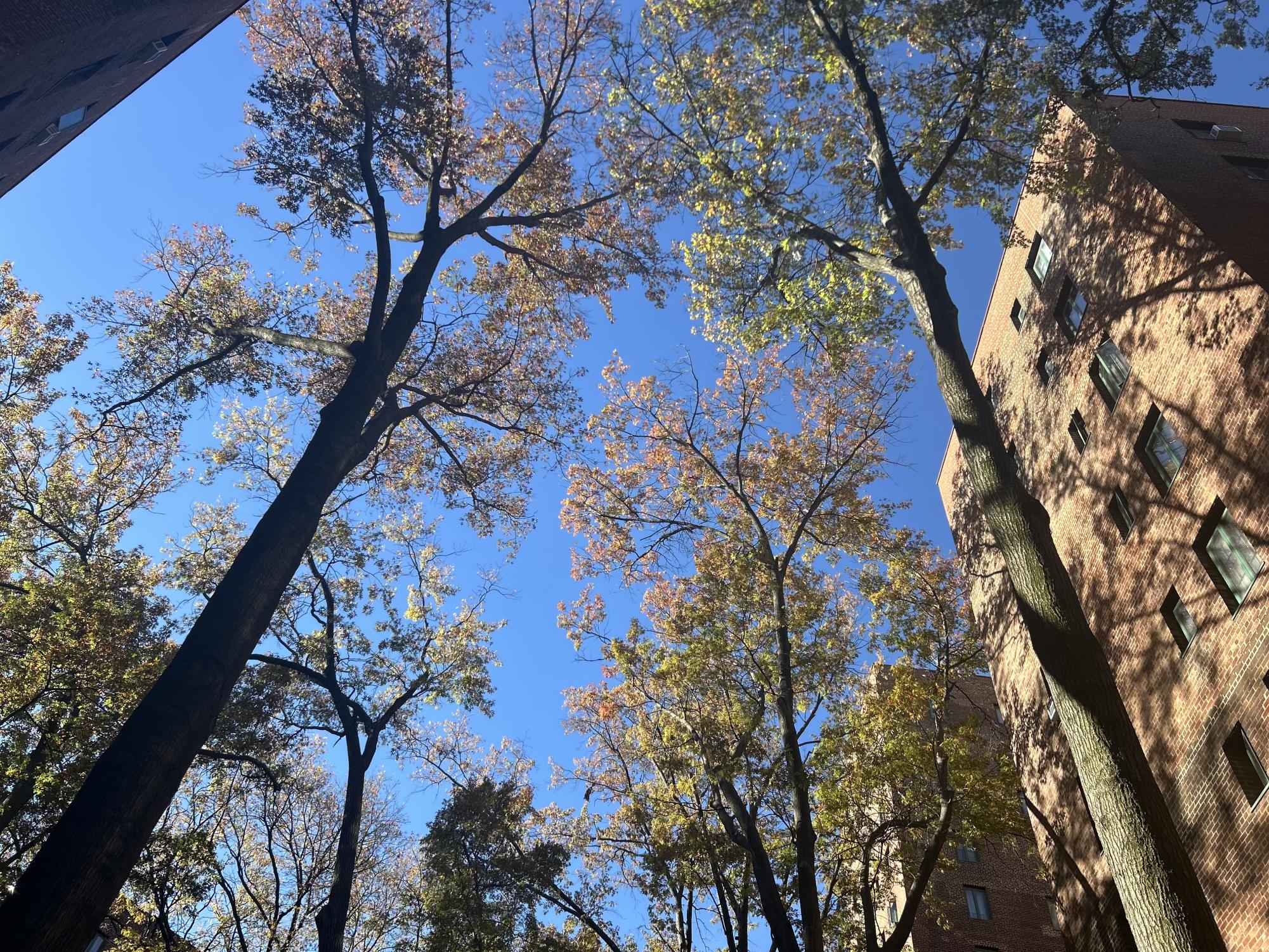
Parkchester, constructed as four quadrants, is the conjoinment of Park Versailles and Westchester Heights, its name birthed by a combination of the two historic Bronx neighborhoods. When Parkchester opened in 1940, it was a settlement open to only whites. Originally built for the middle class, Parkchester has long been a center for affordable housing in the Bronx. Today, it is considered a lower-income neighborhood, with a median household income well below the New York City average and a poverty rate higher than the citywide rate. Over the years, rising costs and economic pressures have displaced many residents, contributing to a demographic shift, though the neighborhood remains diverse with a working-class component.
Lower-income families in Parkchester, particularly many Bangladeshi residents who rely heavily on local retail, now face new burdens as neighborhood businesses close. Without nearby stores, residents often need a car to purchase and transport basic necessities, adding both transportation costs and time to their daily lives. For those without vehicles, this creates isolation and limits access to essential goods and services. Though the New York public transportation system is fairly accessible, it is not easy to navigate with multiple bags of heavy goods. Beyond these practical challenges, the closures also erode the sense of community belonging in Parkchester. In short, the neighborhood’s long-standing “circle” of convenience has been broken.
What Is at Stake?
With stores disappearing from corner to corner and being replaced with big-chain companies, a new question emerges: who exactly is Parkchester for? With long-time residents slowly moving out, Parkchester is beginning to lose the heart of its community, the small businesses, and family-owned shops.
Parkchester’s future should not belong to developers focused solely on profit margins. It should belong to the people who give Parkchester its lively spirit. Parkchester must remain a home for the Bronx’s working class where generations can continue to thrive, not a neighborhood waiting to be bought.
With stores disappearing from corner to corner and being replaced with big-chain companies, a new question emerges: who exactly is Parkchester for? With long-time residents slowly moving out, Parkchester is beginning to lose the heart of its community, the small businesses, and family-owned shops.