
![At the center of the Taegeukgi [태극기 | Korean flag], the red-and-blue taegeuk [태극] represents yin and yang, symbolizing balance and harmony, while the four black trigram lines — geon [건 | ☰] for Heaven or Sky, gon [곤 | ☷] for Earth, gam [감 | ☵] for Water, and ri [리 | ☲] for Fire — surround it, reflecting the enduring values that shape Korean cultural identity. (Photo Credit: Stephanie Nakagawa / Unsplash)](https://thesciencesurvey.com/wp-content/uploads/2026/02/King-Korean-Traditions-5-1200x675.jpg)
In traditional Korean households, the dining experience begins not with the first bite, but with the atmosphere that settles in the room.
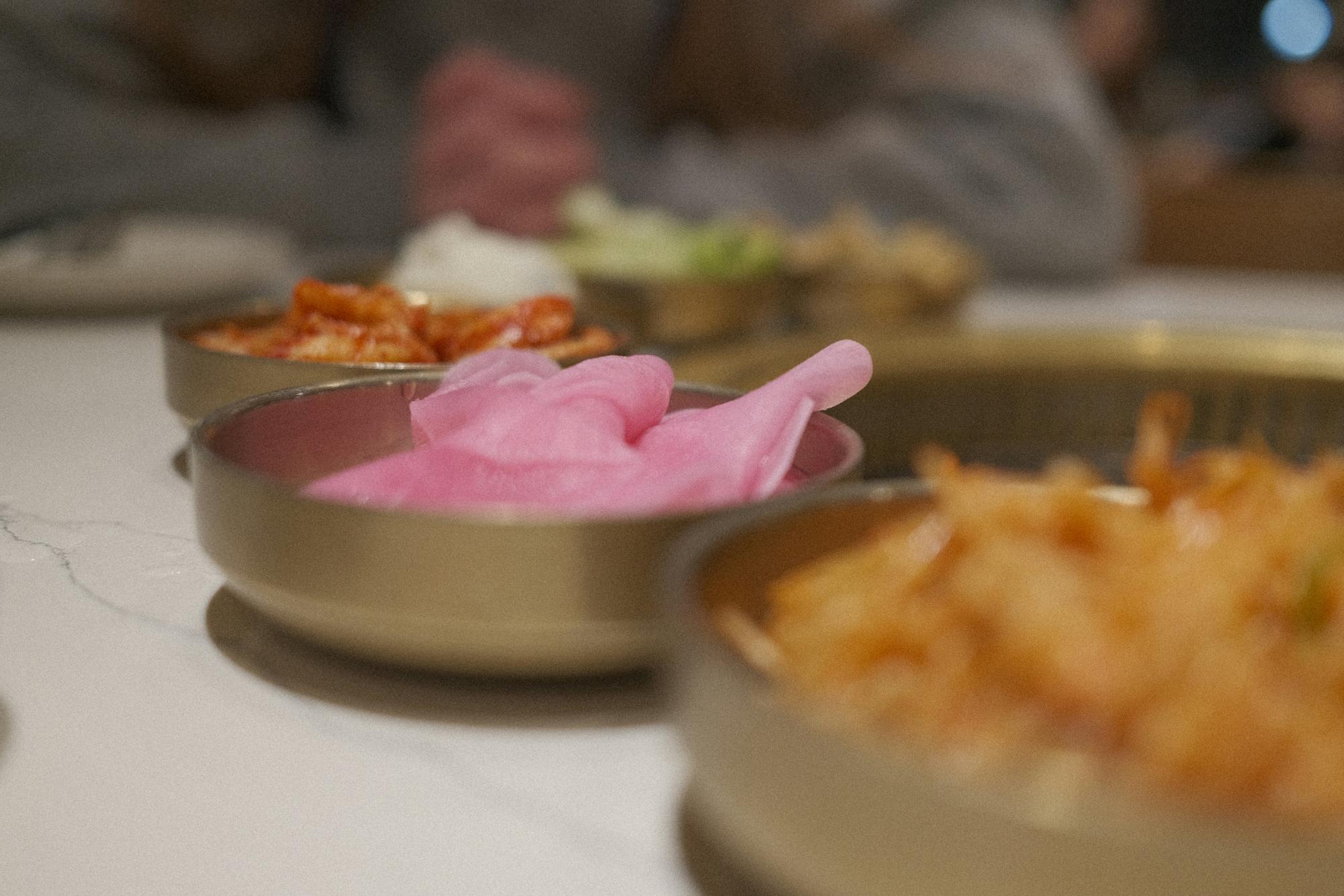
The table sits low to the floor, its polished wood reflecting the warm overhead light. Around it, bangseok [방석 | cushions] are arranged in quiet anticipation, their fabric slightly flattened from years of family meals and unhurried conversations. Dishes appear one by one, the soft steam rising from freshly cooked rice, the comforting aroma of a simmering pot of soup, and a growing assortment of banchan [반찬 | side dishes] coloring the table in bright abundance. Everyone lowers themselves onto the floor, legs folded neatly beneath them, careful not to seem impatient.
Despite the enticing spread, no one reaches forward. Instead, they wait in a calm, instinctive pause shaped by generations of practice. They wait not because someone told them to, but because this pause has been woven into the fabric of Korean dining. When the eldest finally enters and takes their seat, only after they lift their spoon do everyone else’s hands move, everyone bowing their heads slightly, offering the customary, “잘 먹겠습니다.”
The phrase translates simply to “I will eat well,” but it serves to carry a warmth of gratitude — toward the food, toward the hands that prepared it, and toward the people gathered together.
As the meal unfolds, the air shifts, easing into a less formal and more familiar state. The clink of utensils mingles with soft laughter, stories shared between bites, and the gentle rhythm of sharing dishes across the table continues. These simple exchanges weave together the intimate threads of Korean culture — respect, community, and attentiveness. They linger, not announcing themselves, but simply settling in between the strands, as present and comforting as the warm floor beneath their knees.
Korean customs and broader cultural values trace their origins to a history forged by geographical, philosophical, and social structures. Among the most influential forces is Confucianism, which entered the Korean peninsula during the Three Kingdoms period, becoming the primary belief system during the Joseon Dynasty (1392-1910 C.E.). Its emphasis on hierarchy, filial piety, and social harmony extended beyond government matters or education into everyday life, quietly shaping social behavior. Such values remain in households today, whether it is waiting for elders to eat first or serving others before oneself.
While Confucianism provided a moral framework for these ideas, they did not endure through philosophy alone. They were continuously reinforced by the conditions of daily survival, normalizing them over time.
The realities of Korea’s agricultural past meant that survival depended on cooperation. Much of Korea is quite mountainous, leaving limited land to farm, and thus making cultivation of crops very labor intensive. Irrigation systems, planting schedules, and harvests required collective effort, as individuals could not handle the burden of agricultural production alone. Over generations, this reliance on shared labor fostered a communal mindset in which one’s individual needs were balanced with group stability — giving way to the food culture that has endured until today.
Meals became one of the most consistent spaces where this cooperation was practiced and reaffirmed. Rather than emphasizing individual portions, Korean food culture developed around shared dishes, banchan, which are placed at the center of the table for everyone to partake in. There is a silent understanding that food is something meant to be distributed and experienced together.
As families worked to sustain themselves through long, cold winters, the need to preserve food further strengthened these routines. Fermentation practices developed foods such as kimchi [김치], doenjang [된장 | fermented soybean paste], and ganjang [간장 | soy sauce], not just culinary staples, but historical responses to environmental challenges. They are typically prepared collectively by families or entire communities, marking food as a key vessel of cultural continuity.
So as the meal comes to an end, everybody around the table leans back and puts down their chopsticks one by one, saying “잘 먹었습니다!” [I ate well/ thank you for the meal]
Hanok Living
The same principles that shaped food culture also influenced how space itself was organized. This is where traditional Korean housing, known as hanok [한옥], enters the cultural narrative.
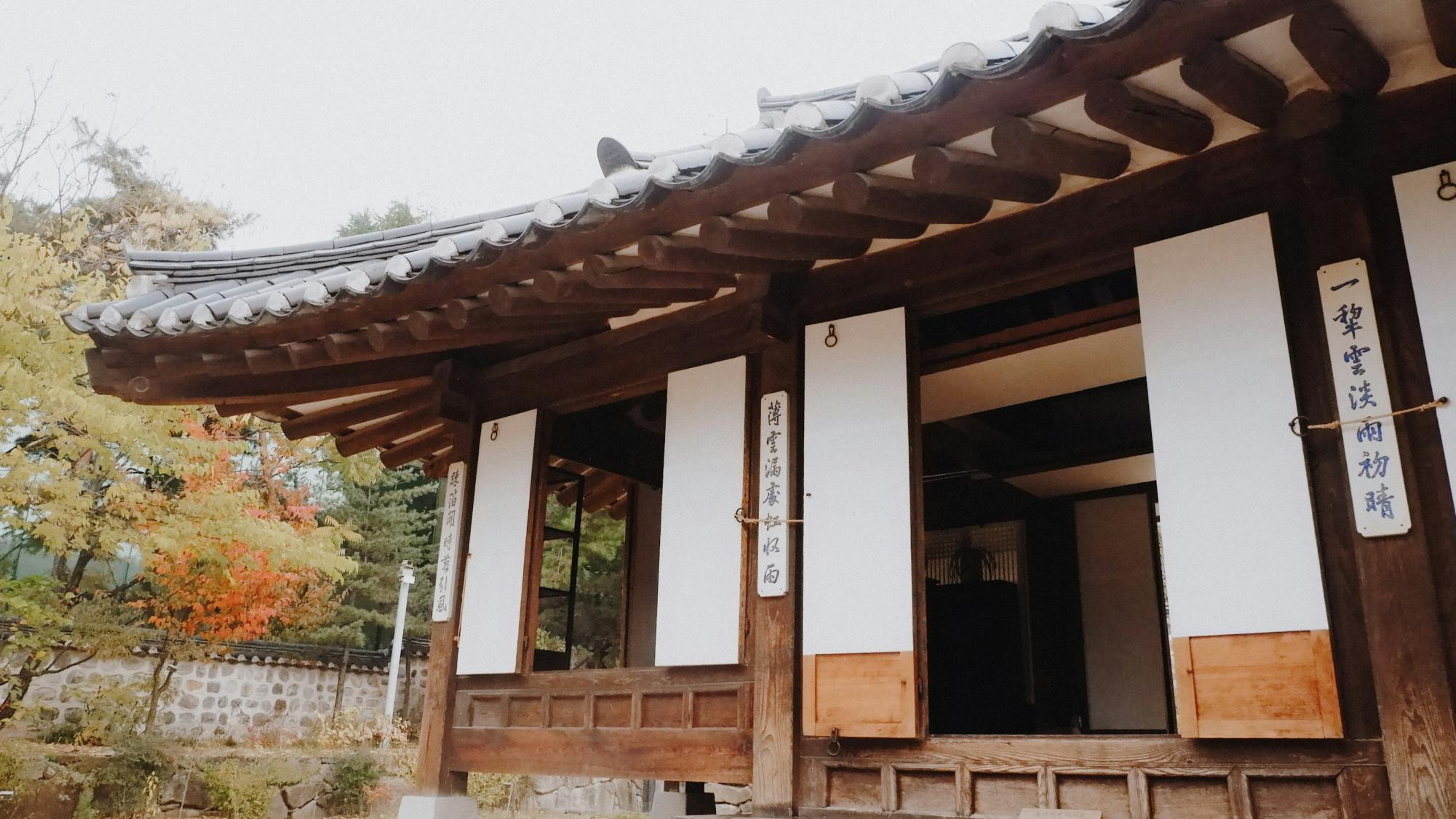
A hanok is structured around balance and baesan-imsu, [배산임수 | the placement of a house with respect to its environment] between people and nature, privacy and togetherness, hierarchy and intimacy. They were designed with materials that were readily available, sustainable, and responsive to seasonal change. Wood formed the visible frameworks such as pillars and beams, while stone served as juchutdol [주춧돌 | foundation stones], supporting the timber. They also feature hanji [한지 | traditional Korean paper] covering windows and doors for light diffusion.
Hanji is known for its strength, durability, and versatility. The paper is not simply ordinary printer paper — they would make for very poor windows. Hanji is made from the inner bark of mulberry trees and hibiscus roots, available in various thicknesses depending on the purpose it will serve whether that is writing, painting, bookbinding, lampshades, or for doors.
All of the unique features of a hanok serve to work with the environment and around it rather than against it. They are specially designed for cooling in the hot summers and heating in the cold winters with ondol [온돌 | a floor-based heating system] and maru [마루 | a raised wooden floor]. Ondol uses heat from a furnace to warm the stones beneath the floor, transferring warmth to the living space in the winters, while the maru structure allows breezes to flow beneath, providing an airy and cool space. Maru works in tandem with daecheong [대청 | wooden floor halls] which are typically more open to allow wind circulation. Daecheong effectively blurs the lines between an indoor and outdoor space, serving either as a patio or a gathering area as one might see fit.
Hwangto [황토 | red clay] is used to create breathable, insulating walls, floors, and sometimes roof layers along with giwa [기와 | roof tiles]. The material of the giwa historically indicated the wealth of a household, reflecting social hierarchy and mirroring the same Confucian order that dictated family roles and status. Regardless of class, the functional purpose remained consistent, with cheoma [처마 | wide, curved roof eaves] of varying lengths to moderate access to sunlight, shielding interiors from summer heat.
The significance of hanok living today lies not only in the physical space itself, but in what it represents: an ongoing negotiation between tradition and modern life. These spaces have evolved into sinhanoks [신한옥], modern interpretations that often evoke a slower, more intentional rhythm of life, one that contrasts with the efficiency-driven pace of modern urban living.
Within this setting, cultural practices such as darye [다례], a traditional Korean tea ritual, reflect the same emphasis on respect and refinement. Influenced by Buddhist traditions during the Goryeo Dynasty (918-1392 C.E.) and later reshaped by Confucian values in the Joseon era, Korean tea culture emphasized simplicity, moderation, and mindfulness rather than luxury. The preparation and serving of tea is deliberate and quiet, an accessible practice rooted in everyday life to reinforce a calm presence and social harmony within the home. These values do not remain confined to architecture, but instead surface repeatedly across other forms of cultural expression, adapting to contemporary contexts while maintaining their symbolic weight.
Fashion and the Performing Arts
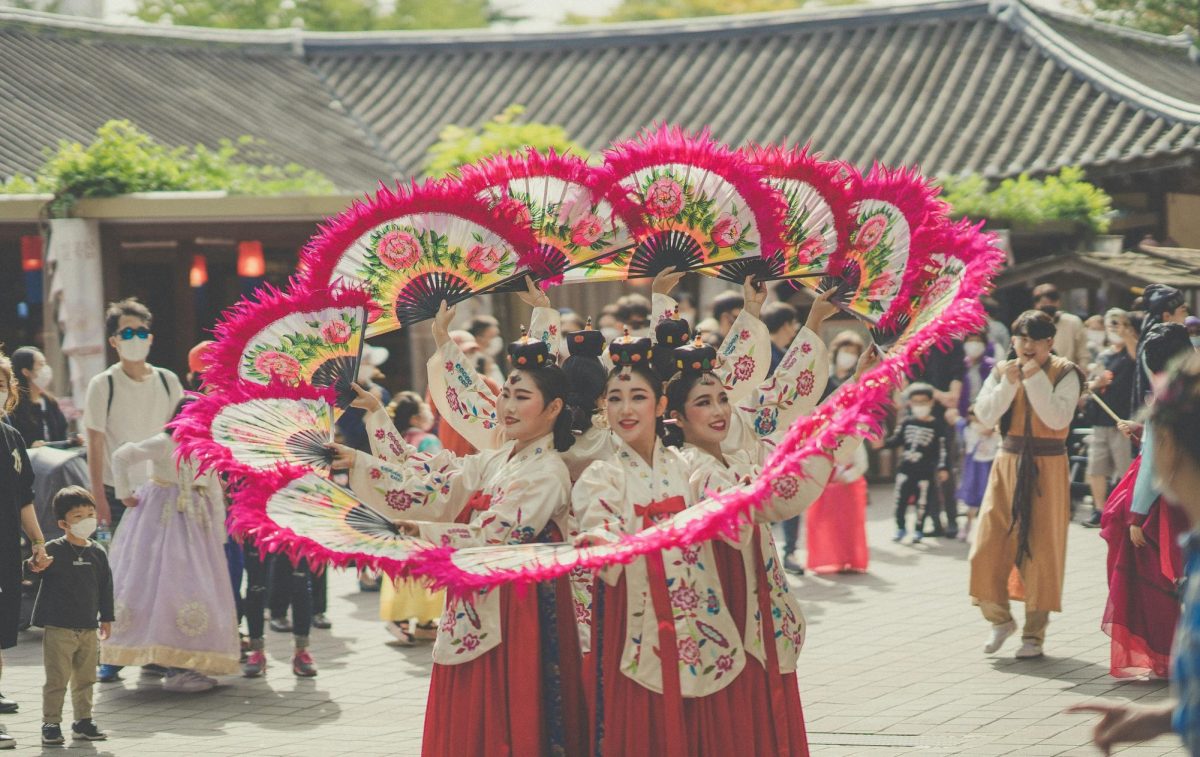
A similar dynamic can be seen in hanbok [한복 | Korean traditional dress] in modern Korean society. Once everyday attire, hanbok are now reserved for special occasions — holidays, ceremonies, and cultural celebrations — yet their presence remains culturally resonant. While the beginnings of its design can be dated back as far as the Three Kingdoms Period (57 B.C.E. – 668 C.E.), hanbok took on its most recognizable form during the Joseon Dynasty, when social class and Confucian ideals influence design, color, and structure. Beyond daily wear, hanbok became closely tied to performance and ritual. Traditional dances utilize its flowing forms to visually reinforce grace, nature, and spirit. Wearing hanbok today is often a conscious act, signaling respect for tradition while allowing room for reinterpretation through modern fabrics, colors, and silhouettes. While hanbok is no longer as common as it once was, it is given a renewed meaning, preserving its role in society while opening space for reinterpretation and change.
In performances, hanbok amplifies motion rather than restricting it. The fan dance, buchaechum [부채춤], uses wide sleeves and vibrant skirts to extend the dancer’s gestures, creating visual patterns that mirror natural imagery such as flowers and waves. Mask dances known as talchum [탈춤], use exaggerated movement and clothing to emphasize humor and make critiques about society, hierarchy, and human behavior. In these performances, masks allow performers to embody the craft rather than being stuck on their individual expression.
Other rhythmic dances such as jangguchum [장구춤] and pungmulnori [풍물놀이 | farm music] further illustrate this relationship. Dancers play percussion instruments such as a janggu [장구 | hourglass double-headed drum] while the flexible structure of hanbok accommodates their dynamic footwork and spinning motions, their flowing garments embodying the rhythm. Historically performed during agricultural festivals and communal rituals, these dances reinforced collective identity, labor cycles, and shared celebration.
While Western clothing gradually replaced hanbok in everyday life, performance had remained a space for traditional dress to evolve to this day. This evolution is clear in K-Pop where many groups have transitioned into more modern stage costumes, embracing global fashion trends. While they appear significantly different, these articles of clothing remain adapted to the expression of movement and aesthetics.
Hangul [한글 | Korean alphabet]
Language offers one of the clearest windows into how Korean culture continues to evolve in everyday life. Among younger generations in South Korea, speech is increasingly shaped by fluid code-switching between Korean and English. English phrases appear casually in conversation, online communications, and popular media, not as a formal insertion but as integrated elements of daily expression. This blending reflects Korea’s global connections and the influence of international education, digital culture, and media exchange.
This dynamic becomes even more pronounced within Korean communities abroad, particularly among Korean Americans. For many individuals, language functions as both a bridge and a boundary. Conversations within family homes often move seamlessly between Korean and English, with elders maintaining Korean as a marker of their cultural identity while younger members respond in a hybrid register shaped by their social environment. This everyday negotiation between languages reflects broader questions of identity: how can one belong to multiple cultural worlds without fully relinquishing either?
Within these households, cultural transmission often occurs in informal, intimate ways. Children may not always speak Korean fluently, yet they learn respect through honorifics, absorb cultural values through shared meals, and participate in traditions that persist regardless of language proficiency. Honorifics and endings such as -nim [님 | indicative of high respect], -ssi [씨 | for peers], -nida [니다 | formal ending], and -yo [요 | formal ending] display relationships and dynamics between individuals. Linguistic structures work in tandem with deeply embedded practice such as bowing and dining etiquette, including waiting for elders to speak or eat first. Words may shift, but practices endure, reinforcing a sense of heritage ground in routine rather than performance.
Taken together, these traditions reveal a system that rather than fading, finds new relevance in these contexts, strengthening communal bonds while allowing individuals to navigate modern life with a sense of rootedness. Korea has thus found widespread global appeal and relevance, gaining visibility and recognition in popular culture. In this way, culture survives not by remaining unchanged, but by remaining connected — linking past and present through practices that continue to evolve while preserving their meaning.
These simple exchanges weave together the intimate threads of Korean culture — respect, community, and attentiveness. They linger, not announcing themselves, but simply settling in between the strands, as present and comforting as the warm floor beneath their knees.