
At 7:20 a.m., I arrive at the train station in order to head to school. Even early in the morning, the platform downstairs is alive with the noises of the city. A train pulls in, announcements echo overhead, and people move quickly through the turnstiles with coffee in their hands. In the middle of all the noise, the sound of a saxophone cuts through – the same man is performing on it, as always. Playing freely for everyone to enjoy, these performers are staples of every New Yorker’s daily commute.
Across the subway system, people busk on platforms every day. Some play violin or guitar, some bring drums and portable speakers, and others sing. The subway was designed to move people from one place to another efficiently, but performers add something extra to that daily routine. Their music becomes part of the commute, rising above the screech of the train wheels or announcements.
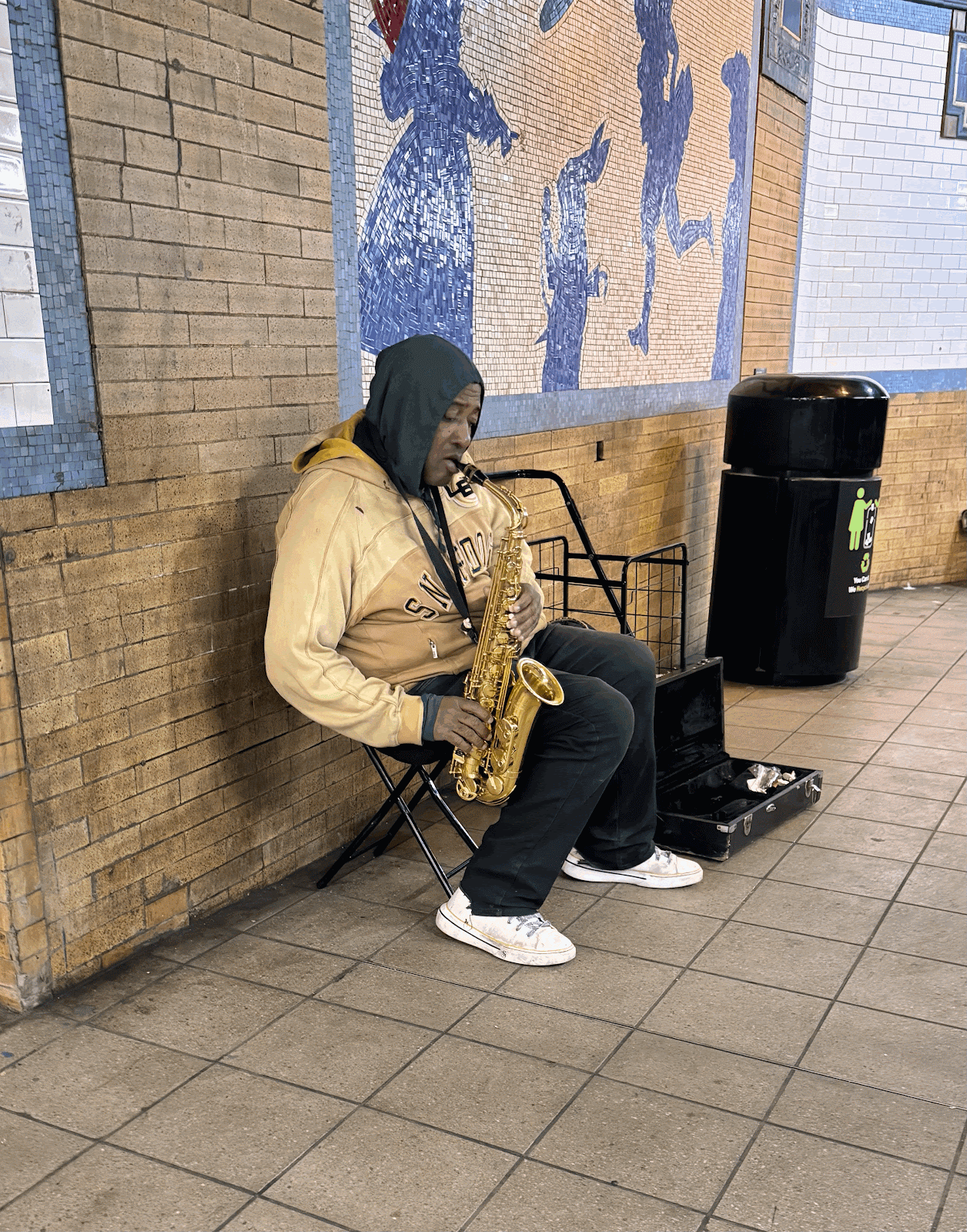
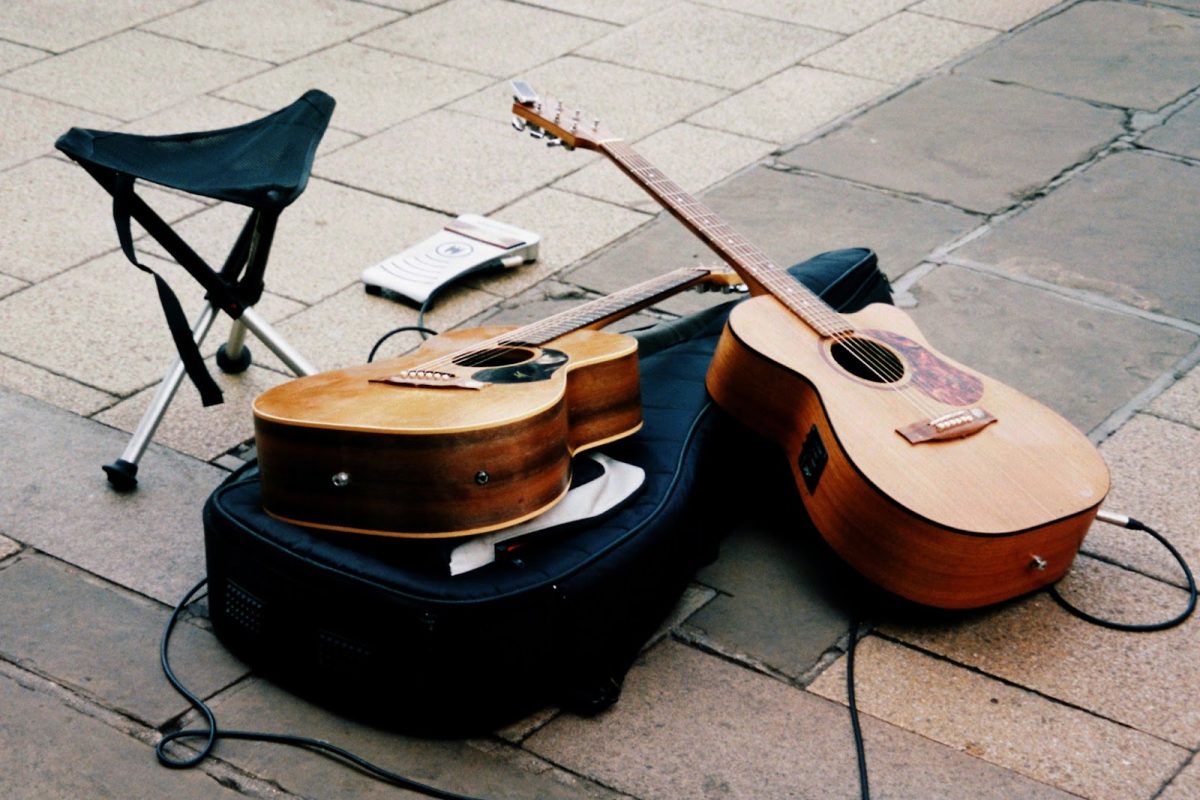
Some performers, such as the saxophonist at my station, are there in the same station every day, and they are well-known among people who have the same daily commute. However, I have recently been hearing all kinds of new instruments being played at my subway station. Newer singers try out their music for an audience with lower stakes. Guitarists and even a flutist have tried their hand at busking. With their instrument cases open for passerbys and commuters, so that they can leave tips, musicians ranging from teenagers to adults can use the subway stations to share their talent. Especially given that I am a young musician myself, I see busking as a way for musicians to spread their art, to practice their performing, and to simultaneously earn some money. It’s different from practicing at home because in a subway station, there are people who stop and listen. But it’s nicer because it’s less pressure – one teenage busker stated that, “most New Yorkers don’t pay too much attention to the point that I get nervous.”
According to him, the reaction from commuters is encouraging, and many people stop by to listen or to leave a few dollars in his case. He also remarked that he recognizes some regular commuters such as myself, and they likewise recognize him, too. However, he explained that playing in the subway can still be challenging, especially when trains arrive and their noise overrides his music. “Sometimes, the announcements or the trains make it hard to hear myself,” he explained over the noise of the train, “but you just keep playing.” Even while facing these obstacles, he said he enjoys busking because it allows him to share his music with people who may not regularly hear live classical music. For him, the subway platform has become not merely a place to practice, but a place to connect with the community through music.

Another example of a well-known subway “performer” has gained recognition as “the lip-syncing woman at Times Square.” Usually playing a backtrack of either Adele or a hit from the 2000s on a speaker, this “singer” recently went viral on social media. Some users were impressed by her voice’s likeness to Adele’s, while others pointed out that she is lip-syncing along to songs. In any case, she has become a sight to see on the subway platform.
Another stage many choose is inside the train itself. There, it is not uncommon to find performers singing with guitars or dancing while the train cars shift. As the train moves from station to station, the performers walk through the carriages, turning a regular commute into a short recital for the passengers around them. The reactions from passengers vary. Some clap or give a few dollars, while others continue looking at their phones or out the window. For the performers, the train becomes their stage, even though the space is small and constantly moving. They have to balance themselves carefully and project their voices over the sound of the tracks and the train announcements. Even with these various hindrances, many continue to perform in order to reach a large and constantly changing audience throughout the day.
The range of music performed is wide, representing the variety of cultures and people populating New York City. On one platform, you may hear a classical piece, and on another, a jazz solo or a pop song. Broadway songs are common near tourist-heavy stations, while instrumental covers of current hits show up almost anywhere. A single ride can expose someone to a multitude of genres that they would rarely listen to otherwise or with which they may be unfamiliar. The diversity of the music reflects the diversity of the city itself.
The time of day affects both the audience and the atmosphere. In the morning, most commuters are rushing somewhere: to school, to work, or to an event. Many people keep walking by without stopping, but some slow down to listen or to drop money into an open case. Even if people do not visibly react, the presence of music still becomes part of their routine. It plays in the background as they wait for their train or check the time.
By midday, the mood shifts. Tourists linger, students gather in small groups, and families are more likely to stop and listen. Hotspots for these performances such as the subway stations at Times Square, Penn Station, and Grand Central, are bustling and alive. Applause happens more often, and phones come out to record short clips. Children sometimes dance on the platform, while parents watch nearby. The performances feel more interactive during these hours because people have time to enjoy them.
Evening rush hour brings another change. The platform fills quickly, and the atmosphere is tense. Upbeat songs tend to draw the most attention, especially when commuters are tired from work or from school. Although performers are less likely to snag a spot in the overflowing train cars rushing by, they retreat to common, more spacious areas. In the midst of the bustling crowds of drained New Yorkers hurrying elsewhere, these musicians diligently carry out their routines. A strong voice or steady rhythm can stand out in the flurry of people, even when trains are arriving every few minutes. For some riders, the music provides a break from the repetition of the day.
Late at night, the platforms are less crowded, and performances feel more serene. Without as many interruptions, songs can continue longer. Fewer people are around, but those who are often listen more closely. Momentarily offering a reflection at the serene hours of the night can draw in more interesting, reflective parties. The quiet environment allows the music to carry more clearly between train arrivals, alerting any potential listeners.
Playing in the subway comes with its challenges. There is no formal stage, sound check, or guaranteed audience. Performers carry their equipment through crowded staircases and navigate limited space on the platform. They have to be aware of foot traffic and avoid blocking passageways. Announcements can cut off songs mid-verse, and gusts of wind from incoming trains can disrupt equipment. Every performance depends on the conditions of each moment.
Subway performances are also one of the most accessible forms of live music in the city. There are no tickets and no reserved seats. Anyone who pays the subway fare can encounter live music as part of their day. The setting removes many of the barriers that often separate performers from their audiences. Eliminating a formal stage and the presence of a more intimidating or expectant crowd provides room for a greater connection between the musicians and audience members. Music becomes something integrated into daily life rather than a special event that requires extensive planning.
In a city known for its large venues and expensive shows, music beneath the city offers a different kind of experience. It happens in a shared public space where people from all neighborhoods and professions pass through. For a few minutes, strangers stand side by side, listening to the same song before continuing their distinct daily lives.
The subway was built for transportation, but buskers and people who perform inside the train cars have turned it into something special. By choosing to perform in that space, they transform part of the daily commute into a live music experience. Even though the audience changes every few minutes, the music often leaves a lasting impression on the people who hear it. Performances such as these have become a familiar part of life in the city for many people. For both commuters and tourists, seeing musicians play in the subway is one of the small but impactful experiences that make New York unique.
The subway was built for transportation, but buskers and people who perform inside the train cars have turned it into something special. By choosing to perform in that space, they transform part of the daily commute into a live music experience. Even though the audience changes every few minutes, the music often leaves a lasting impression on the people who hear it. Performances such as these have become a familiar part of life in the city for many people. For both commuters and tourists, seeing musicians play in the subway is one of the small but impactful experiences that make New York unique.