
We wear bell bottom jeans to reminisce about the 70s, listen to Radiohead and Nirvana to remember the edge of the 90s, and slip on low rise pants to briefly travel back to the party era of the early 2000s. Because of life’s natural tendency to disappoint us or to fall just below our expectations, we are constantly yearning for something besides the present moment. Most often, the past. But recently, as 2016 trends have resurfaced – skinny jeans, ripped shirts, and old filters – we’re not romanticizing something foreign to us, we’re yearning for a period that we have already experienced. What does that say about our generation’s ability to live in the moment and appreciate life as it is?
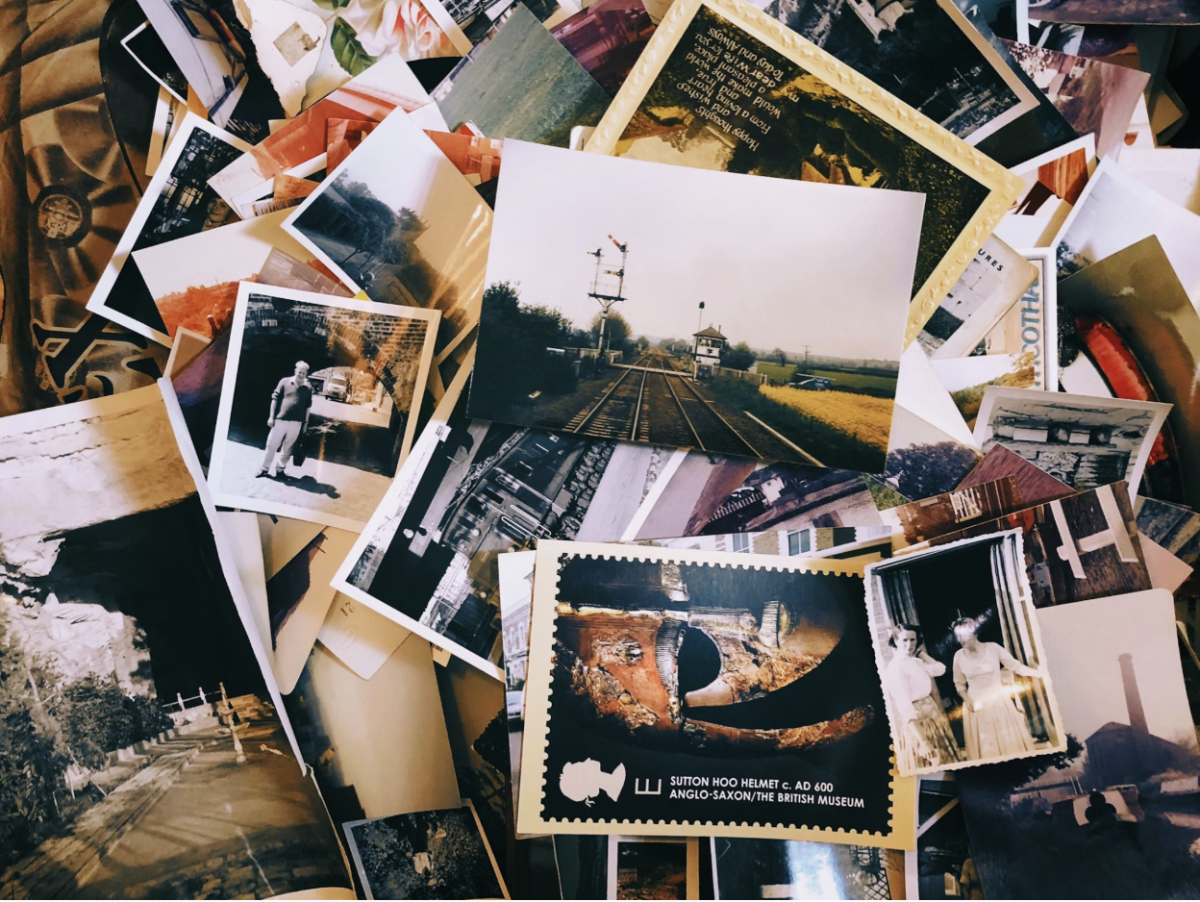
As we look back on photographs, we tend to take one specific moment out of its sequential context and emphasize the positive attributes of that photo, regardless of whether the memory was truly positive or not. This is what creates the feeling of nostalgia. Social media amplifies this effect dramatically as we see photos or short videos taken out of a mediocre context and edited, made up, or cut to seem fun, thrilling and aesthetically pleasing. We see people living lives supposedly free of trouble and turmoil because social media allows us to pick and choose how we present ourselves. But as we look around, comparing our lives to what’s presented online, we gain a false perception of what life can and is supposed to look like.
Revisiting a photo of yourself smiling with a group of friends might make you miss that period of your life or those people, even if your expression in the photo doesn’t reflect how you were truly feeling. When our memory fails to remind us of how we truly felt, photography easily swoops in with a facade of simplicity and fun to make us miss something not necessarily worth missing.
When we live in present moments, nothing is concrete – emotions are up in the air and often confusing. In photos however, everything seems to be unambiguous and spelled out in plain language. Craving this stability and understanding, we can rely on the past as a predetermined image of how to act, preventing us from having to make any difficult decisions or think things through for ourselves.
Social media companies understand that young people often crave this stability and ease and have evidently tailored their platforms to influence users that there is one right way to act, look and to grow up. Thus, it’s not shocking that our generation has begun to lose their sense of individuality. We want to lean on past experiences whether it’s our own or someone else’s to tell us how to act, just because it’s the easier option and social media facilitates this beautifully.
“Our generation has struggled to create a kind of style for ourselves, like what are we doing to look back on the 2020s as? Since we’ve struggled to make ourselves stand out, we’re relying on past culture even if at this point it’s our own,” said Caroline Koo ’26.
The idea that we tend to yearn for what is unattainable is not recent development, and traces as far back as ancient Rome with Roman Poet Ovid’s coined phrase, “the grass is always greener on the other side.” He implies things tend to have an appeal when they are not ours and we know we can’t have them, whether that’s materials and riches, or a vibe and energy to life. Thus, when we are unhappy with our lives we will look to those around us, and oftentimes to the past, to imagine what happiness truly looks like and imagine all we could accomplish if we could alter one specific thing in our lives.
What social media gives us is the glorified few seconds of an average if not negative situation, leaving out the imperfections of almost any event or situation. The excluded imperfections accompany both romanticized moments as well as broader eras of history. When we reminisce on past decades or past years we rarely think about the negative historical events that took place as everyone was listening to Led Zeppelin, or buying Juicy Couture.
We remember the glory of the music and positive vibe of the 70s, but leave out the humiliating end to the Vietnam war, the dire Watergate Scandal, and the general mistrust in the American government. When we talk about the grunge rebellion of the 90s we don’t glorify the AIDs crisis or the surge of violence and crime, just as the 2000s glory often excludes the financial crisis and the widespread drug addiction. Now, as we glorify 2016, omitted is the devastating presidential election that sent our country into a spiral and the shockingly high temperatures that marked a detrimental pivot in the progression of climate change.
It’s widely understood that social media has shortened our attention spans with TikTok’s 15 second videos and Instagram’s fast-paced feed. Is it possible that this short attention span has translated into how quickly we move on from things – how quickly memories turn from now to then?
The interval between now and 2016 is notably larger than the interval between now and the early 2000s or the 1970s. The difference between 70s nostalgia and 2016 nostalgia is that we never actually lived through the 70s as we did in 2016. When we romanticize 2016, are we looking back and yearning for our childhoods, or are we wishing to be the age we are now – but just living in that era?
“The 2016 trend was only coming back because we’re in 2026. People aren’t actually using trends from 2016 because we were like eight years old,” said Will Grunden ’26, arguing that the 2016 revival is just a reflection of the 2026 new year; we are merely looking back on being kids and reflecting on the time that has passed.
Are we just yearning for our childhood, for a time when things were simpler? One of my favorite songs “Goin’ Back” by The Byrds has an unforgettable lyric, “I think I’m returning to those days when I was young enough to know the truth.” The Byrds brilliantly present the juxtaposition of being younger yet still knowing more than we do later on in life. As kids, our naivety compels us to interpret situations in black and white, seeing only right and wrong – a much simpler way to live life. So maybe longing for 2016 is just wanting a time when we were young, naive and lacked responsibility.
Nostalgia is an inevitable and oftentimes comforting feeling where you remember the past in its worst and best forms. However, if we’re always looking back on the past there comes a point where there will be nothing to look back on. This is the concern of the 2016 revival. We are feeling nostalgia for a time that is so close to the present because our generation can’t live presently enough to create new memories first, before previous ones are reminisced upon.
The question is not whether we will continue to recycle and remember the past. We will. It is whether, at some point, the present will start to feel worth saving.
“Our generation has struggled to create a kind of style for ourselves, like what are we doing to look back on the 2020s as? Since we’ve struggled to make ourselves stand out, we’re relying on past culture even if at this point it’s our own,” said Caroline Koo ’26.