
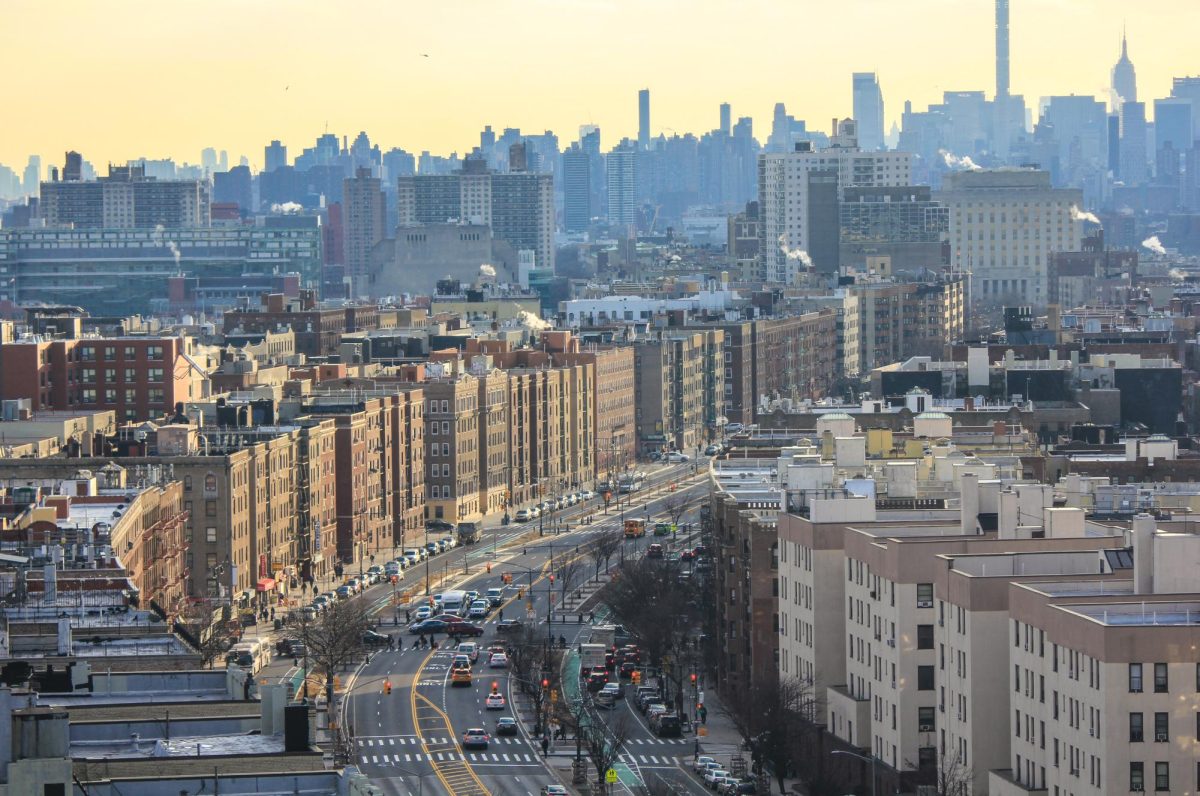
A city’s architecture is the easiest way to spot its identity. In Los Angeles, the Spanish colonial style dominates the suburbs of the Californian City, as this style of architecture is incredibly efficient for climate control. New York City, on the other hand, has been defined by its classical designs and buildings built from brick and stone. This classical architecture is an effect of the Gilded Age, an age of optimism, which brought many buildings that shared the design philosophy of French Renaissance architecture or Beaux-Arts style. Well-known examples of buildings that were built during this time period include the Woolworth Building, Grand Central Station, the Plaza Hotel, and the David D. Dinkins Municipal Building.
The architectural successor to Beaux-Arts style buildings became Art Deco. This building philosophy retained the grandeur of Beaux-Arts, but minimized the immense ornamentation that defined the previous architectural style. Art Deco was made to accommodate construction with new advancements in construction technology, while retaining the impact that Beaux-Arts buildings had. The most famous Art Deco buildings include the Empire State Building, the Chrysler Building, and Rockefeller Center. In the post-World War II period, however, New York City underwent another evolution.
Post-World War II is when the Postmodern era began to take shape and is what we are currently living in. People began prioritizing functionality over design and efficiency over cost. Although New York City needed cost-efficient housing in order to accommodate the Baby Boom of the 1950s and a surge in overall population, some of the city’s cost-efficient designed buildings emerged from this, such as the Upper East Side NYCHA Housing Complex and the Philip Morris Building. However, there are some buildings from this era that have contributed positively to the New York City skyline, including the World Financial Center and the Worldwide Plaza Tower.

Currently however, New York City will face a new construction boom in the realm of affordable housing. In Queens, there are two major housing developments that will add up to 30,000 new housing units to the city: the Jamaica Neighborhood Plan which will add over 12,000 units and OneLIC, which adds an additional 15,000 units over a small and relatively dense neighborhood and over 83,000 new housing units across the five boroughs. These new housing units have resulted from Mayor Adams’ “City of Yes” construction initiative. This housing boom, while still nowhere near enough to solve the City’s housing crisis, which necessitates over 500,000 new housing units by 2032, it is a significant step forward, especially as the current mayoral administration under Zohran K. Mamdani is expected to push for more affordable housing.
Affordable housing serves as a lifeline to low and middle income families. By law, a building or rental unit can be considered affordable if a tenant pays no more than 30% of their income. In a city where housing is scarce and demand is high, it can be difficult to manage the amount of New Yorkers in need considering the price of construction.
One simple method to keep the cost of construction low is to design cheaply and efficiently when planning affordable housing units. However, there is an issue with this: oftentimes, these housing projects stick out in the neighborhoods they occupy. The design philosophy of new affordable housing, which mostly follows a modernist architectural style, contrasts greatly with the art deco architecture of New York City; a city known worldwide for its rich architectural history.
While a modernist design philosophy, characterized by an emphasis on simplicity and functionality, is not necessarily a bad thing, an over-use of modernist architecture can dull any city’s skyline, even New York’s.
However, there are ways to protect against irregular architecture through zoning. New York City has some of the strictest zoning laws in the nation, which is what helps enforce the city’s walkability, quality of living, and indirectly improve a sense of community.
Zoning laws determine how areas within city limits are designated to be developed. For example, a certain section of Upper Manhattan would be zoned to make it so that certain blocks are left reserved for residential developments, while other sections of the city are reserved for commercial projects or mixed-use buildings.
The 1961 Zoning Resolution was the most recent zoning resolution passed, and it serves as the foundation for much of the city’s current zoning laws. It created three separate categories to separate construction projects and regulate them respective to their determined categories. These are residence, commercial, and manufacturing districts. Within these three districts are many subtypes that allow the city to implement specific parking requirements, enforce access to public spaces, and prevent sun blockage.
The zoning resolution has been a key piece of city legislation that has been able to protect the city’s walkability and sense of community. This can be seen taken into effect in City efforts to promote Privately Owned Public Spaces (POPS). These are spaces that are free and open to public-use, but are maintained by private entities.
The City Planning Commission and the New York City Council continue to regulate and amend the 1961 Zoning Resolution as needed; however, construction culture in New York City is very different from that in other cities, such as London and Paris. In these cities, their respective governments have passed legislation to protect the skyline and local landmarks: Paris has restricted how tall developers can build around the Eiffel Tower, and in London, certain sightlines and views of historical landmarks are tightly regulated.
Unfortunately, New York City does not have this type of culture, and it is very unlikely that legislation will be passed to protect the city’s skyline or views. Instead, the city has prioritized development and advancement. According to the City Editor of New York Magazine, Christopher Bonanos, “The attitude of many people here is that you buy a piece of land in New York, you should be able to do with it what you want…The idea of protecting a sight line is pretty alien from our civic culture so to speak and absent a huge sea of chance in the attitude towards development, I don’t really see it happening.” In other words, New York City developers prioritize economic development over preserving culture.
This remains true in affordable housing efforts. Past mayoral administrations such as that under Eric Adams’ administration have made significant investments into housing projects. Under Eric Adams, the city invested around $1.8 billion to expedite over 6,500 housing units, while under Bill DeBlasio, the City preserved and built over 200,000 homes for the city’s most vulnerable. This highlights the city’s urge to push for development and address economic concerns, despite significant challenges: Bill DeBlasio had to manage the COVID-19 crisis, whereas Eric Adams faced multiple corruption charges and suffered backlash from controversial housing decisions.
The current mayoral administration under Zohran Mamdani has made it clear that they will prioritize rent-stabilization and addressing the New York City housing crisis. However, the administration has yet to mention how it will balance housing projects with protecting the city’s identity.
Affordable housing is built by subsidizing construction costs for local developers and providing tax abatements, which are temporary or permanent exemptions from property taxes. This incentivizes private developers to build more housing in order to keep costs down and to maintain affordability standards. However, in areas such as the Grand Concourse, where construction projects are routinely spotted, the question of cultural preservation is raised.
The Grand Concourse, located in the Bronx along East 138th Street into East 206th Street, is one of the City’s most culturally significant areas. It is a historic 5.2-mile long road and designated landmark, meaning it is under the protection of the New York City Landmarks Preservation Commission (LPC). However, only from East 151st Street through East 167th Street is the Grand Concourse protected.

The rest of the Grand Concourse, which includes other protected landmarks such as the Edgar Allan Poe Cottage, the Dollar Savings Bank Tower, and the Loew’s Paradise Theater, are not as tightly preserved by the Landmarks Preservation Commission since the area surrounding the landmarks is open to change irrespective to the landmarks. This means that the rest of the road does not benefit from enhanced construction regulation or commission review in order to ensure that a property is properly preserved.
This gap in architectural protection allows the city to build within areas not part of the Grand Concourse Historic District and build into the greater concourse. This paves the way for less regulated architecture management.
New York City already has laws that prevent developers from building projects that are too novel or distinct from the local community. However, as seen with skyscrapers such as 432 Park Avenue and 262 Fifth Avenue, which are skyscrapers that are receiving backlash for serving as nothing more than a safety deposit box for the ultra rich, these laws are still often bypass-able enough to allow for private companies to build as they wish, so long as they adhere to construction safety standards and codes set by the Fire Department of New York.
2050 Grand Concourse is such a building that stands out with its modern and glass-heavy architecture. The clean blues and whites heavily contrast with the brown and reds of the surrounding apartment buildings. It was constructed as affordable housing by Unique People Services. The issue with this building is that it follows extremely similar design philosophy shared by multiple other buildings: 60 East 191 Street, the Creston Parkview building, the planned 3210 Webster Avenue building, 599 Tinton Avenue, 2330 Cambreleng Avenue, and more.
The issue with these buildings is not that they are simply examples of affordable housing projects, but rather that they are extremely easy to spot as such and that they tend to dull the Bronx’s rich architectural identity. However, there are existing examples of how affordable housing projects can blend into the neighborhoods they occupy. 2605 Grand Concourse is an affordable housing project that follows a modern Art Deco style of construction. Art Deco is what has defined the history of the Bronx, and all of New York City. It follows an emphasis on verticality, an angular appearance, and geometric ornamentation.
2605 Grand Concourse is a prime example of how future public housing can honor a neighborhood’s identity and still serve its main purpose of serving the community it belongs to with affordable units for low and middle income New Yorkers. Obviously, public housing developers will not be able to design buildings as grand as the J.P. Morgan Chase tower, which gleams like a gem in the city skyline thanks to its strict emphasis on step-up design that gracefully blends modern architecture with that of the 1920s through the 1940s. However, small design choices such as adding columns to the facade of buildings can create a huge difference.
Preserving New York City’s culture through its architecture is an important step to keeping what makes this city unique in the world and prevent it from being dulled by buildings that are trying to benefit their communities.
Preserving New York City’s culture through its architecture is an important step to keeping what makes this city unique in the world and prevent it from being dulled by buildings that are trying to benefit their communities.