
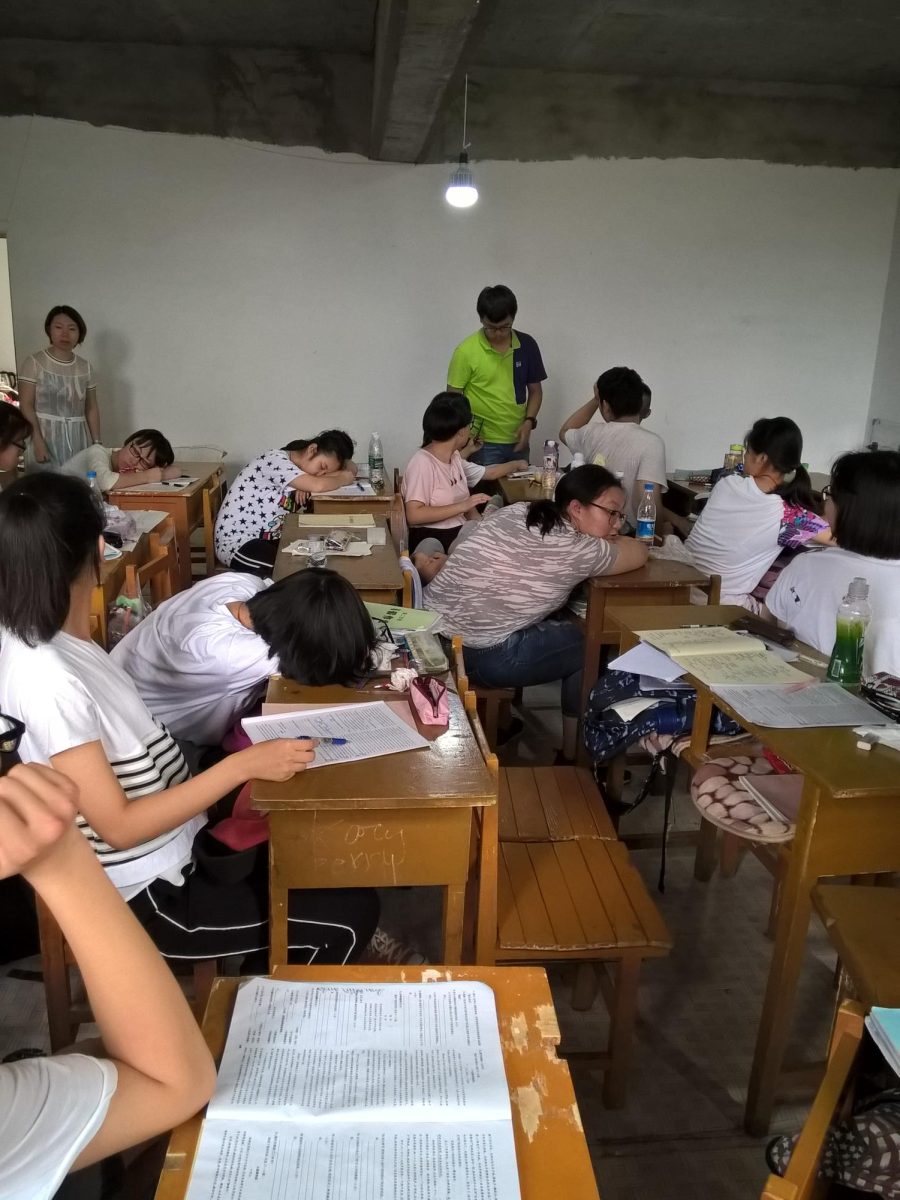
Although sleep is as crucial as food, water, and oxygen, many people, especially teens, often end up sacrificing it.
Sleep deprivation is the failure to obtain the amount of sleep required by one’s body. Sleep promotes healthy development in both the physical and mental senses. During sleep, the body undergoes various processes, including tissue repair, memory formation, and hormone regulation. Lack of sleep hinders these processes, triggering a cascade of immediate and long-term impacts. While brief periods of poor sleep are common and usually manageable, chronic or severe sleep deprivation can significantly interfere with daily life.
Puberty & Sleep Deprivation
According to the National Sleep Foundation, teens require significantly more sleep than adults, with a minimum recommended amount of eight hours of sleep per night. However, more than 70 percent of teens report sleeping below the recommended amount, with most sleeping an average of under seven hours per night. Chronic sleep deprivation in teenagers is a serious public health issue that has a drastic effect on cognitive performance, emotional regulation, and mental health and is also linked to risk-taking behavior.
Some adolescents argue that they function adequately on limited sleep or that academic demands make sleep loss unavoidable. However, research done by the NSF consistently demonstrates that perceived alertness does not reflect actual cognitive performance or emotional regulation, suggesting that chronic sleep loss carries hidden but significant risks — emotional instability, self-harm, drug usage, and physical impacts.
Throughout the human lifespan, one’s sleep schedule is prone to change. In this sense, teens are more vulnerable than any other age group. Adolescents go through physiological changes during puberty that affect sleep regulation, specifically a change in the circadian rhythm.
During puberty, the circadian rhythm, or as one may call it, the body’s internal clock, is delayed. Teens develop a resistance to sleep drive, leading to a decline in rest time, as well as delayed and irregular sleep schedules. The circadian rhythm is also in charge of regulating sleep-wake patterns and has a great influence over major hormones, such as cortisol. When influenced by the circadian rhythm, cortisol levels rise. Recent research shows that high cortisol levels contribute to adolescent depression.
Cognitive Effects of Sleep Deprivation
Experts don’t fully understand sleep’s complex role in the brain. However, they do know that sleep is a major player in learning, memory, and concentration. Mary Carskadon, a psychiatry professor at Brown University, compares the state of sleep deprivation to astigmatism, referring to it as a state of mental “haze.” Teenagers who do not get enough sleep often struggle to concentrate, retain information, and perform well academically. Insufficient sleep can also impair daytime functioning, emotional stability, problem-solving abilities, decision-making skills, and overall cognitive performance.
Mood, Stress, and Emotional Regulation
Beyond cognitive effects, sleep deprivation is a major cause of mood swings and emotional instability. Daytime symptoms commonly include excessive sleepiness, fatigue, low mood, and irritability. Sleep-deprived children and teenagers may appear cranky, frustrated, or unusually emotional, often becoming upset over minor issues. Behavioral problems such as impulsivity, hyperactivity, aggression, and difficulty maintaining interpersonal relationships are also more common among individuals who do not get enough sleep.
Loss of sleep significantly increases stress and makes emotional regulation more difficult. Sleep-deprived adolescents often struggle to cope with stress and anxiety, and those who already experience anxiety may find that poor sleep worsens their symptoms. Similar to the cycle seen in adults with insomnia, anxious teens may worry about falling asleep, which delays sleep onset and reduces total sleep time. Less sleep leads to increased anxiety and emotional distress the following day, reinforcing a harmful cycle of poor sleep and worsening mental health.
Mental Health Risks & Risky Behaviors
An absence of sleep can contribute to the onset and worsening of mental health disorders. Mental health problems represent a great portion of the Global Burden of Disease — quantification by age of health loss — for teens. Studies show that severe sleep deprivation heightens the risk of suicidal thoughts and suicide attempts, sometimes necessitating medical treatment.
Researchers found strong connections between sleep, mood, and self-harm. Adolescents who slept below the recommended amount were three times more likely to consider committing suicide, compared to those who slept eight hours.
Severe sleep loss is also associated with an increased likelihood of engaging in risky behaviors. Matthew Weaver, the lead researcher of “Dose-dependent Relationships between Sleep Duration and Unsafe Behaviors among United States High School Students,” wrote that “the odds of unsafe behavior by high school students increased significantly with fewer hours of sleep.” Although the research team noted that the data was self-reported, they agreed that it raised concern and would need further research.
Research by Dr. Carskadon and her team shows that adolescents who sleep fewer than six hours per night are more likely to use alcohol, tobacco, marijuana, or other substances; rely on caffeine or nicotine to stay awake; drive under the influence; carry weapons; or become involved in physical fights. Impaired judgment and reduced impulse control further increase the likelihood of reckless driving, unprotected sex, and substance misuse. These unsafe behaviors are common precursors to accidents and suicide, which are among the leading causes of death in teenagers. Specifically, over 30 percent of teen deaths are due to drug overdose, and up to 18 percent are from self-harm.
While the mental and behavioral consequences of sleep deprivation are often the most immediately noticeable, insufficient sleep also has profound effects on adolescents’ physical health.
Physical Impacts
Sleep deprivation negatively affects multiple body systems. These systems include, but are not limited to, the heart and circulatory system, the metabolic system, the immune system, the nervous system, and, as previously stated, the brain.
Dr. Elsie Taveras, a pediatrician, studied a group of adolescents for several years. Her research highlighted the importance of sleep for children, as well as how it opens a path for obesity and heart disease. “We’ve found that shorter sleep duration and lower sleep quality in children and adolescents are associated with a higher risk of obesity and heart disease. These are substantial effects that can impact children’s health for years to come,” said Dr. Taveras.
Various studies also indicated a negative correlation between sleep and body mass index. Less sleep disrupts the endocrine hormone function, which controls metabolism and growth, among other things. The study also found that sleep-deprived teens were more susceptible to making poor food choices. As per the National Library of Medicine, teens went “from choosing relatively nutrient-poor foods to consuming excess calories without necessarily increasing their energy expenditure.” Teens’ poor decisions made them more vulnerable to gaining weight and essentially led to a poorer metabolism.
Sleep deprivation could also lead to an increased possibility of contracting diseases. The National Library of Medicine also found a correlation between sleep and illnesses. Shorter resting periods were connected to an increased risk of common illnesses for adolescents. These illnesses included colds, the flu, and gastroenteritis. The study argued that less sleep led to a compromised immune system — the body’s natural defenses were weakened.
Insufficient sleep has a stronger negative impact on adolescents’ health than on adults’ health. A study found that as the amount of sleep decreased, C-reactive protein levels increased, but only among adolescents. C-reactive protein is released by the liver, and if found in high concentrations within one’s bloodstream, it indicates inflammation, infection, or tissue damage, as well as autoimmune diseases. All of these results point to an earlier age at which the detrimental effects of sleep deprivation on inflammation are more noticeable. Because their immune systems are still developing, younger populations may be more sensitive to the restorative impact of sleep on their physical health.
Improving Sleep
Due to teens still developing, sleep deprivation is more detrimental to them than to most age groups. The extensive impacts mentioned above experienced by sleep-deprived teens greatly impact their everyday lives and their futures. The effects include memory and concentration hindrance, lower performance, increased suicidal thoughts and attempts, substance use, and decreased overall physical health.
Thankfully, teens can help themselves increase their sleeping time as well as their overall health. Avoiding “catching up” with sleep on weekends — sleeping until late on weekends — and instead going to sleep around the same time every day can improve sleep quality and essentially sleep duration. Not using devices an hour before bedtime can also help, since it helps the body naturally produce melatonin, a hormone that signals the time to sleep.
Although sleep is as crucial as food, water, and oxygen, many people, especially teens, often end up sacrificing it.