
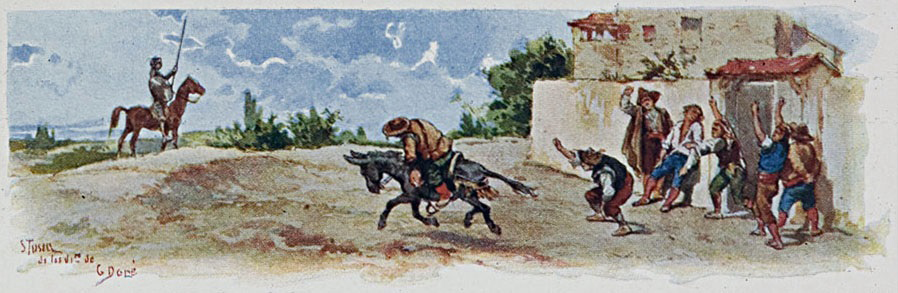
PREFACE.
Across history, humanity had been telling stories. Around fires, in monasteries, in forests, before bed; anywhere humans talk to each other, a story can be found. Even within stories, more stories can be found. But all of these have one common thread: they are fictional.
Right?
INTRODUCTION. REALITY’S INESCUTCHEON.
“All that happens to us, including our humiliations, our misfortunes, our embarrassments, all is given to us as raw material, as clay, so that we may shape our art.” — Jorge Luis Borges, Twenty-Four Conversations With Borges (trans. Roberto Alifano)
What makes a story a fictional story?
No, really, what?
Merriam-Webster’s definition of a story is broad to the point of unusability. It’s defined as an array of things, from “an account of incidents or events” to a “lie, falsehood.” Fiction’s entry in the dictionary is more useful. Using Merriam-Webster again, fiction is “something invented by the imagination or feigned,” “fictitious literature (such as novels or short stories),” and “a work of fiction.”
How much does something need to be invented by the imagination for it to be considered fiction? The intuitive answer would be “a significant.” But how do you quantify the amount? By the word? Sentence? Applying that definition is a logistical nightmare, so a new one must be found.
Circle back to the question of how much needs to be invented for something to be fiction. Another follow-up question arrives: What counts as an “invention?”
If someone writes a story about a marathoner coming in last after they also came last in a marathon, what degree of separation does there need to be from the author for the main character to be fictional? If the story’s plot was changed to be about a racecar driver in a race, does that separate it enough from the author to make it fictional? Could the story still be about a marathoner, but one who wins the race instead? Does the act of transferring real events, with indescribable qualities (such as the exact feeling of the wind while running), render all forms of writing, even an autobiography, an “invention”? Although the example is simple, it quickly becomes messy.
The toughest question still remains: If every story has a kernel of reality to it somewhere, where can reality be excised so that fiction can begin?
If you take a story — call it A — and within that story tell another story, whether through the mouth of a character or by the narration — call this one A1 — A1 would be an embedded narrative, a story within a story, mise en abyme.
Mise en abyme, French for “placed into abyss,” derives from its use in heraldry, the process of designing emblems for institutions or nations, referring to the design “a coat of arms.” The placement of the coat of arms is found within the center of a larger coat of arms; that center is the abyme, or the abyss. The phrase came from heraldry to art through French author Andre Gide. While he originally intended it to refer to literature, Gide’s theory of nested symbols spread to art, then movies, and so on and so forth.

German professor Lucien Dällenbach later formed a semi-concise definition for mise en abyme: “A ‘mise en abyme’ is any internal mirror that reflects the whole of the narrative by simple, repeated, or ‘specious’ (or paradoxical) duplication.” Dällenbach also defined three more variants of mise en abyme. “A sequence which is connected by similarity to the work that encloses it,” is simple duplication (so if A1 is a story within A that simultaneously runs parallel to A). Repeated duplication is “a sequence which is connected by similarity to the work that encloses it and which itself includes a sequence that . . . etc.” (if A1, still within A, contained another story, A2, which contained A3, and so on, all running parallel stories to each other). In other words, it’s simple duplication repeated ad infinitum, hence the name repeated duplication. Finally, “a sequence that is supposed to enclose the work that encloses it,” is specious duplication (if A has a character within to tell a story, A1).
Now comes the question. If A1 is a story within a story, is it more fictional than A? By nature, it is a fiction within a fiction. It is one degree further removed from the reality A represents.
The heart of the essay is this: Is there any possible way that by moving further and further from A — and by extension, reality — can it reach a point wherein the story contains no elements derived from its author’s reality? Can a story be wholly invented? Ultimately, can a story be, truly be, total fiction?
I. HOMER’S ODYSSEY.
“Poets are not to blame for how things are; Zeus is; he gives to each as is his will.” — Homer, The Odyssey (trans. Emily Wilson)
The authorship of The Odyssey — as well as its prequel, The Iliad — has been the subject of debate since its publication, which in and of itself is also subject to debate. The actual words upon the page are largely agreed to have been written anywhere from 725 to 675 BCE. However, the Odyssey was initially intended to be an oral work, performed by rhapsodes (literally translated from Greek as “songstitcher”), or bards. “Rhapsodes,” according to the Oxford English Dictionary, means “songstitcher.” At first, they would “stitch” their songs on the spot, using stock epithets — “rosy-fingered Dawn,” or “swift-footed Achilles” — and improvise to keep up the strict meter demanded by Greek poetry. After the works of Homer became widely circulated, rhapsodes could no longer improvise. They had to memorize the poems exactly. Fiction became reality.
With the Odyssey and the Iliad being written about 3,000 years ago, it’s only natural for there to be debates on their authorship. In ancient Greece, there were debates on who Homer could be and how the poems were written. These debates have been collected under a single title: the Homeric Question. What the Homeric Question asks is three things: Who is Homer? Are the Iliad and the Odyssey by the same author? How were they composed?
Among wider scholarship, it’s believed that the Homeric Epics came out of a set of smaller poems, one of many in a longer line of storytelling that compiled these shorter poems, which was then memorized by rhapsodes. Although rhapsodes could technically no longer improvise the vast majority of the poem, bits and pieces were still subject to small alterations from rhapsode to rhapsode, day to day; a line here, an epithet there. 150 years later, Athenian ruler Pisistratus compiled the various versions into one “fixed” epic. Still, that only complicates the first part of the Homeric Question; instead of asking “Who is Homer?” we ask if there ever was a Homer in the first place.
Scholarship suggests there was not one singular “Homer.” Analysis of the ancient Greeks reveals linguistic differences that implies that the Iliad and the Odyssey were written by separate people. Furthermore, the Epics offer drastically different outlooks on morality and religion. Even in antiquity, there was little evidence for Homer’s existence beyond celebrations and the poems attributed to him. That all points to the first two parts of the Homeric Question being clarified.
Though the Homeric Question has been consistently refuted, said refutations may not mean much anyway. Rhapsodists who could perform “Homer’s” poems were sought out at religious festivals and would even compete with each other and develop rivalries. There was a clan of poets, the Homeridae, who claimed descent from Homer. Homer may be factually fictional, but it’s hard to accept that when he was never treated as such. Today, Homer is a name universally associated with the Odyssey and the Iliad; it’s his name on the cover as the author. Fiction, Homer’s existence, has become reality. The consequences of his existence as an idea are real nonetheless. Alternatively, a theory proposes that there really was a rhapsode named Homer at one point in time. The Epics could have been retroactively attributed to him; if that were the case, Homer was read once, and became fictionalized over time.

Like Homer, the reality presented in the Epics can’t be taken at face value. There are not, and never have been, Cyclops or island witches. It remains unclear if there even was a Trojan War as grand as the Epics claim. More realistically, it wouldd have been a series of wars. On top of that, Odysseus’ travels don’t translate onto real-world geography, and the lack of information on Homer and his time means only approximations have been produced.
Although it’s easy to look back upon the Epics and call them fictional, the Greeks didn’t have the advantage of retrospect. We don’t know how much the Greeks believed in these myths. They are called myths for a reason; the word “myth” traces its roots back to the Greek word for “fiction.”
On some level, the ancient Greeks were aware of this fiction. They were seafarers; they would know that the locations Homer gives didn’t line up geographically on an actual map. They would have known the Odyssey was not completely real. Herodotus, in his Histories, wrote of his skepticism about whether Helen even was the daughter of Leia and Zeus as the Iliad and other myths claim. In fact, he couldn’t even believe that Helen had spent all ten years in Troy.
Crucially, Herodotus did believe that there was a Helen of Troy. It’s not that he — and by extension, other Greeks — mindlessly believed in everything the poems said. Rather, they simply had a different boundary line between fiction and reality, an inescutcheon much larger than ours. The tale of the Trojan War and Odysseus’ return home would have been early history. Exaggerated over the years, but the key details would remain true.
Within the text of the Odyssey, Odysseus, introduced with the epithet polytropos, translating to “many-minded” or “many-wayed,” is the sole narrator of large chunks of the text. The portions he tells are often at times when it would be in his best interest to emphasize both his heroism and his sufferings. From books nine through thirteen, Odysseus narrates his journey to King Alcinous of Phaeacia, who is so moved by his tale that he offers Odysseus a protected boat home to Ithaca, weighed with gifts. This being told by someone who is famed for his lies and trickery makes truth doubtful, a mise en abyme of bias inside truth through specious duplication.
A sour conclusion must be reached: we cannot know how much of the story has been altered within the Odyssey by Odysseus or externally by poets over the years. The words of Odysseus and the poets who spoke his words are all there is to go off. What we see may as well have been, for the most part, reality to both the characters within and the ancients whose histories were these myths.
II. SHAKESPEARE’S HAMLET.
“We are arrant knaves, all. Believe none of us.” — William Shakespeare, Hamlet.
Much like Homer, Shakespeare’s life and existence have been subject to scrutiny. Like Homer, theories have been floated around, suggesting that Shakespeare was not even a real playwright—known as the Shakespeare Authorship Question — which have been thoroughly debunked. His plays reflect this blurring of fact and fiction accordingly, especially in Hamlet.
Although his existence is proved, not much else about Shakespeare’s personal life is known. It’s known that he most likely attended Stratford’s grammar school and, a few years later, married Anne Hathaway in about 1582. He had a few children, and then from 1585 through 1592, there is a gap in the record. Shakespeare must have begun pursuing playwriting, because the first mention of him in 1592 was when a contemporary critiqued a different play as a “Shake-scene” and alluded to some of his earlier plays. For two decades after that, Shakespeare wrote more plays in partnership with an acting company, the King’s Men, and acted in many of them himself.
All this being said, there remains much more to be known. The seven-year period in which Shakespeare completely disappears from the record also happens to contain what would be some of the most fascinating years of his life: had there been records, people would have been able to read his initial poetry and learn how he entered the theater in the first place. One must also consider the content of his works, which have been famed for their raunchy jokes, as well as more recently, their homoeroticism. It’s such a common theme that Shakespeare’s sexuality has come under earnest questioning.
None of these questions about Shakespeare’s life can be answered without more records; even then, some questions could only be answered by Shakespeare himself. That degree of uncertainty for such a highly regarded figure is part of why the Shakespeare Authorship Question was even posed. It is also why a whole host of fictionalized biographies — aptly called “biofiction” — have been written about Shakespeare. Some veer into comedy; others focus on Shakespeare’s relationship with Hathaway or concentrate on his works. But they all stem from the same impulse: the desire to know and understand one of the greatest authors in English literature. So little is known about Shakespeare that, on some level, he has become fictional.
One of Shakespeare’s most famous works is his tragic play, Hamlet, wherein the eponymous prince of Denmark seeks vengeance on the current king Claudius after his marriage to Hamlet’s mother. The catalyst for this was the ghost of his father Hamlet Sr., who was also Claudius’ brother, telling Hamlet that Claudius murdered him.
At first, Hamlet is not inclined to believe that he really saw his father’s ghost. As such, he sets up a test for Claudius; he puts on a play, The Mousetrap, within the play Hamlet, to sniff out Claudius’s guilt, as was a common trope in Shakespeare’s day. As it so happens, Claudius does leave Hamlet’s play in the Hamlet play — he does so before the murder took place, immediately upon hearing the plot. It seems Hamlet Sr. was not wholly unreal after all. Other people in the play also seemed to have seen the ghost, such as Horatio and two of the guards. That all points to the ghost being real, at least within Hamlet.

Per usual, there is another layer to Hamlet Sr.’s ghost in the audience’s reality. Shakespeare’s England would have been colored by the theological divide between Catholics and Protestant Christians. Shakespeare, being formally educated, was well versed in both Catholic and Protestant beliefs, as well as the division between them. One major difference was the perception of ghosts. Ghosts were sound in Catholicism, specifically as purgatorial ghosts who hadn’t been sent to heaven or hell but were not real in Protestantism.
Within the play, Hamlet attended the same university as Martin Luther, the founder of the Protestant Revolution, did in real life. He was educated as a Protestant but saw something that would only make sense with the framework of Catholic theology. He had good reason to find the ghost at odds with reality. The audience would too, as the line between the audience of the play and the actors on the stage was blurred. Protestant or Catholic? Ghost or no ghost? Real or fiction?
III. ONE THOUSAND AND ONE NIGHTS.
“What is this compared with what I shall tell you tomorrow night if I stay alive!” — One Thousand and One Nights (trans. Husain Haddawy)
One of the most classical examples of embedded narratives is within the collection of Middle Eastern and South Asian folktales, One Thousand and One Nights, even across the centuries since its initial penning. During the Islamic Golden Age, the collection was spread throughout the Islamic Caliphate, and as they were, they underwent heavy modifications to be cohesive as a whole, with Islamic culture binding them. The story was passed throughout Islamic territories and received its own oral and written revisions wherever it went, with the two major forms of manuscript being the Syrian and the Egyptian, the Syrian having only four known manuscripts and the Egyptian having a massive collection.
The One Thousand and One Nights have the Odyssey problem tenfold; it is simply impossible to determine what the original could be. It spans too many continents over too many centuries.
More accurately, it’s impossible to find the original. In Husain Haddawy’s introduction to his translation of the One Thousand and One Nights, he mentions an original copy, now lost, that must have been the common ancestor of all future copies. As different as the Syrian and Egyptian manuscripts must be, they also have commonalities that would be shared in the “original” manuscript, such as the writing style and some stories.
Although the publications of the four Syrian copies range from the 14th to the 19th century, they would have been closer to the original than those of the Egyptian copies, in terms of the exact words. The Egyptian copies, all written starting from the last half of the 17th century, delete parts found in the Syrian copies, copy other, altered Egyptian copies, and add in new stories. Ultimately a true “original” cannot be determined; the “true” One Thousand and One Nights cannot be pulled out from all the changes over time.
Later, the One Thousand and One Nights moved into Europe, as did other parts of Middle Eastern and South Asian culture considered “the Orient.” During the Oriental craze in Europe, Orientalists such as John Payne, who ceded his work to Richard Burton, published their translations of the One Thousand and One Nights.
Payne and Burton’s translation remains the only English translation for the Egyptian manuscript. From it came popular stories that spread throughout Europe — such as Aladdin, Ali Baba and His Forty Thieves, and Sinbad the Sailor. These stories were controversially added in by Burton, who learned them from a French translation of the One Thousand and One Nights by Antoine Galland, who allegedly heard those from a Syrian storyteller, though analysis reveals signs of forgery: a translation of a translation; mise en abyme (funnily enough, the person to coin mise en abyme, Andre Gide, would attack Galland’s translation in his Morceaux Choisis).

This dubiousness of source was only found out much later, though it’s not a particularly unique flaw in Burton’s translation. Many authors before his time tried their hand at adding in new stories, hence the variety in the Egyptian manuscripts, which were an attempt to have 1001 stories for 1001 nights; the Syrian manuscripts, closer to the original, have only about 270.
Burton’s translation was heavily criticized for its fixation on the erotic aspects of the One Thousand and One Nights. While eroticism was objectively present in the stories, Burton — who, according to Argentinian writer Jorge Luis Borges, first wrote “a highly personal account of the brothels of Bengal” — took it to new levels. His footnotes were sprawling pages in length and, in content, were filled with “accumulated affections, ironies, obscenities, and copious anecdotes,” so wrote Borges. Burton was, even among his fellow Orientalists fetishizing Asia, an outlier, though they were not critiquing him on the blatant racism on display. Rather, it was that the eroticism of his translation railed against the conservative Victorian culture of the day.
Despite all these complications emerging from translations and copying, the frame story of the One Thousand and One Nights is as simple as it is novel yet holds far more complex narratives within. The overarching frame story is about a king, Shahrayar, who becomes disillusioned with women after learning of his wife’s and his brother’s wife’s infidelity. Consumed by revenge and the belief that there are no chaste women in the world, Shahrayar resolves to marry a woman each night and have them killed the next day. However, the daughter of the vizier of the kingdom, Shahrzad, came up with a plan to stop the killings: she would volunteer to marry the king, going to his palace with her sister, Dinarzad. She’d ask Shahrzad to tell a story, and Shahrzad would agree, only to stop in the middle until the next day. The king, captivated by the story, would agree to let her live until she finishes telling the story to him and Dinarzad, only for Shahrzad to start a new one and leave it half-finished.
So it goes for, within the world of the book, one thousand and one nights, by which point Shahrzad only has to show Shahrayar the three children they had together to convince him to spare her life without needing a story.
Although only officially written down around the 9th century, with Shahrzad’s frame story written in the 14th century, the sub-stories are far ahead of their time. For example, one of the stories, The Three Apples, depicts a murder mystery, as well as a story within itself. In fact, the vast majority of the stories in the One Thousand and One Nights have not just one, but multiple, stories within them; mise en abyme a thousandfold.
It was these translations and transformations that kept people entertained by the One Thousand and One Nights as the centuries went by, for Shahrzad to become Scheherazade through years of translation and for countless operas and poems and movies to be written based off of these tales.
Like all the lines neatly categorizing fiction, the one separating the One Thousand and One Nights from the “real,” authentic one compared to the “fictional,” inauthentic one remains arbitrary. And like with the Odyssey, like with Hamlet, the question of whether the line holds any meaning remains.
IV. CERVANTES’ DON QUIXOTE.
“For me alone Don Quixote was born and I for him. His was the power of action, mine of writing.” — Miguel De Cervantes, Don Quixote Part Two (trans. John Ormsby)
Shakespeare’s plays were written in Renaissance-era Britain, with Hamlet being written in about 1599-1601. Around that time, other European nations had their own Renaissance, with their own works of art and literature. From Spain in 1604 came what is considered to be the highest point of Spanish literature to date: The Ingenious Gentleman Don Quixote of La Mancha, better known simply as Don Quixote.
Don Quixote’s author, Miguel de Cervantes, had more than his fair share of troubles. Born in 1547, his family rarely stayed in one place for long; he had no college education but was an avid reader. He was later sent to Italy, though it’s uncertain whether it was as a student or a fugitive for a “wounding,” or in modern terms, a fight. In 1570, Cervantes enlisted in the Spanish army, where he was shot in the left hand, disabling it for life. In 1575, while on a boat back to Spain, Cervantes was captured by Barbary pirates along with his brother Rodrigo. Despite his four escape attempts, he was to be sold into slavery had it not been for the money gathered by his family and some Trinitarian friars.
Upon returning to Spain, Cervantes found himself poor, as the rising prices in Spain left middle-class families, such as his, destitute. The most employment he managed to find was as a messenger in Algeria. In 1581, Cervantes moved to Portugal, where he had an affair, a daughter, and a marriage, in that order. It was not until 1585 that Cervantes turned his hand to writing professionally. His first book, La Galatea, was well liked yet meagerly received, and his dramas were performed in theaters until Lope de Vega’s plays, thought to be the greatest Spanish playwright to date, became more popular.
It became clear that Cervantes needed to find new employment. He spent 1587 through 1592 as a commissary for the Spanish Armada, where he’d find himself in frequent trouble for failing to balance his spreadsheets correctly, after which he was excommunicated by local churches on multiple occasions. This trouble came to a boiling point in 1592, when he was jailed for a few days.
What Cervantes did during the next few years is unknown. What must at one point have happened was that for whatever reason, whether that be poverty or passion, Cervantes turned his hand to writing once again and published Don Quixote in 1605.
Don Quixote was first printed in 400 copies; 330 of them were lost in a shipwreck. The remaining 70 found their way to Lima, Peru. From there, Don Quixote became a smash hit.
The book opens up with Cervantes himself speaking to the reader, telling them that the first few chapters were from the archives of La Mancha and the rest from a fictional Arabic text translated by a Cide Hamete Benengeli. By including Benengeli, Cervantes both adds credibility to Don Quixote and allows for there to be a stand-in for himself.
Cervantes then moves to an old man, unnamed besides that his last name is either Quixada or Quesada (he intentionally leaves it ambiguous). He’s a member of the Spanish nobility, the hidalgo, and lives in La Mancha, a region of Spain. Although he lives frugally, he fantasizes and reads constantly about stories of knights and chivalry. His obsessive reading drives him to madness, so he dons a set of armor, climbs up on his old workhorse Rocinante, renames himself Don Quixote, and sets off for adventure as a knight errant. He finds himself a lady, Dulcinea del Toboso, and a slaughterhouse worker, Aldonza Lorenzo. He gets into fights, finds a squire in his neighbor, Sancho Panza, promises him land and a noble title, gets into more fights and adventures, and is finally beaten into submission and brought home. At the end, the author notes they’ve found more manuscripts detailing the fictional Don Quixote’s adventures.
Don Quixote was a direct parody of feudal-era stories in Spain and can owe some of its popularity to that. The rest can be attributed to its complex style and characters. In the earlier feudal stories of the time, the characters were “stock” characters; one knight could be replaced with another knight from a different story just by replacing the names. Don Quixote’s characters were not interchangeable, and throughout the novel they have their own interiority and perspectives on the situations they find themselves in.
For that matter, the situations they’re in are notable, specifically the time in which they take place. They are not characters of the mythical past of magic and knights; they were intended to be someone in 17th-century Spain who could imagine meeting on the street; hence the irony in Don Quixote’s delusion. His obsession with the feudal past directly contradicts the modern life of characters in the novel.
Furthermore, the contradiction goes beyond comparing the characters to each other; they also show contradictions in what they say compared to what they think. Sancho goes along with Don Quixote’s delusions without truly believing that the windmills are giants or that he’ll become a governor if Don Quixote succeeds in his adventures. This stands in sharp contrast to the characters in European literature before that, wherein what a character did matched exactly with what they said. Like Shakespeare, although in Spanish prose rather than English plays, Cervantes spearheaded the display of interiority and contradiction in action versus ideas.

Although Cervantes’ work was a success, he only received a lump sum for the publishing rights. As such, he would continue seeking out employment. This time, his work would be more literary endeavors.
His life at home was no less tumultuous than his career. In 1605, there was a stabbing outside Cervantes’ house, leading to the arrest of his whole household, who were suspects by association. A few years later, after moving around and finally staying at the Calle de León, he failed to get a secretarial position for the viceroy of Naples in 1610. However, in 1609, Cervantes had joined a religious order and, in 1613, committed himself under a tertiary vow in the order. The year after, he published 12 Exemplary Tales, a series of short novellas in Castilian. In the years between joining and committing to his religious order, Cervantes was known to be found at writers’ salons, showing his continued literary endeavors.
During this period, people had not forgotten about Don Quixote or the implied sequel at the end of the novel. It had been nine years since its publication, and although Cervantes was still writing other works, there was no sign of a sequel. In lieu of Cervantes, a pseudonymous Alonso Fernández de Avellaneda took up the mantle and wrote a second part to Don Quixote on their own. However, it was not particularly well known even at the time, and today it isn’t well regarded by critics. It had altered numerous parts of the characters, such as Don Quixote’s love for Dulcinea, and failed to match the original in quality.
Cervantes must have been in the middle of writing his own Don Quixote Part Two when Avellaneda’s was published because his was published a year later in 1615. His Don Quixote Part Two is a work of metafiction; the characters of Part Two are aware of the publication of Part One and react to its existence accordingly. Although the One Thousand and One Nights and even the Odyssey were self-aware of their status as stories shared orally, the characters weren’t aware of their existence within the story; it was Don Quixote Part Two that pioneered the concept of fiction about fiction.
For 58 chapters, Cervantes wrote Don Quixote Part Two as usual, with Don Quixote’s adventures and his reluctant yet reliable squire Sancho. Even in this earlier section, Don Quixote’s character was being developed to slowly sway towards sanity, as was Sancho’s towards sharing Don Quixote’s delusion.
Then in chapter 59, Cervantes introduces a character named Jerónimo — intriguingly, the same name as one of Cervantes’ contemporaries, Jerónimo de Pasamonte — who was apparently reading Avellaneda’s Don Quixote Part Two, wherein Don Quixote had fallen out of love with Dulcinea. Furious, Don Quixote introduces himself, and Jerónimo gives him the book as recognition of his reality, in the novel written by Cervantes, not Avellaneda.
The jabs at Avellaneda’s sequel don’t stop there. At one point, Don Quixote meets a character from the sequel and forces them to sign an affidavit saying they never met before. At the end of Don Quixote, Don Quixote is snapped back into sanity and lies in bed, deathly ill. It is only there that his name is confirmed as Alonso Quixano by Cervantes, contradicting the name Avellaneda gave, Martín Quixada. During the story’s last chapter, Don Quixote’s fictional translator, Benengeli, comes at Quixano’s death to denounce any further sequels to Don Quixote, and that “[Benengeli]’s desire has been no other than to deliver over to the detestation of mankind the false and foolish tales of the books of chivalry, which, thanks to that of [Benengeli]’s true Don Quixote, are even now tottering, and doubtless doomed to fall for ever..”
It would be wrong to say that Avellaneda’s sequel is entirely a fiction of a fiction. It was ultimately featured in Cervantes’ official Don Quixote. It became, in some part, “true” fiction by being made official within Cervantes’ fiction.
Speaking of Cervantes’ Don Quixote, the eponymous character Don Quixote may not be wholly fictional either, as strange as his character may be. One of the key themes in Don Quixote is that Don Quixote, this idealistic quixotic knight errant, isn’t just a character made out of Quixano’s madness but is an idea of the feudal knight and Spain’s old glory days. Quixano may fall out of his feudal madness, but then Sancho slips into it, and on some level, so do readers reading Don Quixote. While of course tilting at windmills is a product of Quixano’s madness, his idealism may not be. Quixano’s — or Quixote’s — passion stays with readers through his inevitable downfall, as it does to Sancho and those surrounding him. The border between the story of Don Quixote, the ideas of Don Quixote, and our world, like many of the borders thus mentioned, is blurry.
V. BORGES’ FICCIONES.
“But something remains, and that something is history or poetry, which are not essentially different.” — Jorge Luis Borges, Seven Nights.
When Jorge Luis Borges was born in 1899 in Buenos Aires, he was sickly and would not be sent to school until age nine. He continued his education at home, reading books from his father’s library. Because his paternal grandfather had come from Great Britain, Borges read a majority of the works he found in English, even ones originally in Spanish such as Don Quixote (later, Borges would say that reading the Spanish original felt like reading a translation), which allowed him to develop bilingualism early on in his life. Borges went on to produce a summary of some Greek myths at age six, then published a translation of Oscar Wilde’s The Happy Prince in a popular literary magazine at age nine; it was so well written that Borges’ own friends thought his father wrote it.
Borges’ love for literature continued to grow when his family moved to Europe in 1915 to treat his father’s declining eyesight. There he went to the College of Geneva and stayed in Switzerland after the outbreak of World War I because his family was unable to return to Argentina. During a temporary move to Spain, Borges published his first poem and in 1919 joined a group of writers, las ultraístas, members of the avant-garde literary movement “Ultraism.” The movement was developed as a countermovement to the modernismos, or the Spanish Modernists, of poetry. Unlike los modernismos, las ultraístas wrote their poetry by stripping down their poems to what they considered the most basic elements, metaphors, and would synthesize multiple images into one to broaden the poem’s meaning. These two concepts would follow Borges’ writing even after he left Spain for Argentina in 1921, where he would work on more literary magazines and publish more poems and essays. He would only take the first step into writing fiction 14 years later, in 1935, with his collection of short stories A Universal History of Infamy.
A Universal History of Infamy was only a first step towards fiction, because the first section of the book was, for the most part, real. Borges was simply retelling fictionalized accounts of the real lives of infamous people, such as cowboy Billy the Kid. What made these stories unique was that they were not solely embellished retellings dramatized for the reader. Rather, Borges made up his own sources, altered details big and small, and added or removed events at his leisure, while still including verifiable facts.
The collection is sectioned off into two parts, one being his fictionalized biographies, and the other being his short stories. In between the two main sections of the book is the story Streetcorner Man, wherein Borges tells a dubiously fictional account about a fight in an Argentinian town. Yet again, the story mixes both real and made up elements to the point where it becomes legitimately difficult to differentiate the truth from invention.
The final main section of the book, “Etcetera,” is Borges’ original fiction. The final story in the section and collection overall, “On Exactitude in Science,” speaks of an empire whose maps were so precise the map of the empire itself was scaled to that of a city. The empire’s cartographers would attempt to go on to make a map even larger and more detailed, with the map of the empire at a one to one scale with the actual empire. However, later generations declared it cumbersome and abandoned it. According to the fictional J. A. Suárez Miranda, who this story is attributed to in the ending note, nothing else is left of geography from the empire, and the decay of the map reflects the moral decay of the land beneath.
Borges also wrote retellings of some tales of the One Thousand and One Nights, such as in his Tale of the Two Dreamers, wherein a man from Cairo, having lost all his wealth, is told in a dream that his fortune lay in Persia. However, while visiting the mosque, he is mistaken for a robber and describes the dream to the police captain. The captain laughs and describes a dream he had about money beneath a fountain in Cairo. He then orders the man to leave, giving a small sum. Upon the man’s return to Cairo, he digs beneath a fountain in his home to find piles of gold; the Persian captain had described his house, and the man’s fortune was in Persia after all.
Both of these stories are examples of some of Borges’ earliest forays into a style of writing labeled, eponymously and undescriptively, Borgesian. His writing is presented less as a story and more like an essay about a thought experiment he came up with. There’s a labyrinthine quality to them as well; they all, in some capacity, loop back in on themselves, a quality shared with the One Thousand and One Nights. Unlike the One Thousand and One Nights, Borges’ work presented the fantastical elements as a fact as simple as the sky being blue. Differences aside, the layered nature of Borges’ writing can be, in part, traced to what he wrote in the One Thousand and One Nights.
Despite the quality of his work, neither the sale of Borges’ stories nor the allowance his father gave while alive was enough to earn his living. In 1938, Borges took a job at a library in Buenos Aires coincidentally named after one of his ancestors. Borges loathed the job. It gave poor pay, his colleagues’ only interests were gambling and women, and there were fifty people hired for the work of fifteen. With the 5-6 hours of spare time he had, Borges returned to writing translations and penning short stories.

Spare time was not the only reason Borges turned to writing fictional stories. In the same year he took his job, his father died, and Borges suffered a severe head wound, which gave him blood poisoning and put him near death. Fearing for his sanity and what a failure at writing an essay would do to it, Borges wrote more. His stories got longer, and were published in the collection Garden of Forking Paths.
One of the first ones he wrote after the accident was “Pierre Manard, Author of the Quixote,” a review about a 20th-century French writer, Pierre Manard’s, “translation” of Don Quixote, wherein he became so immersed in the book and Cervantes’ life that he was able to recreate it line for line. Borges praises the translation, as the differences in Manard’s life and Cervantes’ recontextualizes the novel to be completely different, yet wholly indistinguishable.
The recursive nature of the story, where a translation of the novel becomes recreation, characterizes it as one of Borges’ works. One would also be remiss to not mention the “pretender” Avellenada’s Don Quixote Part II. Intentionally or not, Manard is compared to Avellenada’s irreverent sequel, but as an obsessive translator instead. The questions the story raises, such as how the context of the author’s life changes translation or how much a translation should be altered or kept the same as the original, are still discussed today, even within this very essay.
“Pierre Manard, Author of the Quixote,” is Borges’ magnum opus, not in the sense of being his best work, but rather the most important.. It marked the shift from poems to the short stories he’d be famed for.
Borges continued writing these short stories through the 1940s, a time of enormous political upheaval in Argentina. In 1944, Borges published an expanded edition of Garden of Forking Paths entitled Ficciones, containing a new section, “Artificios,” which added six extra stories. Only two years later, in 1946, dictator Juan Perón came into power, and Borges was “promoted” from librarian to an inspector of livestock due to Perón’s low opinion of intellectuals in his regime.
Soon after resigning from the position of livestock inspector, Borges had to find new employment to replace his meager but necessary salary. He began lecturing on American literature at private schools in Argentina and Uruguay. Initially, his phobia of public speaking made Borges write out the lecture to have someone else read as he sat silently, but he later gave his lectures himself. He also repeatedly spoke out against Perón’s regime and continued to write.
One of his publications during this period was The Aleph and Other Stories, another collection of short stories. It has often been considered one of Borges’ best works, for good reason. The Aleph and Other Stories contains some of his most famous and most poignant pieces, such as The Immortal and The House of Asterion.
The Immortal opens with a quote from Francis Bacon (“Solomon saith: There is no new thing upon the earth. So that as Plato had an imagination, that all knowledge was but remembrance; so Solomon giveth his sentence, that all novelty is but oblivion.”). Then, an introduction saying that The Immortal had been found in the last six volumes of Alexander Pope’s Iliad. The narrator is a Roman soldier, Marcus Flaminius Rufus. Rufus is told by a mysterious man, who is on his dying breath, of a river—next to the City of Immortals—bestowing immortality. Rufus sets out to find it and brings his men through the treacherous conditions of the desert. Upon hearing his soldier’s plots to kill him, Rufus flees and, seeing the City of Immortals from a hilltop, approaches it with the company of a troglodyte, a person who can’t speak and feeds upon serpents. The City is a massive, horrifying labyrinth, and Rufus escapes with the Troglodyte. The Troglodyte becomes a trusty companion, whom Rufus names “Argos,” after the dog in the Odyssey. He teaches Argos language, where Argos gets the words to tell him he is Homer, a poet Rufus was as intimately familiar with as we are. Homer tells Rufus about how he had once suggested replacing the City with a labyrinth after the rest of the Immortals—now Trogloydytes—destroyed it, leading to the City Rufus sees. Rufus, having become immortal earlier, spends the next few centuries with the Immortals until they learn of the existence of a river that can remove immortality and go off in search of it. He wanders the world, purchases the copy of the Iliad containing the story, and eventually loses his immortality in 1921. Rufus concludes that since Homer’s life is included in his own story, “[he has] been Homer; soon, like Ulysses, [he] shall be Nobody; soon, [he] shall be all men—[he] shall be dead.”
Borges had written extensively on Homer up until this point and would continue to do so even after the publication of The Immortal. In his 1932 essay, “The Homeric Versions,” (the same essay in which he would say the Spanish Don Quixote felt like a translation to him) Borges argued that a faithful translation of Homeric works—or any writing at all—is impossible, because it cannot convey the author’s true intent. Rather, all translations are different perspectives on the immortal same text. Homer is as immortal as his work and intent are. Rufus is literally immortal too, up until his intent and work are carried out; to share his story to the world. When he writes, he conveys Homer’s (and by extension, Ulysses’) intent, and when dies, he joins the masses of the dead. Through his creation of Rufus, Borges is, in part, immortal too.
Returning to his roots in retelling Greek mythology, his 1947 story The House of Asterion is a retelling of the classic myth of the Minotaur, half man and half bull. Unlike other myth retellings of the time, it is from the perspective of the Minotaur, also named Asterion. He denies defamatory claims about his madness, misanthropy, and arrogance. Then he goes on to describe his “house,” or the labyrinth he’s trapped in, which he never leaves in memory of the last time he did, when the commoners became scared of him. His mother is a queen, so he reasons his own royal blood sets him apart. Asterion continues to describe the games he plays, such as falling off roofs, pretending to sleep, or giving tours of his house to an imaginary “other Asterion.” After describing his house further, this time as infinite and comparable to the universe, Asterion mentions nine men who come every nine years so that he “may deliver them from evil,” whose bodies he leaves in different rooms so that he may tell them apart. One of the men mentioned a redeemer coming, whose identity Asterion speculates upon, eagerly waiting to be taken away from his house. The final line is from the Greek hero Theseus talking to his bride to be Ariadne, saying, “The Minotaur scarcely defended himself!”
Beyond the themes of humanity and death explored through the role reversal of a classic myth, Borges’ writing of the piece likely reflected parts of his relationship with another Argentine writer, Estela Canto. They met in 1944, and Borges proposed to her in 1945, though it’s unclear if she accepted or not. As quickly as it began, it ended when Canto left Borges in 1946, citing Borges’ overcontrolling mother as the cause. The loneliness Asterion feels in the house and the mention of Asterion’s relation to his mother driving the townspeople off could have been Borges’ way of self-reflection following heartbreak..
Juan Perón was overthrown in 1955, and Borges’ position as a librarian was restored with a promotion; he became director of the Argentine National Library. Right after, Borges lost his eyesight, which was already declining due to the same condition his father had. He wouldn’t stop writing, but rather dictated out loud what he wanted written. Like Borges’ last major health emergency, a head injury, a change in literary form accompanied it. He turned back to writing extremely short pieces, at longest under 1,000 words.. Yet Borges didn’t abandon his characteristic style during this period. The pieces in El Hacedor (often translated as Dreamtigers, it more literally means The Doer) and The Book of Imaginary Things contain the same genre-defying philosophical metafictions Borges is well known for. El Hacedor contains a story entitled The Maker, which is about Homer and how his blindness affected his poetry — certainly a subject on Borges’ mind.
Borges would come to publish three more collections of short stories before his death from cancer in 1986. He had moved to Geneva after the junta ruling Argentina, which he had come to support, fell from power. His final collection, Shakespeare’s Memory, was published in 1983, only three years before his death. It was also his shortest collection, with only four stories.
The titular story, Shakespeare’s Memory, is about a writer on Shakespeare named Hermann Sörgel who meets an author of a fictionalized biography of Shakespeare, at a Shakespeare conference. The author, Daniel Thorpe, offers to give Sörgel possession of Shakespeare’s memory, which he himself got from a man named Adam Clay. Sörgel accepts and slowly begins recovering Shakespeare’s memories, such as tunes he hummed, and revelations he had. Eventually Sörgel reached the point that he believed he was Shakespeare, to the extent he was forgetting more and more of his own life. Desperate to regain himself, Sörgel dialed numbers at random on the telephone, offering the memory to anyone who would accept. Even after giving it away, Sörgel notes in his postscript that he still occasionally has dreams and memories that, although real, are not necessarily his own. Borges’ own inspiration for the story was having a dream about being offered Shakespeare’s memory in a hotel room.
By this point in time, Borges was dying, and the idea of how memory affected his writing would be something he’d think about, similarly to his piece The Maker. It can be compared to many other of Borges’ stories, such as Pierre Menard, Author of the Quixote; The Immortal, with its themes of identity; as well as The Tale of the Two Dreamers, with the importance of dreams in the story, and the story’s inspiration. There are, of course, also comparisons to be drawn to our understanding of Shakespeare, which is that it’s inherently incomplete, even with the ultimate source of understanding, his memory. Borges’ bending of time and layers of fiction went on to influence literary criticism and later authors. In particular, the belief that a story doesn’t just recontextualize readings of works after it, but also the ones that came before, begs the question of where the line between an author and their work can be drawn. Even in this essay, every work mentioned prior has come up again in this section, and if the reader were to return to the earlier ones, they would be sure to see new context, ideas, and connections that could not be formed without reading this one. The idea that the present can retroactively change the past throws a massive wrench into the idea of separating reality from fiction, and it seems like a naive concept, disappointing that may be to admit.
CONCLUSION: SO WHAT?
“Out of the blue, beyond any cause you can trace, you’ll suddenly realize things are not how you perceived them to be at all.” — Mark Z. Danielewski, House of Leaves.
After sitting through just about nine thousand words (assuming you have read this the whole way through) only to arrive at the defeated conclusion that one cannot determine the point at which the author and story or reality and fiction can be easily differentiated, a reader naturally wonders this section’s eponymous question: So what?
Artistic analysis always has a rough time proving its mettle. It’s easy to say why a scientific paper has value or why a critique on society should be read. However, the arts have been relegated to a backseat in society as frivolous entertainment; to analyze art is a luxury, and to read the analysis a sign of interest beyond what can be expected from the average person. Literature must prove its value somehow. This portion is the essay trying to prove its own value .
Each character and every person in this world has a perspective. When a character acts in a certain way in a story, that is the character’s perspective coming through. Obviously, characters don’t act on their own volition. An author writes them in a certain way based upon their own perspective on how a character would act. There, reality leaks into fiction. The moment an author becomes involved in the process of writing a story, they add their own perspective based on their own reality.
If within a story, A there is another, B, then A adds another perspective upon B. A’s perspective would be that of the narrative framing, plot, and the way a character acts, if they’re the one telling the story, all of which are built upon that of the author and the author’s perspective. The author’s perspective becomes inherently embedded in the story, which includes things like the society they’re in, the events they’ve lived, the dreams they had, the stories they heard of, and the people they knew. In other words, every story is based in some capacity on something that is real, a fact remaining unchanged even as the layers of story pile on.
What adding more and more layers to a story adds is another perspective. This perspective can be considered on its own in a vacuum (“Why would character X do this based on what we know or can infer about their life?” or “What is the author trying to say with this plot?”) or in relation to another perspective (“Why would the author write character X in this way?” or “Why would character X tell the story in this way?”).
By analyzing these perspectives, one can analyze the bias behind it. All perspectives are inherently biased; it comes with having a perspective in the first place. Not all bias is necessarily negative either (being biased against hate speech, for example, isn’t exactly a detriment). But bias will always be present. To remain unaware of bias and to mindlessly read and watch media would be to plug your ears and shut your eyes to even the most obvious of messages that you will inevitably internalize, not always to your own benefit.
To stack on these perspectives and biases with layers of story allows one to look at society through multiple lenses and angles. When Odysseus tells his story to kings at court, would Homer make it so that he would lie to be more “heroic” in the eyes of the Greeks? When Shakespeare presents a ghost to Hamlet, how divided would the 16th-century English audience be? After Shahrzad tells her stories to Shahryar, could the marriage be a happy one in the Islamic world? In Cervantes’ changing Renaissance Spain, why does Don Quixote fall into feudal delusions as the modern world laughs? How do Borges’ labyrinths in his stories coincide with his own life and world in 20th-century Argentina? For those who ask why this matters, the answer would be to ask in turn, how could they not? A society’s values could not be better distilled than through story; it contains what people found entertaining and relatable, what they could look past, what they censored, what they thought to be obvious truths, and what would be critiques of their culture.
The easy way to answer “so what?” would of course be “because it’s interesting.” But it’s only interesting because of the questions in the last paragraph. It’s a bit recursive; in a sense, mise en abyme.
Ultimately, can a story be, truly be, total fiction?