

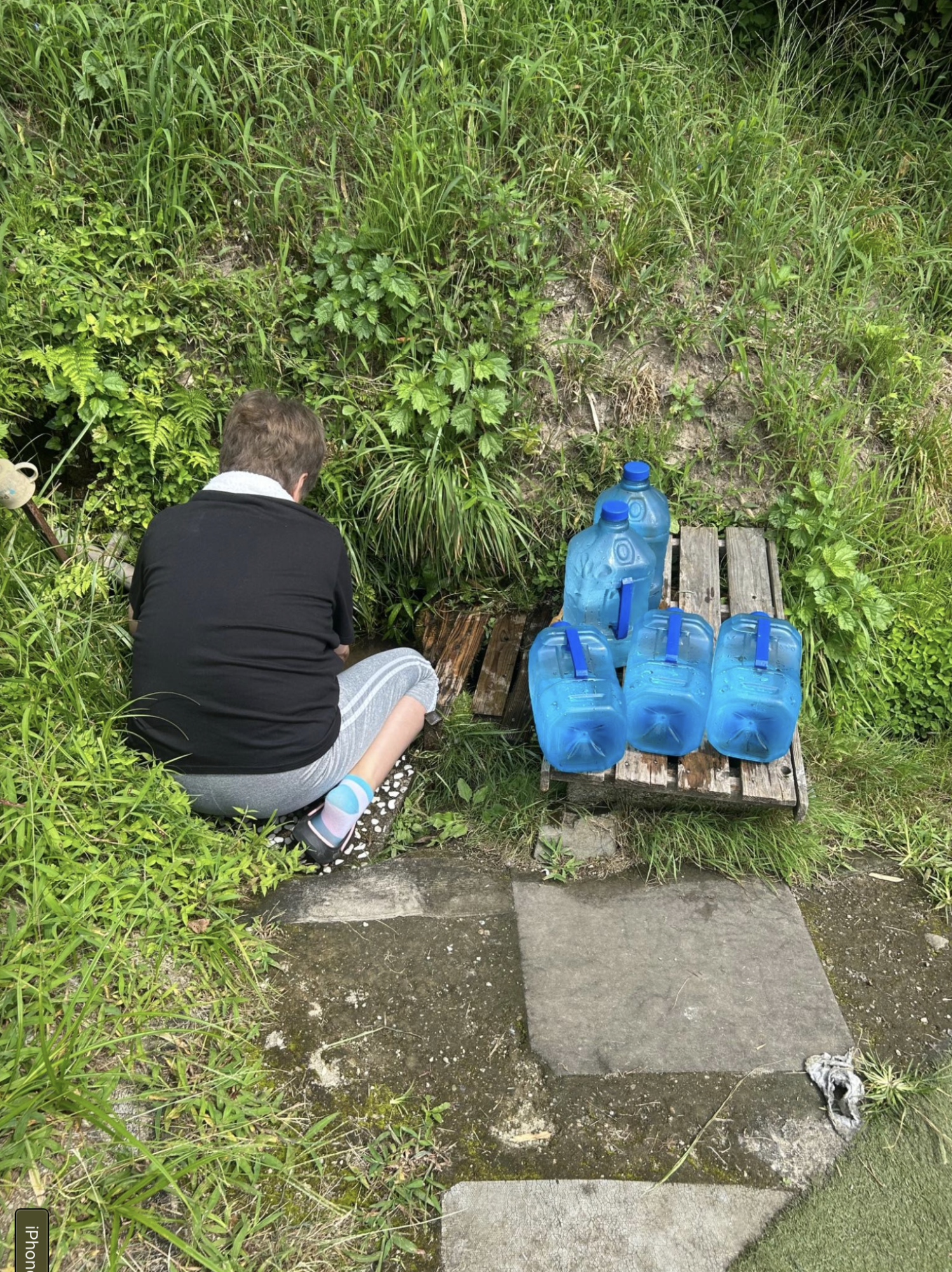
As a teen in New York City, walking is survival. You walk in order to survive high school hallways, to avoid delays, to stretch between subway stops, and to make your body match the pulse of the street. But in rural Japan, where I have spent my summers, the air itself seems to slow down. Streets are emptied by dusk, vending machines buzz along with the cicadas, and the nearest store might be a forty-minute trek through rice paddies. In Japan, walking wasn’t an errand. Rather, it was an encounter: with time, with boredom, and with myself.
I had the opportunity to interview Craig Mod, author of the 2025 memoir Things Become Other Things. When he tells me that “you have to be walking alone,” I understand. He’s describing something almost sacred. “As soon as you have someone else with you,” Mod said, “it completely changes the act.” For Mod, solitude isn’t antisocial — it’s a creative condition. Walking alone and offline, without music or podcasts, forces you into “a kind of really bored state,” he said, “which is more and more elusive.”
That word, ‘bored,’ hits harder than it should. I can’t remember the last time I was bored without panicking. Waiting in line, I pull out my phone. Walking to the train, I scroll. I told Mod that when I forget my earbuds on the subway, I suddenly see everyone again: people eating, scrolling, and staring blankly into space. It feels alien, like waking from a long digital nap.
Mod laughs when I say this. “Even thirty years ago,” he said, “everyone would be 80% more bored than we are today.” And that boredom, he argues, is where our minds begin to breathe again.
The Repetition That Reveals

In Things Become Other Things, Mod walks thousands of kilometers across Japan, and he records his experience to later send to readers. Mod writes essays from inns and photographs strangers before 10 a.m. each morning — his own rule to ensure contact with the world. “You do these big walks day after day,” he said, “and it becomes this kind of moving meditation.”
He’s careful not to mystify it, however. The walking is grueling, physical, and sweaty. But it’s also transformative. “There’s something about the physicality of it,” Mod told me. “Watching what you can do physically changes the chemicals in your mind, the way you see what’s possible.”
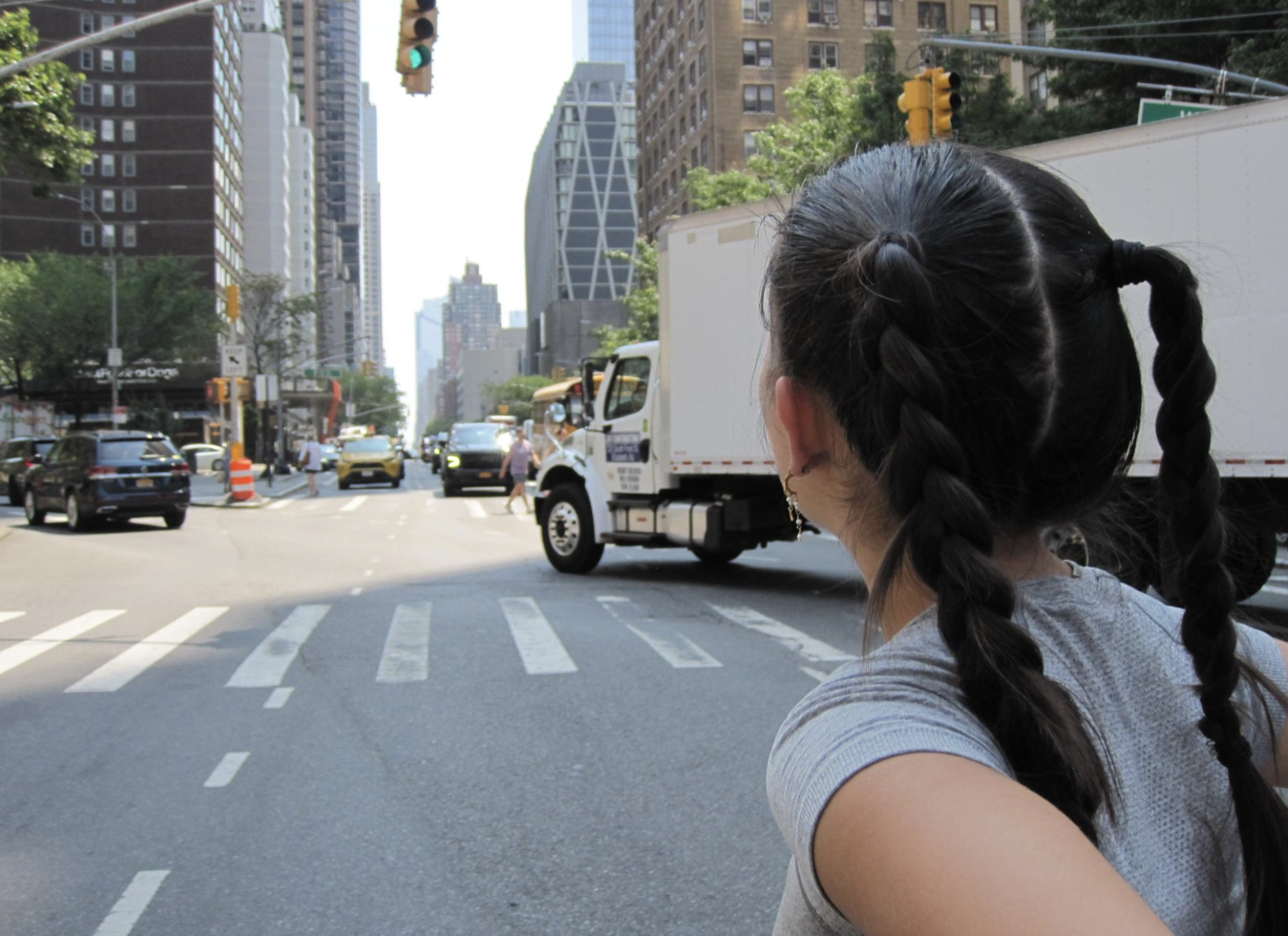
As we converse, I remember my longest walk, thirteen miles down Manhattan with four friends. The city pulsed with life the whole time, with honking cars, sirens, and exhaust. Yet when we finally reached Battery Park, a fullness to the day manifested itself. I didn’t know then that I was chasing the same thing that Mod was chasing, the sense of doing one thing deeply. Even something as ordinary as walking can make a day feel complete.
Rewriting the Self
When I ask what parts of himself had to “dissolve” in order to become the person he writes about, Mod paused. “Childhood embeds in us all sorts of pathologies,” he said. “It’s really hard to have that third-person perspective on yourself.”
For him, walking became a form of therapy, a way to overwrite the smallness that he felt growing up in a town without models for creative life. “I didn’t understand how you could actually have a committed practice around something,” he admitted. “So I left not knowing what that looked like.”
Mod told me that in his twenties, he was somewhat adrift, until running marathons and walking long distances began to “unlock” who he is today. “You start to set rules,” he said. “You find a tatami-mat shop at 9:50 in the morning, and you remember, I have to take a portrait before 10 a.m. So you walk in and ask a stranger. And they say ‘yes.’ And you realize there’s kindness in the world.”
There’s something beautifully primitive about this ritualized discipline, the arbitrary rules that create meaning, and the friction that creates connection. In a world designed to smooth every edge, Mod seeks out the roughness.
Friction as Freedom
‘Friction’ is one of Mod’s favorite words. “It’s really hard to just use that positive ten percent of a tool and step away,” Mod said, regarding the internet. “But friction can be useful.”
He worries about what happens when we remove it entirely. We have entered an era surpassing the digital age. The emergence of Artificial Intelligence means we don’t even have to think about what we want to find before finding something. AI automates translation and social media makes art algorithmic. “You get this sameness,” Mod said. “It’s the same jokes, the same structures. Everyone’s pushed into extreme sameness.”
He’s not exaggerating. I see this on a daily basis in my own life. Many people seem to edit their personalities in order to fit trends, their humor homogenized into fifteen-second bursts. Even our aspirations feel like a template. Success means speed, not depth. At my school, the Bronx High School of Science, ambition comes in the shape of spreadsheets: college applications, SATs, and awards. Everything has a metric, even joy.
However, Mod’s life serves as a counter-proposal. His walks are inefficient on purpose, and he spends eight hours doing something that yields no clear ‘output.’ Or as my Advanced Placement Physics teacher would say, his net velocity is zero. All Craig Mod gets is presence. “I think it’s literally impossible to be an artist and to be on social media all the time,” Mod said. “Great art just requires slower feedback loops.”
It’s easy to dismiss that as romantic. But his point isn’t nostalgic. Rather, it’s attentive. The slower the loop, the richer your thought becomes.
The Loop and the Labyrinth
Mod calls social media “the loop.” And once he names it, I can’t unsee it: the endless refresh and the tiny validation hits are a trap disguised as a connection. “I think art, great art,” Mod said, “just requires slower feedback loops.”
But Mod isn’t anti-technology. He uses AI in order to practice Japanese speeches and calls it “one of the most miraculous things” he’s ever experienced. What worries him is what he calls the flattening effect, when the same tool that helps us learn also removes the struggle that gives learning its meaning.
“If you can translate everything in real time,” Mod said, “the motivation to learn another language disappears.” Fluency, he argues, isn’t just words but also culture, nuance, and the ability to inhabit another way of being. “You can get an apple in France,” Mod joked, “but you can’t have a vulnerable conversation about love.”
His point lands like a koan. Progress removes friction, but friction is what makes us who we are.
Cities of Noise, Towns of Quiet
At one point, I tell Mod about my life between two kinds of noise: the rural quiet of Japan, where I once spent a summer, and the constant buzz of New York City, where I’m finishing high school. In both, walking feels different. In Japan, it’s introspection; in New York, it’s confrontation.
He nods, saying that he still loves cities. “I think New York is one of the most incredible collections of creative people in the world,” Mod insisted. “But friction matters there, too. You used to have to go to the city to find your people. Now the internet collapses that. And when you remove the journey, you remove some of the meaning.”
That idea that the journey carries meaning feels like the spine of his book. Every step that Mod takes across Japan becomes both a literal and symbolic resistance to collapse: the collapse of attention, of geography, and of individuality.
When I tell him that I keep deleting and redownloading Instagram, he laughs. “The DMs thing is real,” Mod said. “But what you can do is not have it on your phone, just use it on your computer.” Mod treats digital discipline the way that monks treat prayer, as small acts of intentional separation.
The Fullness of a Day
Near the end of our talk, Mod tells me that his walks taught him “what a full day feels like.” The phrase sticks. It sounds simple until you realize how few of our days feel full in the way that he means, and not busy, but complete.
“You go to bed,” Mod said “and you think, ‘Wow, I did as much as I could today. I created something, I connected with someone.’” That, for Craig Mod, is the artist’s life, not glamour, but presence.
I think about that when I walk home from school through the city’s noise, past delivery bikes, scaffolding, and steam grates. Sometimes I try Mod’s rule to live without music or a phone. At first, it’s unbearable. Then something shifts. My thoughts stretch. I notice the grain of the sidewalk, the rhythm of traffic lights, and my own breath. Things — ordinary, ignored things — become other things.
Becoming
That’s what Mod’s title means, I think. Things Become Other Things because we see them long enough to let them change. A walk becomes a meditation. A rule becomes a ritual. A day becomes art.
Mod’s book isn’t about walking so much as about learning to become bored again, to feel friction again, and to find fullness in what refuses to be optimized.
When he says goodbye, Mod leaves me with one last image. “I’m always amazed,” Mod said, “how everyone pulls out their phone the moment they get on an escalator. It’s like we can’t bear to do nothing for five seconds.”
I laughed when he said it. But later that week, standing on a subway escalator, I caught myself reaching, reflexively, for my phone. I stopped, pocketed it, and looked around.
The world was still there, waiting.
I had the opportunity to interview Craig Mod, author of the 2025 memoir Things Become Other Things. When he tells me that “you have to be walking alone,” I understand. He’s describing something almost sacred. “As soon as you have someone else with you,” Mod said, “it completely changes the act.” For Mod, solitude isn’t antisocial — it’s a creative condition. Walking alone and offline, without music or podcasts, forces you into “a kind of really bored state,” he said, “which is more and more elusive.”