

Currently on view at the Morgan Library & Museum through Sunday, February 8th, 2026, the Renoir Drawings exhibition offers an intimate glimpse into the works of Auguste Renoir (1841–1919), focusing on the drawings that are often overshadowed by his more celebrated paintings. Two rooms packed with his artwork spanning the length of his career create a vibrant, warm setting, reflective of the red tones in many of Renoir’s sketches.
An artist’s sketchbook reveals Renoir’s inner workings, thoughts, and the evolution of his work. Featured in the exhibition are pages from one of Renoir’s few known surviving sketchbooks as an amateur artist, dating to around 1860. Though Renoir began drawing at the age of 13 and was admitted to art school in 1862, there are no works from his early years, and only a handful from his twenties remain.
Self-Portrait (1879) is an example of the quick sketches that Renoir produced with swift, undefined brush strokes. At the bottom of the canvas is a faint image of a woman, as if Renoir started a new painting atop an unfinished one.
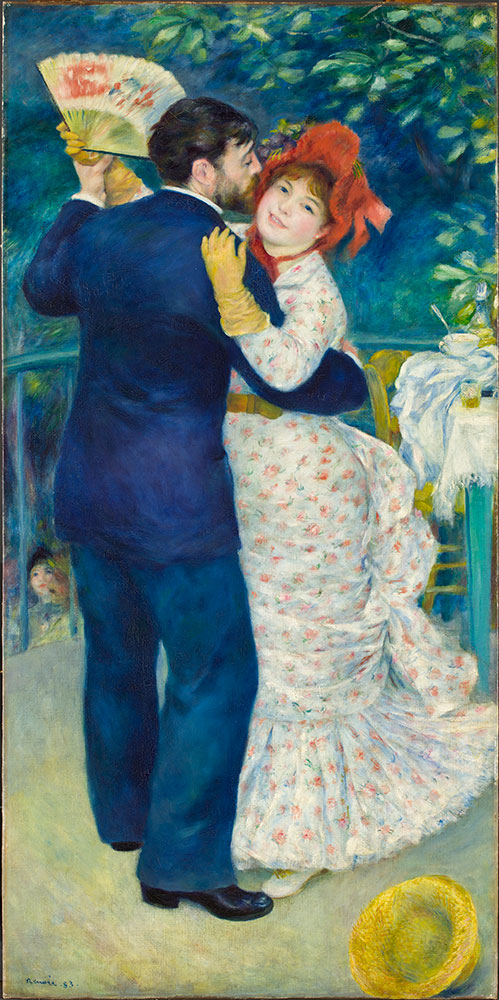
Dance in the Country (1883) is one of Renoir’s most well-known paintings and it is on loan from the Musée d’Orsay in Paris for this exhibition. Surrounding it are many of the sketches Renoir drew to prepare for this painting, on loan from museums such as the Yale University Art Gallery, the Denver Art Museum, and the National Gallery of Art, which all offer a glimpse into the process behind the masterpiece. Museums across the country have copies of the sketches, making this likely the first time the painting and its sketches have been shown together since Renoir created them.
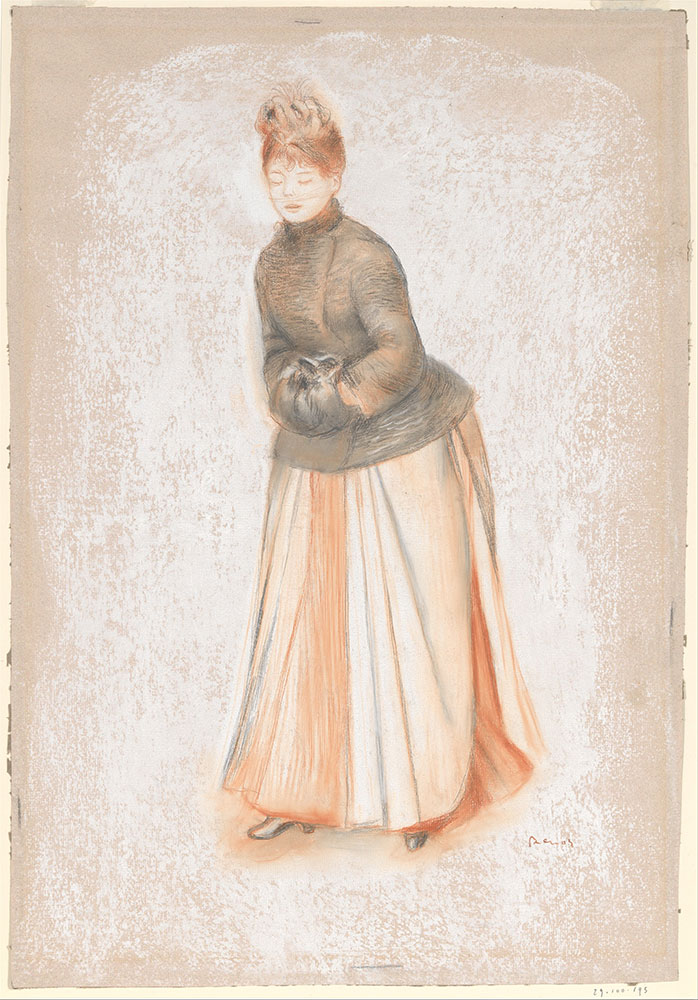
Young Woman with a Muff (1880) is an early example of Renoir’s use of red chalk. The muted red undertones add warmth and contrast to the portrait, giving the woman a glowing appearance. Using red chalk was a practice followed by artists in the Italian Renaissance, and one that Renoir used in order to evoke nostalgia and return to old techniques. The red chalk was also easier to blend and used to depict skin tones.
Though there is nothing fancy about Letter to Paul Bérard (1880), it introduces Renoir in a more informal, personal manner. The letter is to his friend, Paul Bérard, after the birth of his daughter, and it is decorated with playful doodles of a man pulling a baby out of a cabbage patch, a common myth at that time to explain the birth of babies, along with a man waving a banner, and presenting a French flag to a little girl. The doodles differ from Renoir’s typical complex works, but they introduce a different, more spirited side of Renoir.
Renoir’s widespread recognition was partly due to the fact that many of his works were featured in print, making them more widely seen. His drawings were featured in La Vie moderne, an artistic journal, the novel L’Assommoir by Émile Zola, and the essay “Les Salons bourgeois” by Alphonse Daudet. Renoir enjoyed the process of lithography and etching, which allowed him to make his work available to a broader audience.
Renoir frequently painted commissioned portraits to earn money, as most artists did at the time, but he was also commissioned to paint his friends and fellow artists, such as Paul Cézanne (1880). The curators believe that this pastel “may have been commissioned by Victor Chocquet, a government official and art collector who supported both artists and owned many of their works.” Inspired by the pastel, Cézanne recreated the portrait as a painting so he could keep a copy for himself.
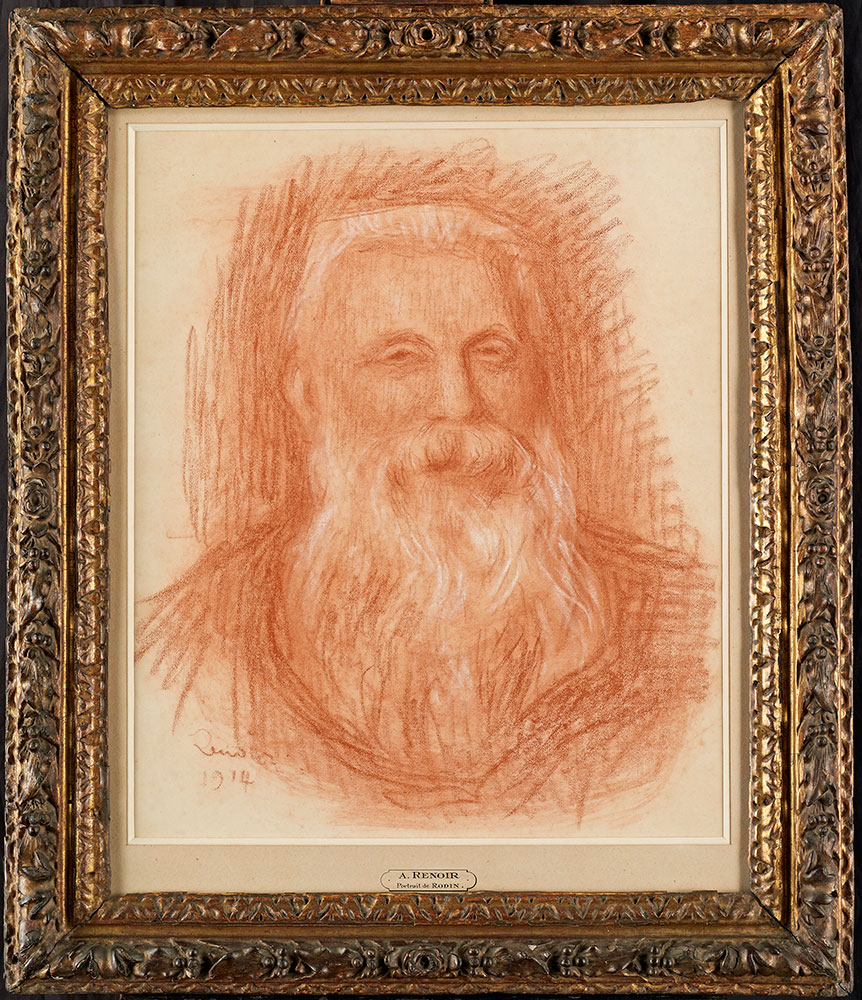
Auguste Rodin (1914) is a drawing of the famous French sculptor in red and white chalk, which Renoir was commissioned to draw originally for a monograph on the sculptor. Rodin visited Renoir’s studio, where Renoir created the work displayed in around only an hour. The quick strokes and blended lines clearly outline Rodin’s facial features, but the background and torso are more loosely defined.
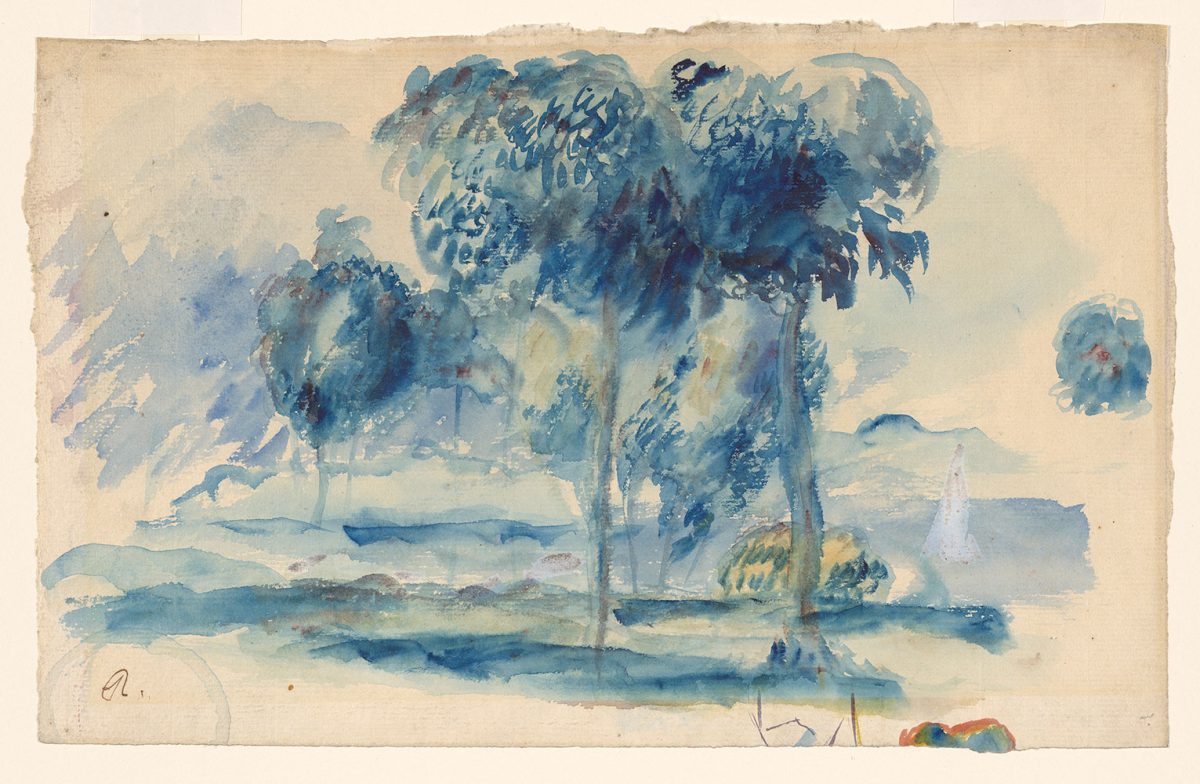
Renoir began working with watercolor in the 1880s. Like most of his work, some of his watercolors feature figures, but unlike his paintings and drawings, they often focus primarily on nature and landscapes. Renoir considered watercolors as a way to practice his use of color, especially to use it capture nature’s vibrant qualities.
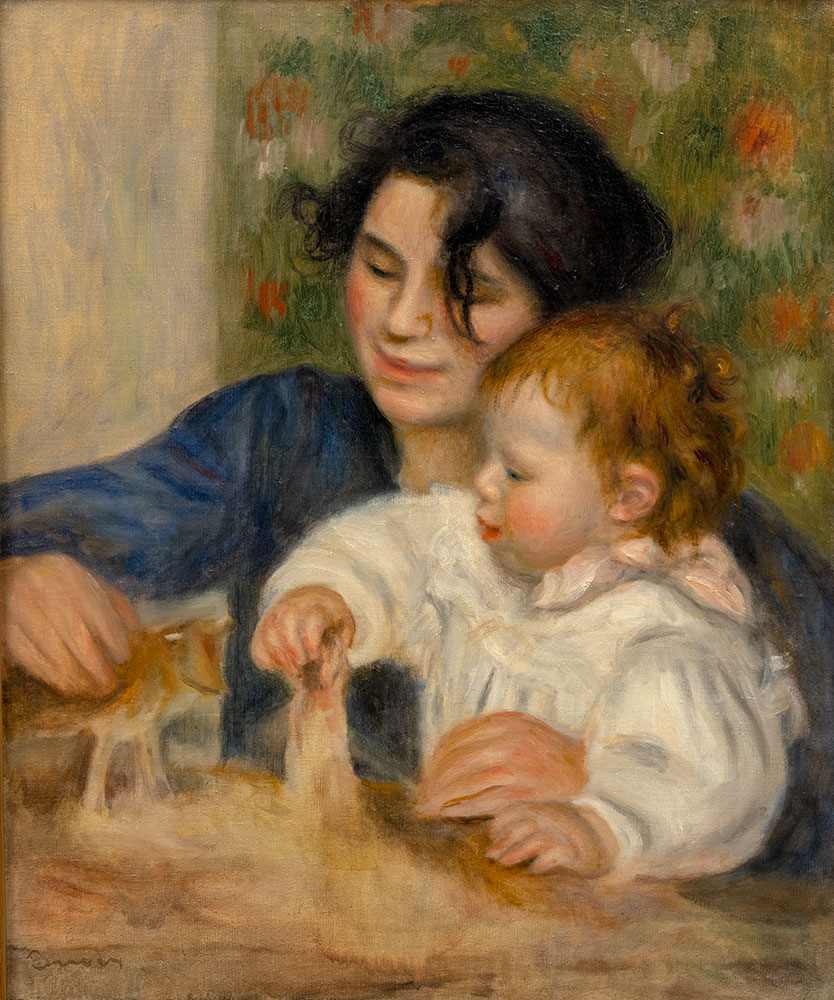
Aline Charigot was originally a model for Renoir, and the two fell in love and got married in 1890. In 1885, before they were married, Charigot gave birth to their son, Pierre Renoir, who became a subject in Renoir’s painting Motherhood (1885). In Gabrielle and Jean (1895), Renoir sketches and then paints his other son, Jean Renoir, with his nursemaid, Gabrielle, continuing to use his loved ones as features in his artwork. When Renoir no longer needed the money and recognition from commissioned portraits, he used his family and friends as subjects for his works, practicing and experimenting with new techniques.
Steering away from his usual Impressionist style, Renoir in the 1880s wanted more structure in his art and returned to drawing female nudes. Loose lines and strokes display the female body in a variety of positions and movements, refining his understanding of anatomy. His painting Seated Nude (1880) is on loan from the Musée Rodin in Paris, as Rodin, another artist who frequently depicted nude models, liked it so much that he acquired it for his own collection.
In the 1890s, Renoir was diagnosed with arthritis, which severely limited his ability to use his hands to create art. Though it served as an obstacle, this did not stop Renoir’s artistic drive, as he continued to follow his passion. Renoir worked with assistants who held his brushes, frequently bandaged his hand, and used various brush-holding methods to continue painting. His determination underscores his artistic passion.
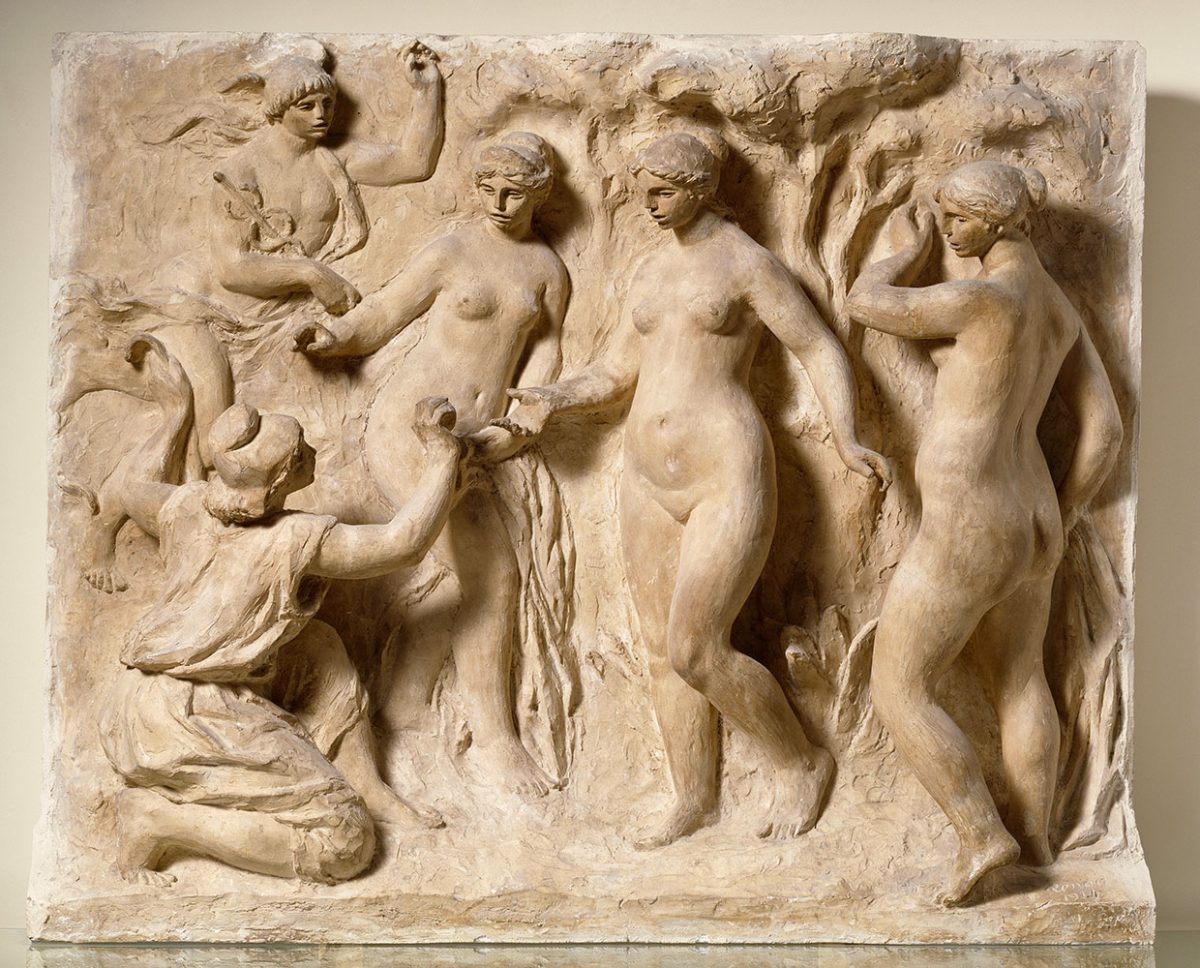
One medium that Renoir rarely focused on as an artist until later in his life was sculpture-making. Renoir collaborated with sculptor Richard Guino, who created The Judgment of Paris (1914), a sculpture of five women, semi or fully nude, based on Renoir’s drawings and vision. The sketches and studies for The Judgment of Paris, works inspired by Greek goddesses and methodology, are also on display, showing the female figures in the sculpture, drawn with red chalk. Renoir also painted a version of The Judgement of Paris in 1913, though it is not on display in the exhibition.
The Renoir Drawings exhibition is as expansive as Renoir’s career, bringing together drawings for which the artist is less recognized from museums and galleries around the world. Having the privilege to walk through such an extensive gathering provides a comprehensive understanding of Renoir’s technique, evolving styles, and contributions to the art world. This experience is a tribute to the exhibition’s curators and their dedication to bringing renewed recognition to Renoir’s masterful drawings. I am grateful for the opportunity it gave me to learn about Renoir’s drawings and his inspiring career.
The Renoir Drawings exhibition is as expansive as Renoir’s career, bringing together drawings for which the artist is less recognized from museums and galleries around the world. Having the privilege to walk through such an extensive gathering provides a comprehensive understanding of Renoir’s technique, evolving styles, and contributions to the art world.