
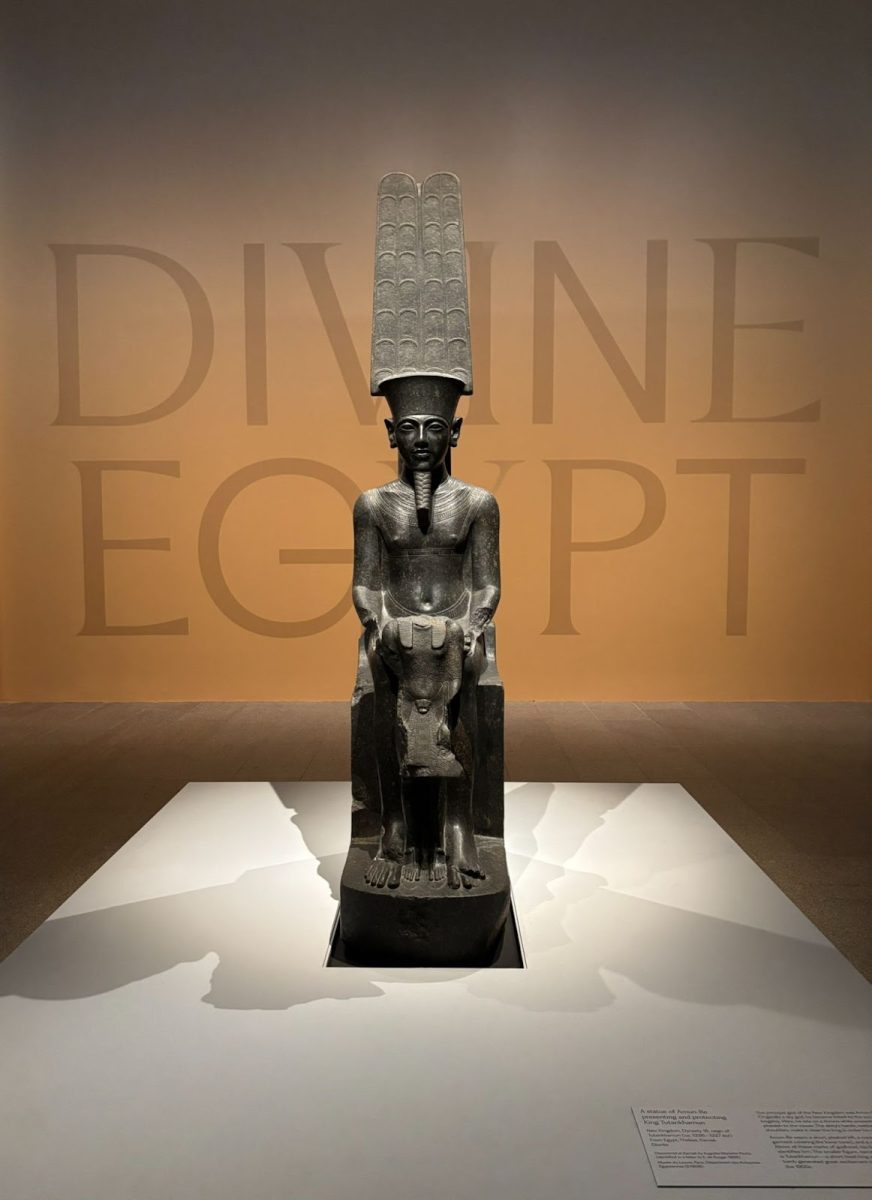
The gallery is dim but golden, the air still except for the soft shuffle of shoes against the brownish wood. The first sight that meets you is striking: King Tutankhamun, rendered in youthful grace, stands beneath the towering form of Amun-Re. The god rises above him in a posture of unwavering command, his body elongated and impossibly still, as though carved from a single breath of light and stone. Tut, small in comparison yet radiant in his own right, seems almost sheltered beneath Amun-Re’s steady gaze.
The contrast is immediate and intentional. Amun-Re’s broad shoulders and serene expression projects the immovable power of a deity who shaped worlds, while Tut’s more delicate form embodies the fragile, human side of kingship. The golden lighting sharpens this narrative, pulling warmth across the god’s headdress and casting a protective glow over the king below.
The Metropolitan Museum of Art’s new exhibition, ‘Divine Egypt: Gods and Goddesses in the Temple and Tomb,’ currently on view until January 19th, 2026, gathers more than 250 artifacts that trace how ancient Egyptians saw their gods–as radiant presences intertwined in daily life. These carefully selected artifacts are borrowed from a multitude of museums, including the Museum of Fine Arts, Boston, the Musée du Louvre, Paris, and the Ny Carlsberg Glyptotek, Copenhagen. The Divine Landscape, which consist of all the gods Egyptians relied on to continue daily life, developed from 4000 B.C.E. all the way to the Roman period of 100 C.E–accumulating over 1,500 deities. The exhibition is split into five sections: Divine Egypt, Expressing the Divine, Ruling the Cosmos, Creating the World, Coping with Life, and Overcoming Death. Curator Diana Graig Patch wanted to piece this exhibition in a way that refuses Western categorization, as Ancient Egypt had an ever-changing, fluid way of approaching their religious practices.
The depiction of Amun-Re and King Tutankhamun sets a historic precedent for the rest of the exhibition. With each section, new deities are discovered and their unwavering significance to aspects of daily Egyptian life is revealed.
Expressing the Divine
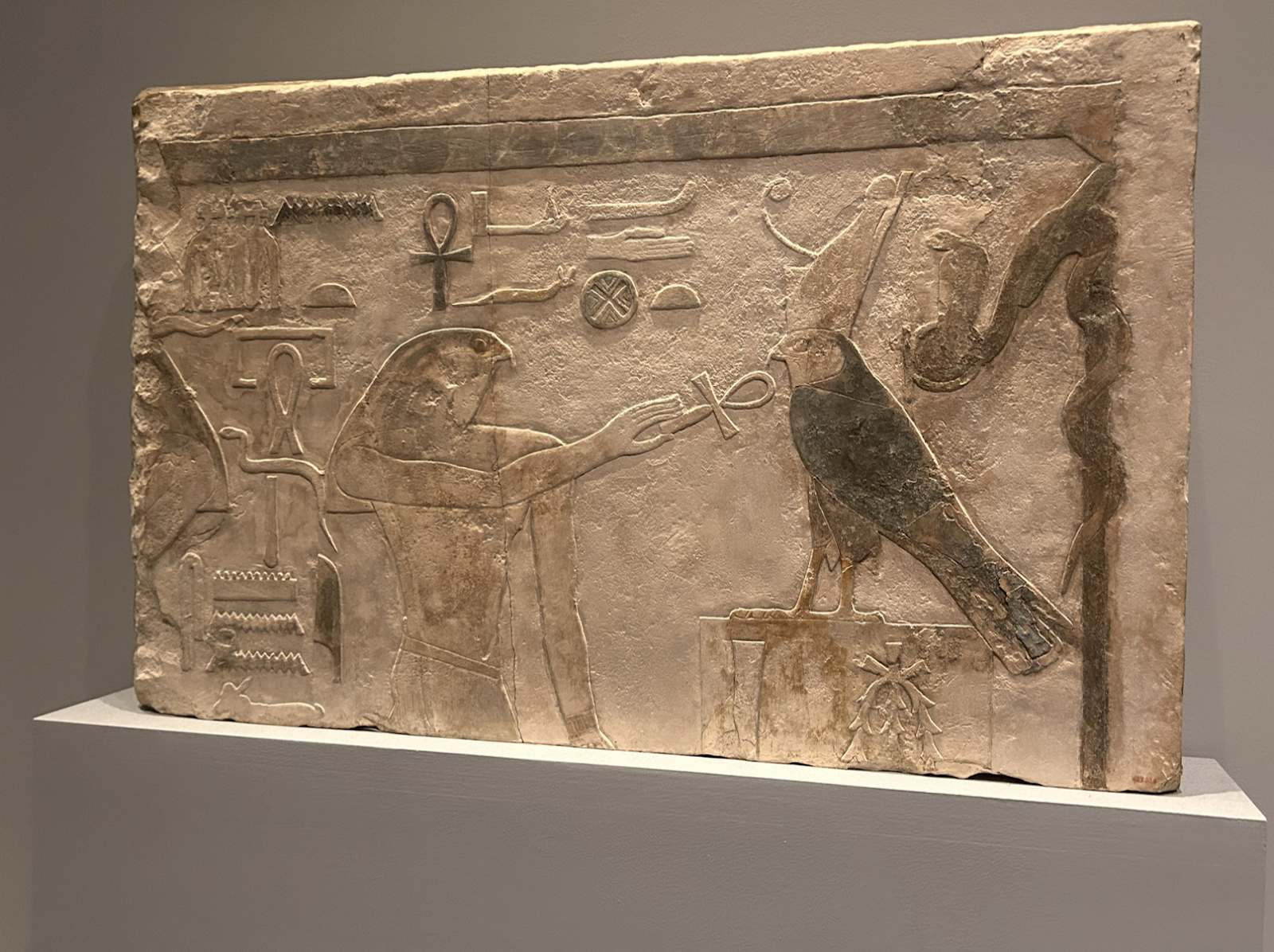
Along the second section of the exhibit, we are met with a multitude of monuments made for the god Horus. Horus was one of the most ubiquitous deities in Ancient Egypt. He first appeared in the Predynastic Period, and he rose to power over Egypt as the god of kingship. He is consistently depicted as a falcon, as falcons can soar and conquer the skies. As a convergence of a king and god, Horus is typically seen wearing a double crown, combining the white crown of Upper Egypt with the red crown of Lower Egypt in order to symbolize his domination over a united Egypt. What makes this section particularly compelling is how it reveals the fluidity of Egyptian divine identity. Some representations of Horus appear distinctly godly, detached from any individual ruler, while others explicitly collapse the boundary between deity and king. In these works, Horus does not simply protect the pharaoh–he is the pharaoh.
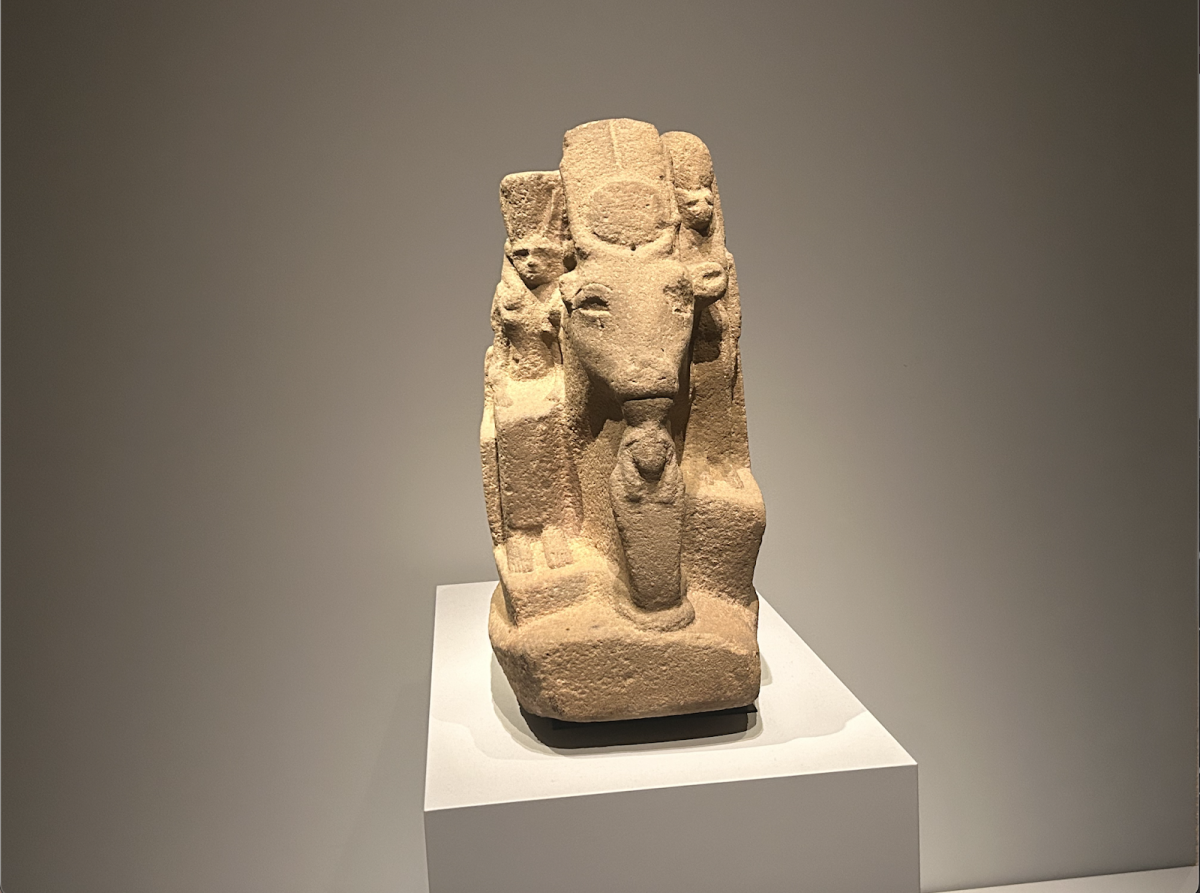
Oftentimes, Egyptian gods tend to have different forms. This can be seen by some as confusing, and while the exhibit highlights the animalistic aspects of gods, there are a few monuments that rely on human versions. The goddess Hathor, for example, is often depicted in the form of a cow: an animal who is perceived as both maternal and protective. Hathor represents the goddess of love, beauty, music, dance, fertility, joy, motherhood, and the sky. In a few artifacts at the ‘Divine Egypt’ exhibition, however, Hathor appears in a human form, often distinguished only by her iconic cow-horn headdress cradling a solar disk. Rather than distinguishing gods and kings, the former being deemed as superior, Hathor is depicted with both prominence and approachability through this representation.
This incentive to portray gods in human form blurs the line between gods and humans even further. At the start of the exhibit, the towering figure of Amun-Re stands above King Tutankhamun, making it clear that despite his divine support and authority, the king is still human. Later, Gods are shown closer in scale to humans, appearing more grounded and emotionally accessible. Instead of existing only as distant, all-powerful figures, they are presented as beings meant to connect with people in daily life, protection, and belief.
Ruling the Cosmos
The second section highlights the importance of cosmic figures such as the Sun god Re. Unlike other gods, Re lacks a single fixed representation. Instead, his identity is fluid, often merging with other deities to reflect different aspects of divine power. Many gods combine with him simply by adding “Re” to the end of their names, reinforcing his role as the ultimate source of life and authority. As the sun god, Re was central to Egyptian belief, governing time, creation, and the daily rhythm of life itself.
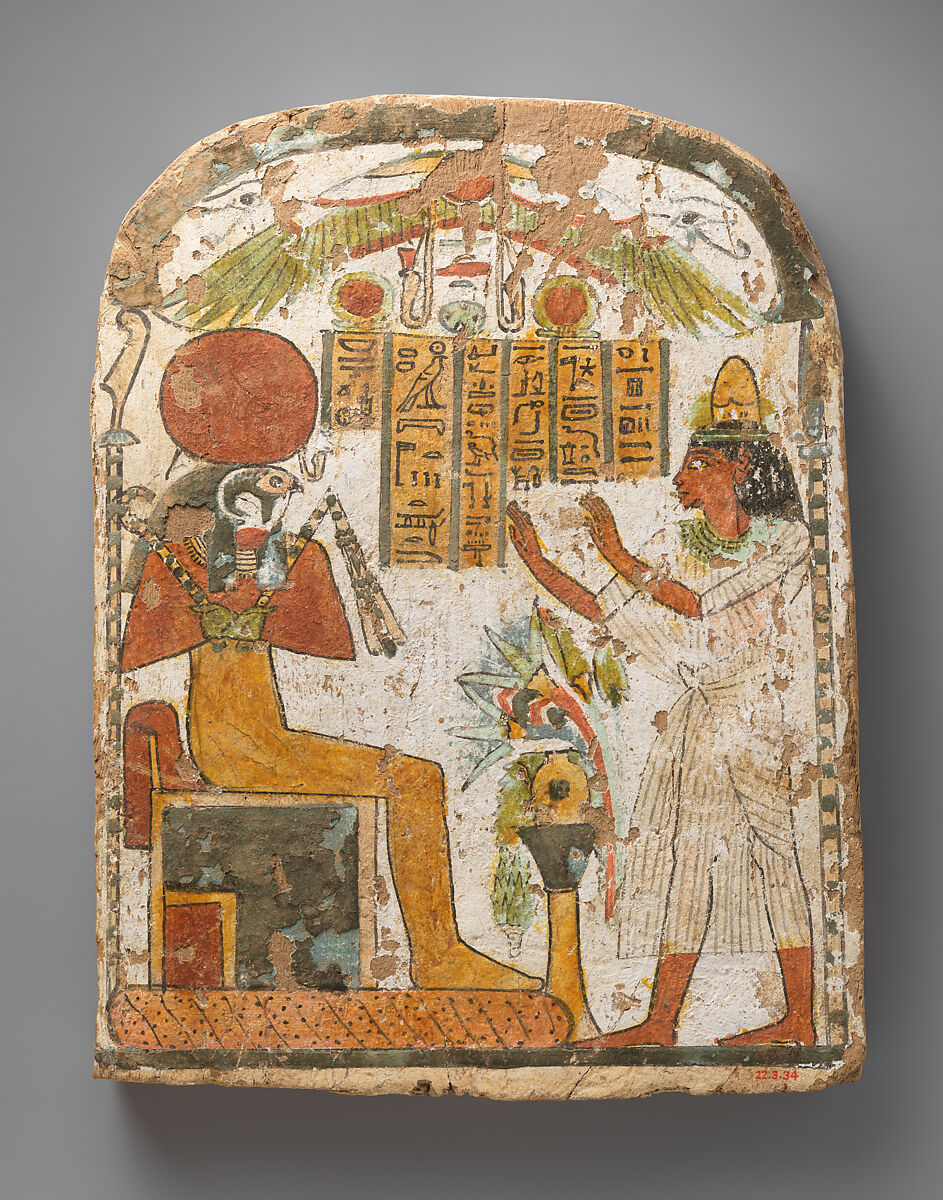
What is simply captivating about Re is that his form changes based on the time of day. In the morning, he is depicted as a giant Scarab, which is formally known as the Khepri. Khepri is a scared beetle who pushes the Sun across the sky, highlighting Re’s importance in respect to the sun. During the day, Re converges with Horus to become Re-Harakhty, typically depicted as a falcon-headed man wearing a sun disk encircled by a cobra. Several objects in the exhibition highlight this identity, including a stela showing Djedbastet adoring Re-Harakhty, where the god appears upright and commanding, dressed in a divine kilt. The falcon of Horus links him to the sky, whereas the solar disk reinforces his lunar authority—maintaining the sun throughout the day.
At nighttime, Re merges with Atum, forming Re-Harakhty-Atum, a figure that represents the full solar cycle from dawn (Khepri) to dusk (Atum). In this form, seen on a wooden stela, the god is wrapped in a shroud and holds the insignia of kingship, signaling both creation and closure. The merging of such values reflects Egyptian beliefs about time as cyclical rather than linear: the sun is born each morning, matures through the day, and dies at night, only to be reborn again.
Creating the World
This section of the exhibition focuses on the different creation accounts in Egyptian mythology, and the gods included. This is where the Ennead, the foundational divine family in Egyptian mythology, is introduced. These gods and their functions, ordered chronologically over four generations, are Atum (creator), Shu (air), Tefnut (moisture), Geb (earth), Nut (sky), Osiris (fertility), Isis (motherhood), Seth (Chaos) and Nephthys (night).
Egyptian mythologies often contradict one another. The sky goddess Nut offers an alternative explanation for the cosmic cycle: she gives birth to the sun each morning and swallows him at night. Although this narrative differs from the transformations of Re, Egyptians did not view these accounts as conflicting. Instead, they accepted multiple myths as complementary ways of expressing the same cosmic order. This approach reveals a culture more concerned with symbolic truth than a sole answer, allowing diverse explanations of the universe to coexist.
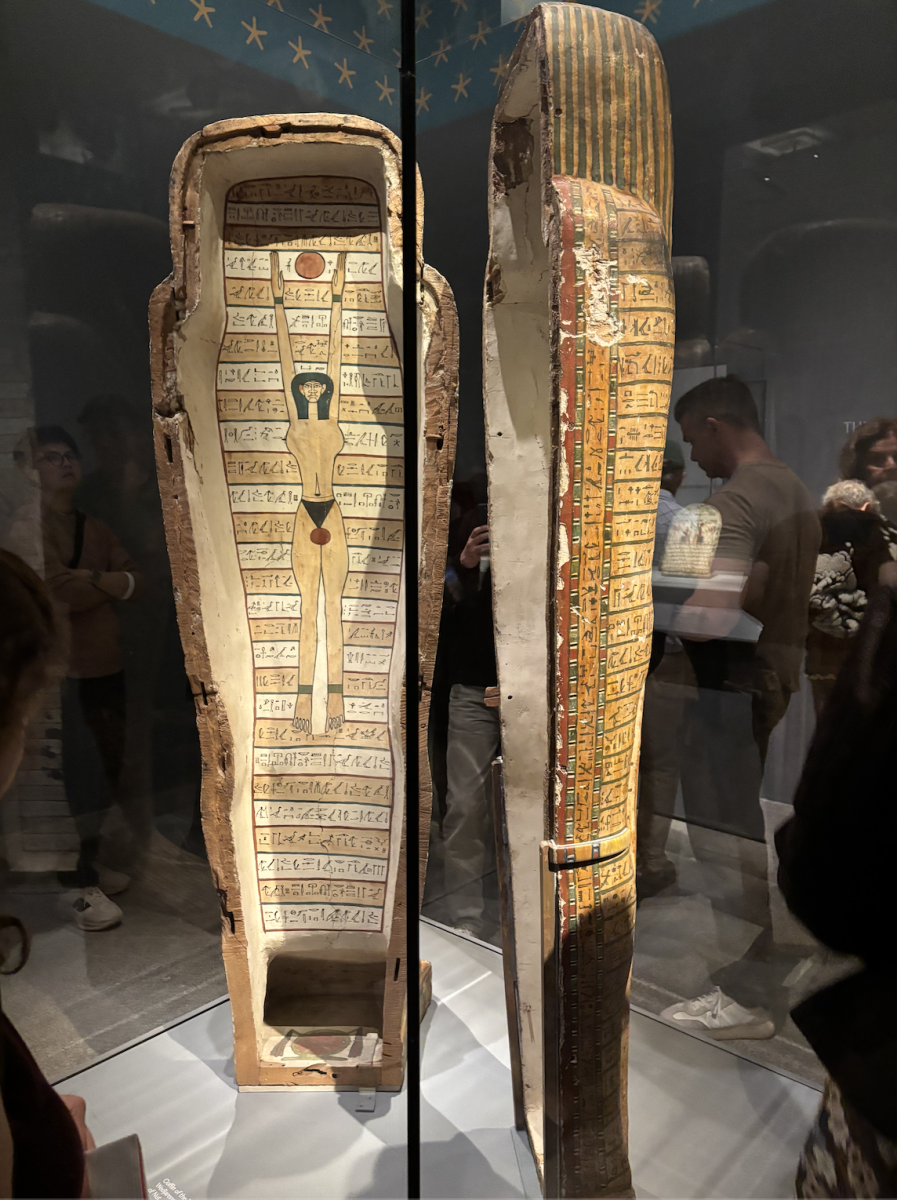
Although these nine gods were central to Egyptian creation myths, they were rarely depicted together as a unified group. One of the few surviving works that illustrates their collective presence is the Inner Coffin of the Singer of Amun and Royal Daughter Naun, which depicts three members of the Ennead working in harmony. In the scene, the sky goddess Nut arches overhead, the earth god Geb lies beneath her, and the air god Shu stands between them. This compositio–Nut above, Geb below, and Shu separating the–is the most common representation of the group.
The Ennead is just one of many ways ancient Egyptians explained creation; several other deities exist. Khnum was a ram-headed deity who created people on his potter’s wheel, whereas Ptah created the world, including all the gods, out of speech and thought. Deities such as Min, were associated both with creation and male fertility.
The mass representation of deities with the same functions show the fluidity and ever changing religion of Egyptians. Every thought, function, and idea related to the gods could be expanded or altered to fit a new narrative; the religion never followed a coherent, rigid structure but instead grew in response to political stability, shifting power, and cultural exchange over time.
Coping with Life
The previous sections highlight gods whose worship was formally carried out by the king and priesthood. Yet, ordinary Egyptians were not allowed to enter temples, and thus had limited ways of directly paying their respects. One of the most interesting ways that Egyptians relayed their gratitude towards gods were through festivals: gods would be carried through the streets on a processional boat (barque), and people could pray and empathize with them.
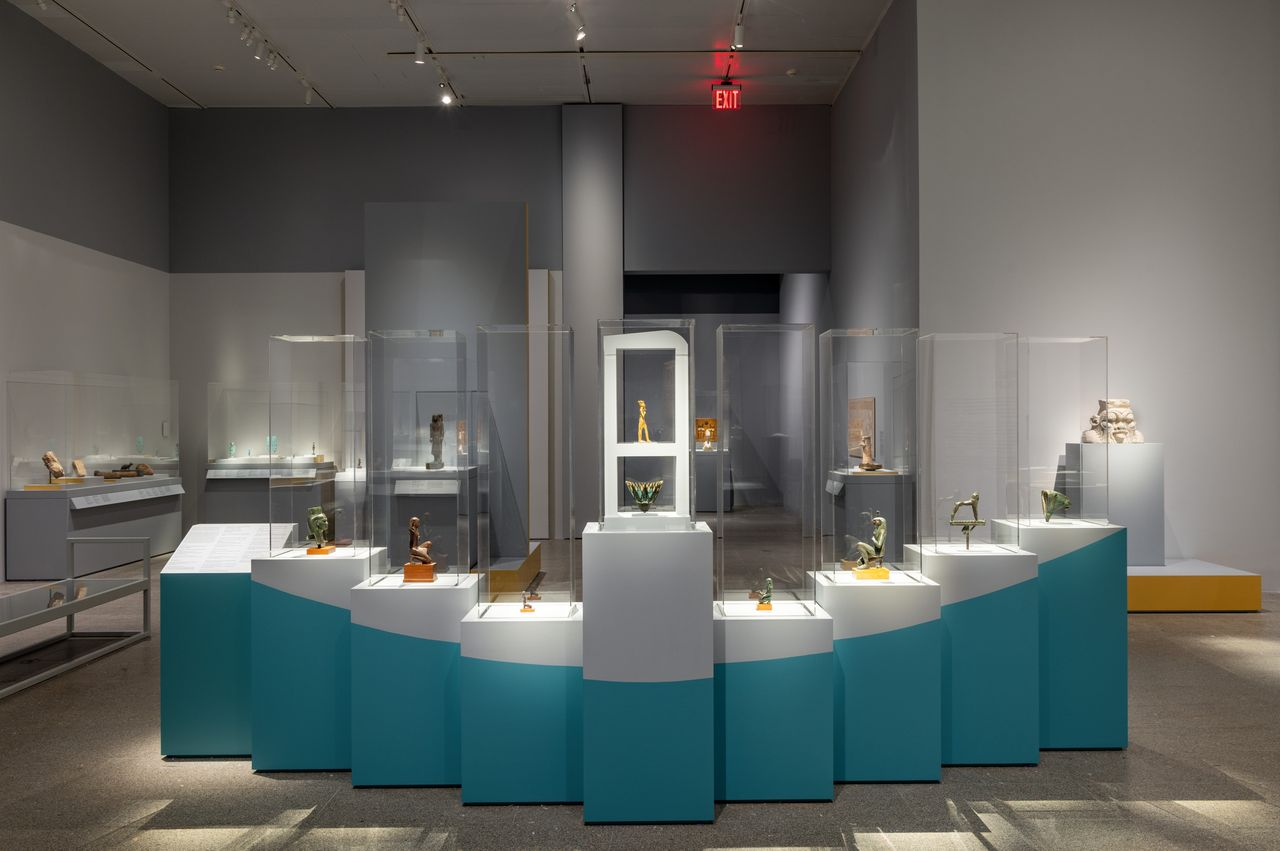
Barques provided an opportunity of comfort for Egyptians, allowing them to convey their worries to gods based on health, fertility, family, jealousy, and power. The MET’s recreation of a barque showcases powerful gods like Amun in solid gold–a material traditionally used in these festival processions. The imbalance between Egyptians and their gods was reinforced by the gods’ distant, otherworldly nature. Ordinary Egyptians were not permitted to touch or directly interact with them, yet they believed that regular attendance at festivals, combined with heartfelt prayers, could bring prosperity into their lives.
Overcoming Death
The last section of the exhibition focuses on the significant deities involved in the role of a person’s funeral. Death is a highly integral part of Egyptian culture, one that unites kings and common people, and it is not portrayed as the end of life, but the beginning of the afterlife. Egyptians believed that for the soul to live on, the body had to remain intact and recognizable, which is why mummification became a solid preserving tactic. Mummification wasn’t accessible to all. Rather, it was held for the elite and pharaohs, who could afford the costs of the complicated process. Over time, however, it became accessible to everyone.
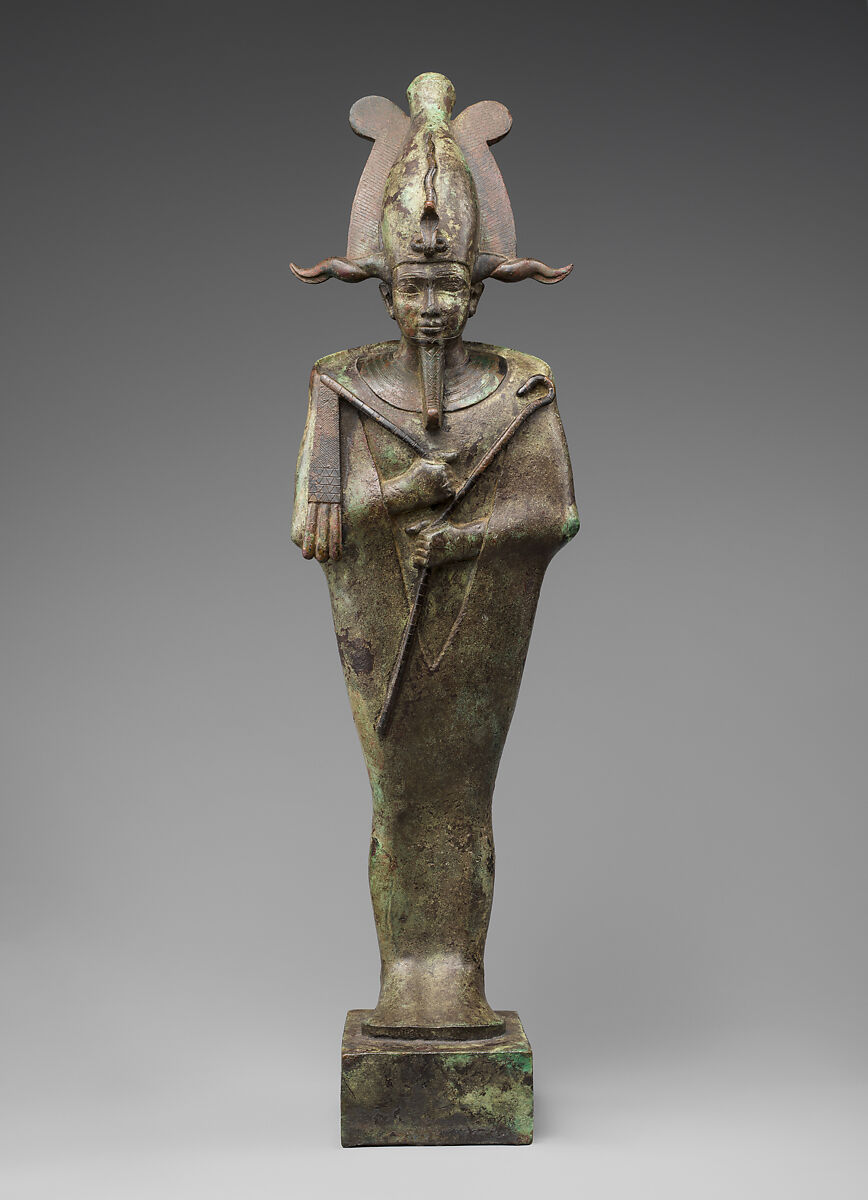
Osiris symbolizes the god of the afterlife and represents the origin of mummification in Egyptian culture. According to myth, he was murdered by his brother Seth, who dismembered him into multiple pieces. His sisters, Isis and Nephthys, collected the pieces, reassembled his body, and performed the first mummification ritual, allowing him to live eternally in the afterlife. This story reflects the importance that Egyptians placed on the preservation of the body and the belief in life after death, which shaped their funerary practices, religious rituals, and social values surrounding family, loyalty, and the divine order.
Towards the end, we encounter the solemn presence of Anubis, the god of Embalming. He oversees mummification, guards the deceased, and judges the purity of the soul. As one of Egypt’s oldest deities, Anubis appears as early as the Predynastic Period, long before Osiris rose as lord of the underworld. He is depicted as a canid, resembling a jackal, an animal associated with cemeteries and protection. The exhibition displays actual animal mummies: cats, canids, and containers for their remains, highlighting Anubis’s role in rituals. Devotion to Egyptian deities remained constant even in death, with continual respect and worship expressed through statues, monuments, and figures of Anubis, Osiris, and Isis.
Egyptian society incorporated gods into homes, rituals, and public spaces, providing protection, guidance, and meaning. Although kings and common people worshipped differently, they were united by the comfort and protection they sought. Some monuments depicted gods and humans in close association, while practices such as barque festivals emphasized their separation; still, worship persisted across all levels of society. Egyptian mythology remains timeless and fluid: across the galleries of ‘Divine Egypt,’ we can trace this continuity, appreciating how carefully crafted imagery and symbolism allowed religion to flourish for millennia, shaping a society in which the divine and human were inseparably intertwined.
Egyptian mythology remains timeless and fluid: across the galleries of ‘Divine Egypt,’ we can trace this continuity, appreciating how carefully crafted imagery and symbolism allowed religion to flourish for millennia, shaping a society in which the divine and human were inseparably intertwined.