
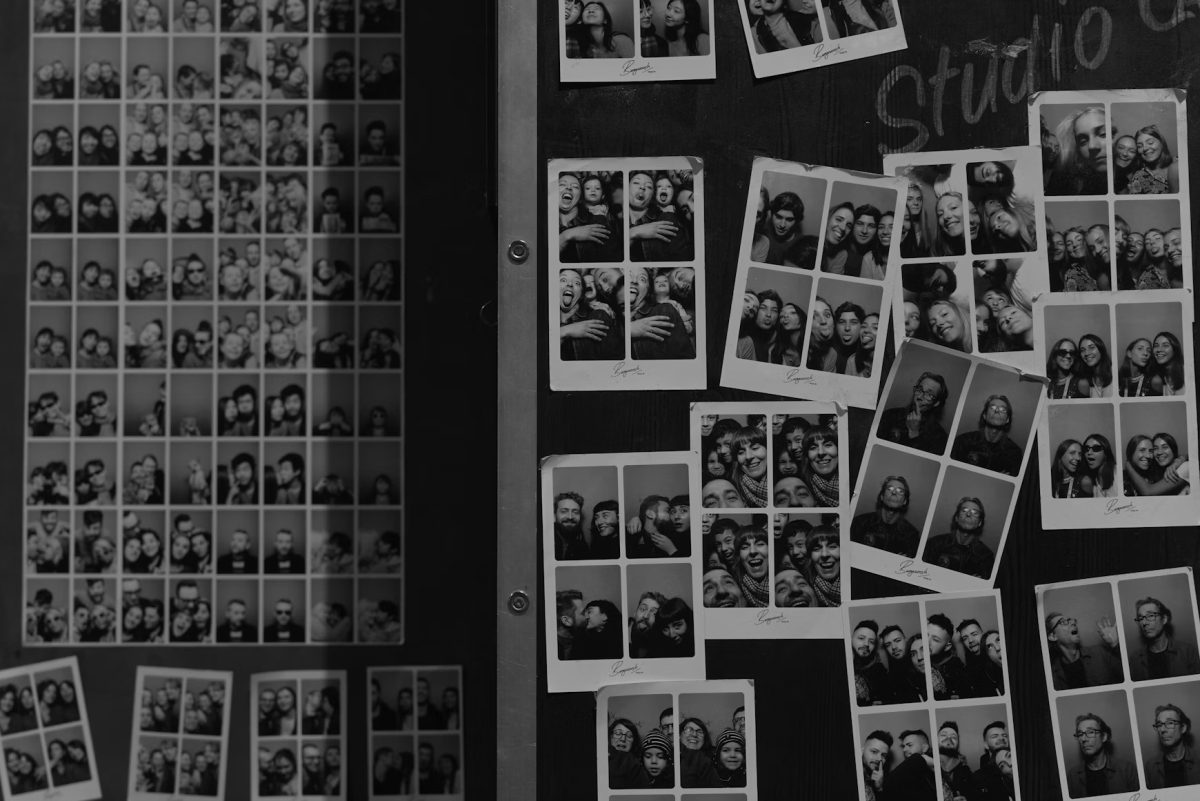
Insert a few dollars, wait a few seconds, then snap! Memories made tangible are spit out of the machine for one to keep. Efficient is one way to describe modern day photobooths. Simply stepping behind the curtains and striking a pose can forever memorialize an outing with friends. The core reasons behind the surge of photobooth usage lie within our increasingly digitalized world, trends in the newer generations, and the desire for “old-school.”
The concept of photobooths was first created in 1889, but it wasn’t until 1925 that the concept was brought to life under the name Photomaton; an easy and autonomous way to take a photo without the need for a professional photographer. It took around 10 minutes to print the photostrip containing 8 photos — almost instantaneous at the time, although it may seem excessively long now. The original photobooth machines were not independently functional enough to be used without supervision either, so workers had to be nearby to set up the customers for their photos. Nowadays, photobooths are almost always automated and ready to use.
Although this machine is nearly 140 years old, its purpose has changed little, aside from its target audience, they were once used for more professional reasons like passport photos. The reason most photobooths are still around is because of the demand for tangible memories and keepsakes. Nostalgia is a feeling that keeps many of us in a strong emotional chokehold, which is only further proven by the decisions we make today. People want to remember the moments when they are happiest and willing to try new opportunities. That is where photobooths come in. By just snapping a few photos, one can keep their souvenir with them in the form of a tiny strip of photos. The feeling of nostalgia has empowered this desire, leading to the popularity of the modern photobooth.
It was not until around World War II, or the 1940s, when photobooths saw a spike in usage. They were still used as a way to produce keepsakes, but were targeted towards a different crowd; soldiers or family members who wanted their loved ones to remember them as the war began. Due to the cheap prices for the photos, the photobooth became an immensely popular choice for the average family at the time. Photobooths not only help capture people’s physical appearances, but they also capture the essence of the times. Through photostrips from the WWII era, people are able to see the more light-hearted side of the war with pictures of soldiers together or families longing for their missing members being exchanged as mementos.
Aside from usage in the past, photobooths have made an impact on those who were fascinated with the concept of this efficient photo taking. Originally, they were made for the public: The ordinary person who could spare a coin or two for some photos. However, photobooths caught the attention of higher class individuals including artists, celebrities, and even U.S. president, John F. Kennedy. Imagine an invention, created for those who do not have the money for professional photography, being used and adored by those who could afford any photography if desired. The experience of being in that small box, taking photos in a free manner, appeals to much more than the typical person. Needless to say, the photobooth was an immediate hit once it was released to the public.
Transitioning into the 21st century, the photobooth audience began to shift. Even as celebrities were stepping away from the photobooth craze, newer generations began to find themselves drawn to this miracle machine. Around the 2010s, Gen Z started the “analog” revolution which brought many back to using photobooths. Although new trends revolve around going back to old-school, more recent factors have played a role in this motivation as well.
Social media, for example, is a big player in this newfound interest in photobooths. Sharing experiences online is the new normal for every get-together or hangout with friends. By using photobooths, people can obtain a physical copy of their experiences for all to see. A few frames captured of you and your friends having a great outing is exactly what people would want on their social media presence. With modernized photobooths, it’s also possible to have a digitized, animated version of the photos you take in the booth. In addition to these modernized features, many photobooth businesses provide props and booths that shoot from different angles for one to use. This makes for the perfect combination of trendy and whimsical desire that many want so they can appear to have a “perfect” life with fun experiences on social media.
Many act based on emotion, and nostalgia is a big player in the popularity of photobooths. The feeling of nostalgia that comes from the physical photostrips contributes to the photobooth’s rising popularity as well. Older trends resurfacing seem to bring back a desire for more old-school activities. As much as the rising use of social media impacts the popularity of photobooths, the step away from a digitalized world also nurtures this growth. Instead of using high-tech photography or a simple phone, many have been going back to digicams and in this case, photobooths. Photobooths offer a way to capture memories without being too “modern” which appeals to those who have followed the old-school trends.
This rising popularity has caused photobooths to appear in most crowded areas, and the impact they have made is evident. Most of these machines that are located in highly visited areas are bound to have lines of excited customers crowding around, waiting for their chance to get their photostrips. Statistics show that in the past five years, the demand for photobooths in weddings is one of the highest compared to other activities or alternatives like a traditional, paid photographer. At the moment, around 87% of guests at weddings say that photobooths are the most entertaining activity available and about 78% of guests use the photobooth more than once at weddings. From these numbers, it is clear that photobooths are an extremely popular activity when organized at events and other functions. Additionally, photos obtained from photobooths at these functions are much more likely to be shared online compared to regular photos taken by phone.
Photobooth usage has shown extraordinary growth as of late, rising nearly 150% in the past five years alone. Factors such as “selfie culture” contribute to these statistics, as almost 60% of Americans take selfies of themselves at least once a week. 36% of those Americans take selfies for the reason of “capturing memories” – one of the core purposes that the photobooth serves.
There are downsides to the more developed photobooths, however. Prices for photostrips have increased compared to their counterparts when photobooths were first introduced to the public. Photos that could have been obtained with only a few coins are now forcing consumers to cough up dollar bills. Although this price increase could drive some away from using photobooths, enough individuals are willing to pay up for these strips. Lydia Chen ’28 said, “I believe the average prices of these photobooths are slightly overpriced, but not to the extent that I would refrain from using them.” A clear reason why the photobooth market has been sustainable and even increasing is because of the fact that slightly higher prices will not stop most people from using them.
Photobooths have become a staple of memories and mementos in recent times through their simple, yet addictive aspects. Almost nothing has changed about this machine following its debut in the early 1900s – an indication that it is one of the few inventions created right from the start. With such a simple machine like the photobooth slipping into modern day trends and culture, it can be as easy as paying up a few dollars to create tangible memories that can last in this developing world.
The experience of being in that small box, taking photos in a free manner, appeals to much more than the typical person. Needless to say, the photobooth was an immediate hit once it was released to the public.