

Imagine walking into a bustling pizza place and immediately being met with the deep, earthy smell of a century-old oven baking fresh pies. You sense the contagious energy of customers and waiters alike — bound by the rhythm of the ovens and the buzz of constant orders. You sit down and begin poring over the menu, your mouth watering at every tempting flavor that you see: white clam, margherita, pepperoni, caprese and so much more. Welcome to Frank Pepe’s: a true pizza paradise.
History and Establishment
Frank Pepe immigrated to New Haven, Connecticut as a teenager in 1909, part of a massive wave of southern Italian immigrants searching for opportunity in American cities. Like many newcomers, he arrived with little money and limited knowledge of English, but with a strong work ethic shaped by his upbringing in Naples. His time in the United States was interrupted by World War I, as Pepe returned to Italy to fight for his homeland. After the war had come to a close, he met and married Filomena Volpi in Maiori, Italy. Together, they moved back to New Haven, a city that was rapidly becoming a hub for Italian immigrant life, and raised their family.
In New Haven, Pepe took whatever work he could find, initially working in a pasta factory before securing a job at a bakery on Wooster Street, the heart of the city’s Italian-American community. The neighborhood was crowded, noisy, and alive with street markets and family-run businesses, and it was here that Pepe began experimenting, adding originality to traditional food in his spare time. Drawing on his memories of Naples, he started developing his own version of the classic “apizza,” a Neapolitan-style pizza adapted to the ingredients, tastes, and circumstances of his new home.
At first, Pepe sold his pizzas informally, walking through the Wooster Square market with several pies balanced atop his head, calling out to passersby. His pizzas quickly gained attention for their simplicity and bold flavor, and demand steadily grew. Pepe eventually saved enough money to purchase a wagon, allowing him to sell more pizzas and reach a wider audience. By June of 1925, his success enabled him to take over the very bakery where he had once worked, officially opening Frank Pepe Pizzeria Napoletana on Wooster Street and marking the beginning of a long legacy that he would leave on New Haven, Connecticut and broader food culture.
In 1937, Frank Pepe’s had grown so popular that he and his family decided to move the establishment to a larger, more spacious location down the street. In the new location, the family was able to add more seating and ovens, allowing them to meet growing demand. A year later, Frank Pepe’s nephew Salvatore “Sally” Consiglio left Pepe’s to open up his own pizzeria down the street, Sally’s Apizza, setting off a long-lasting legendary pizza rivalry within the family.
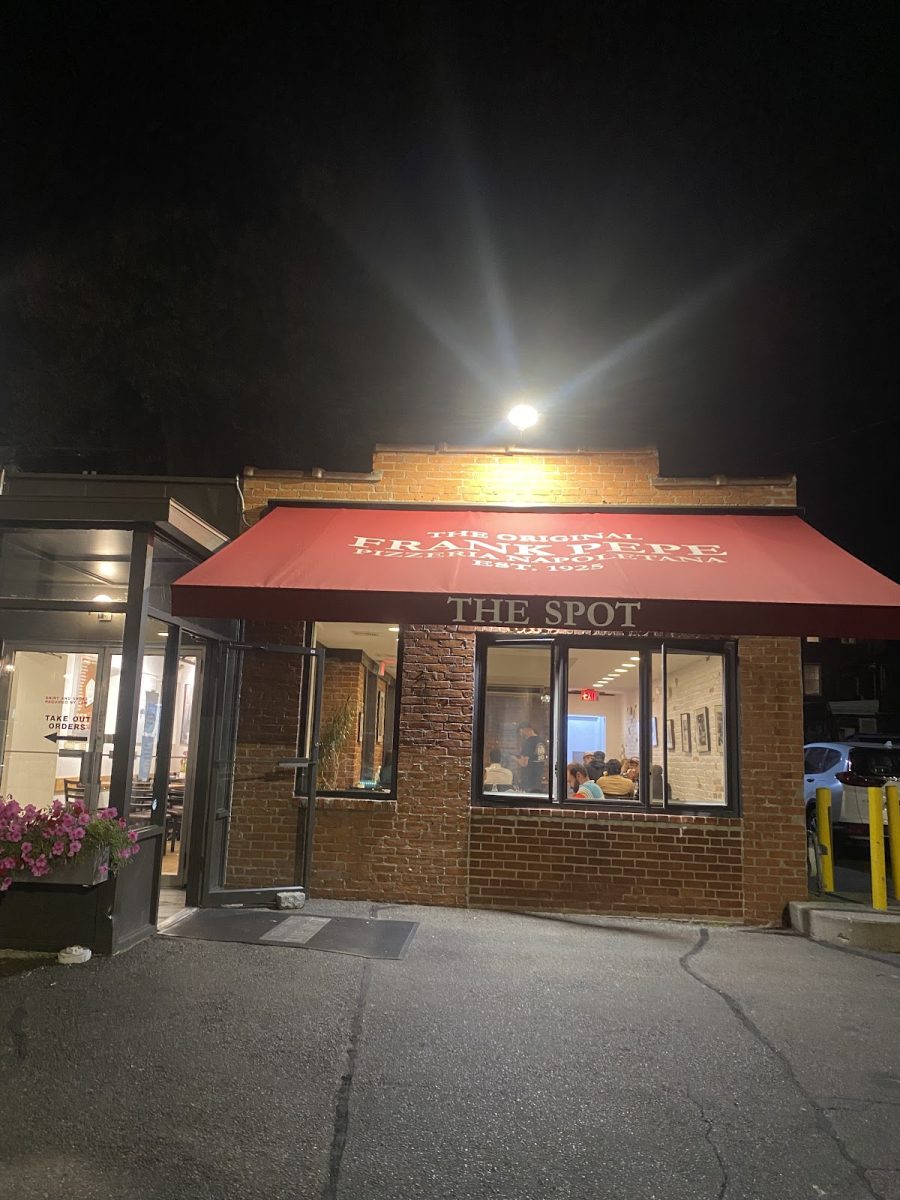
In 1981, after decades of tremendous success, the family bought back the original property that they had left behind in 1937, adding it as an annex to the main pizzeria. The original location is now known as ‘The Spot,’ and customers are invited in to sit and enjoy Frank Pepe’s pizza in the evening hours. It is also a great place to host gatherings with family and friends, and Pepe’s even offers guests the option to learn how to make an original Frank Pepe pizza.
Pepe’s Signature White Clam Pizza
For anyone who has stepped inside Frank Pepe’s, or even just heard its name, the legendary White Clam Pizza immediately comes to mind. It is widely regarded as one of the most iconic pizzas in the United States, and its reputation stems from its simplicity and originality. First introduced in the mid-20th century, the pizza defies expectations by omitting tomato sauce and mozzarella, ingredients many people consider essential to pizza. Instead, it relies on freshly shucked clams, olive oil, garlic, oregano, and a light dusting of grated Pecorino Romano cheese to create a balanced flavor profile.
The foundation of the pizza is Pepe’s signature coal-fired crust. Baked at extremely high temperatures, the crust emerges thin, crisp, and slightly charred, providing a smoky contrast to the delicate seafood. This texture is essential: it allows the toppings to shine without becoming soggy, even with the natural juices released by the clams during baking. The clams themselves are typically littleneck clams, prized for their sweetness and tenderness, and they are distributed evenly across the pie so that every slice delivers a burst of ocean flavor.
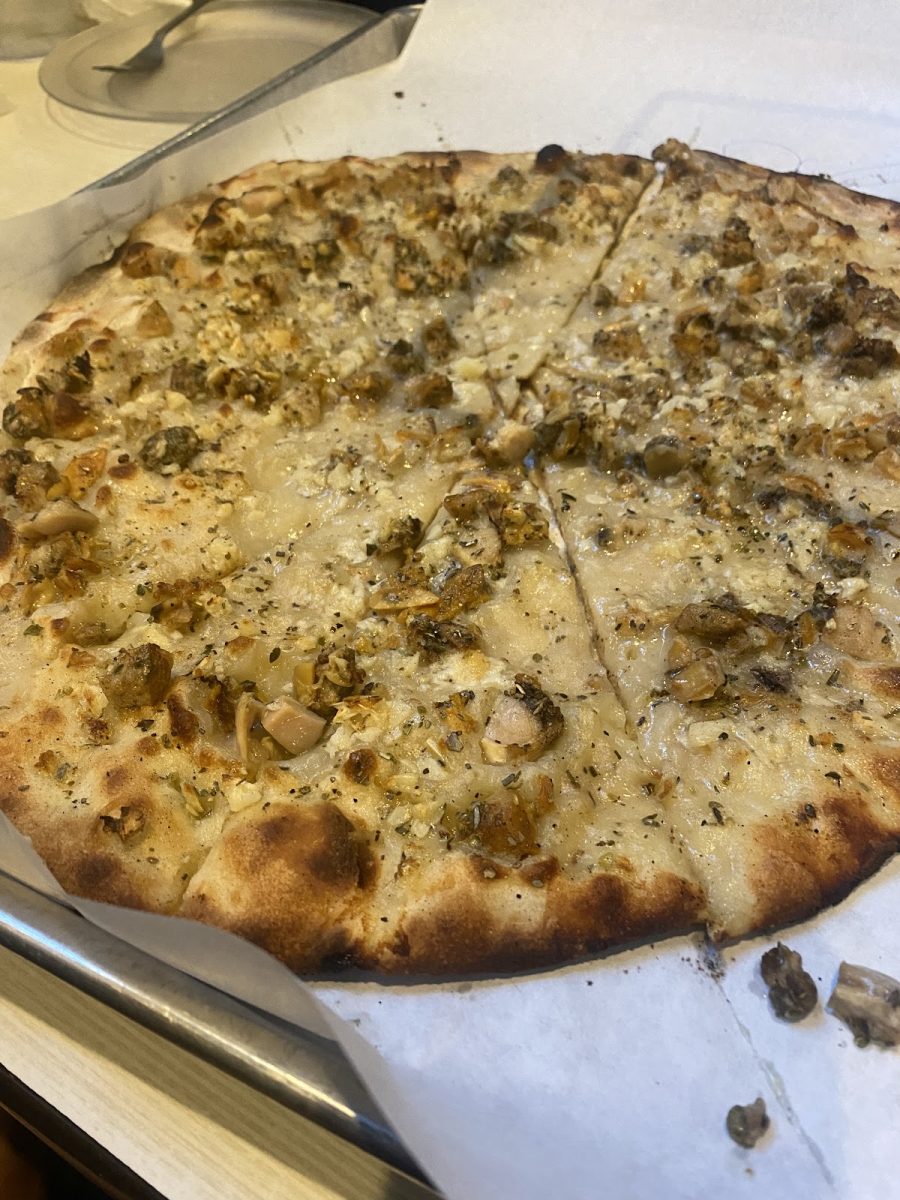
The White Clam Pizza stands out for its remarkable simplicity. There are no heavy sauces or large amounts of cheese to mask its natural flavors; each ingredient is allowed to shine on its own. The olive oil lightly coats the crust and toppings, helping each component of the pizza blend together without becoming overwhelming. The garlic and oregano add flavor, but they are used carefully so they complement the clams rather than overpower them. Thanks to this careful balance, the pizza tastes fresh and light rather than rich or heavy.
Over the years, the White Clam Pizza has become synonymous with Frank Pepe’s legacy and with New Haven–style apizza as a whole. It is frequently cited in food rankings and travel guides as a must-try dish, even for skeptics of seafood on pizza. Thanks to the White Clam Pizza, Frank Pepe’s consistently ranks at the top of the list in “The 101 Best Pizzas in America.” The dish represents how innovation, confidence in ingredients, and respect for technique can transform a simple idea into a culinary masterpiece.
Frank Pepe’s in the Modern Day
One hundred years after its establishment, Frank Pepe’s Pizzeria is as alive as ever. Since its official opening in 1925, Frank Pepe’s has embarked on a road of expansion and now has 17 locations across seven states — Connecticut, New York, Massachusetts, Rhode Island, Maryland, Virginia, and Florida. The family has plans to continue growing the business and bringing Frank Pepe’s signature pizza to even more people across the country.
Despite its wider reach, Frank Pepe’s remains a family-based, close knit operation, with Frank Pepe’s grandchildren now managing the business. Within the establishment, there is a strong sense of internal community, with many of the current employees having worked there for decades. Their dedication contributes to the consistency and authenticity that customers associate with the Pepe name. “There’s so much love, and gratitude, humility, honor, high respect, the way that this team carries out our legacy,” said Jennifer Kelly, co-owner of Pepe’s and one of Frank Pepe’s grandchildren. “To look at today, it blows me out of the water.”
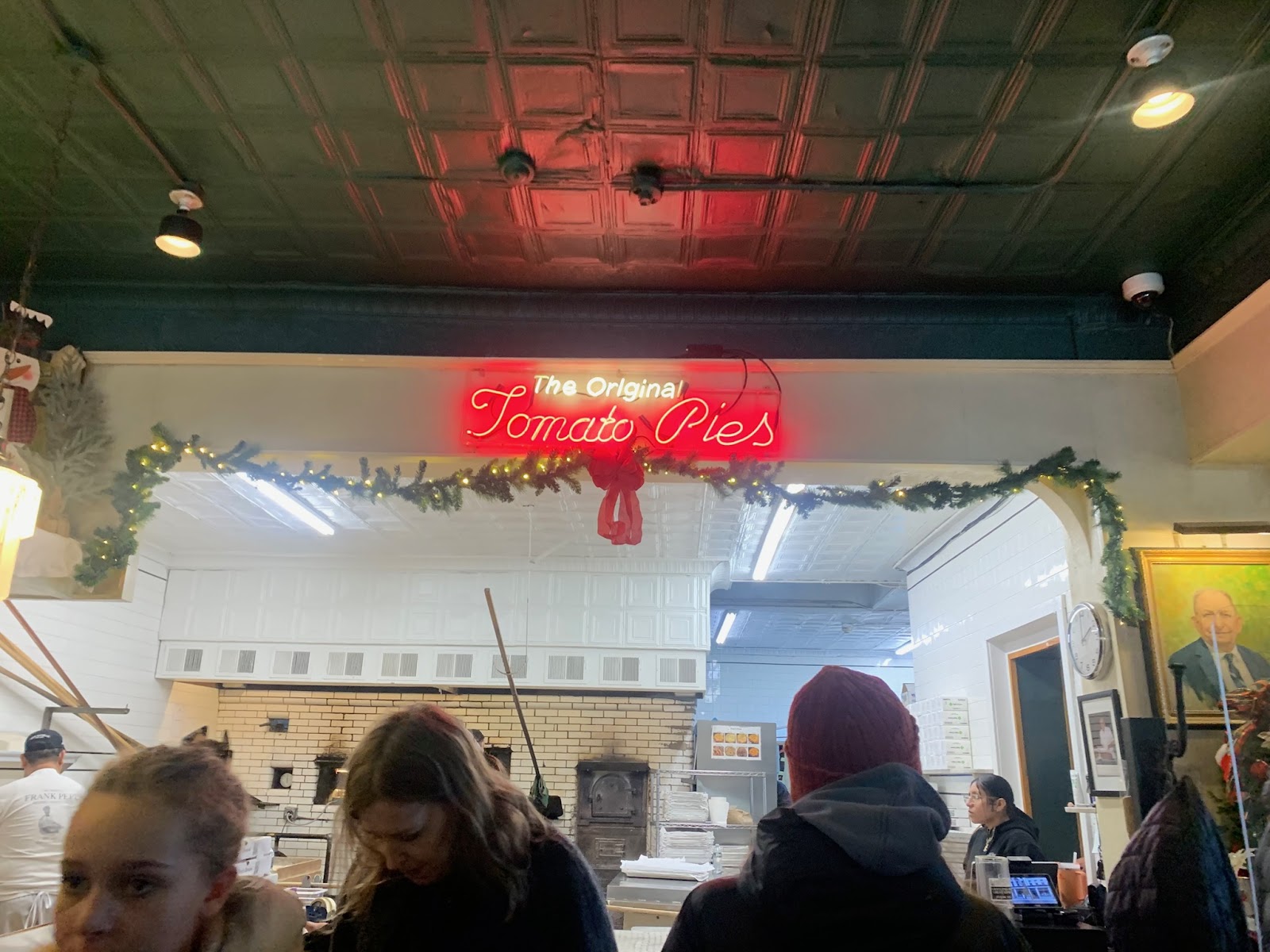
While deeply rooted in tradition, Pepe’s also keeps its menu dynamic by introducing new specialty pies every year. “Original Tomato Pie—Frank’s Way” debuted on December 15th as the Winter 2025 special, adding a touch of garlic to Frank Pepe’s popular tomato pie and paying homage to the way Frank Pepe first crafted the pie in 1925. This centennial feature pays tribute to his personal taste while celebrating the pizzeria’s 100th anniversary. Frank Pepe’s also offered customers the opportunity to give the specialty pie their own twist by adding black pepper, oregano, anchovies, or any other topping of their choosing. This balance between innovation and tradition helps explain how Pepe’s has remained popular for one hundred years and counting.
A century after Frank Pepe first balanced pies through the streets of Wooster Square, the coal ovens still burn, the dining rooms still buzz, and white clam pies still arrive at tables exactly as they did decades ago — mouth-watering and unforgettable. What began as an immigrant’s modest attempt to create a taste of Naples has grown into a national institution without losing its family roots or neighborhood soul. In an era when restaurants often chase trends, Frank Pepe’s stands as living proof that authenticity, quality, and community never go out of style.
“And now you’ve defined pizza,” said a customer at Frank Pepe’s after taking his first bite, a simple statement that perfectly captures what makes this century-old pizza truly legendary.
“There’s so much love, and gratitude, humility, honor, high respect, the way that this team carries out our legacy,” said Jennifer Kelly, co-owner of Pepe’s and one of Frank Pepe’s grandchildren. “To look at today, it blows me out of the water.”