

You’re presented with two pills, both clear in their casing and stretching the length of a finger pad. To the left sits a pill of a fiery shade of red; on the right, one of piercing blue. Which pill do you take? The left, or the right?
To most, the question may sound simple, silly even, but the hesitation, the pause that follows their choice, can reveal more about a person than what initially meets the eye.
Color has the unique ability to evoke aspects of one’s innate nature through a combination of memory, emotion, and instinct, drawing individuals towards certain hues while repelling them away from others. As a result, colors often become associated with particular objects, feelings, and moods, making them powerful means of self-expression and articulation. But why is this, and where did these associations originate?
The human mind naturally forms associations between the elements of one’s environment due to the convergence of both biological and psychological processes. Through color psychology – the study of how colors influence perception, emotion, and behavior – researchers have sought to explain this phenomenon. By examining the various cognitive mechanisms which underlie these associations, researchers hope to uncover what, if anything, color may reveal about the inherent facets of human character and personal identity.
To understand the significant role that color plays in relation to one’s thoughts and behaviors, it is important to note that color is highly subjective. Take color associations regarding specific school subjects as an example. To some, math is undoubtedly linked to the color blue whereas others believe it strongly to be red. This can also be seen through the simple question of a person’s favorite color. Across the world, or even within a single household, the responses to this question may vary greatly. Red, green, blue, purple, pink — everyone has their own unique opinions surrounding color and the meanings that they associate them with. While these differences are often assumed to be the result of personal preference, this is not always the case. In fact, there exists a deeper, scientific explanation behind them.
The variations in color perception from one person to another have biological, perceptual, and psychological causes.
In terms of the biological factors, these include variations in the number and sensitivity of a person’s specialized photoreceptor cells called cones, which can alter the perception of color to the brain; genetic variations, such as color blindness; and density differences in an eye lens’ pigment, which influences spectral sensitivity and the way light wavelengths are absorbed.
The inherent properties of color itself can also be cited as reasons for varying color perception amongst individuals. Upon being asked the seemingly simple question of what color is, people would largely describe it as being the specific tone or shade of a given object. However, colors are much more than what initially meets the eye. They have hue, value, and saturation, all aspects that inevitably work to influence the way color is seen in our minds, and therefore, the opinions that we hold regarding them.

Though biological and perceptual factors are certainly significant to color perception and the associations people make regarding them, psychological factors are likely to evoke the greatest responses in one’s mind.
Psychological color associations typically fall between two broader domains: cultural associations and personal, or mental associations.
Through cultural associations, people’s beliefs in regards to color are innately affected by the symbolic meanings and social norms typically affiliated with them. A common example of this are the varying perceptions of the color red throughout different cultures. In China, for instance, the color red symbolizes luck and happiness; this association is instrumental for Chinese culture, as proven by its prominence in Lunar New Year celebrations and traditional wedding ceremonies. However, in regions of the Middle East, the color red often evokes thoughts of war and blood, leading many to perceive it as a sign of caution and danger.
In the case of personal or mental associations, these draw from the memories and personal lived experiences of a person. For instance, the color of one’s favorite toy growing up would likely be associated with more positive and favorable thoughts, whereas colors tied to moments of fear or frustration may lead to more negative connotations with the color.
Although research into color psychology has been ongoing for several years, the field has wrought varying degrees of skepticism and doubt regarding the validity of colors’ true effects on our lives. In actuality, there exists a deficit in the amount of factual data and scientifically-backed research. Indeed, most of the evidence in support of these claims are primarily anecdotal. However, there exist two key studies that counter these doubts: one investigates the basis of human preference, while the other centers on the Ecological Valence Theory, together working to clarify color’s effects on the human mind.
Seeking to gain a greater understanding of the neural basis for preference, researchers Chris Racey, Anna Franklin, and Chris M. Bird conducted a study using a functional MRI to investigate why humans prefer some colors over others. In the study, participants performed a simple task while passively viewing specific colors, during which their brains were being scanned. Using the analysis of neural activity and behavioral measure recorded through the MRI, researchers were able to identify regions of the brain associated with color preference.
The study concluded that the Posterior Midline Complex (PMC) – an area of the brain relating to sophisticated cognitive functions such as self-awareness, memory, and internal thought processes – is crucial to the brain’s registration of color preference. When individuals view a color they prefer, the PMC, viewed from an MRI, shows greater activity compared to when they view a color that they dislike, even while they are engaged performing a separate task. This heightened neural activity, coupled with participants’ lack of explicit judgement, suggests that the brain automatically assigns subjective value towards basic visual features such as a color’s hue. In this way, raw color perception can be linked to personal enjoyment, contributing greatly to an individual’s aesthetic evaluation of color.
Because the PMC processes the subjective values of colors automatically rather than merely identifying them, the findings help explain both the neural and psychological basis of aesthetic preferences. These findings also provide insight into why some colors inherently “feel” more pleasing opposed to others, even with the absence of conscious color evaluation.
In another study aimed at examining how color influences our mood and behavior, researchers Karen Schloss and Stephen Palmer introduced the Ecological Valence Theory. This theory proposes that individuals’ preferences for a certain color are shaped by the emotional associations with objects that they relate them to. To test this hypothesis, participants were asked to rank their color preferences, identify objects they associate with each color, and indicate whether those objects evoked either positive or negative emotions. The results from the study strongly supported their theory, revealing a significant correlation present between color preference and the emotional value in which they assigned to the associated objects.
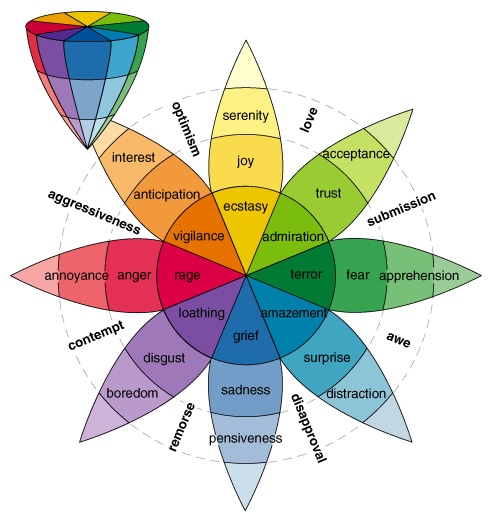
Through these transformative studies, and the extensive research conducted regarding color psychology, it has become evident that color preference is formed by more than just surface-level perceptions. Instead, they are influenced by a variety of both psychological and biological factors. But why does this matter, and what can color truly reveal about ourselves?
Imagine a world devoid of color. One merely portrayed through the shades of black, white, and grey. This world seems to be blank, as if missing a part of itself that you know is gone, but can not quite put your finger on what exactly is amiss. There is an absence in this world, in yourself, that lacks the essence of all things warm and familiar.
Color.
Although it may seem almost trivial at first, in reality, color plays a vital role in our everyday lives. From conveying emotions and thoughts to facilitating greater communication between one another, colors are far more than a simple descriptive word. Rather, they are powerful means of emotional expression and personal identity.
According to psychology specialist Dr. Mahnke, he states in a report that, “the color produced by light is a kind of energy. This energy affects both the functions of our body as well as our mind and emotions.”
To the color one paints their room to the clothes that they choose to wear, color functions as a universal mode of self expression that people utilize everyday as a means of conveying their identities to the world, even while they’re not conscious of its effects. Color is subjective, meaning that its value varies from one person to another, but in understanding how color operates in the mind, we can gain deeper insight, not only of the minds of others, but of ourselves as well.
“The color produced by light is a kind of energy. This energy affects both the functions of our body as well as our mind and emotions,” writes psychology specialist Dr. Mahnke.