

Traveling has always been important to my family. It is an opportunity to explore the world and to learn about new cultures while traveling together, especially since we hardly spend time together due to school and work. We’ve gone to so many different places, trying new foods and taking a break from the hectic work and school life that we usually experience. My passport is filled with different stamps from Mexico to the Dominican Republic, from Canada to Aruba, and from England to France. It is filled with my travels across the world.
In late July 2025, a new stamp was added to the collection. At the airport in New Delhi, I looked into my eagle decorated passport and saw the stamp of India.
From July 30th to August 25th, 2025, I would spend my time traveling across the State of Punjab, connecting to my heritage and learning about my own culture again.
This would be the first time that I would remember spending such a long time away from home. It would also be the first time that I would fully immerse myself in my culture since I was 3. I went to India in February of 2023 for my Uncle’s wedding, but the hustle and bustle of all the events condensed into a single week did not let me immerse myself in my culture.
This trip was also therapeutic for my mom. She had also travelled to India for the wedding, but prior to that, she had not traveled back since 2009. At the age of 13, she moved to the United States, and has only returned to the country two times: once to shop for wedding clothes in 2007, and another to celebrate my first birthday in 2009.
My trip mainly consisted of traveling around Punjab, the place where my parents and grandparents were born. We visited different historical locations, Gudwaras, and other holy sites important to us. We looked at different clothing stores, bazars, and food stalls — experiencing the trip to the fullest.
Week 1
Week 1 was filled with hustle and bustle. On the first day, after spending 12 hours on a plane, we landed in Abu Dhabi, and then transferred to another plane for an additional 6 hours. By the end, I was exhausted.
Even so, I felt thrilled as we touched down at New Delhi international airport. It was around 8:30 p.m. when we landed. After completing immigration checks, getting our bags, and adding more stamps to our passports, we were finally ready for the country.
Yet, of course, the traveling didn’t stop there.
Punjab is around 5 hours away from Delhi with no traffic…and of course, as we drove, there was traffic. The drive, however, did have a highlight: eating at a Dhaba restaurant at 12 a.m.
‘‘Dhaba’’ is a word for a restaurant placed near an international highway. It’s a place for families to stretch after long drives and fill their stomachs with warm and fresh food. It was the first time that we ate authentic fresh food in India after making do with the bland dishes served on the airplane.
Shahi Panner, Naan, Kulchie, Murg Makani, were the highlights of that meal. The panner was so fresh; it practically felt like chewing into a cloud. From the first few bites, I could tell the difference between the Indian food in India versus the United States.
The drinks were also different in taste.
Pepsi, in India, uses cane sugar, giving it a slightly different taste than the United States counterpart. It tasted less sugary and much more refreshing.
The difference in price also made me gasp in shock. Around 100 rupees equates to a dollar. We ate so much for what seemed like 5 dollars, despite the food tasting so complex and flavorful.
After eating and cleaning up, we packed back into the car for another 3 hours until we got to my granduncle’s house in Patiala, the town my dad was born and raised in.
In town, buildings and houses were cramped together, utilizing as much space as possible and making roads crowded and narrow. It was a far cry from the home I’ve known with paved sidewalks and cleaned streets.
As we pulled to the gate, my family piled out of the car, wheeling out all of our suitcases and bags to enter the house I had only been to once before.
My grandfather’s brother and his wife greeted us. Even though my grandpa didn’t come with us, my granduncle reminded me so much of him. His bright eyes and the loud hearty laugh as he greeted us made me think back of my grandpa in America.
My grandaunt doted over me and my brother, even though we were both much taller than her. It was nice to be greeted like this even in our half-asleep stupor. Nothing much was done other than dropping our baggage in our prospective rooms and falling fast asleep knowing we would have to get up early in the morning to recover from jet lag.
The next few days were very similar; we would slowly unpack all of our belongings and adjust to the time shift.
In the mornings, we would often eat paranthas, a punjabi flat bread, with house made cream made from fresh milk delivered to the house. We would also often drink chai, a staple drink in many desi (South Asian) households.
Of course, when in India, shopping is a must. While my family did not go on a major shopping spree yet, we went to the local market to look at fresh fruits and vegetables. Again, there was such a difference in the stores in India than in America.
In the U.S., stores like Costco, Walmart, and Stop and Shop are large and massive, all the produce inside the store in big racks.
In India, lots of the produce was on display outside stalls for those driving on the street to see. There was so much produce that I wasn’t sure if I could name them all, a testament to how Punjab is often called the bread-basket of India due to the sheer amount of agricultural export and how much of the state is reliant on agriculture.
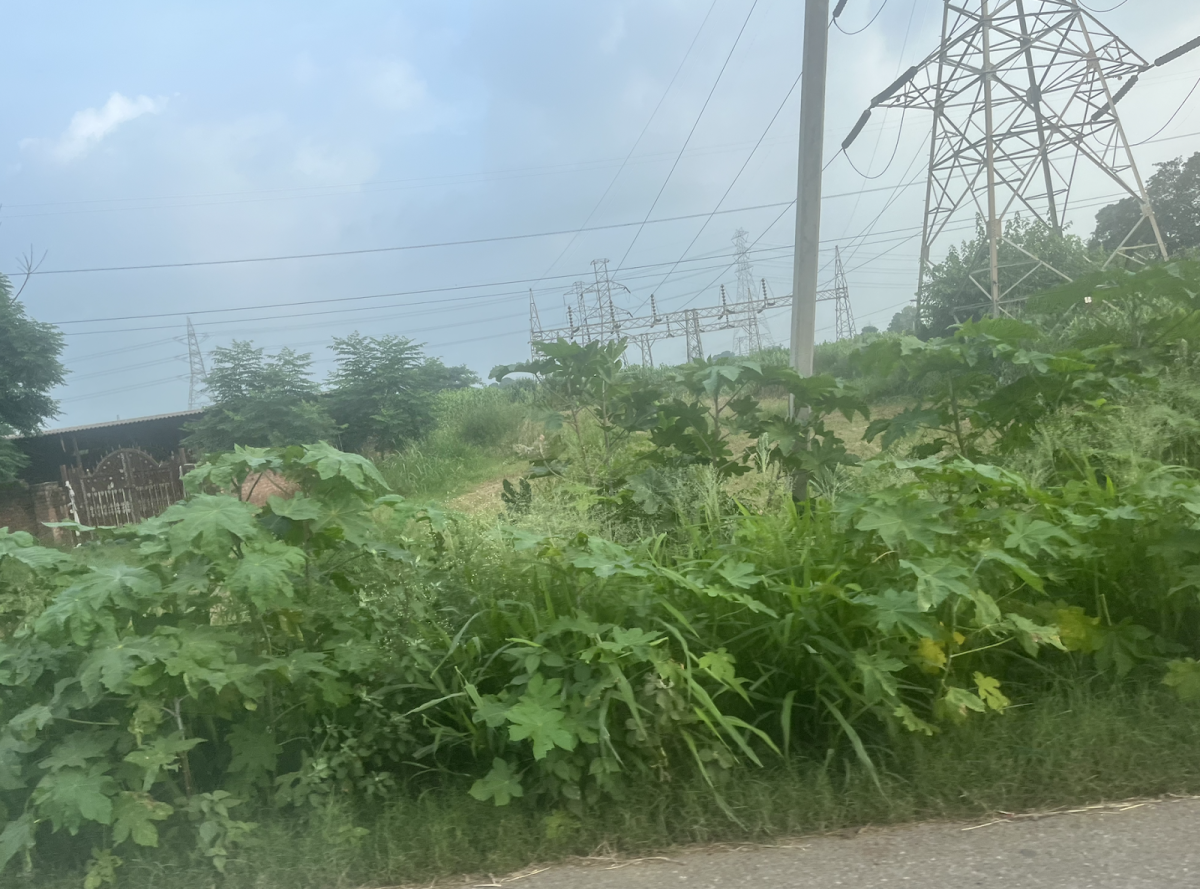
The first week was also the week we tried street food in the country. Many people assume that all street food in India is dirty and unclean, yet I saw vendors wearing gloves, handing out napkins, using incense to keep bugs away, and cleaning up their carts and stalls.
A lot of misinformation is spread throughout social media to incite strong emotions within us. By doing this, we are more inclined to watch more, comment more, and scroll more on such videos even when they may be false or exaggerated. This is often seen with people making videos on how terrible street food is in India.
In reality, lots of these videos are of different countries or don’t show the vendors washing their hands as the video is cropped to fit a certain narrative. I’ve eaten dosa, kulcha, gol gappa, and much more without getting sick.
Experiences such as these are always important to break stereotypes and assumptions of cultures and countries. Rather than having a perceived notion about a country and its people, it’s much better to try to research and learn about them.
Week 2
While the first week was much calmer, the second week was filled with shopping and purchasing extravagant dresses.
We hustled into the car and took an hour and a half drive to Punjab’s capital, Chandigarh. The city had some of the best shopping centers for punjabi attire and dresses. One of these stores was Sham Fashion.
Arriving at the store, it was already busy despite the fact it was still early. There were so many people checking out the different catalogs of clothes. From salwars, to sarees, to lenghas, the store had so many different types of dresses, all in bright colors and extravagant designs.

Due to the fact the store was five floors and had thousands and thousands of dresses, it took my mom quite a while to finish up shopping. I was much quicker, deciding to only get eight dresses in order to not spend as much money and time. Despite this, we were at the same store for almost five hours, a key example of how hard it can be to shop in India simply due to the sheer amount of articles one can buy.
Even though we spent so much time in a single store, it was only one day in the week; the rest of the week consisted of us visiting smaller stores and shops around India.
Chandigarh is the capital city of fashion in Punjab, but many local stores and shops in Patiala had beautiful jewelry and clothing.
Back in Patiala, India, an old friend of my dad’s owns a clothing store. Like many other stores, they sold stitched and unstitched dresses. The beauty of being able to buy unstitched dress fabric is that it’s up to the buyers choice on what style of dress it will become.
This creative liberty is what makes unstitched dresses so popular in India as measurements can be taken of the body to more accurately stitch the suit together rather than buying a ready made dress and adjusting it.
Week 3
Week 3 was the most impactful week for me. It was the week that my family and I traveled to many historical places and gurdwaras, Sikh places of worship, to learn more about our religion and partake in religious activities.
We went to sites like Fathegarh Shahib, where the youngest two children, Fateh Singh and Zorawara Singh, of the last living Sikh Guru, Guru Gobind Singh, were martyred by the Mughal Empire for refusing to convert to Islam. The site is a reminder of Sikh history and resilience as the place where the two children were killed had been turned into a Sikh place of worship.
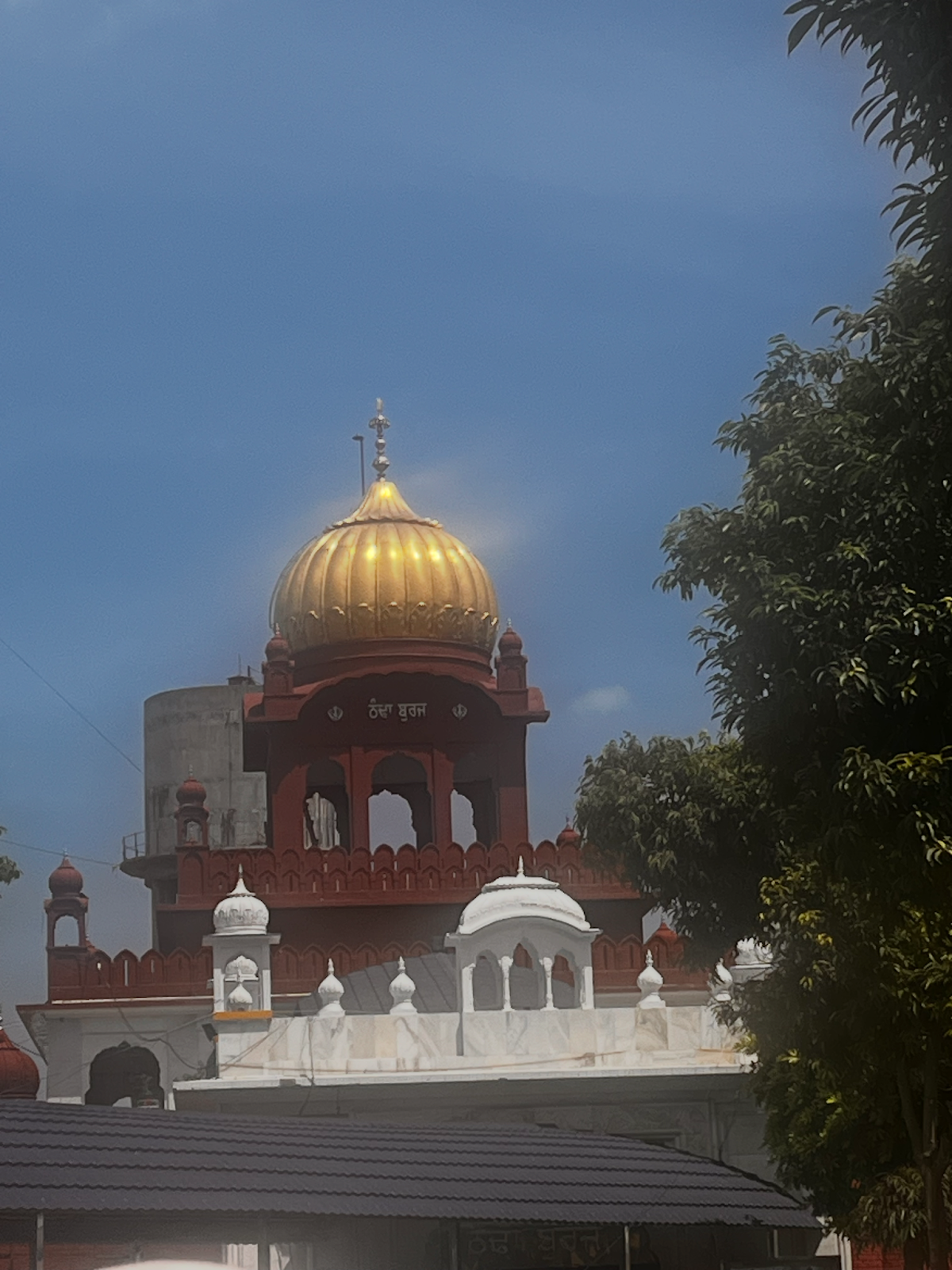
We also visited Anandpur Sahib, located on the edge of Shivalik Hills. It is the place where the last two Sikh gurus, Guru Tegh Bahadur and Guru Gobind Singh lived. It is also the place where Guru Gobind Singh created the Khalsa Path in 1699.
The Khalsa is a pivotal part of Sikhism. The Khalsa was created as a group of warriors who would protect the innocent from religious persecution. The founding of Khalsa is celebrated by Sikhs during the festival of Vaisakhi, primarily in April.
The Khalsa follows the 5 k’s: Kesh (uncut hair) to show devotion to the sikh god, Kangha (a wooden comb) to show cleanliness, Kara (an iron or steel bracelet worn on the wrist) to show connection to god, Kirpan (a sword or dagger) to be used in defense and protect others, and Kachera (short breeches) worn by both men and women to show that all are equal.
Anandpur Sahib is located high up on hills and includes a 100 step staircase down to a well where the Guru’s would travel to get water.

At Anandpur Sahib, my family partook in a Sikh religious practice called, akhand path. The holy scripture of Sikhs, the Guru Granth Sahib, would be read non-stop for approximately 48 hours by devoted readers at the gurdwara, mainly older Sikhs who could fluently read gurmukhī.
The readers would take shifts in reading the Guru Granth Sahib in order to read it as efficiently as possible. Once a day, the congregation would stand up as the reader would pray for health and prosperity for the reason why the akhand path was started for.
In our case, it was for my younger brother as he had never participated in an event like this in Punjab. When I was younger, I went through the same process, although I cannot remember it well since I was around three or four years old.
Since Anandpur Sahib was around a two hour drive from where my family was staying, we decided to stay the night at the gurdwara. This allowed us to partake in Sevā, a main pillar in Sikhism that is about servicing the community.
My family and I washed dishes in the langar, a free kitchen located in every gurdwara that serves meals to all free of charge, regardless of religion, caste, gender, economic status, or ethnicity.
The few days we were at Anandpur Sahib allowed me to continue to learn about my culture first hand. It was an amazing experience to partake in the events at the gurdwara.
On the last day we were at Anandpur Sahib, we decided to visit the Virasat-E-Khalsa museum.
The museum is surrounded by pools of water where the building’s roof had downward slopes that made it look like a lotus flower.
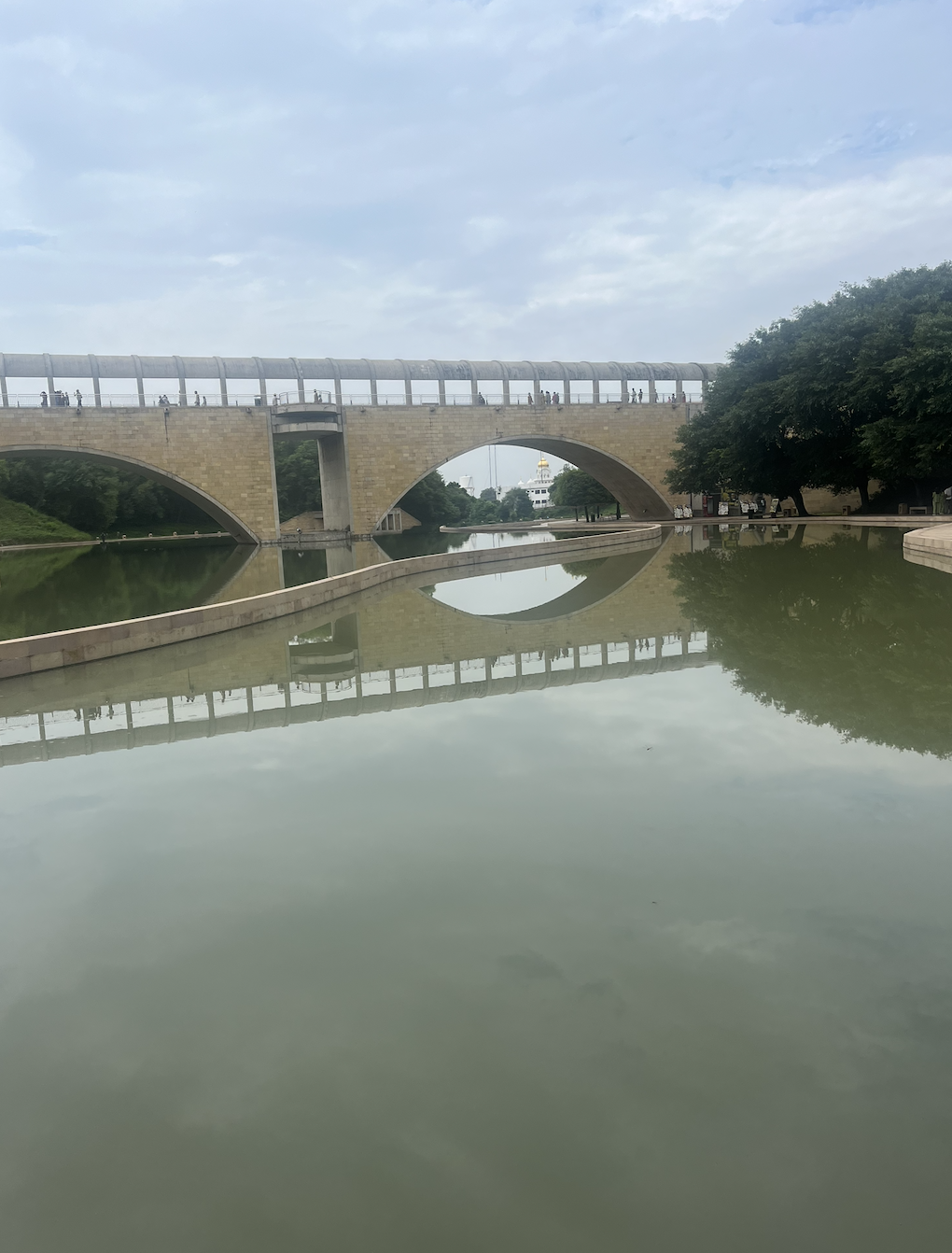
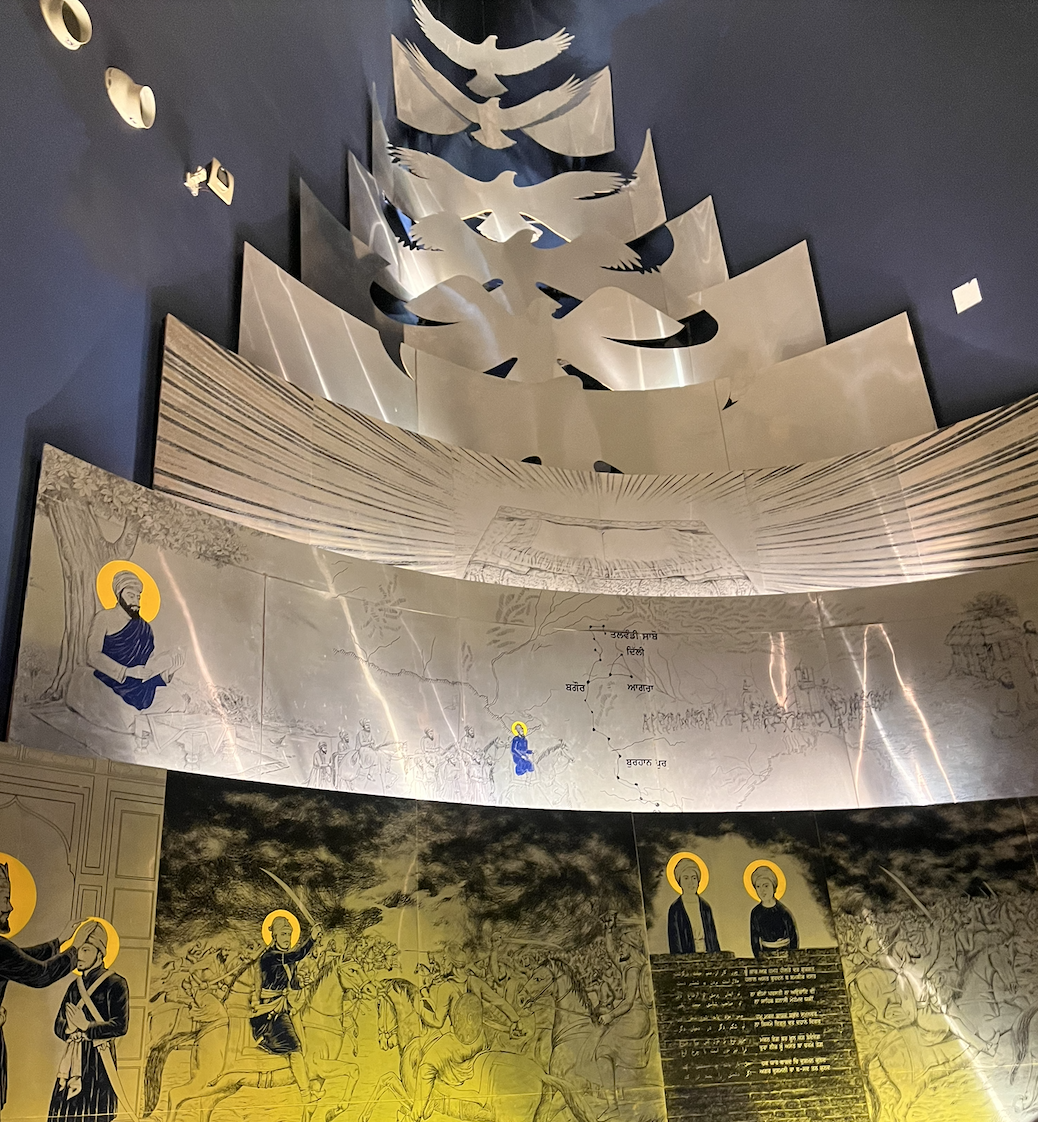
The museum focuses on Sikh history, from our first guru to the partition of India. Over 500 years of history are told inside the walls of the museum.
Inside, people travel up past colorful lights of a mosaic showcasing Punjabi culture and music. Once you travel up, you are able to get headphones that can tell you the information in each room in many different languages.
The museum contained many model structures of different settings and people rather than objects from the past, making it one of the most interesting museums I’ve visited.
In fact, on March 20th, 2019 the museum set a record for the most people visiting a museum in the Indian subcontinent in a single day. It is a spectacular sight and it is free to enter the museum. Full day passes are sold at the museum for 100 Indian rupees per person which is around one U.S. dollar.
Week 4
On our final week in India, my family decided to end the trip by visiting one of the holiest sites in Sikhism.
The Golden Temple, better known as Sri Harmandir Sahib, is an important site in Sikh history and culture.
Located in Amritsar, Punjab, the gurdwara was a five hour drive from where my family was staying. As such, we also decided to stay at the gurdwara for the three days of prayer.
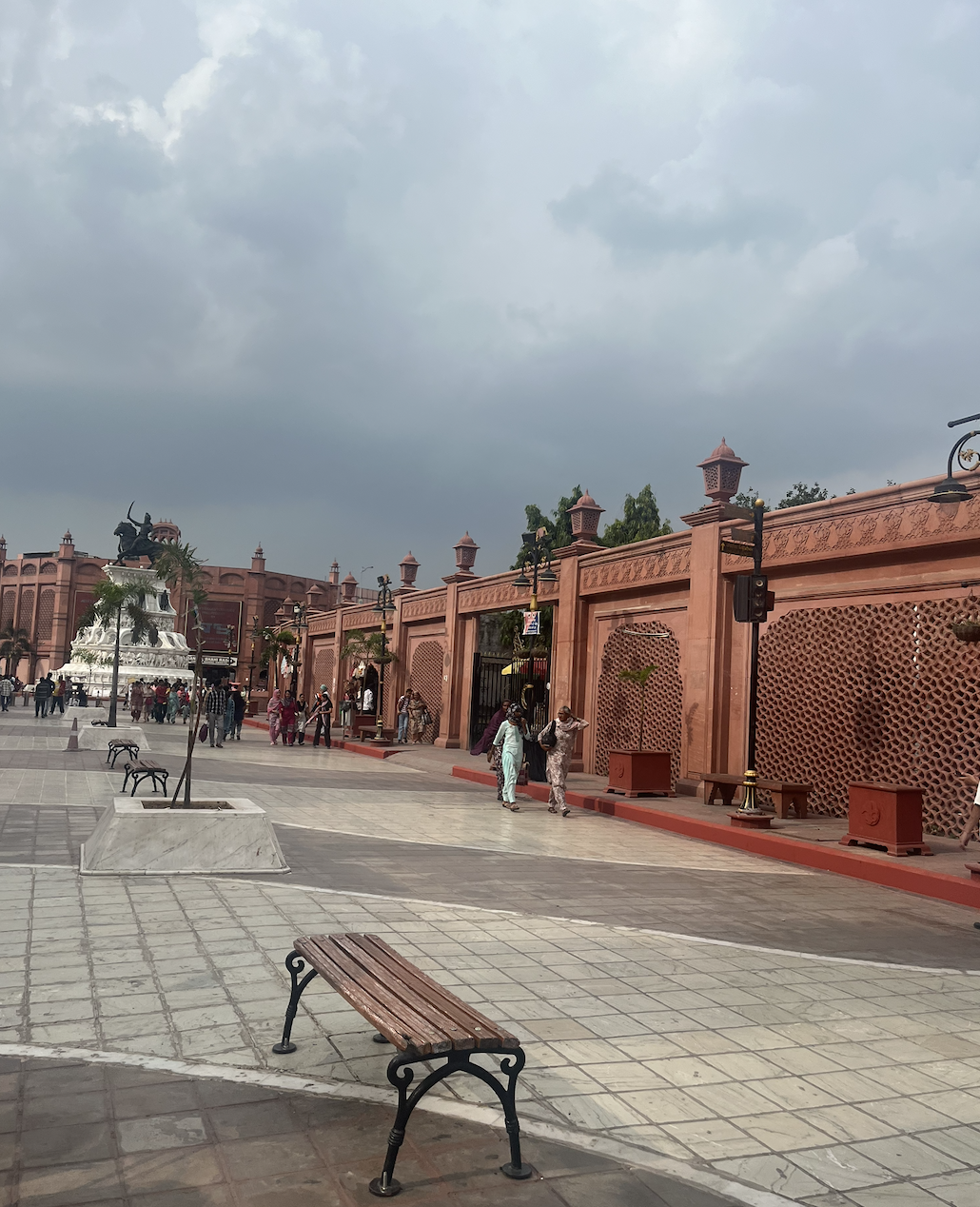
Sri Harmandair Sahib was founded by Guru Arjan, the fifth guru, and was completed in 1589 C.E. The sarovar, holy pool also known as the pool of nectar, was actually installed by Guru Ram Das, the fourth Sikh guru, in 1577vC.E..
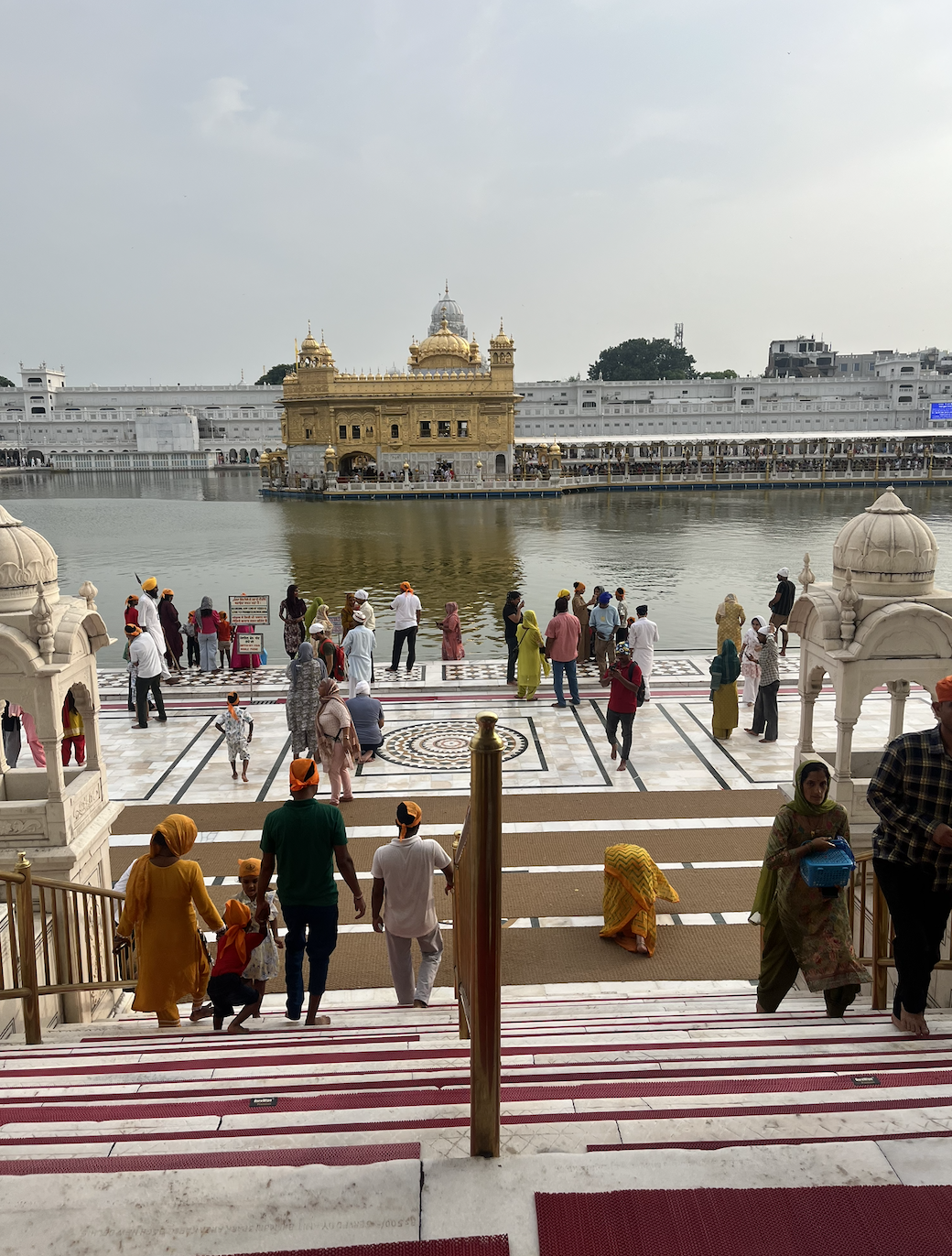
Guru Arjan placed a copy of the Guru Granth Sahib, the holy religious scripture of Sikhism, inside Harmandair Sahib.
Throughout its history, Sri Harmandair Sahib was constantly rebuilt due to the history of persecution against Sikhs by Mughal and Afghan armies.
Sri Harmandair Sahib was originally not covered in gold, this only happened in 1830 C.E> when the first Maharaja (king) of the Sakar-i-Khalsa (Sikh Empire), Maharaja Ranjit Singh, rebuilt the gurdwara in copper and marble and overlaid it with gold leaf, leading the the name, The Golden Temple.
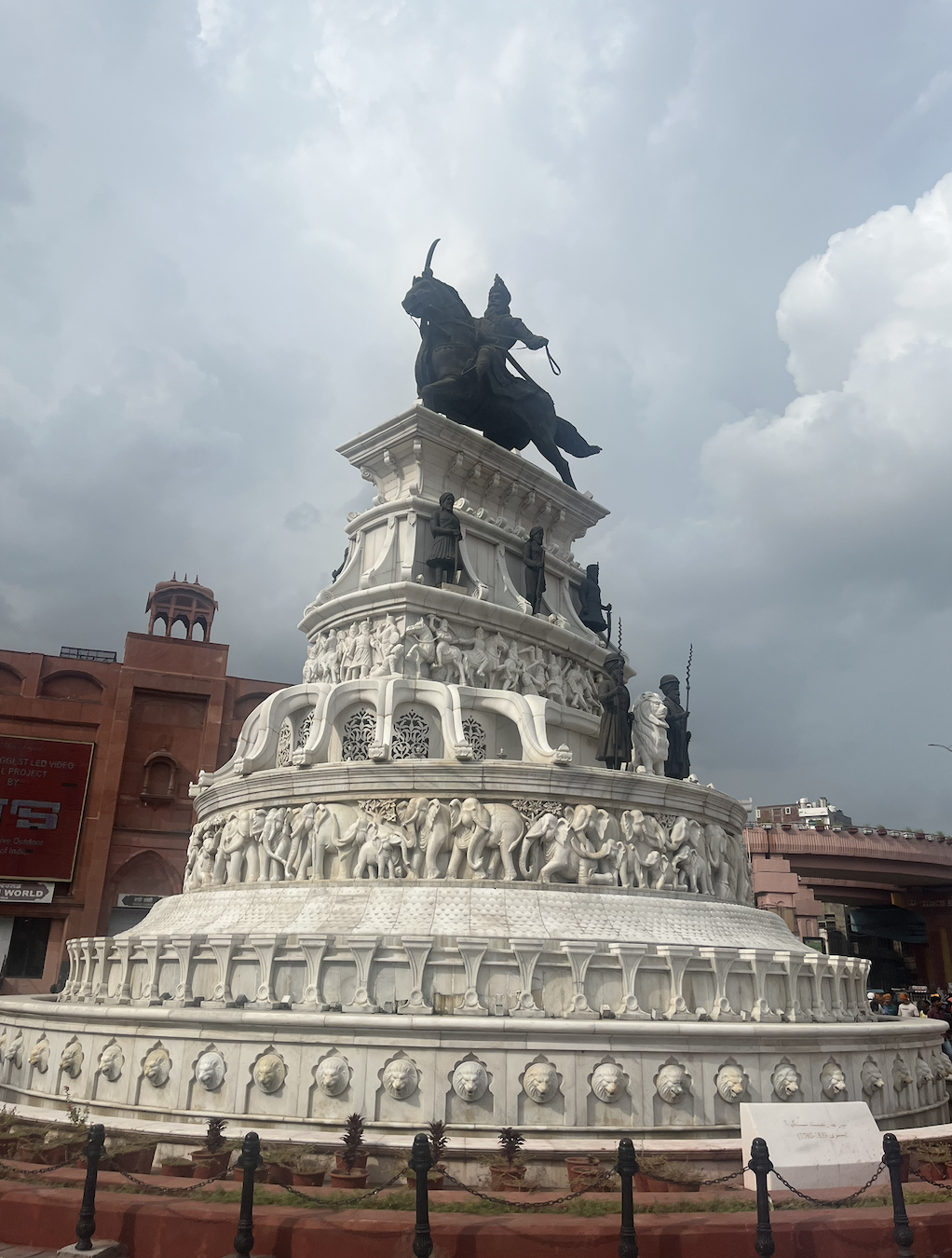
The gurdwara has a rich and complex history from colonialism and Indian history.
Guru Arjun was arrested by the Mughal Emperor Jahangir and was executed in 1606 C.E. for refusing to convert to Islam. The gurdwara was then placed under control of the empire until Guru Arjun’s son, Guru Hargobind fought in the Battle of Amritsar to regain control of it.
Sri Harmandair Sahib was only fully regained by the Sikhs as a result of Guru Gobind Singh creating the Khalsa and allowing them to take back the temple.
Mughal and Afghan rulers saw the temple as the center of Sikh faith and thus it continued to be a site of persecution.
In 1709 C.E., the governor of Lahore attempted to suppress Sikhs from gathering to celebrate Diwali and Vaisakhi with the usage of an army. The Sikhs gathered defied these orders and continued to enter the gurdwara to celebrate.
In 1737 C.E., the Mughal governor appointed Masse Khan as the police commissioner. He then used the temple as an entertainment center with dancing girls and befouled the sacred pool. Sikhs avenged this as they assassinated Masse Khan inside the temple in 1740 C.E..
In 1757 C.E., Afghan ruler Ahmad Shah Durrani attacked Amritsar and desecrated Sri Harmandair Sahib. Before departing with the Afghans, he had waste poured into the pool as well as the insides of slaughtered cows. Again, the Sikhs restored the gurdwara. Ahmad Shah Durrani returned again in 1762 C.E. and had Sri Harmandair Sahib blown up by gunpowder. He again attacked the temple in 1764 C.E. with a large Afghan army, destroying it for a third time.
The gurdwara was finally safe under the control of the Sikh empire, a time of peace for many Sikh people.
However, after the second Anglo-Sikh war, the Sikh Empire was defeated and replaced by the Province of the Punjab by the British East India Company.
In 1858 v, under the terms of the Queen’s Proclamation issued by Queen Victoria, The Punjab, along with the rest of British India, came under the direct rule of the British Crown, putting Punjab in the direct control of the British Empire.
This time period was also filled with political turmoil within the Sikh community.
The British began to photograph Sikhs as they believed this “fading sect” ought to be recorded in history and one day shown in museums as a part of India’s history. The British also started a heavy mission of conversion amongst the Sikhs. Many notable Sikhs left the faith at this time.
Sri Harmandir Sahib was under the control of the British Government and they had appointed a Sikh manager, Mangal Singh to look after the site for them. The British had nefarious designs for the Sikhs. In 1877 C.E., the British were going to auction Sri Harmandair Sahib in order to build a church in its place. Crucifixes were even put near the entrance of the gurdwara near the foot-wash area.
Sikhs decided to hold an Akhand Path Sahib in the gurdwara and do Ardaas so that the most precious place of the Sikhs would be saved.
The next day, the sangat gathered at Harmandir Sahib and Asa Di Vaar began. An intelligence officer sent by the Viceroy was also present to watch over the gathering.
Then at 4:30 a.m,. a big ball of lightning entered.
The intelligence office stated that, “It is for the knowledge of all that in Harimandir Sahib on April 30th, 1877 at 4.30 in the morning, a strange thing happened. There were about four hundred devotees enjoying spiritual peace of celestial music in Harimandir Sahib when suddenly a flash of lighting was seen which in the form of a big resplendence entered through the door on the mountain-side and exploded exactly like a ball in front of Sri Guru Granth Sahib and illuminating everything then went out, becoming a streak of light through the southern door – though at the time of its exploding there was a dreadful and forceful sound, no harm of any kind occurred to any devotee sitting inside and no harm to the building or anything else in the precinct. All the people described this supernatural scene as the wonderful doing of Sri Guru Ram Das himself.”
As a result, the British called off the auction of the gurdwara and many Sikhs believed it to be a message in which Sikhs should fight for their right of religion and their holy sites.
Yet, trouble still brewed.
In March 1919 C.E., with the passage of the Rowlatt Act, the incarceration and detention of perceived threat of terrorism from revolutionary nationalist organisations made it much easier to justify certain actions.
One such example of this was during the Vaisakhi festival in April 1919 C.E. where Colonel Reginald Dyer commanded that a group of 10,000 unarmed protesters and Vaisakhi pilgrims be fired upon.
The Jallianwala Bagh massacre took place in the Jallianwala Bagh garden next to Sri Harmandair Sahib. This massacre caused the deaths of hundreds of pilgrims and unarmed protesters who protested against the Rowlatt act.
The Jallianwala Bagh could only be entered and exited on one side which Dyer blocked with his troops. Troops were ordered to keep firing until their ammunition went low or stopped.
People attempted to climb the walls to escape or jumped in the well to prevent death by gunfire.
In the end, estimates of those killed vary from 379 to 1,500 or more people.
As a result of this massacre, the Province of The Punjab was placed under Martial Law. Thousands were detained and some killed by security forces following the massacre.
However, both Secretary of State for War Winston Churchill and former Prime Minister H. H. Asquith openly condemned the attack, Churchill referring to it as “unutterably monstrous” and Asquith calling it “one of the worst, most dreadful, outrages in the whole of our history.”
Today, the Jallianwala Bagh garden honors those who have died in the massacre with a museum inside the garden.

Visitation is free and I would highly recommend visiting the park to learn more about the story of the massacre.
Even when the British left India, the gurdwara was attacked by its own Indian government.
The partition of India caused the separation of the Province of The Punjab to East Punjab in India and West Punjab in Pakistan.
This resulted in many Sikhs rushing to leave their homes in the west and travel to the east to try to escape the violence caused by the partition.
The partition also resulted in many gurdwaras important to Sikhs almost impossible to access due to the fact that they were located in West Punjab which was a part of Pakistan.
Due to this, Sikhs created the Khalistan movement, advocating for an independent Sikh state as Sikhs were categorized as Hindus by the British at the time of the partition.
Operation Blue Star, led by Indian Prime Minister Indira Gandhi, occurred between June 1st to 8th, 1984. The goal of the operation was to flush out the militants fighting for independence.
At the time, multiple gurdwaras across Punjab were also attacked. Punjab was also put into a media blackout, restricting access to the internet and media.
The following is a timeline of the events that occurred:
Day 1 – June 1st, 1984.
The Indian Government begins its military operation, which it had spent over a year planning, designed to crush and silence the Sikh political agitations in Punjab.
The army forces surround Sri Darbar Sahib/ the Golden Temple complex. Without provocation, they start firing upon the complex, killing at least eight people.
The first Shaheed was Bhai Mehnga Singh Babbar, who was shot in the forehead. When asked how he was, he answered “Chardi Kala” (high spirits). He was cremated close to Manji Sahib, near Harmandir Sahib.
Day 2 – June 2nd, 1984.
At least seven divisions of the army are deployed in villages of Panjab.
The exits out of Amritsar are closed off. However, the Indian forces place no restrictions on pilgrims entering Amritsar or even Sri Darbar Sahib.
As expected, a large number of Sikhs and their families arrive at Sri Darbar Sahib in order to commemorate the martyrdom of the fifth Guru, Dhan Sri Guru Arjan Dev Jee Maharaaj, on the following day. They are allowed to enter the complex, becoming deliberately trapped inside.
By nightfall, the media and the press are gagged. The rail, road and air services in Punjab are suspended, and foreigners’ and NRIs’ entry is banned. The water and electricity supply is cut off.
Day 3 – June 3rd, 1984.
There is a media blackout, and a complete curfew is imposed, with the army and the paramilitary patrolling the whole of Punjab. At this point, Punjab is effectively cut off from the rest of the world.
The army seals off all routes of exit around the Harmandir Sahib complex. Thousands of worshippers and pilgrims are trapped inside, having come to commemorate the martyrdom of the 5th Sikh Guru. No attempt is made to warn the innocent men, women and children trapped inside, or to allow them to evacuate.
The following passage is from Citizens for Democracy; Report to the Nation: Oppression in Punjab (Bombay, 1985 C.E.): “No one inside the Golden Temple had yet realised the sinister plan of the authorities. Punjab had been sealed. Amritsar had been sealed. The Golden Temple had been sealed. Thousands of pilgrims and hundreds of Akali workers had been allowed to gather inside the Temple complex. They had been given no inkling or warning either of the sudden curfew or of the imminent Army attack. It was to be a black hole-type of tragedy, not out of forgetfulness but out of deliberate planning and design.” A day after the report was published it was banned and confiscated. The authors were arrested and charged with sedition/ incitement of rebellion against the government.
The Indian forces storm the complex and launch their main attack. As they do so, General Shabeg Singh Jee fires a burst from his gun, thus giving the command for Sikh fighters to open fire. The Indian army takes heavy losses and calls for reinforcements. There is an incessant exchange of fire during the night between June 3 and 4th, 1985 C.E.
Day 4 – June 4th, 1984.
At 4 a.m. the bombardment of the Sri Darbar Sahib complex begins, with the use of heavy artillery and cannon fire. The army shells the Gurdwara complex without warning, whilst thousands of innocent men, women, and children are still trapped inside.
“At about 4 a.m. in the early hours of the morning of June 4th, the regular Army attack started with a 25-pounder which fell in the ramparts of the Deori to the left of Akal Takht Sahib with such a thunder that for a few moments I thought that the whole complex had collapsed… Thereafter, every second the ferocity of firing increased,” noted an eyewitness named Devinder Singh Duggal, the overseer of the Sikh Reference Library.
Sri Darbar Sahib’s water supply and power supply is cut off. Thousands of pilgrims inside the complex suffer in the scorching heat of June, and many of them die from dehydration.
“When people begged for water, some jawans (soldiers) told them to drink the mixture of blood and urine on the ground,” said another eyewitness named Karnail Kaur, as noted in Mark Tully’s book Amritsar: Mrs Gandhi’s Last Battle.
The Indian forces fire mortar shells and poisonous gas canisters inside Sri Darbar Sahib and Sri Akaal Takht Sahib, targeting civilians. They bombard the historic Ramgarhia Bungas, the water tank, and other fortified positions, and they destroy the outer defenses laid by Bhai Shabeg Singh Jee. The army then formed a wall of iron by placing tanks on the road separating the Guru Nanak Niwas building.
About 100 die in pitched battles from both sides, however the total number of deaths is much higher.
The firing continued until June 6th.
Day 5 – 5th of June 1984
The army stormed Harmandir Sahib on the night of June 5th under the command of Major-General Kuldip Singh Brar. The forces had full control of Harmandir Sahib by the morning of June 7th.
There were casualties among the army, civilians, and mil.itants. Sikh leaders Bhindranwale and Shabeg Singh were killed in the operation.
Day 6 – June 6th 1984.
From the night of the June 5th moving to the early hours of June 6th, the battle increased in ferocity.
Unable to defeat the Sikh fighters in pitched battles, tanks were used by the Indian forces to blow up the complex. High-explosive squash-head shells were exploded into Sri Akaal Takht.
By 5 a.m., due to firing from the army tanks, the Akaal Takht (often described as the Sikh equivalent of the Vatican) is destroyed. The neighbouring structures of the Akaal Takht continue to be attacked.
At 11 a.m., a group of innocent people trying to escape is mowed down by machine gun fire.
“Grenades and poisonous gas shells were thrown at the men, women and children, who had locked themselves in the rooms, bathrooms and toilets of Guru Nanak Niwas, Guru Ram Das serai and Taja Singh Samundri Hall. Those who tried to come out were pierced with bayonets and shot dead. Some soldiers caught hold of small babies and children by their feet, lifted them up in the air and then smashed them against the walls and thus breaking their skulls,” wrote Harvinder Kaur as reported in Harminder Kaur’s book, Blue Star Over Amritsar: The Real Story of June 1984.
“It was a virtual massacre. A large number of women, children and pilgrims were gunned down,” as reported by a reporter with The Guardian on June 13th 1984.
Day 7 – June 7th 1984.
By the morning, only a few Sikh fighters are still alive and fighting. The army finally gains effective control of the Sri Darbar Sahib complex.
After the resistance is broken, the army has free reign. Soldiers unleash their vengeance on the unarmed Sikh pilgrims who they had trapped inside the complex. They indiscriminately kill Sikh civilians, including children.
An eyewitness details how the army treated the pilgrims who had survived the bombardment: “[The army] took off their [the Sikhs’] turbans with which they tied their hands behind their backs. Then the Army men beat these Sikh boys with the butts of their rifles until they fell on the ground and were shot dead right in front of me.”
The Sikh reference library is burnt and destroyed. Its priceless collection of 20,000 incredibly rare and valuable historic documents are reduced to ashes. Amongst these, irreplaceable documents regularly referred to for research are destroyed, hukamname from the Guru period are lost, and above all, 2500 handwritten saroops of Dhan Guru Granth Sahib Jee Maharaaj are desecrated.
After the murders of innocent pilgrims, “the most distressing and inexcusable act was the torching of the Sikh Reference Library.” It was an intentional and calculated act in continuation of the Indian government’s onslaught against the fabric of the Sikh nation.
“Any army which wants to destroy a nation destroys its culture. That is why the Indian army burnt the library,” wrote Mark Tully in his book Amritsar: Mrs Gandhi’s Last Battle.
Soldiers celebrate the thousands of cold-blooded murders and the desecration of the Sikhs’ holiest shrine by drinking and smoking within the complex. Hundreds of thousands of bottles of alcohol were sanctioned by the Indian state for consumption of its forces within Sri Darbar Sahib.
Day 8 – June 8th 1984.
All forms of aid are denied to the surviving victims. The Red Cross is refused permission to enter the Harmandir Sahib complex and the wounded are left to suffer for days. Many people die of dehydration as they are refused water.
A reporter with The Christian Science Monitor reported on June 8th 1984: “On Saturday, medical workers in Amritsar said soldiers had threatened to shoot them if they gave food or water to Sikh pilgrims wounded in the attack and lying in the hospital.”
The CFD report, ‘Oppression in Punjab’ remarks: “In accordance with the UN Charter of Human Rights, the Red Cross is permitted to go in aid of the wounded right inside the enemy territory, but in Amritsar in June, 1984, the Red Cross was not allowed to enter the Golden Temple – a respected and hallowed part of our country – in aid of Indians under attack from the Indian Army. It only means that the attack was so brutal and the battle scene so grisly, that there was much to hide from public scrutiny, even if it be that of a neutral agency called the Red Cross. This also explains perhaps why Press censorship had already been imposed, the last of the journalists were hounded away and the Press was not allowed to go inside the Golden Temple up to June 10, when they were taken on a guided tour of the complex for the first time since the Army operation began almost a week before.”
Day 9 – 9th June 1984.
Following the executions of surviving pilgrims within the Gurdwara complex, the remaining survivors are rounded up, detained by the army forces and charged as terrorists:
“379 of the alleged ‘most dangerous terrorists’ were forced to sign a common confessional statement and thereafter served a common charge sheet that they were all Bhindranwale’s closest associates and comrades-in-arms engaged in waging war against the state… The evidence collected established beyond doubt that none of the Jodhpur detainees we succeeded in profiling are ‘terrorists’ but rather all of them are completely innocent, ordinary persons, whose only crime was that they had all gone to or were coming from the Golden Temple as devotees or pilgrims visiting the Golden Temple for the Gurpurab on June 3, 1984 or farmers gone to the Temple to deliver village donations of grain to the S.G.P.C. or students gone to pay obeisance at their holiest religious shrine, the Harmandir Sahib,” as writted in Citizens for Democracy; Report to the Nation: Oppression in Punjab, Bombay, 1985.
These detainees were detained for up to five years, before in the face of worldwide condemnation and protest they were finally released.
The following quote is from an Indian Army circular which was distributed in June 1984, proving that all practicing Sikhs were considered terrorists and were targeted by the Indian government: “Some of our innocent countrymen were administered an oath in the name of religion to support extremists and actively participated in the act of terrorism. These people wear a miniature kirpan round their neck and are called “Amritdharis”. They have to be subdued to achieve the final aim of restoring peace in the country. Any knowledge of the “Amritdharis” who are dangerous people and pledged to commit murder, arson and acts of terrorism should be immediately brought to the notice of the authorities. These people may appear harmless from outside but they are basically committed to terrorism.”
The government orders the shooting of unarmed protesters in New Delhi, Sri Nagar (Kashmir) and Punjab.
Some firing still continues within the Sri Darbar Sahib complex.
In the aftermath of the pogroms, the government reported that 20,000 Sikhs had fled the city; the People’s Union for Civil Liberties reported “at least” 1,000 displaced persons. The most-affected regions were the Sikh neighborhoods of Delhi.
Human rights organizations and newspapers across India believed that the massacre was organized. The collusion of political officials connected to the Indian National Congress in the violence and judicial failure to penalize the perpetrators alienated Sikhs and increased support for the Khalistan movement. The Akal Takht, Sikhism’s governing body, considers the killings a genocide.
In 2011, Human Rights Watch reported that the Government of India had “yet to prosecute those responsible for the mass killings.” According to the 2011 WikiLeaks cable leaks, the United States was convinced of the Indian National Congress’s complicity in the riots and called it “opportunism” and “hatred” by the Congress government of Sikhs. Although the U.S. has not identified the riots as genocide, it acknowledged that “grave human rights violations” occurred.
After the assassination of Indira Gandhi on October 31st, 1984 by two of her Sikh bodyguards, anti-Sikh riots erupted the following day. They continued in some areas for several days, in which 3,000-17,000 people were killed. At least 50,000 Sikhs were displaced.
Sultanpuri, Mangolpuri, Trilokpuri, and other Trans-Yamuna areas of Delhi were the worst affected. Perpetrators carried iron rods, knives, clubs, and combustible material.
They entered Sikh neighbourhoods, killing Sikhs indiscriminately and destroying shops and houses. Armed mobs stopped buses and trains in and near Delhi, pulling off Sikh passengers for lynching; some were burnt alive. Others were dragged from their homes and hacked to death, and Sikh women were reportedly assaulted and Sikhs also had acid thrown on them
On October 31st, a crowd around the All India Institute of Medical Sciences began shouting vengeance slogans such as “Blood for blood!” and became an unruly mob. President Zail Singh arrived at the hospital and the mob stoned his car. The mob began assaulting Sikhs, stopping cars and buses to pull Sikhs out and burn them.
During the night of October 31st and the morning of November 1st, Congress Party leaders met with local supporters to distribute money and weapons. Congress MP Sajjan Kumar and trade-union leader Lalit Maken handed out ₹100 notes and bottles of liquor to the assailants. Sajjan Kumar was observed holding rallies in Delhi, distributing iron rods from a parked truck to a group of 120 people and ordering them to “attack Sikhs, kill them, and loot and burn their properties.”
During the morning he led a mob along the Palam railway road to Mangolpuri, where the crowd chanted: “Kill the Sardars” and “Indira Gandhi is our mother and these people have killed her.” In Sultanpuri, Moti Singh (a Sikh Congress Party member for 20 years) heard Kumar make the following speech: “Whoever kills the sons of the snakes, I will reward them. Whoever kills Roshan Singh and Bagh Singh will get 5,000 rupees each and 1,000 rupees each for killing any other Sikhs. You can collect these prizes on 3 November from my personal assistant Jai Chand Jamadar.”
On November 8thm, 1984, Nanaji Deshmukh circulated an essay entitled ‘Moment of Soul Searching,’ justifying the violence as a response to perceived Sikh provocation. Critics say the essay showed ideological sympathy for the riots.
The government allegedly destroyed evidence and shielded the guilty. Asian Age, an Indian daily newspaper, ran a front-page story calling the government actions “the mother of all cover-ups.”
While there has been no formal state recognition of the 1984 massacre as a genocide, Sikh communities both in India and the diaspora continue to lobby for its acknowledgment.
Entering the Temple
As I walked down the marble steps to the pool surrounding the gurdwara, It was hard to believe such events could ever occur in such a place.
Where blood may have stained the marble paths, volunteers cleaned them till they shone in the sunlight. Where parts of the temple may have been destroyed by gunfire, the golden leaf gleamed in the setting sun. And where screams would’ve been heard, all I heard were the prayers of my people as the moon rose.
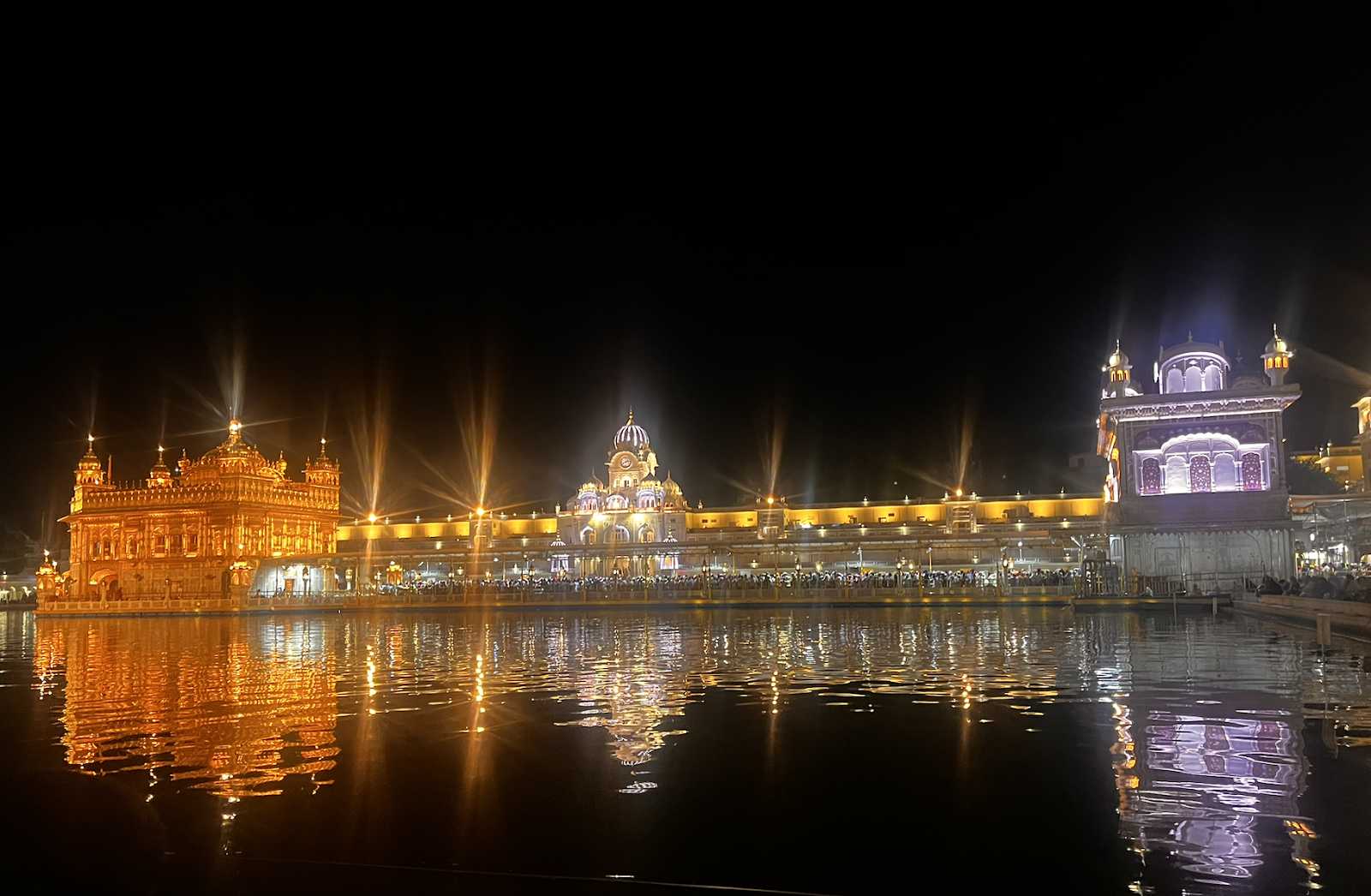
My family spent three days at the gurdwara, splitting our time from visiting the museums and memorials and attending prayers dedicated to my brother. These days, we would wake up around 4 a.m. to watch as the congregation first brought in the Guru Granth Sahib to be opened for the first time in the day.
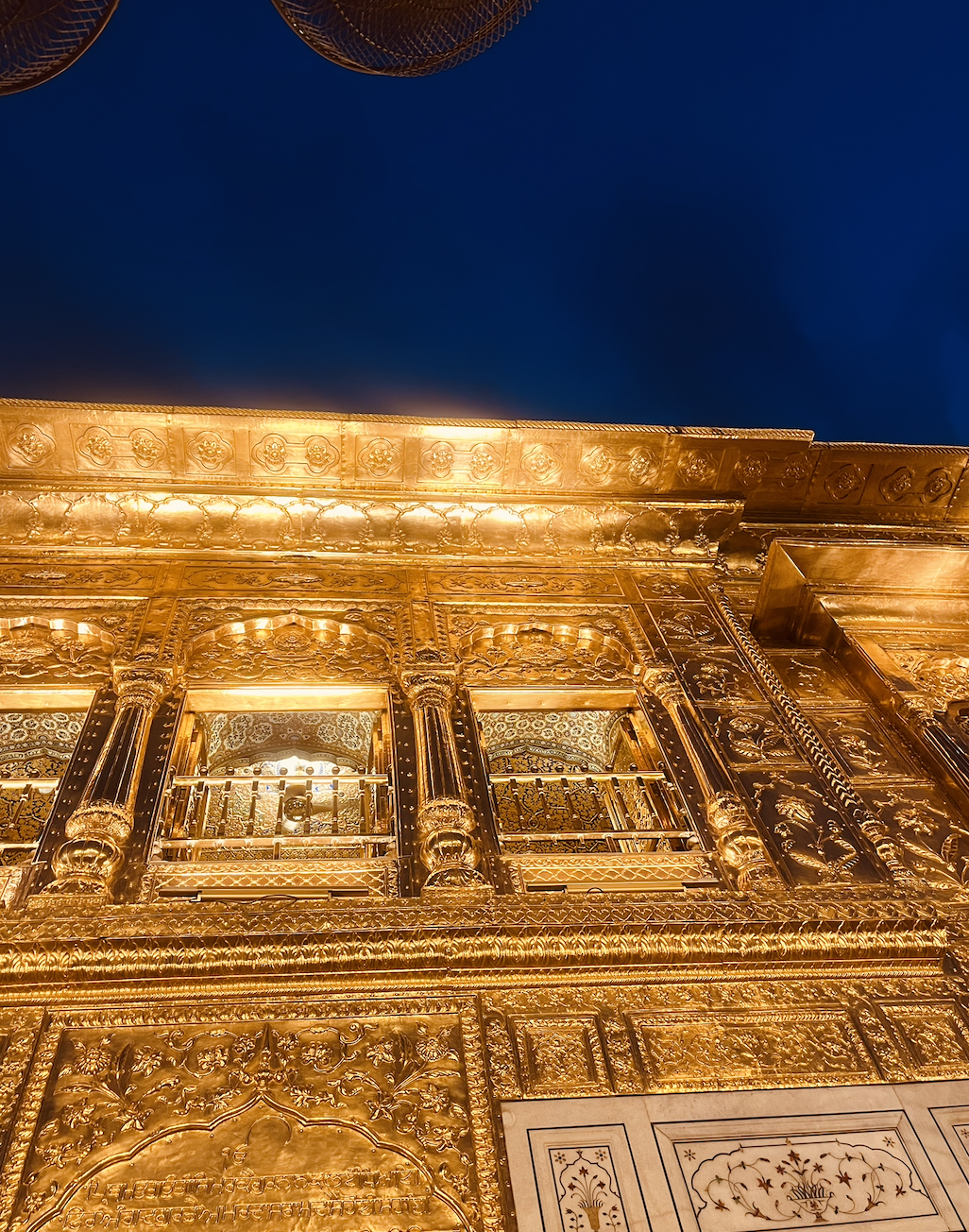
Every day we would take a dip in the holy pool to help connect us with the gurdwara and our roots as well as healing our ailments, inside and out.
The four weeks passed in a flash. As soon as I knew it, we were already heading back to Patiala.
Returning Home
The days we got back from the Golden Temple were days we rested at home and began to pack our belongings for the flight back to New York.
I felt homesick, to be honest. I never remembered being away from home for this long. Yet, I am glad to have taken this trip. It allowed me to connect more with my culture and learn about my people’s history and how much we have endured.
On the flight from Delhi to JFK, I opened my sketchbook and began drawing many of the places I visited and all of the people I met, hoping to immortalize the trip in an artistic manner meaningful to me.
While this may not be that sketch or drawing, this piece of writing is about more than a simple trip, but rather a trip of the past colliding with the future.
I hope that as you finish reading this, you too will feel inclined to learn more about your own culture and heritage, traveling back to connect with your roots. No feeling can describe the joy I felt and I hope this is an experience that everyone can partake in.
In late July 2025, a new stamp was added to the collection. At the airport in New Delhi, I looked into my eagle decorated passport and saw the stamp of India.