

In the summer of 1932, in the dusty wheat fields of Western Australia, a peculiar conflict had taken place. The farmlands were in big trouble. The Australian government deployed soldiers armed with machine guns, not against human enemies, but against flocks of emus. Hordes of these large birds trampled over fences, destroying crops and livelihoods of veteran farmers. What was intended as a quick campaign to protect crops instead became an embarrassing military failure. Emus are large, flightless birds native to Australia. They are the second-tallest birds in the world, after ostriches, with the average height being around 1.75 meters. With long legs, long necks, and shaggy feathers, emus are fast runners capable of reaching speeds up to 50 kilometers per hour, using their powerful legs for defense.
The Great Emu War stands as a striking example of how human efforts to control nature can backfire, especially when conventional weapons meet unconventional foes. What began as an attempt to defend farmers’ livelihoods later evolved into a public relations failure, a punchline in media commentary, and eventually a cautionary tale about the limits of brute force in ecological conflict.
This strange skirmish lies in the aftermath of World War I and the onset of the Great Depression. The Australian government, looking to help returning veterans, decided to grant thousands of veterans farmland — in Western Australia’s wheat belt — small, fragile, and often unprofitable. To combat the ripples of the Great Depression, Australia decided to offer rewards for agricultural production. The government’s promises of subsidies for the labor, however, were not fulfilled which worsened the farmers’ situation. Falling wheat prices during this time further contributed to the already difficult crisis.
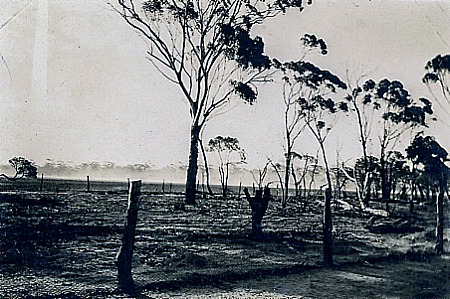
By late 1932, an especially dry season and a mass migration of emus towards the Wheatbelt resulted in disaster for Australia. Emus caused widespread destruction to local farms in Western Australia, specifically in the Campion district. After their breeding season and a terrible drought, an estimated 20,000 emus migrated inland in search of food and water, where they found the newly cultivated farmland. Upon their arrival, the emus trampled fences, allowing rabbits to enter the farms and further damage crops. The emus fed on wheat and other grains, ruining large sections of farmland just before harvest. This severely impacted the livelihoods of struggling farmers who were already dealing with the economic hardships of the Great Depression. The sheer number of emus and their agility made it nearly impossible for farmers to drive them off. Additionally, the traditional methods of pest control were ineffective, which made the farmers make desperate appeals to the government for military assistance. Fences, poisons, and traps all proved ineffective against the large avians.
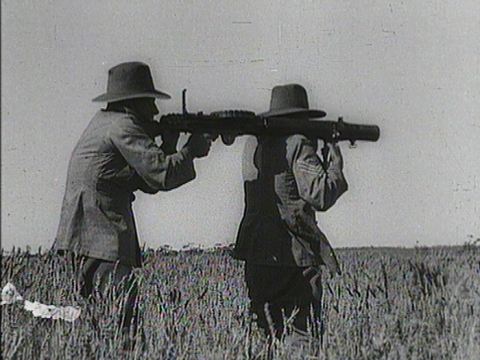
Defence Minister Sir George Pearce responded by authorizing military intervention. On November 2nd, 1932, a small group led by Major G.P.W Meredith from the Royal Australian Artillery was dispatched to the Campion district with orders to reduce the emu population and protect the farmland. The government approved the use of military resources under the condition that the farmers would provide the soldiers with food, accommodation, and cover transportation costs. Major Meredith and his team brought with them two Lewis machine guns, standard-issue light automatic weapons used in World War I, and 10,000 rounds of ammunition. The plan was to strategically ambush the emus in areas where they gathered in large numbers, using the machine guns mounted on vehicles to cover more ground.
What followed was entirely unexpected; the Australian soldiers attempted to shoot the birds, who scattered, evaded, and outmaneuvered them. The operation was reduced to a failure. However, within this strange encounter lies a richer narrative about human hubris, ecological unpredictability, and a nation’s sense of identity.
Many of the reports from the Emu War came directly from soldiers and journalists who were involved in the operation. Major G.P.W. Meredith, the officer in charge, famously reported the birds as being extraordinarily difficult targets. He said, “They could face machine guns with the invulnerability of tanks.” Emus are known for their surprising speed, agility, and ability to “take” multiple bullets and keep running. Major Meredith even joked that if the Australian army ever faced an organized force of emus, they would be a large source of concern. On the “battlefield” soldiers described scenes of chaos. Machine guns mounted on trucks bounced across rough terrain, unable to aim accurately, while emus scattered in unpredictable patterns. These accounts paint a picture of complete and utter failure, as trained men struggled against unarmed birds in what was supposed to be a routine pest control operation.
Australian newspapers eagerly covered the bizarre turn of events, with many reporters openly mocking the government’s efforts. Headlines dubbed the situation a “war,” and editorials questioned why the military was being used against birds. Eyewitnesses described the military’s presence as “more comical than helpful.” Civilians would gather to watch the “hunts,” which often ended in embarrassment for the soldiers. Farmers, who were initially hopeful, were soon disappointed as it became clear that the campaign would not solve their problem. Farmers who had called for help out of desperation, were frustrated by the failed operation to protect their crops.
When the military gave up, the government decided to create bounties, providing firepower and compensation for farmers that hunted the birds. To protect the farms, taller and stronger fences were introduced to prevent emus from leaping over and ravaging the crops. However, the damage was already done; the public spectacle of soldiers chasing birds with machine guns became a source of dark humor throughout Australia. Internationally, the story was picked up as a peculiar event, often shown as an example of government overreach and military miscalculation.
In the end, the Great Emu War of 1932 stands as one of history’s most unusual military failures. What began as an attempt to control a population of emus quickly turned into a ridiculous standoff between man and bird. Despite the fact that the Australian government used machine guns and military tactics, the emus proved to be too fast, too resilient, and too adaptable, ultimately “winning” the war. While the government’s campaign ended in embarrassment, the “Great Emu War” left behind a story that is tragic, somewhat comedic, and deeply instructive for future encounters with nature’s forces.
Though it happened nearly a century ago, the Great Emu War still carries relevance today. With the Environment Protection and Biodiversity Conservation Act of 1999, Emus in Australia became a protected species. Despite this legal protection, the coastal population of Emus has shown a large decline in recent years. Just as in 1932, approaches to tame nature frequently backfire, creating new challenges or worsening old ones. Modern issues such as habitat destruction, invasive species, and climate change showcase a similar theme. Nature does not bend easily to human will. We should not try to dominate or “defeat” the environment. Society today must learn to coexist with nature, finding balance through science, sustainability, and respect. The consequences of short-sighted solutions and the arrogance of quick fixes are dangerous. It reminds us that coexistence, rather than conquest, should define our relationship with the natural world. While the Great Emu War was fought with bullets and ended with jammed guns, its true legacy is a lesson in humility. Let it be a warning that when humanity battles nature, it often ends up fighting itself.
Major G.P.W. Meredith, the officer in charge, famously reported the birds as being extraordinarily difficult targets. He said, “They could face machine guns with the invulnerability of tanks.”