

Woodie Flowers was more than a mechanical engineering professor—he was a builder of dreams. The beloved MIT educator and co-founder of the FIRST Robotics Competition was remembered for his “passion, enthusiasm, and kindness” that inspired millions of students worldwide. He showed young people that science could be a game: one MIT reporter said he “made science a competitive sport” by transforming hands-on design into exciting, collaborative contests. Flowers even coined the phrase “gracious professionalism” to capture his ethos of fierce yet friendly competition. “He set an example of how to be not just a good engineer, but also a good person,” reflected a former FIRST student. When Flowers passed away in 2019 at 75, MIT noted that his “passion for design and his infectious kindness have impacted countless engineering students across the world.” His legacy lives on in every student who builds, learns, and leads with the same spirit of generosity and curiosity he taught.
Early Life and Education
Woodie Claude Flowers was born in 1943 in Jena, Louisiana. From a young age, he was driven to build and explore. His father was a welder with a “penchant for tinkering and building,” and Woodie spent childhood days fixing cars, building rockets, and camping in the Louisiana woods. His love of both engineering and nature showed early: a teenage science project on how the environment affects butterflies, which even won awards. After high school, Flowers studied engineering at Louisiana Tech University, earning his bachelor’s degree in 1966. He then set his sights north to MIT, where he completed a master’s in mechanical engineering in 1968, an engineer’s degree in 1971, and a Ph.D. in 1973 under Professor Robert Mann. His graduate thesis focused on a “man-interactive simulator system” for prosthetic knees, hinting at a career-long fascination with design and human-centered technology.
Flowers joined the MIT faculty after earning his Ph.D. in 1973. Almost immediately, he took over the famous design course known as 2.70 (now 2.007) and turned it into one of MIT’s most popular classes. He believed engineering education should be hands-on, playful, and collaborative. Under his leadership, the class evolved into a year-long design competition, challenging undergraduates to build a robot or device to solve a creative task. In a MIT video, Flowers explained that from the very start, “2.007/2.70 was about building a device to accomplish a task,” testing both creativity and teamwork. In its early years, students worked with simple materials like tongue depressors and rubber bands. Decades later, they still designed robots—but now with 3D-printed parts, microcontrollers, and advanced tools. Through it all, one core principle remained unchanged: as Flowers put it, “Some of the stuff that stayed the same is the wonderful way you compete like crazy but help each other out.” That idea—competing furiously, yet valuing kindness and respect—became the heart of his famous motto “gracious professionalism.”
Flowers didn’t just teach engineering; he lived it. In 1994, he was named the Pappalardo Professor of Mechanical Engineering at MIT, after serving as head of the Systems and Design division in the early 1990s. He earned praise as a mentor and advisor for his methods of educating students. Flowers once noted, “I looked up and three of the best students in the class—really sharp people—were standing there with their jaw open. They’d never seen anyone hit a piece of steel hard enough to just mold it.” He frequently spent hours with students discussing their projects and ideas, offering not just technical advice, but life guidance. Many former students went on to become professors themselves, carrying his teaching ideals into their labs and classrooms. Beyond MIT, Flowers shared science with the public–he hosted the PBS series Scientific American Frontiers from 1990 to 1993, earning a regional Emmy for bringing technology topics to a broad audience. Throughout his career, he collected honors for his innovative teaching, from the ASME Ruth and Joel Spira Outstanding Design Educator Award to membership in the National Academy of Engineering. Yet colleagues say he never acted like an academic superstar; he was known for his friendly smile (and signature Chuck Taylor sneakers) more than any ego.
Creating FIRST: Inspiring Young Innovators

Flowers’s influence went far beyond MIT’s campus. In 1990, he began working with inventor Dean Kamen to bring the excitement of engineering to high-schoolers. Together they launched the FIRST Robotics Competition in 1992, a league where students design, build, and program robots to meet creative challenges. The first contest had just 28 teams; today, FIRST has become a global movement, serving roughly 660,000 students from over 100 countries each year. The program offers more than $80 million in college scholarships to participants, and it sponsors leagues for younger grades (First Lego League, First Tech Challenge, and more). Importantly, Flowers insisted that FIRST reflects the same values he taught at MIT. The term he coined, “gracious professionalism,” became the movement’s guiding ethos: fierce competition on the field, but always respect, cooperation, and mentorship behind the scenes. As FIRST’s leadership later noted, “Woodie was critical to establishing the ethos of FIRST by coining the term Gracious Professionalism and nurturing its meaning in his every action.”
FIRST credited Flowers for everything from its founding vision to its warm community. Even after his passing, FIRST published a tribute noting he “was an incredible supporter of our mission, a friend to everyone he met, and an inspiration to our students, alumni, mentors, volunteers, supporters, and staff.” His influence is further honored by the Woodie Flowers Award, created in 1996 to recognize outstanding mentoring in robotics. Winners of that award–and indeed every mentor in FIRST–are said to carry on “his legacy as mentors who inspire young people through the art and science of engineering and design.”
A Legacy of Learning and Kindness
Woodie Flowers changed how a generation learns engineering. In his MIT classrooms, he built environments where creativity and cooperation thrived. He challenged students to think critically about their designs and even about their words, once pausing in lecture to turn to the dictionary and fine-tune a precise phrase. He trusted students to take risks (after all, robots can break!), and he celebrated it when they did. His students have become educators and industry leaders, and many say they try to teach with the same enthusiasm and empathy he showed. As one advisory student put it, they say “Never meet your heroes,” but Woodie was a rare exception–a hero who got “better the longer and better you knew him.”
Beyond the classroom, Flowers pushed the engineers’ role in society. He wrote and spoke about how technology should serve people, and he worked with organizations to improve K–12 STEM education. He remained at MIT as Professor Emeritus until his death, never losing his youthful curiosity. Through it all, he remained grateful to his wife Margaret, who helped run FIRST and whom he often credited as his partner in everything.
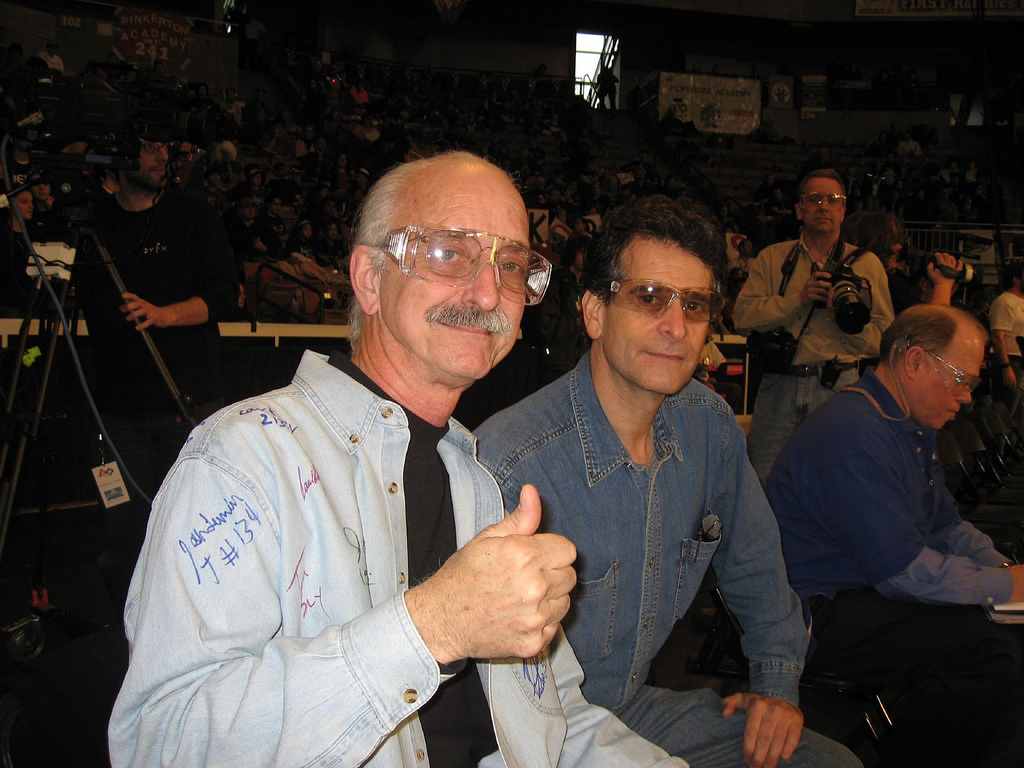
In the end, Woodie Flowers’s legacy is not just in the awards or buildings named after him. It lives in every student who discovered a love of STEM through FIRST, in every team that learned to cheer for a rival, and in every classroom that adopted a more hands-on, humane way of learning. As MIT Admissions summarized, he was “the absolute moral core of the entire FIRST community,” commanding respect by living the values he taught. His message was simple: work hard, create boldly, and treat others with respect–because being a good engineer goes hand in hand with being a good person. In that truth, Woodie Flowers’s life continues to teach us all.
In the end, Woodie Flowers’s legacy is not just in the awards or buildings named after him. It lives in every student who discovered a love of STEM through FIRST, in every team that learned to cheer for a rival, and in every classroom that adopted a more hands-on, humane way of learning.