
When answering questions on his track record of opposing improvements to the Voting Rights Act during his confirmation hearing prior to becoming Chief Justice of the Supreme Court, John Roberts replied that “you keep referring to what I supported and what I wanted to do. I was a 26-year-old staff lawyer. It was my first job as a lawyer after my clerkships… It was the policy of President Reagan. It was to extend the Voting Rights Act without change… and it was my job to promote the attorney general’s view and the president’s view on that issue. And that’s what I was doing.”
Twenty-three years later, John Roberts and the conservative supermajority on the Supreme Court have followed through on “the policy of President Reagan” and severely weakened Section 2 of the Voting Rights Act, which allows minority voters to sue if a state is prohibiting “voting practices or procedures that discriminate on the basis of race, color, or membership in one of the language minority groups identified.” To understand how the Supreme Court’s decision in Louisiana v. Callais will affect the future of voting rights in the United States, the bleak pre-Voting Rights Act status quo ante must be revisited, as well as the attempts at reform and the conservative counterrevolution to it.

After early attempts during Reconstruction to expand suffrage to Black males through the 15th Amendment, things went dramatically wrong in the South. African American voters were systematically disenfranchised and prevented from voting through Jim Crow laws. These laws implemented obstacles such as rigged literacy tests that were intentionally vague, so that African Americans would not pass no matter what answers they put down. It also included poll taxes, which forced people to pay to vote, and grandfather clauses that stated you could only vote if your grandfather could vote, a parameter that many African Americans at that time could not meet.
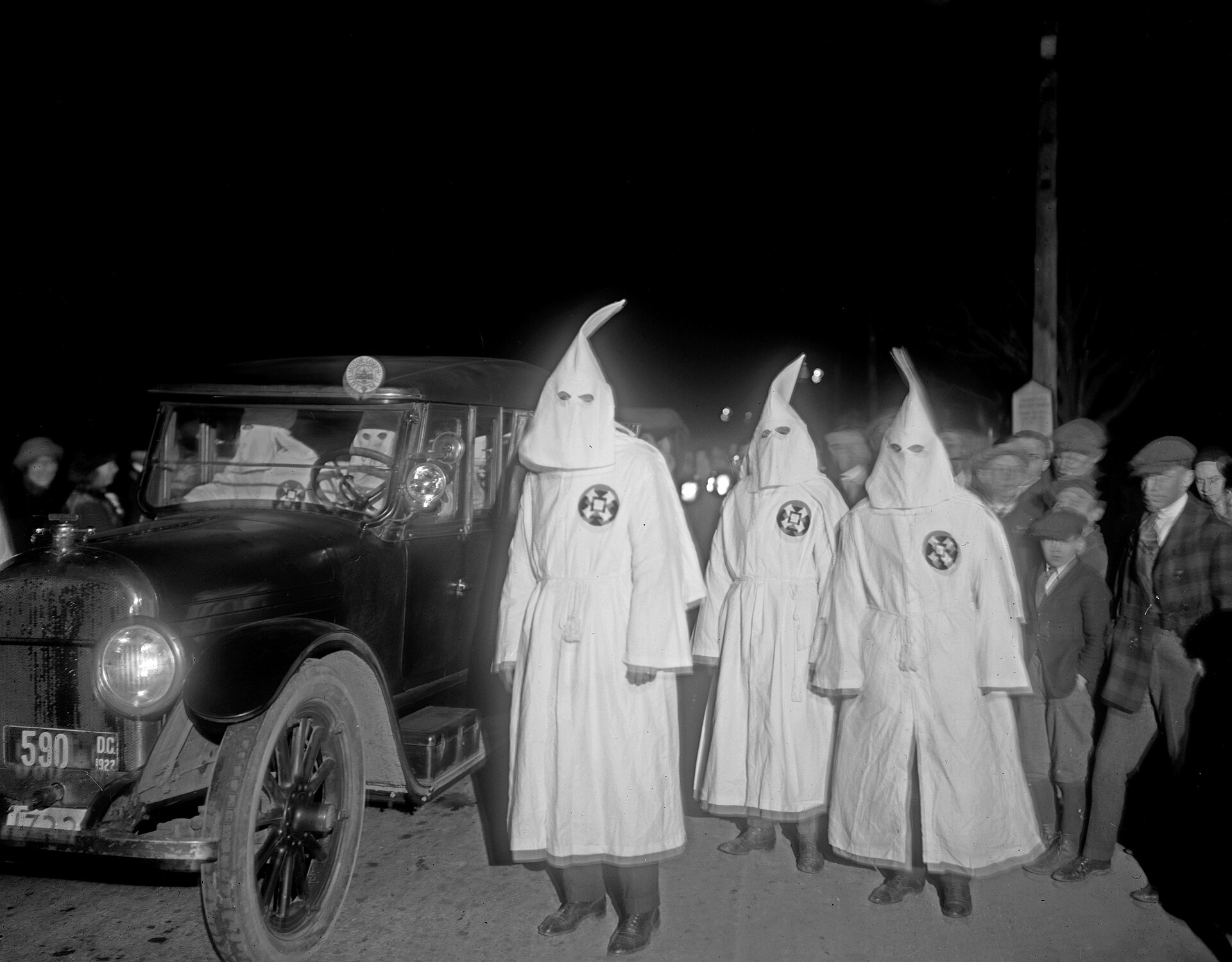
There were also tools outside the state that were used to deny African Americans voting rights. During and after Reconstruction, white supremacist organizations like the Ku Klux Klan (KKK) threatened voters with violence and even death to stop them from voting. Police oftentimes were collaborators or bystanders to this.
Besides threats of violence and barriers to voting, a more contemporary tool used was gerrymandering. Gerrymandering, defined as “the manipulation of an electoral constituency’s boundaries so as to favor one party or class,” was used to dilute Black voting power by packing or cracking districts. Packing involves putting all Black voters into a single district, while cracking means separating a group’s population among enough districts so that they don’t have a majority, often used in the modern day to separate a more liberal city with more conservative rural areas.
Alongside southern states that participated in disenfranchisement, several northern and western states also had literacy tests or voter registration systems that intentionally created barriers to non-white voters. For example, English literacy requirements in states like New York and California made it harder for many Puerto Rican, Latino, and Asian American citizens to register and vote, even though these restrictions were not always explicitly framed as racial policies.
Native Americans were also among those disenfranchised. Despite officially receiving citizenship in 1924, they were prevented from voting in some states if they lived on reservations or were considered under federal guardianship. Generally the rampant practice of poll taxes, voter roll purges, and local political manipulation painted a bleak picture for voting in the so-called “land of the free.”
This voter suppression lasted for essentially 100 years, continuing until the Civil Rights movements of the 1950s and 1960s attempted to bring about reform. Post-WWII America specifically began to start a real change with the V abroad and V at home campaign, with returning Black veterans wanting greater progress and racial change at home. Having just fought nominally for democracy, racial exclusion at the ballot box became much harder to justify on any moral and political grounds.
The Great Migration was another factor that contributed to change. This involved the movement of African Americans into Northern and Western cities, which had expanded their political influence by giving them real access to voting. This combined with the new posture among African Americans following World War II resulted in civil rights groups shifting to a more aggressive legal strategy, using federal lawsuits to attack all white primaries and other barriers to voting.
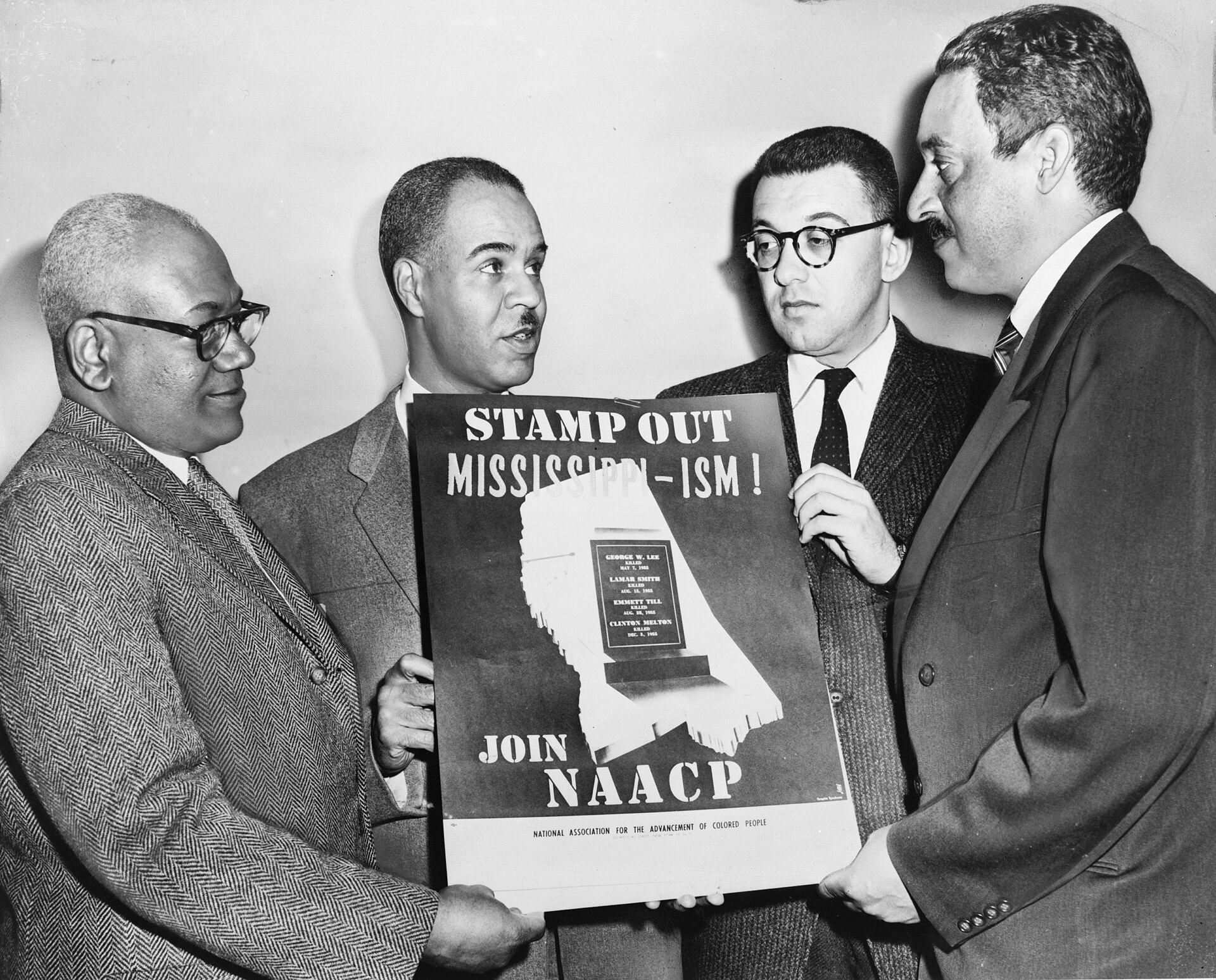
One of these groups included the NAACP, one of the most important Civil Rights organizations of the 20th century. Founded in 1909 by Black activists and white progressives, the NAACP spent the first half of the twentieth century using the courts to fight against segregation but kept running into the brick wall of courts being inclined to uphold segregation more often than not, and anytime the courts actually did side with NAACP, Southern states would just find a workaround.
Take an example in Texas, where the NAACP spent decades fighting all white primaries and actually winning in Nixon v. Herndon (1927) and Nixon v. Condon (1932), only for the Texas Democratic Party to simply ban Black membership as a private organization and argue the courts had no jurisdiction over a private club’s rules. The Supreme Court accepted that argument in 1935, sending the NAACP back to square one. Any progress in Congress itself was also stalled, because even if the NAACP could get someone on their side to take a stand against huge issues like lynching, the South would find a way to filibuster, a rule that required sixty votes to pass legislation in the Senate.
What changed after World War II was that the moral and political ground shifted enough through factors mentioned above like the Great Migration, Black veterans returning home, and general contradictions in the American identity. This made it so the courts and eventually Congress became more willing to act; the NAACP didn’t change its strategy so much as the country finally caught up to it.
Turning to the Courts, in the 1950s and 1960s, the Supreme Court, under Chief Justice Earl Warren, began to strike down the legal foundations of Jim Crow and specifically worked to expand democracy. Decisions like Smith v. Allwright (1944) struck down all white primaries, while Baker v. Carr (1961) opened the door to challenges against unfair district maps, signaling that voting rights were now subject to constitutional protection and judicial review. Attacks on the Jim Crow order weren’t just coming from the top of government but also from everyday people through the Civil Rights movement, who worked tirelessly to expand voting rights for minorities.
Two crucial grassroots organizations were SNCC and the SCLC. The SCLC, the Southern Christian Leadership Conference, was founded by MLK with the explicit goal of using nonviolent direct action to dismantle segregation across the South. SNCC, the Student Nonviolent Coordinating Committee, was founded in 1960 and was a youth driven organization operating in dangerous conditions organizing sit-ins, Freedom Rides, and voter registration drives across the South, where Black residents faced violence for trying to register.
The old Jim Crow order didn’t go away easily, and these efforts were often met with arrests, violence, and resistance from local authorities. However, these efforts did succeed in drawing national media attention and exposing the gap between America’s supposed “democratic ideals” and its reality. By the mid-1960s, voting rights had become a central focus of the Civil Rights movement as it pushed for change, particularly in places like Alabama, where Black citizens faced some of the most entrenched barriers to political participation.
Then President Johnson was particularly moved to action by the Selma to Montgomery marches, where peaceful protests for voting rights were met with violent crackdowns on “Bloody Sunday.” Published in the news, these images shocked the nation, prompting outrage that pushed President Johnson to act. He framed voting rights as a moral and constitutional crisis, building on earlier reforms like the Twenty-fourth Amendment that eliminated poll taxes and the aforementioned Supreme Court decisions.
In a televised speech to Congress, President Johnson gave one of the great American speeches, stating, “What happened in Selma is part of a far larger movement which reaches into every section and state of America. It is the effort of American Negroes to secure for themselves the full blessings of American life. Their cause must be our cause, too. Because it is not just Negroes, but really it’s all of us who must overcome the crippling legacy of bigotry and injustice. And we shall overcome.”
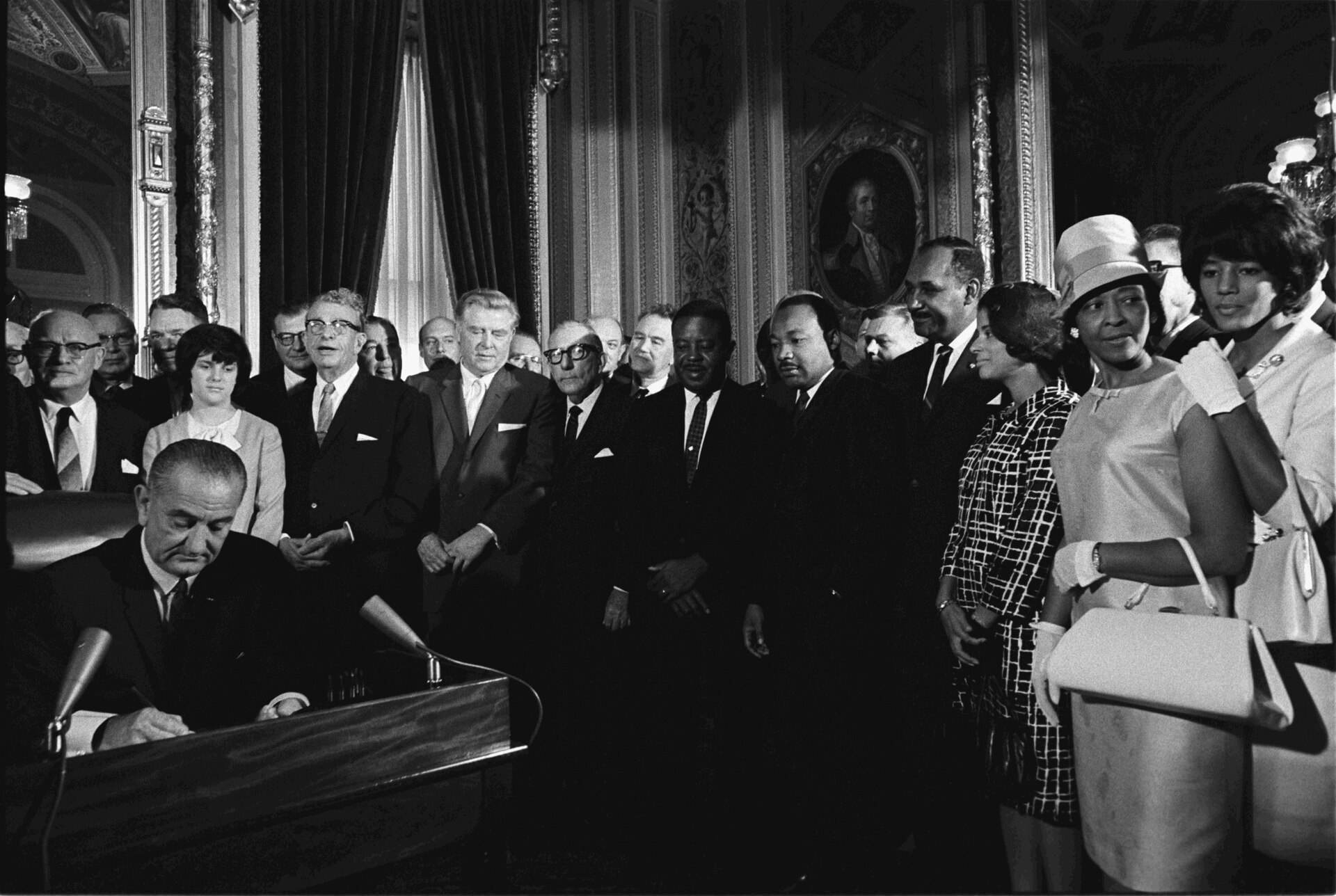
This energy culminated in the Voting Rights Act of 1965, marking the moment when federal power decisively moved against the Jim Crow system and began enforcing the promise of suffrage nationwide. The Voting Rights Act has multiple crucial, emancipatory, parts to it. It banned literacy tests made to restrict Black voters and authorized the federal government to send examiners into place with a history of voter repression, oftentimes the south. Under Section 5 of the Act, it also required states to get approval from the federal government before making changes to their voting laws, a practice known as preclearance.
Section 2 of the Act serves as an anchor, explicitly spelling out that you cannot discriminate on the basis of race, color, or membership in one of the language minority groups identified in the act. In practice, it dramatically expanded access to the ballot across the country and gave people a way to challenge unfair voting practices in places that don’t have state-level protections.
In the immediate aftermath of the Act, Black voting participation in the South exploded, with the full force of the federal government behind it. Federal examiners went into the South to register Black voters and to ensure that they were allowed to vote. Roughly a quarter million new Black voters were registered within the first year and doubled the Black elected officials in the South from 72 to 159 by 1966. In a crucial 1966 court case following the Act’s passing, South Carolina v. Katzenbach, the Supreme Court ruled that Congress had broad power under the Fifteenth Amendment to take action against racial discrimination in voting.
Even as Democrats lost the White House for the beginning of the 1970s, the act continued to be used and was crucial during this decade thanks to a broad bipartisan belief that continued action was necessary. The act went through two “reauthorizations” where Congress updated and renewed the law for a set amount of time. In 1970, the act was renewed for another five years alongside updating the “coverage formula” to expand the act’s protections to regions that were seen as suppressing voters during the 1968 elections.
The 1975 reauthorization was more dramatic as it amounted to large-scale expansion of the Act’s protections to other minorities living within the United States. This made it so that jurisdictions with large populations of citizens who were not proficient in English now had to provide bilingual ballots and voting assistance. The 1975 amendments likewise updated the coverage formula again, bringing new areas, like the Southwest, under preclearance.
In front of the Supreme Court, the act was also upheld for most of the decade. In decisions like Perkins v. Matthews, the court ruled unanimously that even seemingly minor changes, such as moving polling places or altering municipal boundaries, required federal preclearance. That same expansive approach continued in Georgia v. United States, where the Court upheld, by an 8-1 margin, the federal government’s power to block discriminatory redistricting plans, and in White v. Regester, where it unanimously struck down multi-member districts that diluted Black and Latino voting strength.
At the end of the decade, however, the Supreme Court laid down a decision that narrowed potential enforcement of the act in City of Mobile v. Bolden. In Mobile, Alabama, each of the city council members was elected by a citywide vote. With the city demographics being 60% White and 40% African American this meant that no African American had ever been elected to the city council. The African American residents of Mobile sued under the Voting Rights Act, arguing that the voting system was intentionally designed to disenfranchise them.
Lower courts sided with the African Americans, but when the decision was appealed to the Supreme Court, they ruled in a 6-3 decision that because the city’s voting method was not explicitly meant to discriminate, it was not subject to the Voting Rights Act. This case established that unless there was an explicit desire to discriminate within the text of the law, voters could not sue under the Voting Rights Act.
At this point we reunite with the aforementioned John Roberts. At the time of City of Mobile v. Bolden, Ronald Reagan was running for president, being sworn in the year after. In 1982, the Voting Rights Act was up for reauthorization after its last reauthorization in 1975. Fearing the potential repercussions of the Supreme Court decisions, a bipartisan effort was enacted to change the act to make it explicit that the act was enforceable based on results of discrimination, not the intent of discrimination.
Most members of the Reagan administration didn’t plan on putting up much of a fight, with the act being popular with the broader American public. However, conservatives in the Department of Justice pushed back, wanting to keep the act in name only by leaving the act mostly unchanged, making it almost impossible to actually use with the City of Mobile v. Bolden decision still standing. This might not have been visible to the average American in the leadup to the fight, with Reagan addressing an NAACP conference to profess his support for voting rights, and he told the Washington Star that he would sign whatever reauthorization Congress passed.
However, after a meeting with William Smith, the Attorney General, Reagan began to sing a different tune. As David Daley notes in his book Antidemocratic, following the meeting “Reagan embraced two of Smith’s proposals — maintaining the intent standard, and making it easier for localities to escape Section 5 preclearance, which required all bodies in covered states to get approval before making any changes to election law or procedures.” By the end of the year Reagan attacked the “effects” standard that Congress wanted to add, claiming that, “You could come down to where all of society had to have an actual quota system.”
John Roberts went one step further, bringing up state rights. In a memo arguing against changing the Voting Rights Act, he said, “Violations of §2 should not be made too easy to prove, since they provide a basis for the most intrusive interference imaginable by federal courts into state and local processes.” To actually follow through on this vendetta against the Voting Rights Act, the Reagan administration wanted to keep the number of votes for it below sixty in the Senate. Thanks to the filibuster, a procedural rule, this was the amount needed to actually pass a bill in the Senate, which was Reagan’s preferred option instead of having to make a dramatic veto.
In a coalition that included pro-segregation Republican Senator Strom Thurmond, who was also chair of the Senate Judiciary Committee, the Reagan administration prepared a Senate fight to stall the bill until they could get their way. However, it soon became apparent that there was enough bipartisan support to pass the reauthorization with the new intent test intact. Roberts did not give up, however, coaching administration officials on lines to deliver to Congress to dissuade them from voting for the reauthorization. He even attempted to convince the president about the potential merits of a veto. All of this was stopped when Kansas Republican Bob Dole informed the Reagan administration that it was over, he had a veto-proof supermajority willing to pass the effects test.
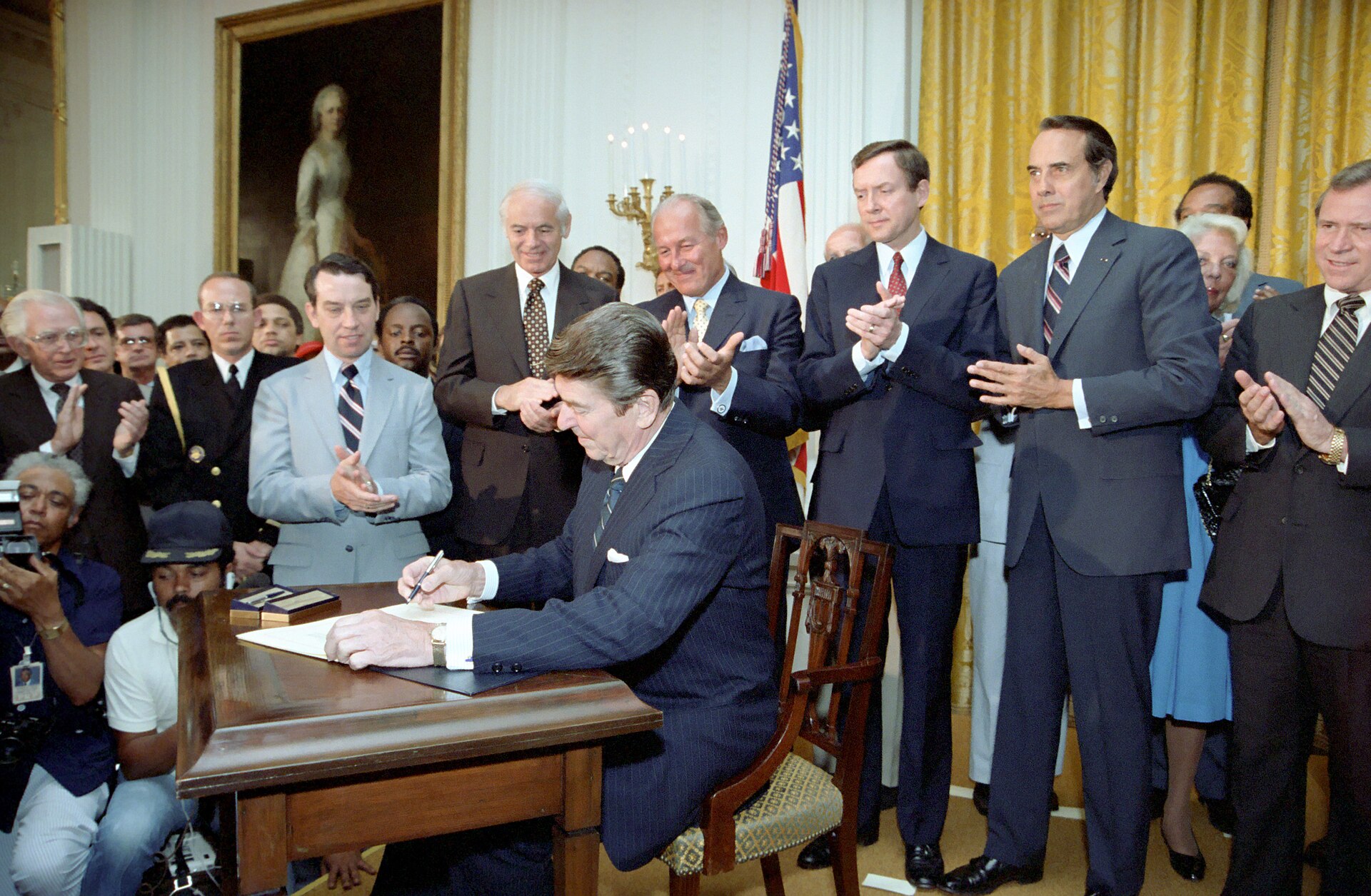
What lesson did Roberts and the conservative movement take away from this opening salvo in the fight for the future of the Voting Rights Act? That they were focused on the wrong centers of power. That April, the Federalist Society, a conservative think tank, had their first national gathering and came to a simple conclusion: they had to seize the courts. As mentioned previously, the Voting Rights Act had been upheld again and again by the Supreme Court during the 1960s and 70s, but that would begin to be subject to change.
Though he had signed the reauthorization of the act, Reagan started a campaign to undermine the act with the appointment of judges that would carry out a more right-wing vision of it. Reagan appointed three Supreme Court justices during his eight years in power and elevated one: Sandra Day O’Connor in 1981, Antonin Scalia in 1986, and Anthony Kennedy in 1988, while also elevating William Rehnquist to Chief Justice in 1986. This shift in the court was especially important due to court cases that would decide the future of voting rights in America.
In 1986, Thornburg v. Gingles upheld the 1982 reauthorization of the act by saying that plaintiffs could sue simply with a demonstration of racially polarized voting that left minority voters with diminished opportunity to elect candidates of their choice, not if there was simply an intention to diminish voting rights. However, Reagan’s justices were already laying the groundwork for arguments that may be used to retract the act in the present day, saying that evidence of sustained minority electoral success and statistical voting patterns could be considered to decide when the law had done its job in a concurrence with the original decision.
In another decision that mirrors the Supreme Court just ruled on, Shaw v. Reno (1993) established that white voters could challenge an African American congressional district in North Carolina. They ruled that the district was so oddly shaped it could only be explained by race. This flipped how the act was supposed to be used with conservative justices Rehnquist, Scalia, Kennedy, and Thomas focusing not on whether minority voters were being shut out but on whether race had been used too heavily in drawing the fix. While they had not eliminated the act yet, they were already shifting the political and legal conversation around it more to their own ends.
In Congress, the 1992 reauthorization was a much more muted affair than in 1982, though a Republican, George H.W. Bush was still in the White House. There were a few changes made to the act, like expanding the bilingual election requirement to cover jurisdictions with linguistic minority populations of over 10,000, along with new protections for Indigenous peoples on reservations. These passed without a huge battle, and President George H.W. Bush signed the Voting Rights Act Amendments of 1992 into law.
On the legal side George H.W. Bush made more of an impact on the act’s future. David Souter, who was George H.W. Bush’s first appointment to the Supreme Court proved to be fairly moderate. Bush’s other appointment Clarence Thomas, on the other hand, was much more brazenly conservative. Clarence Thomas laid out his objections to the Voting Rights Act in 1994, insisting that the act was exacerbating rather than easing “racial tensions.” Several colleagues called his position “radical,” but he stuck to his guns. In fact, he reiterated this sentiment in the recent decision on Louisiana v Callais, where he said the Supreme Court “should never have interpreted §2 of the Voting Rights Act of 1965 to effectively give racial groups ‘an entitlement to roughly proportional representation.’”
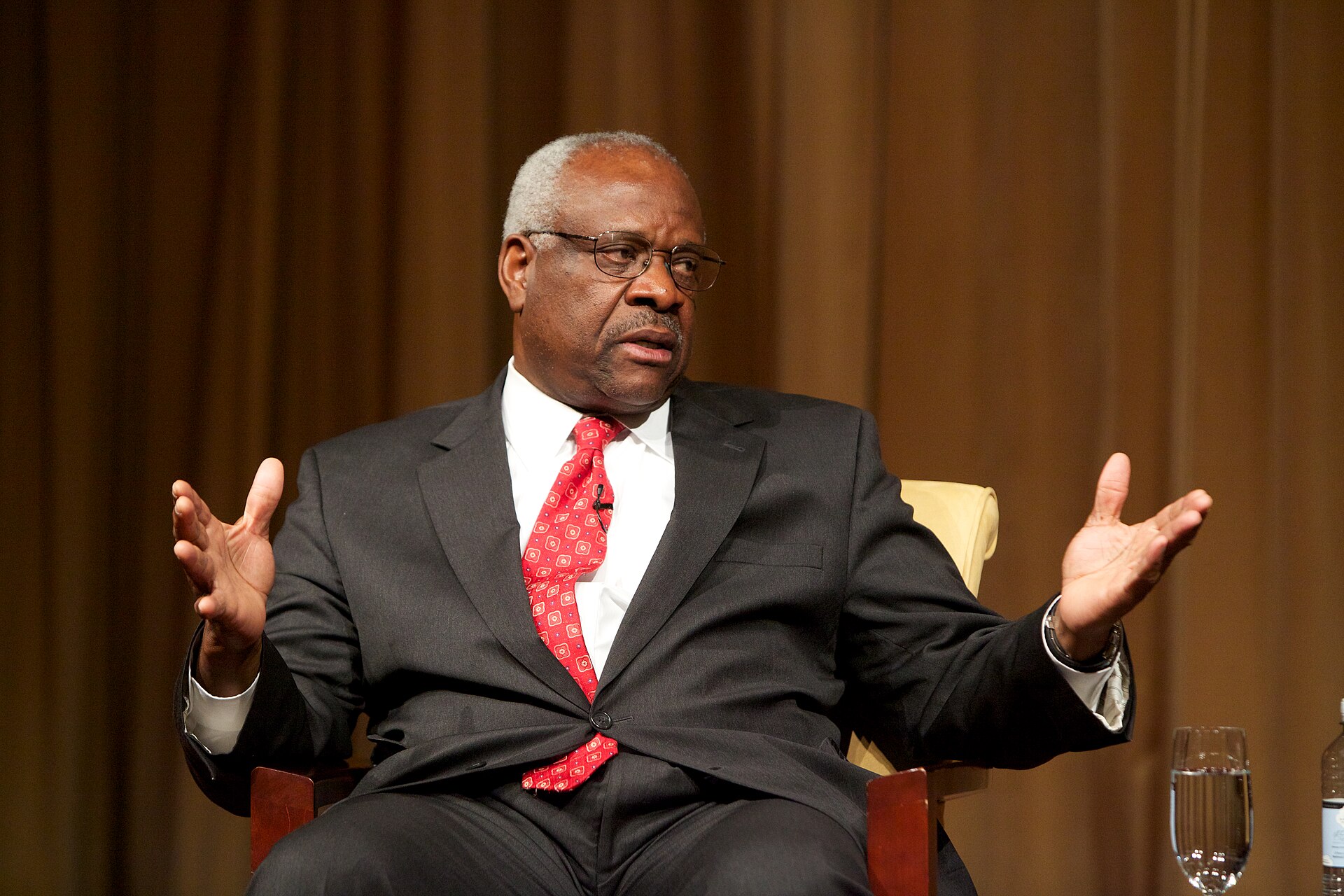
Back in the 1990’s, conservatives on the court continued to chip away at the act. In Miller v. Johnson (1995), the Court ruled that race could never be a predominant reason for redistricting, going a step further than Shaw had. The practical effect was that states trying to comply with the Voting Rights Act were now vulnerable to lawsuits from white voters claiming racial discrimination, as states could technically consider race but now legally could not let it override traditional redistricting principles such as compactness, contiguity, respect for political subdivisions, and the preservation of communities of interest.
In the lead up to the 2006 reauthorization, the Supreme Court handed down two decisions with conservatives in the majority that did more damage to the act. In Reno v. Bossier Parish School Board (2000) a Louisiana school board rejected an NAACP map that would have created two majority Black districts in favor of a plan that created none.
The problem with this was that the map they approved wasn’t necessarily discriminatory, and the board pointed out the boundaries were identical to one the Justice Department had already approved for the local governing body. They also pointed to the fact that Black politicians had actually won elections under the map. The Justice Department pointed out that even though the plan did not result in discrimination, the school board had still been presented with an opportunity to have a map that actively helped Black representation and by rejecting it, they had undermined the Voting Rights Act.
In their decisions the Supreme Court sided with the school board, saying that the Voting Rights Act only blocked voting plans that actively made things worse than what they already were. A plan drawn with some discriminatory decisions, like a map that went against the NAACP but that did not technically worsen the existing situation, could still be approved under this ruling.
The 2003 decision in Georgia v. Ashcroft was similarly damaging. In it, the court said that a Georgia State Senate map — that was seen as undermining the Voting Rights Act — could be passed because it preserved “opportunity to participate in the political process.” This decision made it much easier for states to get away with making black voters more diluted across districts as long as they met the court’s new standard of giving Black voters some vague “influence.”
In dissent, the liberal wing of the court fired back by essentially restating the core reason the Voting Rights Act was needed in the first place: if a district was not a safe majority minority district, there was little chance of them electing candidates of choice, as there was not sufficient evidence that non minority voters will actually vote reliably alongside minority voters. Without clear evidence that minority voting rights would be diluted without a district of their own, Justice Souter said that it was “very hard to see anything left of” Section 5.
The 2006 reauthorization, like the one in 1982, aimed to use the legislative and executive branches to counterbalance the judicial branch. Specifically, Democrats wanted the reauthorization of the act to explicitly stop the chipping away the Supreme Court had been doing. The reauthorization extended the act’s provisions for another twenty-five years and overturned the two decisions mentioned earlier. First, they explicitly amended Section 5 to define “purpose” to mean “any discriminatory purpose,” like the schools board’s rejection of the NAACP map, and went on to amend Section 5, having it explicitly say that states couldn’t just appeal to a vague influence that minority voters were supposed to have. They had to concurrently give them districts that would allow them to vote for candidates of their choice.
The final vote was overwhelming, with 390-33 in the House and 98-0 in the Senate. George W. Bush signed it into law at a ceremony with civil rights leaders on the White House lawn. However, this underscored real attempts by the Republican caucus to undermine the act. Representative Westmoreland of Georgia proposed an amendment to create an expedited process for states to be put off of preclearance. Representative Gohmert of Texas proposed cutting the reauthorization from 25 years down to just 10. A third amendment that had the support of a group of 80 Republican legislators proposed updating the coverage formula to remove many Southern states from Section 5 coverage by swapping in newer, more favorable data.
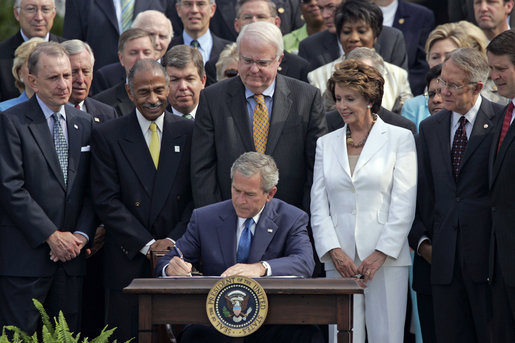
To justify this, Southern members of Congress argued that despite their state’s efforts to improve, the South continued to be treated differently from the rest of the country. All of these amendments failed, though the struggle to alter the bill continued to the day of its actual signing, with Judiciary Committee Republicans filing a committee report on the reauthorization that contained two poison pills.
The first poison pill was the argument of equal sovereignty, which was a variant on the same states’ rights case that John Roberts had been making in 1982. Equal sovereignty essentially meant that singling out certain states for preclearance while leaving others free to change their voting laws treated states unequally, thereby violating the constitution.
The second poison pill concerned the coverage formula, which had been kept the same for each reauthorization since 1975. The Judiciary Committee Republicans argued that this made the act obsolete and not connected to present-day realities. This report by Republicans was not made into law, but by putting it into Congressional records, they made it available to the Supreme Court to be used when considering the constitutionality of legislation.
With the 2006 authorization out of the way, we come to the final nail in the coffin of the Voting Rights Act — the appointment of John Roberts as Chief Justice. Roberts had been busy since his 1982 attacks on the act; he continued to work in the Reagan administration reviewing bills, drafting executive orders, and performing general legal review of presidential activities, which is where he wrote those 25-plus memos fighting the 1982 reauthorization.
He continued to bounce around public and private service, serving as George H.W. Bush’s Principal Deputy Solicitor General, the number two position in the office that argues the government’s cases before the Supreme Court. He was nominated to be a judge three times, once under the first George Bush and once under the second, before being confirmed the third time as a judge in 2003. Two years later Bush nominated him to the chief justice spot when it was clear Chief Justice Rehnquist’s health was in decline.
At the confirmation hearing itself, Roberts had his lines prepared. Riffing off of Bush’s history as manager of the Texas Rangers, he compared judges to baseball umpires: “It’s my job to call balls and strikes and not to pitch or bat.” While this helped with Bush, many Democrats were more skeptical. Senator Kennedy of Massachusetts (the younger brother of the deceased former president) pressed hard on the Voting Rights Act, noting Roberts’s long record of opposition to Section 2 and the fact that he had not disavowed any of the positions he had taken in his Regan-era memos.
Kennedy said the American people were entitled to know whether Roberts believed the provision was constitutionally sound. Roberts eventually said he had “no basis for viewing it as constitutionally suspect,” but he would not repudiate his earlier memos, saying he had just been representing his client, the Reagan administration. Civil rights leaders were not reassured.
John Lewis, who had had his skull broken by state troopers on the Edmund Pettus Bridge while marching for voting rights, testified that Roberts was “hostile towards civil rights, affirmative action, and the Voting Rights Act” and warned against confirming someone “whose record demonstrates a strong desire to reverse the hard-won civil rights gains that so many sacrificed so much to achieve.” To put it succinctly, Lewis said that “25 years ago, John Roberts was on the wrong side of the nation’s struggle to achieve genuine equality of opportunity for all Americans.”
Other Civil Rights organizations also stayed off the sidelines, with the NAACP Legal Defense Fund released a detailed report combing through Roberts Reagan era memos, documenting his key role advancing the administration’s opposition to amending Section 2 of the Voting Rights Act as has been detailed earlier in this article. 160 law professors signed a letter urging the Senate not to approve Roberts’s appointment, arguing he held an unacceptably narrow view of Congress’s authority to protect civil rights. Latino civil rights organizations, women’s groups, disability rights advocates, and environmental organizations all came out against the nomination, running newspaper ads, and flooding senators with calls and letters.
However, the political environment was not favorable to Democrats wishing to block the nomination. While there were some notable votes against Roberts, such as future President Joseph Biden and current Democratic minority leader Chuck Schumer, 22 Democrats voted in favor of confirmation alongside every Republican. Even with the efforts from the NAACP and other civil rights organizations, many Democrats argued that Roberts was simply too qualified to oppose, that his legal credentials were beyond question, and when Democrats next controlled the White House, they would want Republicans to apply the same standard of confirming a highly qualified nominee regardless of ideology. Somewhat ironically, when Republicans controlled the Senate in 2014, they refused to confirm any of President Obama’s justice picks, including Supreme Court justice nominees.
Another factor was that many Democrats came from states that had voted to reelect the at-the-time popular President Bush. These Democrats faced straightforward political pressure to vote yes. In the end the vote was 78-22, and the man who spent his early career crusading against the Voting Rights Act was now in charge of the highest court in the land.
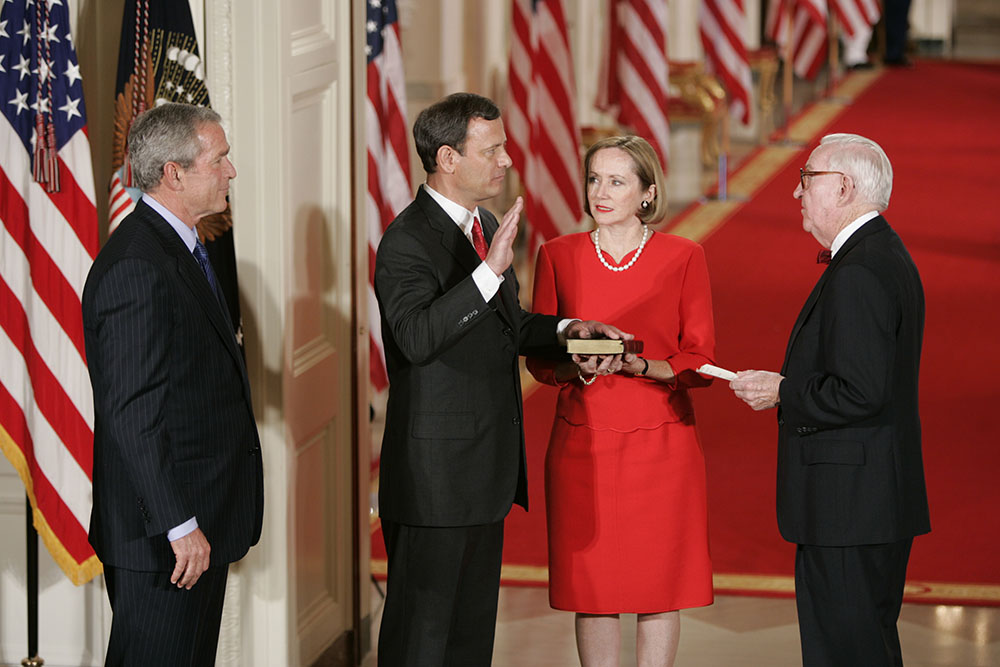
If Roberts was anything, he was patient. Before bringing the hammer down on the entire act, he chipped away at it bit by bit. Laying down groundwork involved a few decisions, the most notable being League of United Latin American Citizens v. Perry (2006) and Northwest Austin Municipal Utility District No. 1 v. Holder (2009). In the 2006 decision, the Court found that Texas had violated Section 2 of the Voting Rights Act by eliminating a majority Latino district in a rare mid-decade redistricting. Roberts wrote separately to argue that it wasn’t admissible under the Voting Rights Act, an early indication of his feelings on the act.
The more important decision was Northwest Austin Municipal Utility District No. 1 v. Holder (2009). A suburb of Austin argued that since it had no history of racial discrimination, it wanted to opt out of oversight by the federal government under the Voting Rights Act. In other words, it no longer wanted to submit to preclearance. In this decision, Roberts appeared openly hostile to the act, repeating arguments that he would use to eliminate whole chunks of it later.
At an oral argument, he compared the need for preclearance to an “elephant whistle,” saying “there are no elephants, so it must work.” Writing for the majority, he claimed that the need for the act was unclear, saying the act “imposes current burdens and must be justified by current needs” and that “a departure from the fundamental principle of equal sovereignty requires a showing that a statute’s disparate geographic coverage is sufficiently related to the problem that it targets.” While the decision itself was unanimous, with Liberal justices not seeing the problem with opting out of the Austin suburb since it had not displayed evidence of racial discrimination, Roberts had still laid the seeds of his ultimate argument that the Voting Rights Act was obsolete.
The ultimate vindication of the conservative movement’s crusade against Section 5 of the Voting Rights Act and preclearance came in 2013. Strengthened by a Heritage Foundation vetted conservative majority and assured of their lifetime appointments, the Supreme Court became openly hostile to even the idea of the act. During oral arguments, Justice Scalia argued that the act was nothing more than “a phenomenon that is called perpetuation of racial entitlement. Whenever a society adopts racial entitlements, it is very difficult to get out of them through the normal political processes… Even the name of it is wonderful — the Voting Rights Act. Who is going to vote against that in the future?”
John Roberts himself was singing a different tune than at his confirmation hearing, where he had told Congress he had “no basis for viewing the act as constitutionally suspect.” While calling the act “extraordinary measures to address an extraordinary problem,” he even acknowledged the South’s history of “unremitting and ingenious defiance of the Constitution.” But he argued that times had changed and that parts of the act had outlived their usefulness as a solution to a 1960s-era crisis.
He pointed to increases in voting participation among African Americans and improvements in voting standards. So, he asserted, the coverage formula used to place Southern states under special oversight could no longer justify its departure from what Roberts called the principle of equal sovereignty, a standard the Court (under Roberts) had created in Northwest Austin (2009) that required any law treating states unequally to be grounded in current conditions, riffing off of the Judiciary Committee filings by Republicans during the 2006 reauthorization.
In a 5-4 decision, the conservative majority made a decision that Roberts framed as hitting the ball into Congress’s court, saying that the coverage formula that currently existed was unconstitutional and had to be updated by Congress to account for the South’s progress on voting rights. Clarence Thomas filed a concurrence that argued that the Court’s decision didn’t go far enough. He asserted that instead of demanding an updated formula, the Court should eliminate Congress’s ability to use Section 5 and preclearance in any circumstance.
In dissent, the liberal justices articulated that pointing to progress the South had made to justify eliminating part of the act was paradoxical, pointing out that any progress they had made was because they were under federal supervision. As Justice Ginsberg put it, “Throwing out preclearance when it has worked and is continuing to work to stop discriminatory changes is like throwing away your umbrella in a rainstorm because you are not getting wet.” She also pointed out that Congress had compiled nearly 16,000 pages of evidence of ongoing discrimination when it reauthorized the act in 2006, a record Roberts essentially dismissed.
To this day, Congress has yet to pass that updated coverage formula that Roberts recommended, with each attempt passed by either party in the House, such as the Democrats’ John Lewis Voting Rights Advancement Act, dying before the filibuster in the Senate, the same tool Regan tried to use to stall the 1982 reauthorization.
In the immediate term, the Supreme Court decisions resulted in an immediate flood of anti-voter laws across the country. The same day as the decision, Texas officials announced that they would implement the nation’s most restrictive voter ID law, which had previously been blocked in the preclearance process. Texas Attorney General and current Governor Greg Abbott tweeted, “With today’s decision, the state’s voter ID law will take effect immediately.”
Mississippi’s secretary of state announced on the very day of the decision that the state would move forward with a photo ID law that had been sitting in preclearance limbo. The day after the ruling, the chairman of the North Carolina Senate Rules Committee publicly announced the legislature would be moving forward with an omnibus voting restrictions bill that included reducing early voting, eliminating same-day registration, banning out-of-precinct voting, ending pre-registration for 16-year-olds, and instituting a strict photo ID requirement. It was ultimately struck down in 2016 by a federal appeals court, which found it had targeted “African Americans with almost surgical precision” in violation of Section 2 of the Voting Rights Act, but only after three years of litigation and multiple elections held under discriminatory rules.
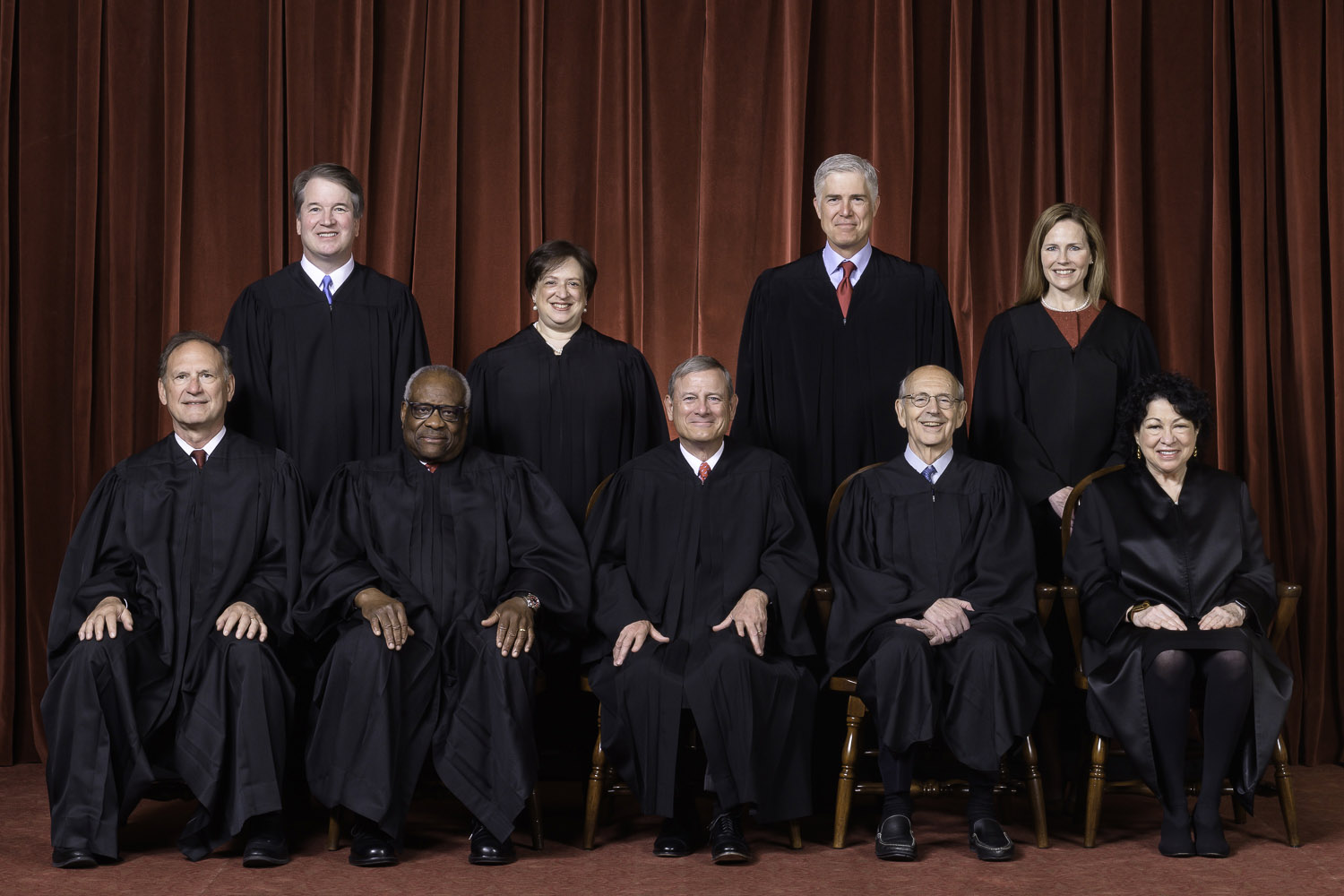
The Roberts court wasn’t done yet. Armed with newly appointed Trump justices and eventually a supermajority following the death of Ruth Bader Ginsberg, they continued to go to work. In Rucho v. Common Cause (2019), Roberts wrote the majority opinion in a case about North Carolina’s congressional map, which Republicans had explicitly drawn to produce a 10-3 Republican delegation. A mapmaker had testified under oath that he had been instructed to maximize Republican seats as much as possible. Lower courts struck the map down. Roberts and the conservative majority reversed them, ruling in a 5-4 decision that partisan gerrymandering claims were simply beyond the reach of federal courts no matter how extreme or openly partisan the map was.
In practice, this made it so that any state that wanted to draw a discriminatory map could now simply claim it was motivated by party rather than race, and federal courts would have to walk away. Kagan’s dissent pointed out that lower courts had already developed workable tools to identify extreme gerrymanders and that the majority was abandoning the field just when it had the means to clean it up.
Then came Brnovich v. Democratic National Committee (2021), written by Samuel Alito, one of George W. Bush’s appointments. The case involved two Arizona voting restrictions: one that threw out ballots cast in the wrong precinct and one that banned third-party ballot collection, a practice that Native American, Latino, and Black voters in remote areas relied on heavily. Writing for the 6-3 conservative supermajority that included all three of Donald Trump’s Heritage Foundation vetted appointments, Neil Gorsuch, Brett Kavanaugh, and Amy Coney Barrett, Alito invented five new “guideposts” for evaluating Section 2 claims.
The first guidepost the majority outlined was that courts should look at how much a law departed from voting practices that existed in 1982, which, as stated earlier, was the year Congress had specifically updated the law to make it easier to challenge discriminatory practices. The conservative majority also outlined four other criteria for deciding if a new law was discriminatory: courts should consider how substantial the burden on voters is; how large any racial disparities are caused by the rules; how the challenged rule fits within the state’s overall voting system (essentially saying that if a state’s overall voting system didn’t tip off any alarms, the new rule could likely stand); and the strength of the state’s interests, such as preventing fraud.
Practically, this decision just made it much harder to challenge the flood of voter suppression laws that had appeared after the gutting of preclearance like early voting restrictions, voter ID requirements, and limits on absentee voting because they now had to be shown to meet these criteria.
Which brings us to the present day: Louisiana v. Callais, the case the Supreme Court just laid down its ruling for, aiming to finish what the conservative legal movement has been angling to do for decades. After the 2020 census showed Black residents made up a third of Louisiana’s population, the state drew a map giving them only one of six congressional districts. The Supreme Court, in a surprise decision given what we have discussed, ordered a second majority-Black district drawn in a 5-4 decision in Allen v. Milligan (2023.)
Louisiana complied, but a group of white voters immediately sued, arguing the new district was itself an unconstitutional racial gerrymander. After first hearing arguments in March 2025, the Court took the extraordinary step of ordering re-argument, asking parties to brief whether Louisiana’s creation of a second majority Black district to comply with Section 2 itself violated the Constitution. This was a bad sign, given the court usually reserves re-arguments before it makes huge sweeping decisions.
Louisiana, in a remarkable turn, filed a supplemental brief arguing that all “race based redistricting is unconstitutional.” At oral argument in October 2025, court observers said the conservative majority appeared ready to significantly limit Section 2, with Kavanaugh suggesting race-based redistricting remedies should have a time limit, similar to the logic the Court had used to end affirmative action in college admissions.
Analysts estimate that without the strength of Section 2, up to 12 congressional seats in the South states could be gerrymandered for the Republican, fundamentally remaking and disenfranchising millions of Americans. As of this article’s publication, the Supreme Court ruled that by Louisiana redrawing congressional maps to franchise African Americans, the state had used race improperly and done an illegal racial gerrymander.
With this decision, the court achieved exactly what Roberts wanted to do in 1982, eliminating the effects test of the act. Writing for the majority, Alito said “to successfully challenge district maps under the Voting Rights Act now, challengers will need to show proof a state “intentionally drew its districts to afford minority voters less opportunity because of their race.”
Given the current Supreme Court’s record on voting rights, this was not shocking. Following the ruling, the NAACP put out a statement stating, “The Supreme Court betrayed Black voters, they betrayed America, and they betrayed our democracy. This ruling is a major setback for our nation and threatens to erode the hard-won victories we’ve fought, bled and died for.” Similarly, the liberal dissent to the ruling stated, “I dissent because the Court’s decision will set back the foundational right Congress granted of racial equality in electoral opportunity.”
Already, its becoming clear that many states see this as their opportunity the change voting maps. Alabama’s attorney general said the state would act to “ensure that our congressional maps reflect the will of the people, not a racial quota system the Constitution forbids.” Similarly, Liz Murrill, the Attorney General of Louisiana said that the ruling “empowers legislators to do the job that the federal constitution always directed legislatures to do.” In Mississippi, Govenor Tate Reeves announced he would summon lawmakers for a separate special session 21 calendar days after the ruling to redraw the maps for the Mississippi Supreme Court.
As we stand at the dawn of a new, unchained era of gerrymandering, time will tell if we are returning to a new era of disenfranchisement and extreme gerrymandering, or if Congress acts to stop the courts chipping at one of their most historic achievements.
So, he asserted, the coverage formula used to place Southern states under special oversight could no longer justify its departure from what Roberts called the principle of equal sovereignty, a standard the Court (under Roberts) had created in Northwest Austin (2009) that required any law treating states unequally to be grounded in current conditions, riffing off of the Judiciary Committee filings by Republicans during the 2006 reauthorization.