

When you meet someone and learn that they’re a Republican, what do you assume about them?
Depending on where you stand politically, your assumptions may vary. Maybe you assume that they are against social welfare policies and an overbearing government. You may think them a radical nationalist who fears people who are different from them. Or maybe you consider them a proud American who is fighting against the weakening of this country by the left.
Regardless of the connotation you might have, the meaning of republicanism has certainly changed over time, no matter whom you ask. From the anti-federalist policies of the Democratic Republicans in the late 18th century, to the more progressive Republicans of the 19th century, to the MAGA extremism of today, Republicans in America have undergone a major identity crisis.
And as we experience Trump’s second presidential term, another shift may be approaching. Many MAGA Republicans have felt betrayed by Trump as of late, as his populist and isolationist campaign promises have fallen through. Where will the party go if it abandons its leader? Maybe the past shifts in the party’s history will give insight into its future.
To Be “For The People”
The word “republic” stems directly from ancient Rome, when a name was needed for their new form of government. When the former system of a monarchy was left behind in 509 B.C.E., it was replaced by a republic, a government that accurately represents its people and openly encourages civic participation. The Roman republic had separate branches of power, the Senate and the Councilium Plebs, with the former being made up of the upper class, and the latter being made up of the lower plebeian class. This system thrived for centuries until it dissolved with the rise of Julius Caesar, before being officially over when Augustus became the first Roman emperor.
While the Romans did not invent the concept altogether, and many of their time had similar systems, many countries throughout history would later use their representative government as a model. The ideas of republicanism and civic duty became particularly important to 17th- and 18th-century Europeans during the Enlightenment, a time when absolute monarchs were shunned in favor of “enlightened” despots.
In turn, as England’s thirteen North American colonies began to question the power of the British crown, they were influenced by Enlightenment ideology when forming their new government. This reflection, along with rising tension between them and England, led to the Revolutionary War. After the war, the burgeoning nation needed a government that would hold the colonies together without tying any of them down to a centralized government. Thus, the Articles of Confederation were born.
The Foundations of American Republicanism
While the Articles of Confederation were only in use from 1783 to 1787 C.E., they possessed the ideals that would go on to become key tenets of republicanism in the United States. The most important of these ideas is the concept of having a weak central government while the states are mainly autonomous. However, this system was ultimately discarded when the problems with a weak central government became clear: the government cannot collect taxes or amass its own army.
To rectify this, the Constitution was created to give the United States a new foundational government, one focused on strengthening the central government. But some people, known as anti-federalists, were opposed to the idea of strong federal power. While the Constitution was ultimately ratified despite some backlash, the anti-federalists would go on to support a strict view of the Constitution, leaving little room for interpretation, thereby limiting the powers of the central government. As the 18th century came to a close and George Washington left office, the anti-federalists became known as the Democratic-Republicans, a group that was spearheaded by Thomas Jefferson, and was primarily supported by those of lower classes.
During the early 19th century, the Democratic-Republican Party became the only political party, as the federalists lost popularity following the War of 1812. The party would experience its split in 1824, when John Quincy Adams was declared president by the House of Representatives, despite Andrew Jackson winning the popular vote. This led to distrust between those who followed Adams and those who followed Jackson, which led to Jackson’s supporters forming the Democratic Party, and Adams’ supporters forming the Whig Party. However, the Whig Party was only united in its opposition to Jackson, and dissolved in 1854 due to a lack of consensus on issues like slavery. The early Republican Party was composed of those from all walks of life who opposed slavery, like the splinters of the Whig Party, and farmers who didn’t want slaves taking their jobs.
The Republican Party was formally legitimized in the election of 1856, when Republican candidate John C. Frémont lost to Democrat James Buchanan. Despite the loss, the significance of this election for the party lies in their growing voter base, as most of the northern states voted Republican. Republicans continued to run on an anti-slavery platform, which led to Abraham Lincoln’s election as the Republican candidate in 1860. But as the Civil War came to a close, a transformation in the party would take place.
A History of Growing Conservatism
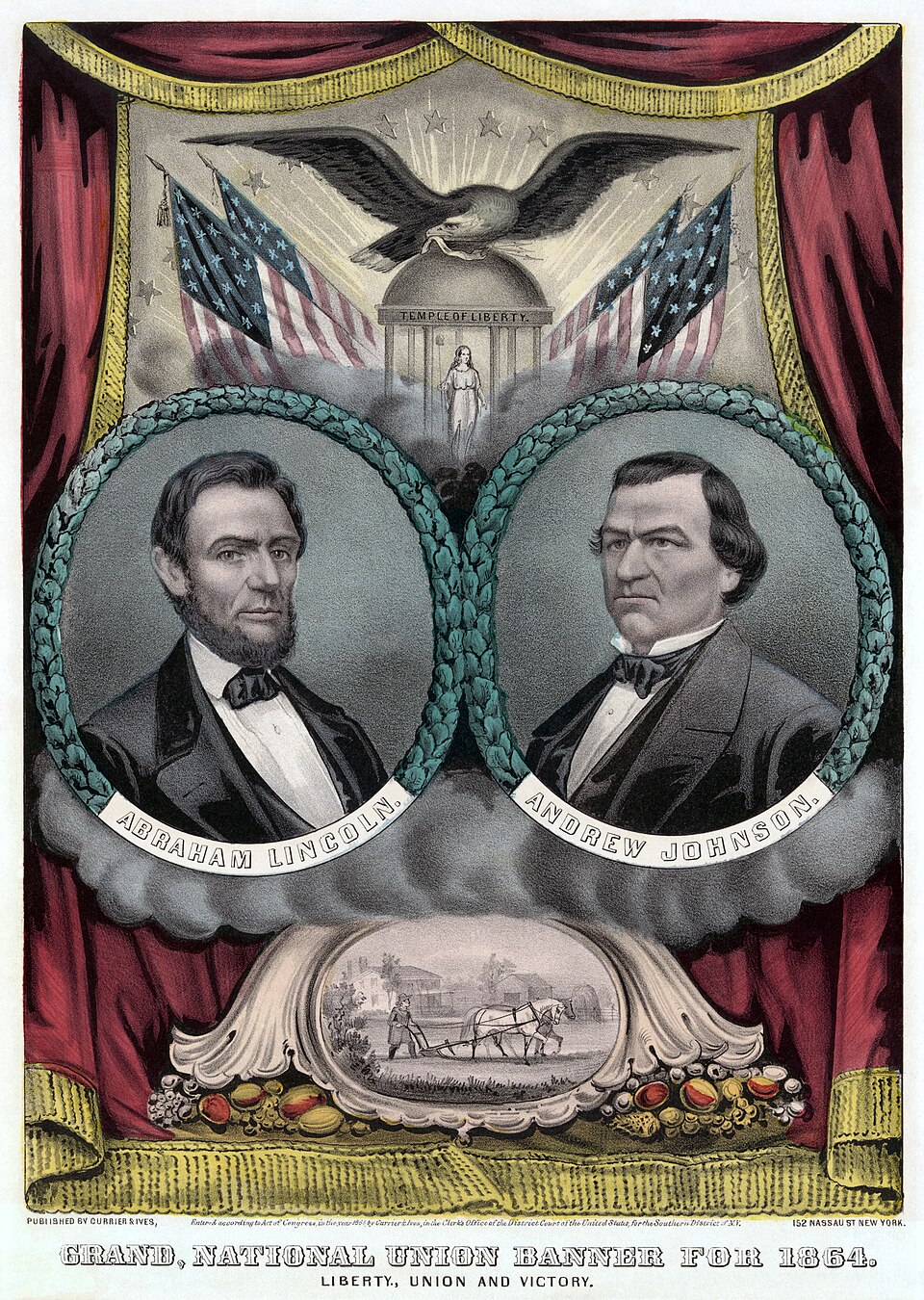
How does a party that built its entire platform on limiting the spread of slavery continue after slavery is no more?
For the Republicans of the Reconstruction Era, the answer lay in helping the formerly enslaved build lives.
The small sect of the party known as “Radical Republicans” strove to quickly expand the rights of freed Blacks after the Civil War. Their efforts led to the passing of the 14th and 15th Amendments, which guaranteed citizenship for all born on American soil and ensured voting rights wouldn’t be barred for reasons of race or creed, respectively. However, these efforts were ended when Republican president Rutherford B. Hayes ended Reconstruction in 1877 to secure his election as president. This undermined the work done for Blacks in the South, as Southern Democrats, many of whom were former Confederates, took hold of the region.
During the early 20th century, Republicans continued to have a following in the North, continued to support civil rights, and often intervened with the operations of large businesses. For example, Theodore Roosevelt often prosecuted business monopolies and improved conditions for the working class. During the Great Depression, Herbert Hoover met with large corporations to discuss increasing wages, which would give workers more purchasing power amidst the economic peril.
As the Democrat Franklin Delano Roosevelt took control of the presidency for three terms between the Great Depression and World War II, the Republican Party found itself against his interference with big business, the very same interference that Teddy Roosevelt was known for. For instance, their opposition to Franklin Roosevelt’s “New Deal,” which sought to expand federal power to aid Americans during the Great Depression, related directly to the party’s limited government ideals, and the deal’s high price tag.
When the Civil Rights Movement picked up steam in the 1950s and 60s, Republicans were trying to gain a foothold in the “Solid South,” a term that described how the South mainly voted Democrat from the end of Reconstruction up until the passing of the Civil Rights Act. The end of this trend was marked by the Republican “Southern Strategy,” which was aimed at courting white Southerners by appealing to racist ideals. When President Lyndon B. Johnson signed the Civil Rights Act in 1964, many Republicans opposed it.
This trend of Republican candidates being less progressive and appealing to white voters continued as the 20th century came to a close. “Compassionate conservatism,” a term coined by President George W. Bush to describe his more progressive ideals as a politician, strived to improve the lives of the average American by calling for increased self-responsibility, while still limiting government influence. But during the Obama administration, Republicans often obstructed many of his administration’s bipartisan efforts, even attempting to bar legislation that would help all Americans, such as the Affordable Care Act, which was created to expand Medicaid and to make healthcare more affordable.
This antagonistic attitude towards Democrats, and the disillusionment many Americans had with the promises of the Obama administration, may have perfectly set the stage for Donald Trump’s entrance into the 2016 Republican primaries.
The MAGA Elephant in the Room
When Donald Trump announced his entry into the 2016 presidential race on June 16th, 2015, most of the Republican establishment took it as a joke. But his status as a candidate outside of politics may have been the key to his appeal. In 2016, Trump’s New Hampshire co-chairman, Steve Stepanek, stated that “The issues that are driving the average Trump voter are, first and foremost, that he’s not a politician. Secondly, he is self-funding his campaign, so he can’t be bought.”
Another key part of his appeal lies in his rhetoric, which often spoke to the xenophobic and hateful beliefs of some Americans. This includes his ideas of travel bans on Muslim countries and his calls to build a wall between the U.S. and Mexico. Trump also consistently berated his opponent in the presidential race proper, Hillary Clinton, calling for his supporters to “lock her up,” and questioning her mental stability.
When the Republican primaries came around in 2016, it became apparent that Trump was the frontrunner, beating out established politicians like Senator Ted Cruz and then Florida Representative Marco Rubio. Ultimately, rather than being brought down by the controversy created by his words, he instead rose to the presidency.
Multiple aspects of Trump’s time in office were unprecedented. His rhetoric that often divided rather than uniting Americans, his isolationist and often combative foreign policy, and the lies he told to protect his image and to blame others. But through it all, his supporters became even more steadfast and even more radical. This radical shift led to conspiratorial language surrounding Trump’s 2020 election loss, charging a right-wing bitterness that remained throughout Biden’s presidency.
Trump’s tactics remained largely unchanged when he began his 2024 presidential campaign. Once again he questioned the qualifications of his opponent, Kamala Harris, and furthered his “us vs. them” rhetoric, othering and demonizing minorities and left-wing ideology. This tried and true strategy ultimately made him the 47th president.
The Future of the Party
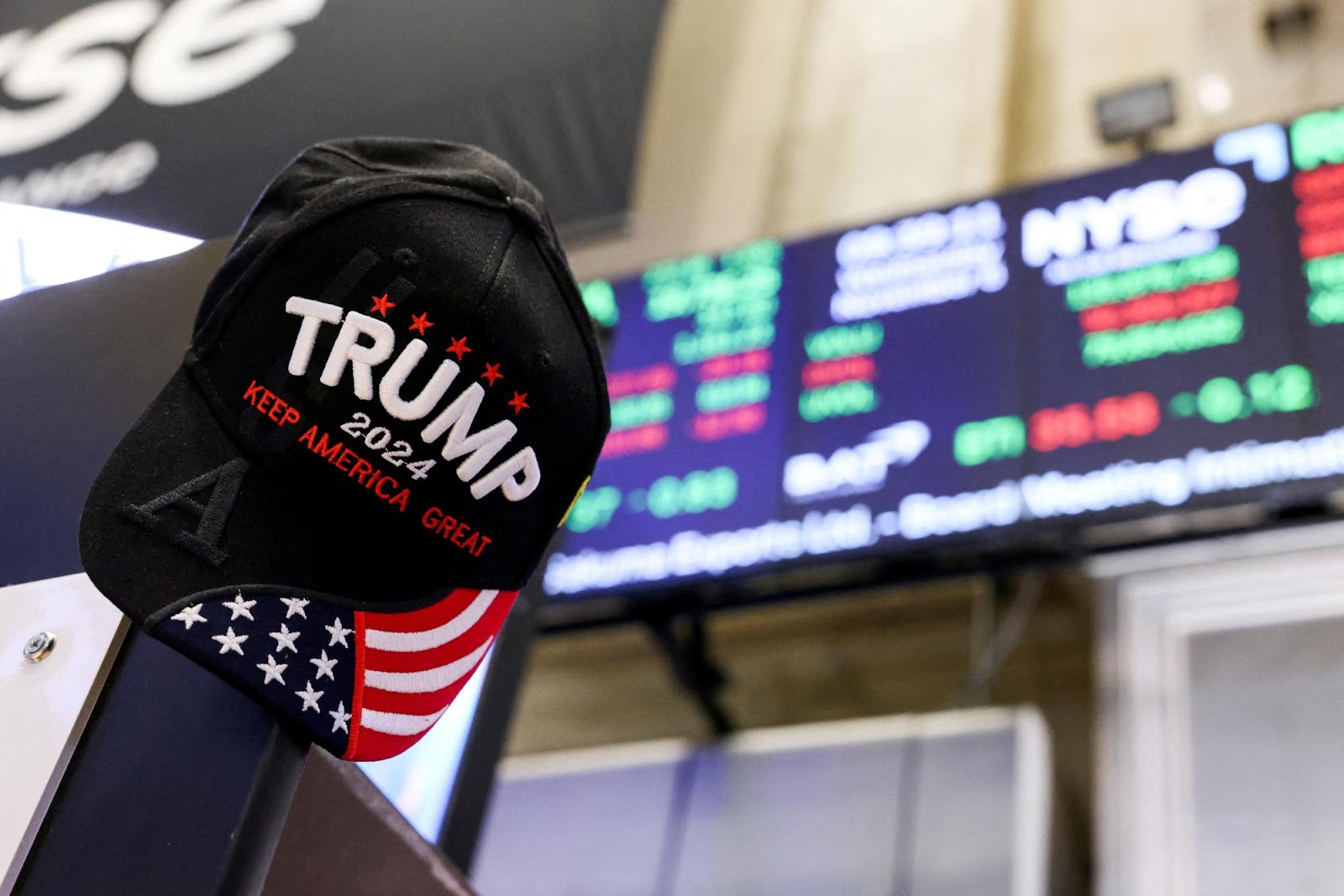
After a year into Trump’s second term, many once fervent supporters of the president have started to question his handling of the country. Many Republican voters stuck by Trump, believing that prices would be lowered and that their country would take a step back on foreign affairs in the wake of the conflicts in Ukraine and in Gaza.
Now, after Trump’s steep tariffs on foreign countries that hurt the average consumer more than helped, and his foreign entanglements with Venezuela, Russia, and Israel, many former MAGA supporters feel disillusioned with the president. What doesn’t help is his large cuts to welfare and healthcare. His approval rating has dropped to a mere 36%, the lowest in his second term and nearly the lowest overall, if not for his 34% rating shortly after January 6th, 2021.
This ire has been directed towards Republican lawmakers and senators through town halls and phone calls, as they face the brunt of the complaints about Trump’s policies. Trump is also facing defiance from members of his own party. After his handling of the Epstein files that read as suspicious to many in his own party, Congress voted to release all of the files, a process that remains stagnant. Furthermore, one of Trump’s most steadfast allies has now become an enemy, as former Georgia Congresswoman Marjorie Taylor Greene clashed with the president over the Epstein files and what she perceives as policies that don’t benefit the people she represents.
Then there’s the question of where Republicans will go from here after the era of Trump. What will the party stand for after such an all-encompassing figure has left the stage? As midterms approach and as backlash to this era of Republicanism has already manifested in this past year’s mayoral elections, MAGA’s grip on the party may be waning. Even if J.D. Vance attempts to take Trump’s status as a figurehead once his second term is over, he isn’t as much of a commanding force as Trump.
As during the era of Reconstruction, the Civil Rights movement, and Trump’s first term, it seems that the Republican party is bound to transform once again.
From the anti-federalist policies of the Democratic Republicans in the late 18th century, to the more progressive Republicans of the 19th century, to the MAGA extremism of today, Republicans in America have undergone a major identity crisis.