
History is written by the victors. Although the phrase is often attributed to Winston Churchill, there has been some iteration of this phrase throughout many different cultures because it is relevant to everyone. Different groups of people recall history differently, intentionally and unintentionally. This can lead to bias tainting our history classes, research, and retellings. This control of the narrative allows nations to hide and reframe their wrongdoings.
The erasure of history can also be intentional to reach a goal, as seen in propaganda. When division and tension exist within a nation, many people seek to control narratives in order to have an influence within the country. The lack of available facts allows for the easier dehumanization of the enemy. It is a tactic often used in totalitarian governments. For instance, when Joseph Stalin had control over the Soviet Union, he implemented a system to starve the Ukrainian people. Despite the large amounts of deaths, Stalin used his control over the media to sway the public and erase the famine from public view.
This shift towards painting oneself as the correct party, especially regarding conflicts between multiple nations, leads to different interpretations of history, creating the potential for erasure and a loss of nuance. This loss of nuance is perpetuated by what different communities view as relevant or valuable. Conversation about erasing and sanitizing history begs the question: what does it mean to erase history? The definition of historical erasure is when historical information is suppressed, warped, or removed, though not everyone defines the erasure of history the same. Erasing history goes beyond the erasure of mere facts; rather, it’s the erasure of the community from whom those facts belong to. The removal of monuments doesn’t necessarily mean that everyone will forget about the events, but those who were affected by them feel as though a part of their identity is being removed from the public perception. This phenomenon is mentioned in Jason Stanley’s book Erasing History: How Fascists Rewrite the Past to Control the Future, “It’s not just about getting rid of a painting, but also an attempt to paint over evidence of a movement that brought people across the world out onto the streets.”
The assumption that the removal of monuments depletes public knowledge is correct. When symbols, documents, and conversations about the topic are silenced or removed, it becomes easier to deny those things happened. The public’s understanding and general exposure to the topic becomes foggy and unclear. It can stunt any change that was resulting from the knowledge of those topics. The erasure of history isn’t always intentional or malicious. Historical erasure could be a product of the difference in values or priorities, a group will often prioritize the retelling of how they experienced history over another group’s experience.
Monuments play a major role in representing the priorities and values of a society. In the past, monuments were often churches that told stories of religious and political power. Statues and tributes are how historians piece together who was in power and what those cultures valued. Today, monuments are more commonly simple figures that tell the importance of a figure without the full explanation of the event. Monuments serve the purpose of both representing certain events, and they are important to finding what is not a represented part of history. Monuments are physical symbols of remembrance, artifacts that are left out on display. They shape our collective memory and are an important cultural practice.
When communities are erased from historical monuments and artifacts, it showcases that they are no longer a priority in society.
In March of 2025, the Trump Administration implemented a new executive order, an order that has the force of law passed by the president that requires no act from congress, entitled “RESTORING TRUTH AND SANITY TO AMERICAN HISTORY.” The order allows the Vice President, the Assistant to the President for Domestic Policy, and the Special Assistant to the President and Senior Associate Staff Secretary to “remove improper ideology.” However, there are not many objective standards that the order is acquainted with “improper ideology.” The policy gives the aforementioned individuals the ability to remove anything released after 2020.
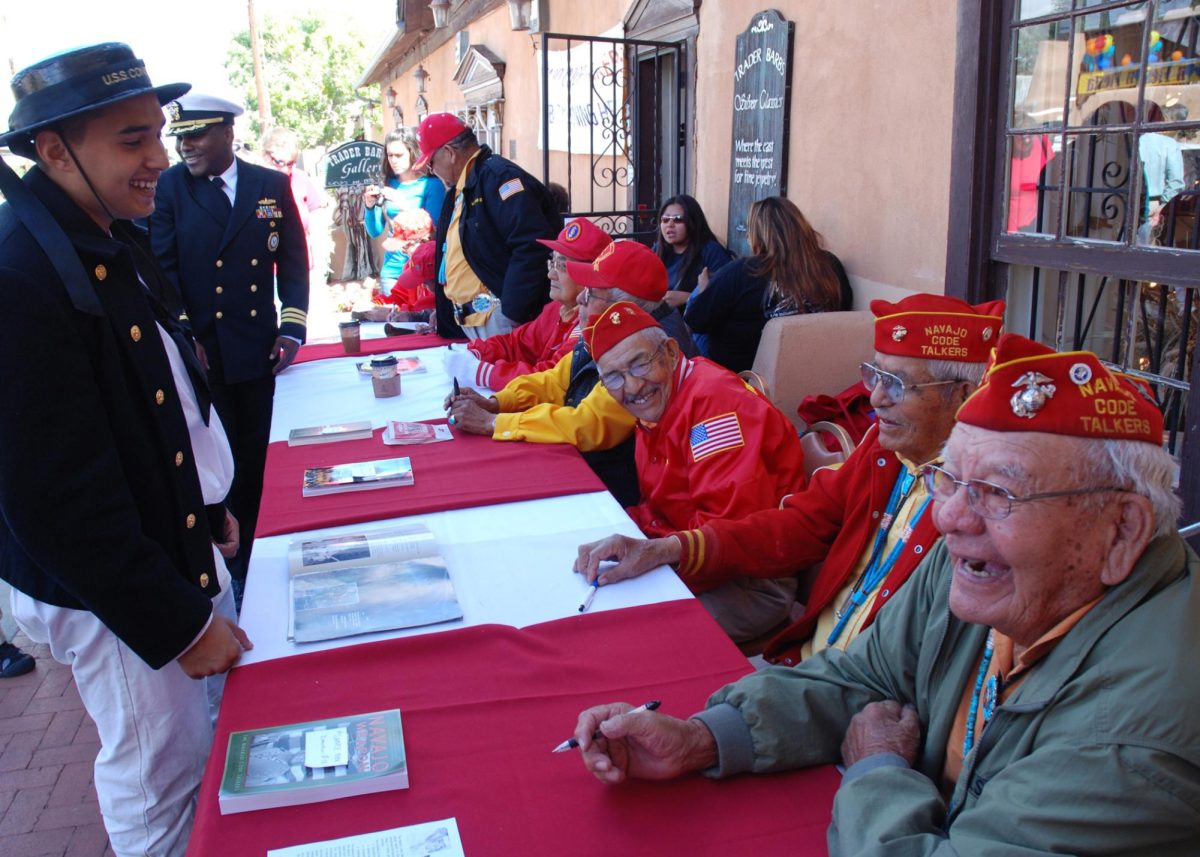
It’s important to put this feeling into context, especially as the Trump Administration cracks down on things that are considered DEI. The communities that are represented by the artifacts, physical pieces that represent events in history, that the Trump administration is removing are already feeling unsafe and threatened during this period of division in the US. Many minorities that have had important contributions to the U.S. have been erased. For example, the Navajo Code Talkers allowed for the United States of America to create a better code to communicate during WW2. After the passing of the executive order articles commending this achievement were removed.
The erasure of history is the erasure of a people’s history. It creates a strong emotional reaction in those who are losing representation. Online, the order has been described the executive order as an attempt to whitewash and change history. Furthermore, there is no warning when pieces are removed from websites and national parks. People have commented on how quickly information has been removed. Many of the historical references that were removed have been added back shortly after, some of which only had the mention of other groups. Although the executive order’s purpose is to remove things that “paint America in a negative light,” many of the historical facts removed have been stories of American achievements.
Beyond that, history places today into an important context. How can one truly grasp why, for instance, minority groups are more likely to experience financial instability without understanding the difficulties that came with getting a job while facing immense discrimination. History doesn’t just stop us from ‘repeating our mistakes,’ it prevents us from not understanding why things are as they are.
Lacking the fundamental skills of understanding what leads to certain events can more easily allow for using scapegoats and “repeating history.”
President Trump’s executive order states that history has been changed and that the removal of these different perspectives is an appropriate response to restore it. The executive order claims that there has been a ‘revisionist movement’ (for example, removing statues of Christopher Columbus or confederate soldiers) to rewrite American history, specifically to paint America as “inherently racist, sexist, oppressive, or otherwise irredeemably flawed.” The executive order hopes to create new exhibits that paint America in a more positive light and emphasizes its strengths. Marginalized groups have had complaints regarding the rewrite of history, claiming that it discredits the U.S. and damages our reputation. The argument is only supplemented by the sharp political divide that the U.S. is facing today.
Beyond that, many feel that these artifacts place special emphasis on certain groups of people, and that we should not emphasize certain historical events over others. The reasoning in part aligns with the Trump Administration’s repeated claims of removing DEI and claiming that “our strength is in our unity, not our diversity.” This belief stems from the idea that our past defines us. So to be a perfect nation, our nation must have always been perfect. However, this ignores that as a nation we must look to the past to grow from our mistakes. By surrounding ourselves with perfection we lose the chance to improve and grow.
During these times of polarity and disagreement it is crucial to hear and understand both sides of the argument. Whether that understanding is used to create better counter points or to allow for a deeper discussion about compromise.
“It’s not just about getting rid of a painting, but also an attempt to paint over evidence of a movement that brought people across the world out onto the streets,” writes Jason Stanley in his book Erasing History: How Fascists Rewrite the Past to Control the Future.