
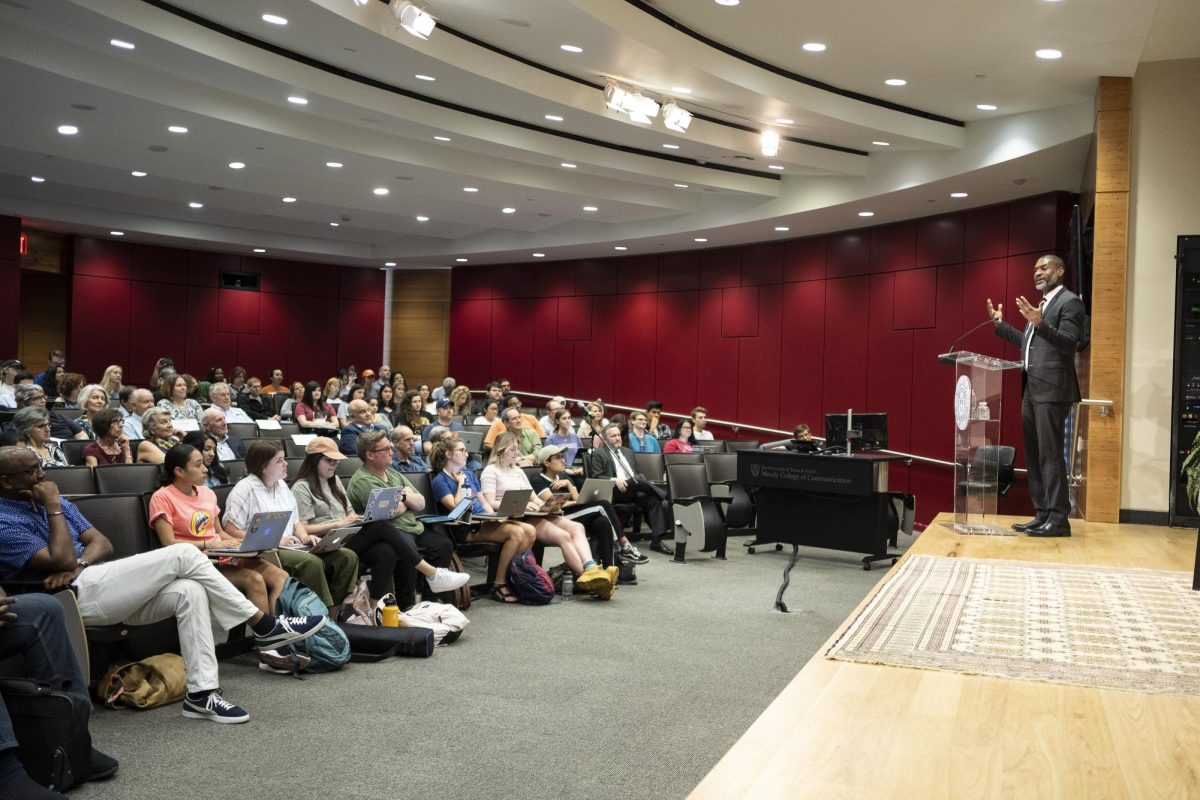
Free speech on college campuses has become one of the most controversial topics within the nation. Institutions that were once coveted as spaces for open discourse and the sharing of different opinions are now the center of controversy, protest, and political tension. Ranging from the disagreement of hosting guest speakers to moderating intense classroom debates, colleges are struggling with balancing students’ rights to freedom of speech while maintaining a safe and respectful educational environment for all.
Many college students and faculty in today’s world believe that certain forms of speech can be immensely harmful, especially when they target certain race, religion, gender, and sexual identities. Due to these beliefs, many protests have been held demanding that colleges restrict guest speakers on campus, usually when they hold extreme and controversial public views. Students argue that by allowing these speakers, colleges are permitting offensive and hateful ideology to be present on campus, creating a tense and unsafe environment for many students. They believe that although free speech should be fostered and encouraged, hateful and bigoted rhetoric should not be allowed to have a platform in an institution that is supposed to welcome and accept all students and faculty.
However, other students argue that by actively shielding students from potentially offensive disputes, colleges are not rightfully preparing students for real world discourse. They claim that discomfort is not a goal, but can often be a byproduct of genuine learning. Discomfort emerges when students move beyond anecdotes and confront the structural dimensions of racism and inequality. When this happens, this discomfort signals intellectual growth rather than pedagogical failure.
On the other hand, some individuals claim that by restricting speech, colleges are becoming places in which students are unable to share their opinions without repercussions. They believe that intense backlash and forms of “cancel culture” will prevent and discourage open and honest discourse. Some students have made reports of feeling afraid or unable to share discussion points in classes due to fear of social backlash, online critiques, and being reported to administrators. Students today are often highly attuned to the stakes of speech — its capacity to wound, exclude, or misrepresent — but they are also more anxious about saying the “wrong” thing. This hasn’t reduced disagreement so much as it has made it quieter. This raises the growing concern that students of higher education are not able to experience and add to the varying ideas that were once fostered, as colleges are growing more intolerant of disagreement.
Social media is also a large, growing, factor contributing to the effects of the free speech issue on college campuses. The students and faculty who use online media platforms sometimes make comments on controversial issues that spread throughout the university at immense speed. It is also a common occurrence in which a comment made by a student or professor reaches national attention and causes public outrage. In response, universities take disciplinary action towards the students in order to show action in regards to the controversy. This in turn fuels accusations that certain institutions are not allowing free speech in order to silence certain opinions and prevent dissension.
Campus speech tends to reflect greater issues and tensions among society. The ultimate goal of resolving this issue is for colleges to foster an environment for students to freely open discussion while protecting their students from experiencing genuine harm. Many educators believe that the best way to ensure a welcoming environment for conversation is by promoting civil discourse. Classes and programs can teach students how to have discussions that are respectful and how to disagree on topics without being hateful and dehumanizing. Academic freedom protects inquiry, not intimidation. Speech that advances analysis — even if it is unsettling — belongs in the classroom. Speech that targets, dehumanizes, or forecloses the participation of others does not. Pedagogy insists that ideas be evaluated based on their explanatory power and ethical consequences, not on their shock value or rhetorical aggression.
The topic of guest speakers has also become a center of heated discussion. The president of Barnard College made claims regarding guest speakers, stating that it is vital that colleges and universities resist polarization and monolithic thinking by invoking commitments to open discussion and inquiry. She also claims that it is necessary for educators and students to face ideas that are offensive and hurtful in order to channel conflict into dialogue, debate, and learning. Her overall message is that it is important for colleges to have diverse discourse so that students can diverge and expand their beliefs and understandings of the world instead of retreating to their already existing worldviews.
Dr. Eric Tang, a professor of Ethnic sSudies at UT Austin, shared his professional opinion on the topic with me. He said, “Many students arrive believing that controversial issues — especially around race — are a matter of personal belief or common sense.” The approach is to slow the conversation down and ask students to interrogate how ideas are produced, structured, and circulated rather than to defend positions. By grounding discussion in texts, histories, and social theory, students are not asked to speak as representatives of identities but as analysts of social processes. This allows students to feel respected even when disagreement is present, because the focus is on understanding structures rather than judging individuals.
When asked how professors should respond when a student feels harmed by ideas discussed in class, Dr. Tang said, “I acknowledge the student’s experience, then work to contextualize the material: Why is this text or idea being studied? What analytical work is it doing? What tools do we have to critique it?” This response neither dismisses student concerns nor collapses academic inquiry into emotional comfort alone. It models care and intellectual responsibility. It’s key for professors to emphasize that disagreement is not “abuse.”
When asked how he personally addresses students who engage in opposing viewpoints, Dr. Tang said, “In response, emphasize that rigorous engagement requires clarity, not provocation.” When students learn to diagram arguments, trace historical patterns, and distinguish intent from impact, they become more willing to engage opposing viewpoints without defaulting to defensiveness or silence.
Professors should not avoid difficult topics, but instead should curate them responsibly. This means providing historical context, framing questions carefully, and anticipating how materials may land differently for different students. Limiting how something is discussed is not the same as limiting what can be studied. Debate is not synonymous with free-for-all expressions. Productive debate requires shared commitments: evidence, clarity, and mutual accountability. By teaching students how to analyze arguments rather than simply asserting beliefs, the classroom becomes a space where disagreement sharpens understanding instead of escalating conflict.
Universities should protect the conditions for inquiry, not platform any controversial opinion out there. Institutions must clearly oppose harassment and coercion, while also defending faculty expertise in designing curricula and moderating classroom discussion. Policies can set important baselines, but they cannot substitute for good pedagogy. In some cases, they create uncertainty that discourages students from speaking at all. Universities should provide explicit institutional backing for faculty whose teaching is grounded in scholarship and pedagogical intent, especially around controversial topics. This includes clear public statements defending academic freedom, resources for classroom facilitation, and administrative responses that make clear that political censorship should never have a place in the classroom.
Professors should not avoid difficult topics, but instead should curate them responsibly. This means providing historical context, framing questions carefully, and anticipating how materials may land differently for different students.