
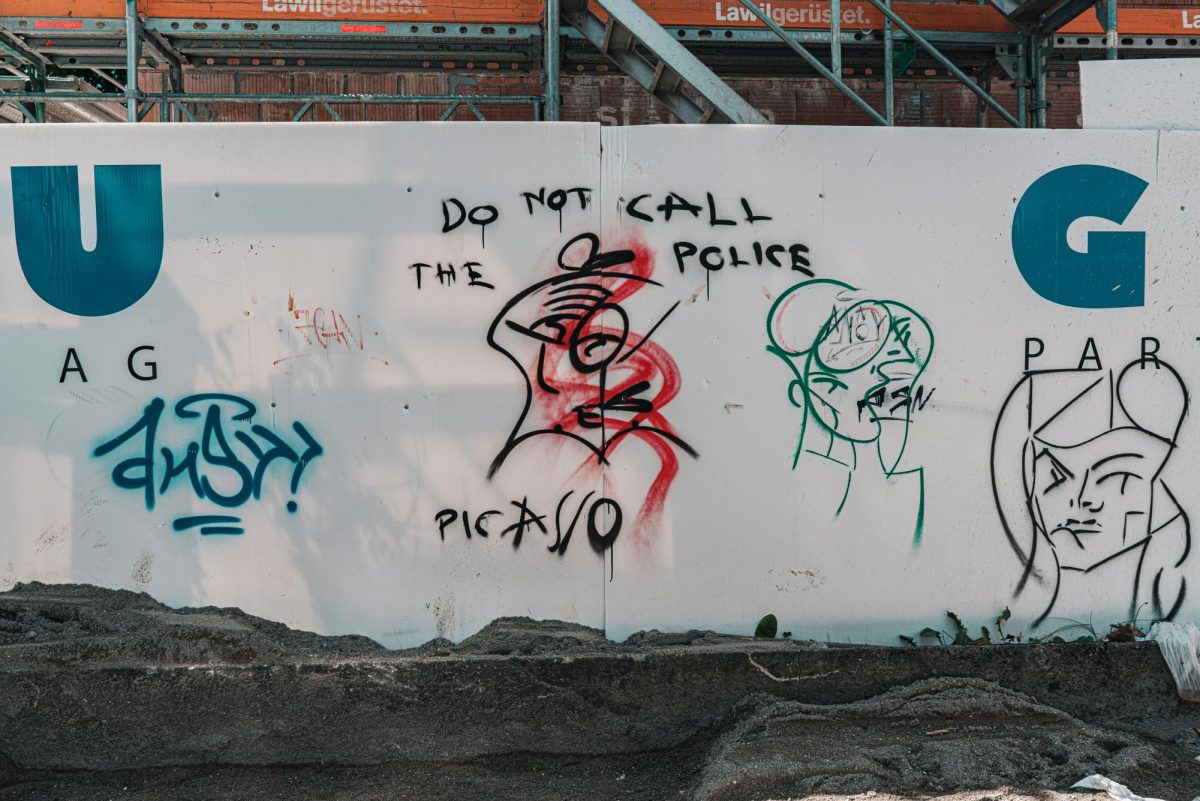
Is New York City becoming a city overrun by youth crime, or has it always struggled with teenagers breaking the law?
Nowadays, youth crime is seemingly common in New York City, with some sort of crime being committed by teens on every corner of the city. Data shows that the number of people under the age of 18 reported to have committed crimes, such as murder, assaults, and robberies, has risen, raising concerns about the safety and future of New York City’s youths.
The youth crime rate in New York City has had major shifts due to social media and the implementation of the Raise the Age law (RTA) in 2019. In April 2017, former Governor Andrew Cuomo signed Raise the Age into law, which implemented an age increase of criminals’ legal accountability for committing a crime, and being subjected to punishments from 16 to 18. Officially carried out in 2019, the crime rate has only increased since. Therefore, a question emerges: is the RTA more beneficial for teens than it is doing them harm?
Opinions differ, as experts say that RTA provides benefits that outweigh the crime. The Urban Institute, a well respected, nonpartisan research organization that studies social and criminal justice using data and evidence based analysis says, “Young people have a unique capacity for rehabilitation and change, which is crucial for enhancing public safety.” They suggest that the minds of youths are still developing, therefore making them more susceptible to impulsive decision-making. However, since they are still growing, they are also highly capable of change.
Just last year, teens in New York City committed a total of 9,232 major crimes, with 2,603 of them being robberies and 1,462 of them being aggravated assault, which is a 13% increase from 8,050 major crimes in 2019.
The Urban Institution makes many strong arguments, emphasizing education, rehabilitation programs, and effects on personal and public safety. Youth in correctional facilities struggle for education that corresponds to their age level. Adult correctional facilities, which are primarily designed for adults, often limit educational opportunities for youths because the curriculum consists of adult level content, such as job training, life skills, and topics not suited for adolescents’ academic needs. When the justice system corrects these youths as juveniles instead of adults, they receive education that matches their age and abilities.
Another major problem is that the adult rehabilitation programs that are available to incarcerated youth are incompatible with teenagers. Teens can often reenter the criminal legal system due to the lack of proper care and counseling in the facilities they were placed in.
Overall, adult jails are ill-fitting for minors. Since young people are more likely to be victimized by adults, they face a higher risk of sexual violence and suicide.
As guidelines regarding the separation of juvenile and adult detainees exist, the young people are typically placed in solidary confinement. This is highly immoral and likely to cause permanent damage to the teens’ mental health, as they are often confined to small, bare cells for 23 hours a day with limited human contact, stimulation, and access to education or counseling.
But as good as it sounds, it’s hard to work against solid statistics. So why did the New York City youth crime rate increase? One reason is that underaged individuals face less harsh punishments, which reduces accountability and often leads to more repeated offenses and greater risk-taking.
According to NYPD commissioner Jessica Tisch in an article she wrote for the New York Post, the criminal justice process is flawed because it allows violent teens to “cycle through the system” and continue their wrongdoings. Even worse, certain offenses can simply be erased, and judges cannot look into criminal history, which allows violent and dangerous youth to escape their deserved punishment. By allowing teens to get off without any real consequences, they freely repeat and escalate their mistakes.
Social media has a profound impact on today’s youth with the growth of social media. More and more people are getting influenced, with over 5.4 billion users globally and around 250 million new users annually, social media influences youth identity, social connections, and mental health. Recent violence resulting from social media conflicts and trends serves as an example. According to reporter Steven Vargo in an article published in the New York Post in December 2024, an 18-year-old male in the Bronx allegedly attacked a 17-year-old female in a subway station because of an online conflict.
Romero, the attacker, reportedly saw the victim with friends on East 149th Street and Grand Concourse in the Bronx, approached her with a knife in hand, and slashed her across the face. She was then taken to the hospital, where multiple layers of stitches were required to patch up her injury. The attack was allegedly triggered by an insult the victim made about the aggressor’s brother on Instagram.
Researchers with the Psychological Science in the Public Interest note that early exposure to violence normalizes it through trends and content. It creates pressure for public displays of aggression, platforms for gang organizations, and carries online conflicts into real-world harm.
Romero was charged with first-degree assault, second- and third-degree assault, criminal possession of a weapon, and menacing.
Due to the nature of social media, a phenomenon called online disinhibition occurs, which progresses towards real-world escalation. Researchers with Cyberpsychology, Behavior, and Social Networking describe this phenomenon as when anonymity and reduced accountability in online spaces embolden people to behave with less restraint online and act in ways they wouldn’t when face-to-face.
Social media creates a false sense of security: that regardless of what you say or how you act online, you are safe, and that your identity is hidden or that the people you offend cannot or will not do anything about it. This false impression reduces fear of real world repercussions, and compels individuals to act irrationally directly contributing to real-world conflicts.
In response to these irresponsible insults, the targeted individuals or groups take action. This introduces another form of social media toxicity, where disrespect online can be interpreted as a form of public humiliation and a loss of street credibility, often in gang-affiliated youth.
To maintain their status or “street cred,” teens are compelled to take revenge on the seemingly trivial remarks made on them, and in many cases this revenge takes the form of crime in the real world. Romero’s case is a powerful display of social media carrying online conflict into real-world harm, with more inevitable cases as social media grows.
Often similar cases like these are spread through social media and named as trends. They normalize and even glorify crimes in youth, which researchers with the Youth Endowment Fund suggest, has a direct effect on youth crime rates. When teens commit crimes, a desire to gain acknowledgement and fame on the internet can be a motivating factor. Teens often repeat mistakes as negative social pressure continuously pushes them to commit crimes in the name of trends.
When Justin, a student from Francis Lewis High School, was asked about the increase in youth crime and violence linked to social media, he said “I’ve noticed more fights and random incidents involving teens, usually involving groups of them just messing around or trying to show off. A lot of it seems connected to social media drama that spills into real life.”
He also referred to the recent gun threat at Benjamin N. Cardozo High School, on September 18th, 2025, where a 16-year-old threatened to start a shooting at his school. This incident serves as the perfect example of social media toxicity, as the shooter posts about this on their social media. Boasting about something along the lines of “TS GMT BOUTTA SHOOT THE SCHOOL UP,” suggesting that the school “gets him angry,” and that he’s going to start a shooting.
In short, youth crime in New York City happens for many reasons. The Raise the Age law tries to help teens instead of punishing them as adults, but crime and repeat offenses are still happening. Many teens in correctional facilities don’t get the right education and support, which can return them back into the system. Social media also plays a big role, turning online arguments into real world fights and encouraging dangerous behavior.
This makes us wonder: How can New York City government help teens stay out of trouble while continuing to hold them accountable? What can be done about social media to stop it from causing violence? And how can we give young people the support they need to make better choices?
“I’ve noticed more fights and random incidents involving teens, usually involving groups of them just messing around or trying to show off. A lot of it seems connected to social media drama that spills into real life.”