
As of 2026, humanity is closer than ever to doomsday, or at least that’s what a group of scientists say.
Created in 1947, the Doomsday Clock is a representation for how close the world is to disaster, whether that is nuclear war, climate catastrophe, or anything else. The closer the time on the clock is to midnight, the more danger the world is in. Throughout the 79 years of the clock’s existence, it has, with a few notable exceptions in the 1990s, gotten closer and closer. Today, the clock sits at a record low of 89 seconds to midnight (the next update will be on January 27th, 2026). Of course this doesn’t literally mean the planet is going to explode in 89 seconds, as it’s really just a metaphor. The time is determined by the Science and Security Board, a group of scientists who can give an objective and wide reaching opinion on the state of the world. When deciding what time to set the clock, the Board looks at a wide range of issues from Climate Change to AI to Nuclear Policy and War.
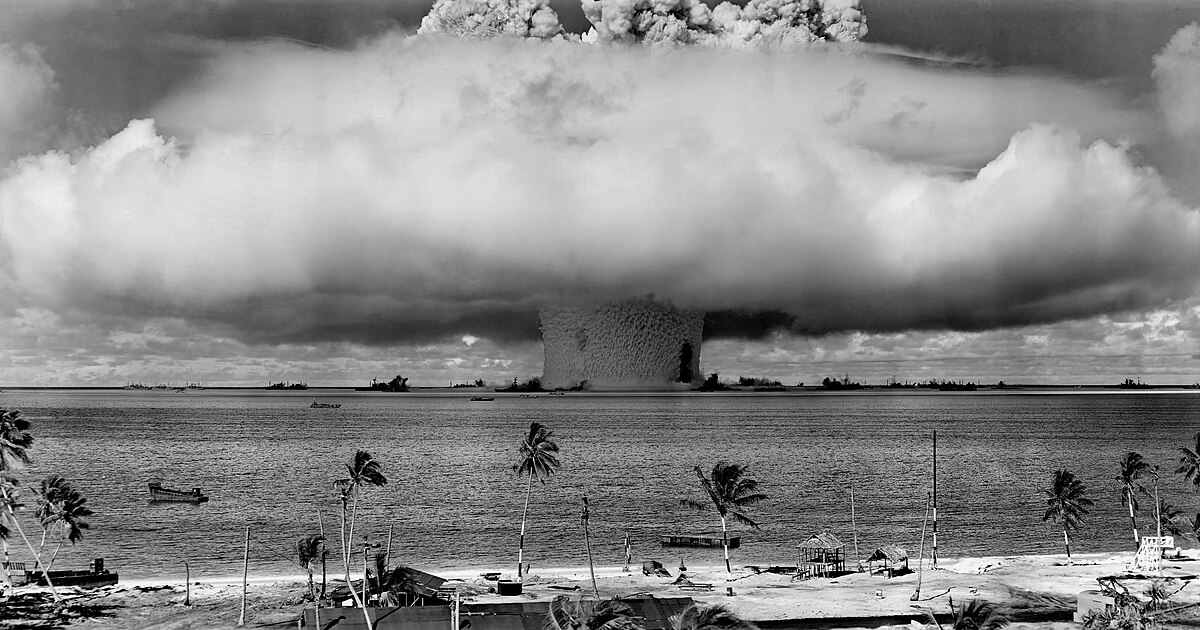
In order to understand the Doomsday Clock’s current time, it is important to know its history. When the clock was first created after World War II, its purpose was primarily to give a warning of nuclear war. Originally at 7 minutes from midnight, the clock shifted times as the Cold War continued. The time dropped to 3 minutes in 1949 after the Soviet Union successfully created their first nuclear bomb. The time dropped another minute in 1953 when the United States tested the first Hydrogen Bomb, a bomb much stronger than atomic bombs. The furthest the clock has ever been from midnight was 15 minutes in 1991 in response to the Strategic Arms Reduction Treaty between the United States and Soviet Union. Even as the risk of nuclear war shrank, other threats grew.
The reasoning for this feeling of imminent nuclear threat is clear: the world is stockpiling its arsenal. During the war in Ukraine, Russia quietly suspended its participation in the New Strategic Arms Reduction Treaty. The treaty, signed by the United States and Russia in 2011, limited the number of certain weapons each country could have, including nuclear warheads. Without such limitations they are free to increase their nuclear arsenal and put pressure on other countries to do the same.
Besides Russia, China has increased its amount of nuclear warheads to 600 and has conducted an intercontinental missile test in the Pacific for the first time since 1980.
Iran has also begun rushing to create a nuclear weapon. On June 22nd, 2025, the United States bombed three Iranian Nuclear facilities in Operation Midnight Hammer. This strike was motivated by reports that Iran was close to gathering and enough Uranium to make a nuclear weapon. While President Trump said that the strikes had completely destroyed the nuclear program, initial intelligence reports determined that they had only delayed the creation of a nuclear weapon by a few months at best.
Climate change has been a known issue for less time than nuclear war, but it is just as much of a threat. Ten years ago, in 2015, nations signed the Paris Agreement saying that they should work to avoid average temperatures from exceeding 1.5 degrees Celsius. Past this threshold the effects of increased temperatures would become increasingly irreversible. Ten years later average temperatures have reached that limit.
Any progress made with fighting climate change has slowed and even reversed with Trump’s presidency. The president has denied the existence of climate change and insulted countries for working to limit emissions. In the first year of his presidency, Trump has worked to stop the development of clean energy sources across the country and start new oil drilling projects. He has also announced his intentions to reduce regulations of the Environmental Protection Agency which limit the amount of greenhouse gases can be produced. In an executive order on April 8th, 2025, Trump criticized states for, “seek[ing] to regulate energy beyond their constitutional or statutory authorities.” Trump calls states’ efforts to regulate greenhouse gas emissions ideologically driven and claims that carbon emission caps are impossible to reach.
Climate change leads to more frequent dangerous weather conditions, some effects of which are already manifesting. Droughts and heat waves are becoming more common and hurricanes are becoming more violent because of warming oceans. Many countries at low elevation are at risk of being submerged as sea levels rise. Island nations are especially vulnerable.
The Bulletin of Atomic Scientists does share some positive news, however. More money is being put to transition to clean energy each year, with two trillion dollars being invested in 2024. However, all current efforts being taken to reduce emissions are not enough to keep temperatures at a reasonable level. In their report entitled the Bulletin of the Atomic Scientists, they argue that climate finance must increase by a factor of five to keep temperatures in the 1.5 degree Celsius scenario outlined by the Paris Agreement.
The rise of artificial intelligence today is yet another concern. In their most recent report, the Bulletin of the Atomic Scientists argue that the increasing power and use of large language models (LLMs) and of AI in warfare are both threats. The war in Ukraine over the past three years has caused drastic advancements in drone warfare and autonomous drone technology. Many drones can identify and fly themselves towards their targets without human intervention. The development of drone warfare has made it possible for governments to engage in a state of warfare that allows remote elimination of targets without having to risk soldiers, all at a relatively low cost. Before drones, only long range missiles, which cost millions of dollars, could accomplish such an attack.
LLMs pose a different, yet dangerous risk, specifically the creation and spread of misinformation. New AI photo and video generators can create content that is almost indistinguishable from real life. OpenAI’s new Sora 2 video creator recently released and almost instantly most social media were flooded with fake videos, such as fake racist depictions of Martin Luther King Jr. Unlike this example, many of these videos are silly and relatively harmless but anyone who comes across them is shocked by the realism, even if they understand that what they are watching is AI deepfakes of politicians and influential people can be used against them, tricking people into believing that they did things they would never do. Finding true information on the internet was hard to begin with, but it is becoming increasingly impossible.
There is work being done to help slow the development of AI. For example, the EU’s new AI act is a step in the right direction. The public is also becoming more wary of fake content. If someone suspects something is AI on social media, a quick check of the comment sections will have people who can tell them that it is not real.
Experts also fear that AI can be used to accelerate development of dangerous biotechnologies. The technology to create artificial super viruses is getting more and more advanced, and it is easy to understand how countries would want to get ahead by creating these super viruses first, similar to the nuclear arms race during the Cold War. Another more science-fiction danger that could be created with new technologies is mirror life. Mirror life is a theoretical form of life that uses reversed molecules instead of the normal oriented molecules every other form of life on Earth uses. These theoretical and artificial forms of life would be completely uncontrollable by typical factors that control normal life. A mirror virus could slip into a human body completely undetected. A mirror bacteria could have no natural competition and grow at an uncontrollable rate. Mirror life is completely theoretical for now, but scientists have been expressing the risks of mirror life.
New diseases can also emerge from animals and spread to humans, as was the case with the COVID-19 pandemic in 2020. One new virus that could possibly cause the next pandemic is the bird flu, also called avian influenza. Named for being most common in birds, the bird flu can spread to mammals through contact. Luckily there have not been a very large number of human cases yet.
Taken together, all of these threats explain how the Doomsday Clock got to be so low. The clock serves as a reminder of how the choices we make today will affect our future.
Today, in 2026, the clock sits at a record low of 89 seconds to midnight.