
As I was writing this article, I began to think about why I was doing all of this research in the first place. What role does the history of early 20th century China play in relation to American-Chinese relations today? Can we learn important lessons for the future by examining the events of the past? I would like to argue that we definitely can.
As we exit the first quarter of the 21st century, we face many existential threats to the existence of the United States, both domestic and international. Of said international concerns, China ranks chief among them. In the current day, Communist President Xi Jinping (president indefinitely, as he has removed legal term limits for presidential electors) and U.S President Donald Trump are in a trade war of attrition, trying to go tit for tat with one another in every conceivable economic sector, with little regard for the effect on the common population of both countries.
Seeing as how much importance has been placed on diplomatic affairs between these two countries, I believe that it is important for us in the West to get a better understanding of how we have come to this point, from both the American and Chinese perspective.
It can be hard to understand another country’s history, especially one as long and complex as China’s, but I hope that this article can serve as an introduction to the modern history of China. Understanding another country’s history gives us a better understanding of their historical tendencies, their culture, and why certain aspects of their lifestyles are structured in a particular way. In addition to this, it serves as a good baseline for understanding the deep history and tensions between modern day Taiwan and China, both of which are the political successors of the Republic of China and the Chinese Communist Party, respectively. The Western world’s technological dependence on Taiwan’s semiconductor industry, coupled with this long and tumultuous history, could breed terrible outcomes. This could be a tangible reality; in 2023, U.S intelligence, specifically former CIA director William Burns, said that Xi has ordered for the CCP military to be ready to invade Taiwan in 2027. An invasion of Taiwan could mean a full Chinese seizure of their property and assets for communist party usage, which would create a massive shortage in factories capable of producing specialized technologies the global economy is reliant on, such as semiconductor chips. As we creep closer to this impending deadline of 2027, we should try to get a better understanding of how and why the situation arrived here. While I had hoped to get further in Chinese history with this article, I hope you enjoy it and do your own research on this fascinating time period.
What role does the history of early 20th century China play in relation to American-Chinese relations today? Can we learn important lessons for the future by examining the events of the past? I would like to argue that we definitely can.
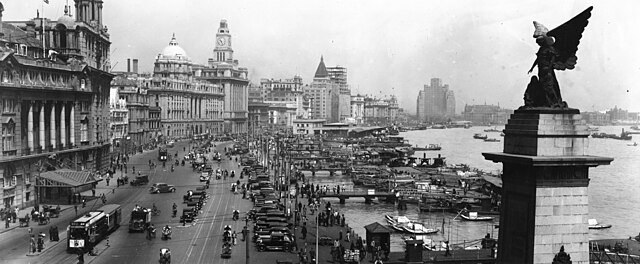
Entering the 20th century, China was not in a good state. At the time, the Chinese were in the midst of what was known as the century of humiliation. During this period, led by the declining Qing dynasty, China had lost two wars against Western powers, had an incredibly weak, but large economy, and in urban centers, crime, theft and opium ran rampant. Things began to change in 1911 when the Tomenghui (precursor to the Kuomintang or KMT) launched a revolution against the Qing dynasty. While they were successful in bringing the downfall of the last Qing emperor, the new Republic of China was incredibly weak and China would fall into what would be known as the “warlord era.” During this period, China operated as small pocket-areas that would fall under the jurisdiction of an armed, non-governmental militia, completely fracturing the country. Different warlords would be funded by all different alliances from different countries, allowing the Imperial powers to continue their business interests within China. At the same time, the new Republic of China, led by Sun Yat-sen, was having many financial problems and was in desperate need of aid (nobody would help the ROC because all the major powers were all betting on their own warlords). But the Chinese were in luck. The Soviets made an offer to the ROC in 1921, providing them the lifeline they needed in exchange for allowing communist members to join the Nationalist party (including one Mao Zedong: future chairman of the CCP, national hero and complete psychopath responsible for the deaths of over 60 million people). Over the next few years, left and right wing Chinese revolutionaries would battle the warlords for nationalist control of China. However, in 1925, cancer would claim the life of Sun Yat-sen, and he would appoint his Moscow educated general, Chiang Kai-shek, as his successor.
Initially, Chiang was receptive to the leftists, but after discovering that communists in Canton (current-day Guangzhou, a city in China) had begun planning to overthrow him upon his return to the city, he would end up launching the ‘Shanghai Massacre,’ a violent massacre against the communist nationalists, which would end up expelling them permanently from the Nationalist Party. To undertake the massacre, he would work with the ‘Green Gang,’ a gang of Shanghai street thugs who also worked to traffic opium in Shanghai to boost KMT profits. The Green Gang would continue to propagate the mass Chinese opium addiction throughout the warring periods, serving as both an informal militia and narco-profit center for the KMT. By the end of 1929, Chiang Kai-shek controlled around half of the Chinese mainland, primarily in the East. Western China was still under the primary control of foreign powers, and the communists set up bases in Shanghai and other urban areas, despite the fact they were technically under ROC control. This would create a layered, multi-tiered conflict in which the ROC, CCP and various warlords of western backing would engage in civil war for the next few years.
Mao, now in control of his own little Soviet (the small camp cities/areas the communists were allowed to take over following the expulsion in 1927), was isolated from the greater communist movement due to his focus on rural living and the peasant class. In his isolation, he would grow distrustful of some soldiers, causing them to mutiny. Mao would quickly resolve this in the Futian Incident of 1930, where the future chairman would execute roughly 200 troops (he would later admit in 1956 he killed the wrong people). While Mao certainly had many violent tendencies, as a leader, he was absolutely brilliant. By fully understanding the power of the proletariat class from his time working as a government surveyor in the rural farmlands, knew the full power of propaganda and land reform and the effect that could have on the allegiances of the peasants. The difference between Mao Zedong and Chiang Kai-shek’s political strategy was that Mao knew the strength in the numbers of the farm laborers, while Chiang put more emphasis on the fiscal backing of the elite, both in China and abroad. While Mao’s perceived allegiance to the laborers of China may seem like a good thing (it may even paint him in a positive light), you must consider this man caused an untold scale of death and starvation; the casualties may even outmatch the totality of those produced by World War 2 (63 million to 54 million dead).
Then, in 1931, a new contender would join the ring: Japan. Due to the fact that the KMT had withdrawn forces from the Manchuria border in order to help root out the communists, the Japanese would find Manchuria relatively easy to invade. As the most developed, advanced country in Asia at the time, the new Japanese empire would seek control of Manchuria and the defeat of the Nationalists. Over the next five years, they would stabilize and develop Manchuria to a much higher level than the rest of China. During this time, several important events in the civil war would take place, with the KMT encircling the communists in 1934, starting the Long March. During this incident, the communists lost 90% of their forces and retreated to Yan’an (now Shaanxi). In this moment of chaos, Mao took control at the Zunyi conference in 1935, molding CCP high command into his personal playground. However, the ever increasing technological development of the Japanese in Manchuria caused the Nationalists and the communists to unite once again in 1936 during the Xi’an Incident, which put a temporary pause to the fighting of the civil war while attention became poised at the reclamation of Japanese Manchuria.
This began the Second Sino-Japanese War, from 1937-1945. As the main theater of the global conflict (World War II) in Asia, this war was devastatingly brutal, with around 24 million casualties. The Japanese army was notoriously violent and undisciplined, as shown by events like the Rape of Nanjing, in which Japanese soldiers indiscriminately murdered men and raped women within the city, while also looting and committing mass arson. In order for the Chinese to properly combat these invaders, they would need aid. Fortunately, Chiang Kai Shek had already set up his connections in America, being personally associated with TIME magazine founder Henry Luce, who would work to spread propaganda about a westernized, Christian China under the KMT throughout the 1930’s. Chiang also sent his international lobbyist associate, T.V Soong, to the States in 1940, a full three years before Chinese citizens were allowed to enter the United States (the Chinese Exclusion Act was still in effect), in order to discuss the situation in China with then president Franklin Delano Rosevelt (FDR) and other Washington officials. During that time in the early 1940’s, the United States was officially neutral in the war. However, FDR was still looking for ways that he could help benefit the KMT movement. Officially supporting one side of the war was off the table, as it could cause tension between KMT and CCP forces, leading to reignition of the civil war. So, other means would need to be devised. While some aid would come to China from this meeting, the true American presence in the east would not come until around a year later. After this visit, in mid 1941, FDR would be made aware of Claire Chennault, a retired U.S air force general hired by Chiang Kai Shek as his private air force advisor. In response to this, FDR sent Tommy “The Cork” Corcoran, a man who had been called by many as one of the first modern American lobbyists, to provide aid to Chennault through The China Defense Supply Company, a shell company in China set up through covert funding in order to circumvent the congressional budget. Corcoran, along with Channault, then convinced FDR to create the American Volunteer Group, later renamed to the Flying Tigers, which became the first American military presence in China. On the other hand, the CCP did not receive the same treatment in terms of aid. While they would have some successful campaigns, Soviet aid would be halted in 1941 due to the Sino-Soviet Neutrality Pact. Also that year, in response to American aid in the region, the Japanese would launch an attack on Pearl Harbor, officially bringing America into World War II.
After four more years of fighting and two bombs dropped on Japan, the Second Sino-Japanese War ended with China as the victor. However, this did not mean that peace was meant for China just yet. In fact, the most important war for China was still yet to be fought: the final leg of the civil war. This was the most crucial battle yet and would determine the next era of Chinese policy, as well as whether it would have Soviet or Yankee allegiances.
Immediately after Japan was defeated, the first order of business for the two competing parties was to divide up Manchuria and Northern China in order to obtain as many resources as possible. The United Front, which had been together for the last eight years, split immediately. KMT troops, using U.S. gear and munitions, were able to get the key cities and vital transportation lines in the east and north of China. On the other hand, communist troops took to capturing large swaths of the hinterland, with the goal of fostering a strong agrarian based state, as opposed to the urbanization, westernization and Christianization of Chiang Kai-shek. While the tensions between the competing parties were high at this point, all out war had not yet begun and Chiang Kai-shek even extended an invitation of diplomacy to Mao Zedong. After a meeting between the two in Chongqing, an announcement was made that both sides would work together to create a unified and peaceful China. However, an outbreak of violence between the two parties in December 1945 would stymie this goal and raise tensions even higher. In response, U.S President Harry Truman would send his Secretary of State, George Marshall (architect of the famous Marshall Plan in Europe) in order to get both sides to negotiate. While Marshall would repeatedly establish negotiations and get them moving forward, before any ink dried, someone would break a ceasefire. Both parties negotiated under the assumption of hostility from the other, refusing to make concessions on captured territory, which led to ineffective and pointless discussions.
When the opportunity came in 1946 for a coalition government with a democratically chosen constitution, the Nationalists deliberately held the parliamentary proceedings without any communist representation. The new government would be a combination of presidential and parliamentary systems, under the influence of the political philosophy of Sun-Yat Sen, but would be designed with the intention of not accommodating Communist Chinese. For the next few months, things wouldn’t boil over into an all out war, until March 15th, 1947 when KMT forces would launch a full military campaign on the CCP. While nationalist forces would have early success, capturing the city of Yan’an within a few days, their progress would slow immensely as the communists reorganized. Mao, while disappointed at the initial communist loss, was not that perturbed as he had faith that as long as the communists were able to capture the minds of the proletariat class and secure farm land, they would succeed. His strategy was proven right. By the end of 1947, the Nationalists had not made any further progress while the CCP had captured massive inroads into central China and taken primary control of Manchuria from the KMT. In a report to the Chinese Communist Party’s Central Committee in December 1947, an optimistic Mao observed, “The Chinese people’s revolutionary war has now reached a turning point.…The main forces of the People’s Liberation Army have carried the fight into the Kuomintang Area.…This is a turning point in history.” By 1948, the communists had gone from controlling around one tenth of China two years earlier to now controlling almost one third of it. Continuing on, the communist’s relentless offensive would cut off nationalist forces from vital resources, destroyed communication infrastructure, and intensified the financial crisis the ROC had already been in.
With public morale low, and the ROC on its last legs, the Nationalists would try to appeal to the “Big Four” (U.S, U.K, USSR and France) for international support. The United States, Nationalist China’s biggest ally, immediately replied that such an effort would not lead to any useful results. The other powers followed suit. Now that communist victory was clear, Mao Zedong began to make demands for a peaceful surrender. These are as follows: “(1) punishment of “war criminals,” (2) abrogation of the 1946 constitution, (3) abolition of the existing form of government, (4) reorganization of Nationalist armies, (5) confiscation of “bureaucratic” capital from Nationalist Party elites and functionaries, (6) land reform, (7) abrogation of “treasonous” treaties, and (8) establishment of a democratic coalition government without the participation of “reactionary” (Nationalist) elements.” These demands were all in all used to totally dismantle the government that Chiang Kai-shek had begun and replace it, ground up, with a new government. As communist forces continued to cut off supply lines and take underdefended KMT territory, the Nationalist forces shrank in fear and the CCP was able to show effective force. Throughout the next year, communist forces would march farther and farther inland, capturing cities and provinces left and right. On October 1st, 1949, Mao Zedong proclaimed the establishment of the People’s Republic of China, what we would come to call the CCP. It was finally over after nearly 40 years, and Mao had won it all.
While these events occurred nearly 80 years ago from today, the impact of them still runs deep. The fundamental difference between the Taiwanese and Chinese government, and the reason tensions between the two run so deep, is because Taiwan’s current government is the product of Chiang Kai-shek and his political lineage. The two have always been total political enemies, and that national pride plays a large part in why the current CCP wants to annex it (arguably less important than its role as a mass semiconductor producer, but nationalist ideals still do play a role in Chinese politics). In addition, the loss of China to the American and French lobbies lead to a shift in foreign politics, with Western powers pivoting away from Chinese intervention and into meddling with French Indochina. Once China was lost, Truman’s policy of containment for the communist movement was put to rest (the idea that that NATO and its allies could geographically contain the spread of communism in Europe and Asia) and into the more aggressive policy of rollback, which argued for arming anti-communist forces to fight for the west in proxy wars. These policies were implemented by people like Richard Nixon and Allen Dulles, and were used to both fund the growing military industrial complex the U.S had created after WW2 as well as propagate the culture of fear that would eventually become the Vietnam War. Even today, U.S-China hostilities can be traced back to this idea of aggressive U.S intervention and exploitation in China.
What role does the history of early 20th century China play in relation to American-Chinese relations today? Can we learn important lessons for the future by examining the events of the past? I would like to argue that we definitely can.