
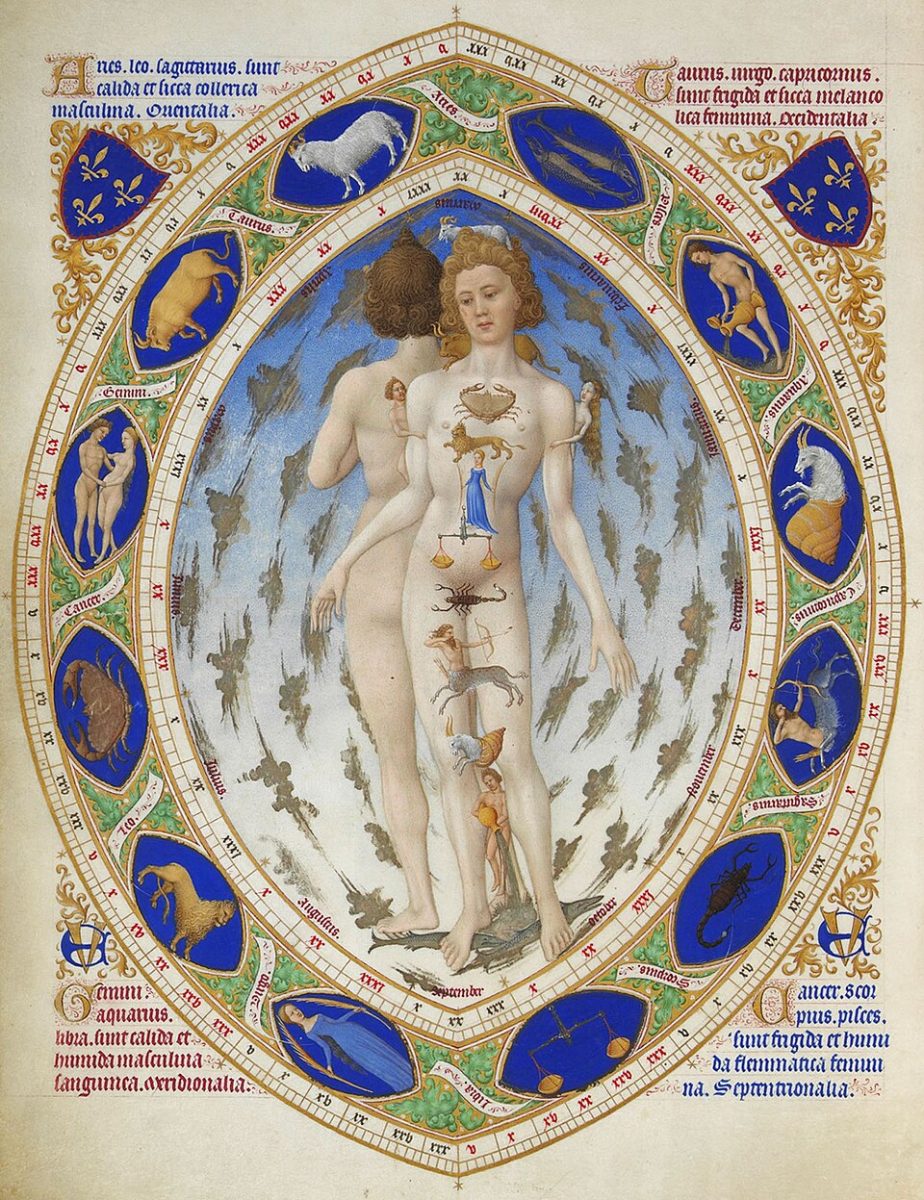
For thousands of years, science and spirituality have been two concepts deeply intertwined in their quest to explain the origins and contents of the universe – concepts far too vast and abstract for the human mind to comprehend on its own, but far too tantalizing in their infinity to leave unexplored. Thus, through thousands of years of philosophical and scientific exploration, humans have sought to envelop the universe around them in an ever-growing quilt of reason, logic, and faith. A patchwork of different ideologies, each reflecting the time period and culture in which they were coined, that no one bearing needle and thread would ever live to see sewn to completion. And yet, the materialization of the theoretical and the ideological continues to expand, restlessly, rapidly, until our computer screens overflow with knowledge, speculation, and an expression of curiosity innate to human life.
In the modern day, however, it seems that the public perception of spirituality has cleaved it from scientific reasoning. Observation has been torn from interpretation in a way that prevents people from engaging with both the corporeal and intangible questions of our world in a meaningful way. However, one cannot sever spirituality from science and emerge with a full picture of human nature, culture, religion, and society.
The Earliest Examples of Spirituality
Spirituality is not a practice tied intrinsically to our modern views on religion, but rather a belief in a soul or a spirit that exists beyond the human body. Throughout history, spirituality has consistently been seen as a gateway through which we can explain the ways of the world and of human life.
Spirituality is speculated to have found its roots in the Paleolithic Era, nearly 2.5 million years ago, when the ancestors of modern humans were first developing tools out of stone and living as nomadic hunter-gatherers. As the human brain developed and gained the ability to process the world around it, early humans began to seek explanations for the things that they saw. Aspects of everyday life, including weather events such as bright sunshine or thunderstorms, were some of the first to gain both practical and spiritual interpretations. Sure, lightning struck the ground – but why did it happen? Was the sky sentient? Did it purposefully strike the ground as a warning or a symbol of its frustration? These early considerations and analyses would be echoed in different cultures throughout history.
In his 1871 work Primitive Culture, anthropologist Edward Tylor defined the phenomenon as a belief system called “animism,” or the “theory of the universal animation of nature.” This theory posits that early people believed that all things in nature – whether they were human, animal, or inanimate – possessed a spirit, underscoring the importance of spirituality in the human perception of the world. Early people viewed nature not as something to be exploited or manipulated, but rather as a system of beings, each connected to the next and each deserving of respect.
As time went on, spirituality would continue to grow and evolve alongside more tangible developments. For example, during the Pleistocene Epoch, Neanderthals began to bury the bodies of their dead. What started off as a practical way to dispose of bodies sprouted into a vast array of elaborate, cultural burial rituals later in history. Burying the dead also proved to slow down the decay process of the human body, a notable scientific development.
A Brief Timeline of Spirituality
The practice of spirituality and its exploration of the world would branch out through an innumerable number of unique channels as time went on but soon became far more organized within each pathway. A common theme that developed in nearly all spiritual practices is the improvement of the individual and how they choose to live their life, particularly when faced with the judgment of their gods or other religious figures.
From 3000-500 B.C.E., historians note that spiritual beliefs began to gain more of a structure within society. In Ancient Egypt, the rise of the polytheistic Kemetic religion, or “The Way of the Gods,” emphasized that the belief in an afterlife should shape one’s life on Earth. This belief system bloomed into a structured state religion in Egypt by the Early Dynastic Period. In Ancient India, early Vedic traditions would pave the path for later philosophies associated with spirituality, like the practices of yoga and meditation.

Then came the Axial Age, as coined by German philosopher Karl Jaspers. This period represented a turning point in the focus of spirituality; it became a belief system centered on the transformation and morality of solely the individual. Amidst this age, broad developments were made in the fields of philosophy, religion, and culture all across the globe. In South Asia, Siddhartha Gautama taught liberation from suffering, creating the religion of Buddhism. In China, the philosopher Confucius maintained ethics and social order by creating his structure of the Five Relationships. In Greece, Socrates encouraged inner questioning and the importance of justice in living a virtuous life. Each of these philosophies and religions, among many others, pushed people to confront their humanity and what they could do to better themselves.
At the beginning of the Common Era, the rise of Christianity aligned the public perception of spirituality more closely with organized religion, particularly in European society. Love, salvation, and forming a personal relationship with God became the key to living a holy life. Meanwhile, in Asia, Buddhism would continue to spread, emphasizing meditation and discipline. Hinduism would also evolve, traveling down diverse spiritual paths, both physical (primarily through the aforementioned practice of yoga) and religious.
Hundreds of years down the line, the Scientific Revolution and Enlightenment would allow spirituality to coexist with science. The Scientific Revolution marked the emergence of modern science, from Copernicus’ heliocentric model of the universe to Isaac Newton’s Laws of Motion. Suddenly, the European worldview had shifted from a medieval reliance on religious doctrine to an emphasis on observation, experimentation, and reasoning. Rationalism, therefore, emerged as a system of thought based on the belief that human experience was the root of all knowledge. Although rationalism seemed to reject a more religious view of the universe, it emphasized a fundamentally human perspective on life and a focus on the world around us – something that spirituality had always sought to explore and respect. Through this mindset, countless religious, scientific, and philosophical developments were made.
Spirituality Leading Up To the Modern-Day World
The 19th century saw the spread of Eastern spiritual practices to the West, with teachers traveling to educate the masses on their beliefs. Swami Vivekananda, for example, an Indian Hindu monk and philosopher, spoke at the 1893 Parliament of the World’s Religions. There, he reframed meditation as a scientific method of training the mind and yoga as a mental discipline rather than a physical exercise. This event would affect people’s perception of spirituality for years to come, joining Eastern and Western practices.
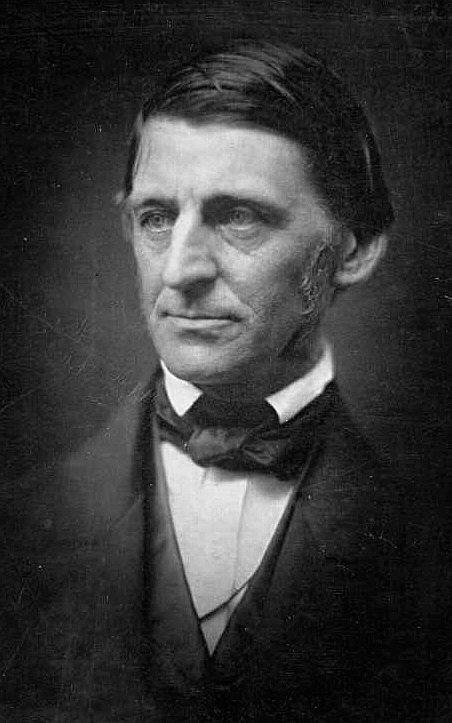
Alongside this global spiritual exchange was the rise of a movement called Transcendentalism. Transcendentalism was pioneered by writers and philosophers in 19th-century New England who believed in the unity and virtue of all creation. The belief system celebrates the natural world – from the individual and their emotions to nature itself – over reason. Transcendentalism promoted the coexistence between science and spirituality, but claimed that the reality of the spiritual world surpassed that of the tangible world. However, as the rise of industrialization began to change the scheme of American society, Transcendentalism’s focus on nature became obsolete; it was ultimately overwritten by the growing consumerist mindset of the time, further cleaving the materialistic world (which people saw as “rational”) from the incorporeal.
The 19th century also allowed for the rise of an occult movement called theosophy, or “divine wisdom.” Founded by Russian occultist Helena Petrovna Blavatsky, theosophy represents a synthesis of science, religion, and philosophy, all to establish direct contact with a deeper spiritual reality. Theosophists believed that such contact could be made through meditation or other methods of achieving a divine state beyond human consciousness. Theosophy would ultimately open the doors to what was perhaps the 20th century’s most significant spiritual trend: the New Age movement.
The New Age movement was built on the belief that a period of greater spiritual awareness and enlightenment was approaching human civilization. The arrival of the New Age would supposedly eliminate human suffering in the forms of war, discrimination, and illness. Some believers thought that it was their responsibility to “manifest” the new era, while others thought that it would arrive regardless of human activities. The New Age movement leveraged traditional occult practices in order to assist an individual’s growth and transformation. Most famously, it employed astrology and the age-old practices of yoga and meditation to do so.
Due to its acceptance of unscientific ideas, the influence of the New Age Movement began to fade away towards the end of the 1980s. This would end up alienating spiritual interpretations from scientific ones in the eyes of the general public for decades to come.
How Relevant is Spirituality Today?
In a 2024 study, Pew Research concluded that over 62% of adults worldwide believe that something spiritual exists beyond the natural world, and 56% believe that parts of nature can be home to spiritual energies. This belief corresponds to early ideas of animism, showing how an age-old way to interpret our world has echoed into our lives in the modern day.
Now, many people have reconciled spirituality with science through the practice of mindfulness. This concept encompasses yoga, meditation, and journaling, each specific to the individual choosing to indulge in them. Thanks to the growing use of the internet, mindfulness ideas – from digital applications to physical activities – have become increasingly popular on social media. Influencers will often post videos of themselves engaging in such activities in order to promote “self-care” and personal growth. “Mindfulness gives you time,” senior monk Bhante Henepola Gunaratana once wrote. “Time gives you choices. Choices, skillfully made, lead to freedom.”

(Photo Credit: lilartsy / Unsplash)
Understanding the impact of spirituality on our modern-day world is not only a way to reconnect with our respective histories and cultures, but also with how our worldviews have evolved over time. Now, it is our job to observe the ideologies of the past, build off their successes and prevent ourselves from repeating their mistakes, all while continuing to sew human history together – using whichever needle, spool, and thread we see fit.
Now, many people have reconciled spirituality with science through the practice of mindfulness. This concept encompasses yoga, meditation, and journaling, each specific to the individual choosing to indulge in them. Thanks to the growing use of the internet, mindfulness ideas – from digital applications to physical activities – have become increasingly popular on social media. Influencers will often post videos of themselves engaging in such activities in order to promote “self-care” and personal growth. “Mindfulness gives you time,” senior monk Bhante Henepola Gunaratana once wrote. “Time gives you choices. Choices, skillfully made, lead to freedom.”