

Every night as our bodies fall still, our eyes flicker beneath closed eyelids, and our minds come alive in ways we barely understand. Dreams are one of the most universal human experiences, yet they remain one of science’s greatest mysteries.
Sometimes they feel random and chaotic; other times they seem symbolic, emotional, and even prophetic. Are dreams just the brain’s way of sorting through information, or do they reveal something deeper about our fears, memories, and desires? By exploring what happens in the brain during sleep and what psychologists and neuroscientists believe about the meaning of dreams, we can begin to understand why we dream and what those strange nighttime stories might actually be telling us.
At the turn of the twentieth century, Sigmund Freud (1856-1939 C.E.) radically transformed the way people thought about dreams. In The Interpretation of Dreams (1900), he argued that dreams are not meaningless nighttime stories but “the royal road to the unconscious.”
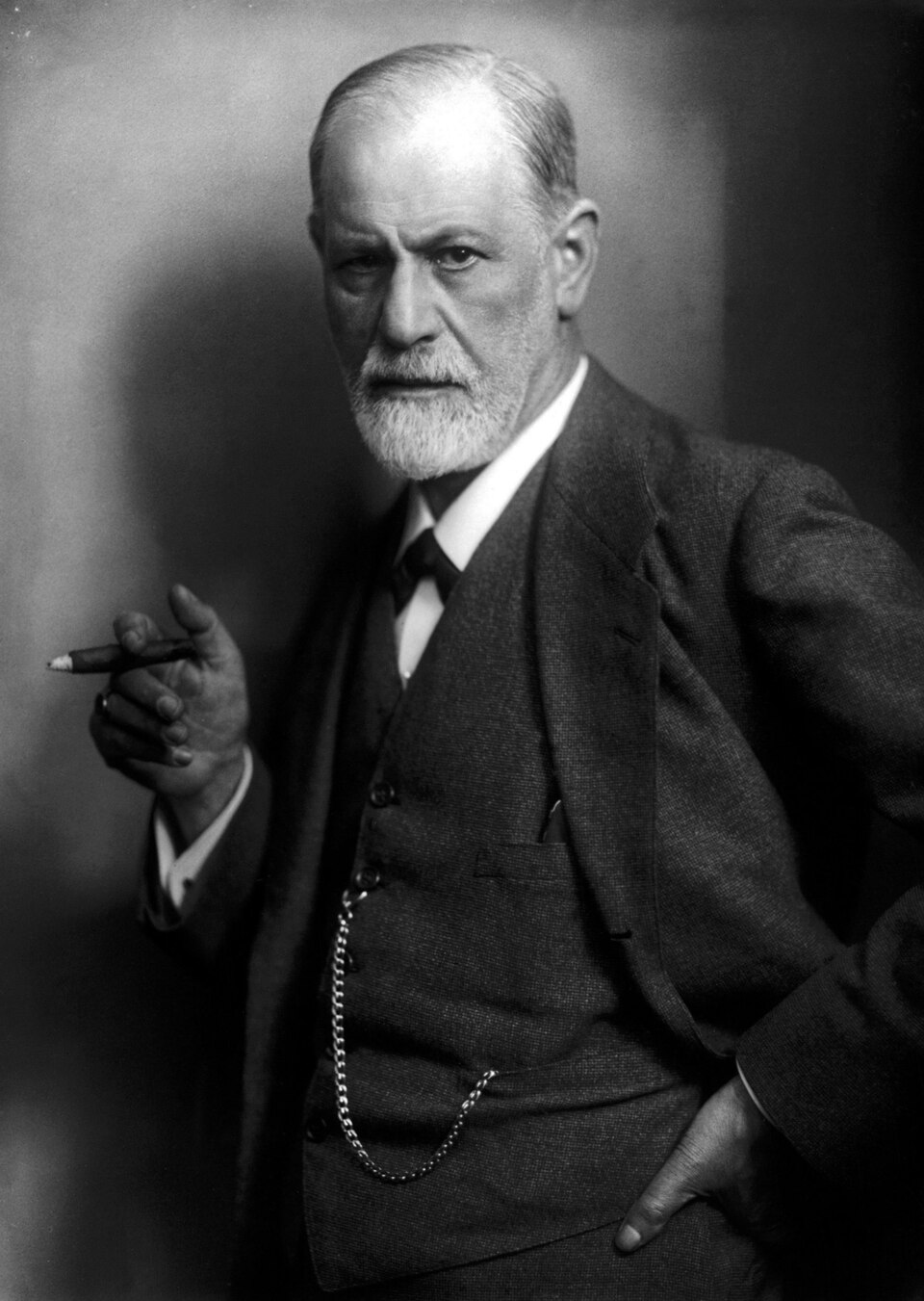
For Freud, dreams revealed hidden desires, unresolved conflicts, and repressed wishes that the conscious mind could not tolerate during waking life. Rather than dismissing dreams as random brain activity, Freud treated them as psychologically significant texts that could be analyzed and interpreted. His theory of dreams became one of the foundational pillars of psychoanalysis and reshaped modern understandings of the mind (McLeod).
Central to Freud’s theory is the idea that dreams are hidden ways to execute your private desires. He believed that many human desires, especially those that are socially unacceptable or anxiety-provoking, are pushed out of conscious awareness through repression. However, repression does not eliminate these wishes; it merely forces them into the unconscious.
When the mind lowers its defenses during sleep, these wishes attempt to surface. Dreams, according to Freud, allow this to happen in a distorted and symbolic form so that the dreamer can remain asleep without being overwhelmed by anxiety (McLeod).
Freud illustrated this theory with his own dream, often referred to as the “Irma dream,” which he had on July 24, 1895. At the time, he felt guilty about a patient named Irma who was not improving under his treatment. In the dream, Freud encountered Irma at a party and examined her, only to discover that another doctor had administered a contaminated injection that caused her condition. Upon waking, Freud interpreted the dream as wish fulfillment: it relieved his guilt by shifting the blame to someone else.
He concluded that the dream satisfied his unconscious wish to be free of responsibility. From this personal example, Freud generalized that a primary function of dreams is the fulfillment of wishes (Freud, 1900, as cited in McLeod).
To explain how unacceptable wishes become disguised, Freud distinguished between manifest and latent content. Manifest content refers to the actual storyline of the dream, and the images and events the dreamer remembers. Latent content, by contrast, is the hidden psychological meaning beneath the surface.
Freud believed that latent content contains the true significance of the dream and reflects unconscious desires and conflicts. For example, a dream about losing teeth might not literally concern dentistry but could symbolize anxiety about aging, power, or loss. Importantly, Freud stressed that the meaning depends on the individual’s personal associations rather than fixed definitions (McLeod).
The transformation from latent to manifest content occurs through what Freud called “dreamwork.” Dreamwork is the mind’s method of censoring and reshaping unconscious wishes so they appear less threatening.
One mechanism of dream work is displacement, in which emotional intensity shifts from an important person or object to a safer substitute. Freud described a patient who resented his sister-in-law but dreamed of strangling a small white dog. Because directly dreaming of harming his sister-in-law would provoke guilt, the unconscious mind displaced those feelings onto the dog (McLeod).
Another mechanism is condensation, where multiple ideas or people combine into a single image. A dream figure might simultaneously represent a father, a romantic partner, and a rival. This compression allows complex emotions to be expressed economically within the dream.
Symbolization is also crucial; repressed wishes are expressed through symbols rather than literal representations. Freud sometimes suggested recurring themes, such as climbing ladders symbolizing ambition or flying symbolizing desire, but he was cautious about rigid interpretations. Finally, secondary elaboration organizes fragmented dream images into a more coherent narrative, making the manifest content appear logical and believable (McLeod).
Although Freud explored the possibility of recurring symbols, he rejected the idea of universal “dream dictionaries.” He insisted that symbols are often personal rather than fixed.
In one revealing anecdote, a patient who dreamed of holding a wriggling fish jokingly assumed it must represent a sexual symbol. However, further analysis revealed that her mother, an outspoken Pisces who disapproved of therapy, was occupying her thoughts. Freud concluded that the fish more plausibly symbolized her mother, demonstrating that interpretation requires attention to individual context (McLeod).
Freud also developed a clinical method to uncover latent content called free association, where patients were encouraged to say whatever came to mind in connection with each element of the dream, without censorship.
These spontaneous connections, Freud believed, would lead back to repressed wishes. He also examined transference, in which feelings toward significant figures in a patient’s life were redirected onto the therapist.
Observing these patterns could illuminate the emotional conflicts underlying dreams. Dream analysis, therefore, became a collaborative process between analyst and patient, aimed at revealing unconscious material (McLeod).
Ultimately, Freud viewed dreams as purposeful psychological phenomena rather than meaningless illusions.
In The Interpretation of Dreams, he not only introduced a theory of dreaming but also launched psychoanalysis itself, emphasizing the central role of the unconscious mind in shaping behavior and experience. While many of his claims remain controversial today, Freud’s approach permanently altered the cultural and intellectual landscape.
By treating dreams as coded messages from the unconscious, he invited generations of thinkers to look beneath the surface of the mind and to consider that even in sleep, the psyche is actively at work (McLeod).
Carl Jung (1875-1961 C.E.) believed that dreams are not meaningless byproducts of sleep, nor are they merely disguised wish fulfillments, as Sigmund Freud proposed. Instead, Jung argued that dreams “reveal more than they conceal” (Hurd).
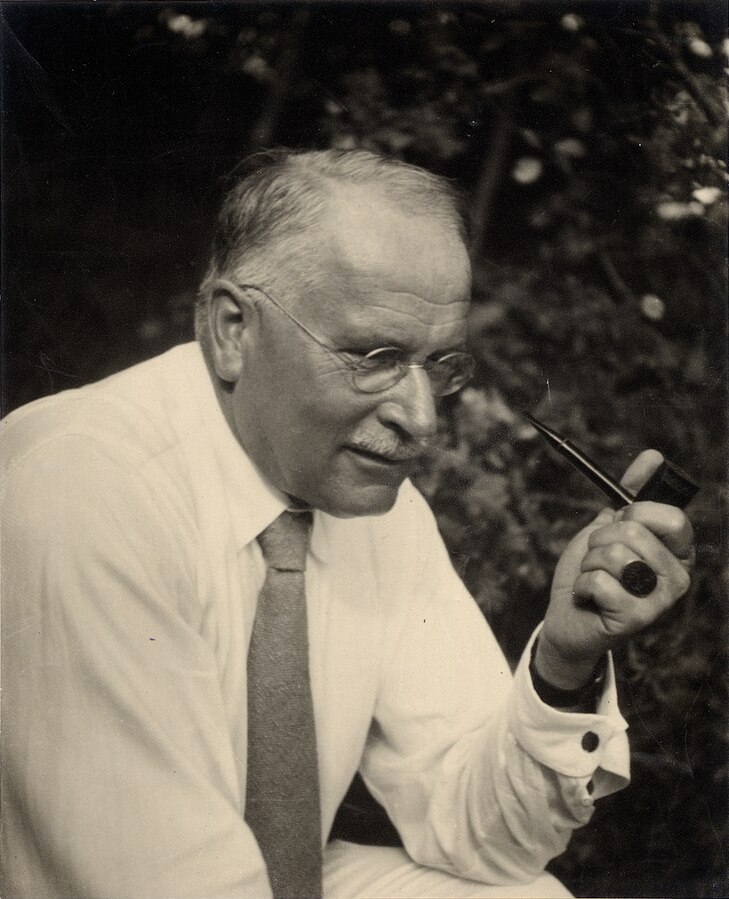
For Jung, dreams are natural expressions of the unconscious mind, communicating in symbols and mythic imagery. Across his long career, during which he reportedly analyzed over 80,000 dreams, Jung treated dreams as essential to psychological development, creativity, and even physical health. His theory of dreaming became a cornerstone of analytical psychology and continues to influence contemporary psychoanalytic thought.
At the center of Jung’s dream theory is his understanding of the unconscious. He described consciousness as “a ship on the great sea of the unconscious,” suggesting that much of our psychological life unfolds beneath the surface (Jung, ETH Zurich lecture).
The unconscious, in Jung’s view, is not merely a storehouse of repressed desires but a dynamic, creative force containing unrealized potentials, instincts, and symbolic knowledge. Dreams are “messages sent up from the unconscious” and act as “a spontaneous self-portrayal, in symbolic form, of the actual situation in the unconscious” (Jung, Structure and Dynamics of the Psyche). In other words, dreams reflect the psyche’s current state with striking honesty.
Unlike Freud, Jung rejected the idea that dreams disguise suppressed emotions. He did not believe that dreams require elaborate decoding to perform their function. Instead, dreams naturally contribute to what Jung called individuation, the lifelong process of integrating conscious and unconscious elements of the personality. Individuation represents the psyche’s movement toward wholeness.
Dreams assist this process by presenting images and scenarios that compensate for imbalances in conscious life. As Marie-Louise von Franz explains, when we attend to dreams, a “self-regulating tendency in the soul” counterbalances the one-sidedness of consciousness (von Franz).
This compensatory function is central to Jung’s interpretation of dreams. If a person’s conscious attitude is rigid, inflated, or evasive, dreams often present corrective imagery. For example, a father neglecting his responsibilities might dream that his children despise him, forcing him to confront his avoidance. A person overly identified with a polished social persona may dream of immoral acts, revealing the “shadow” aspects of personality that need integration. In these cases, dreams act as psychological correctives, illuminating blind spots and restoring balance (Jung, Development of Personality).
Jung also distinguished between ordinary compensatory dreams and what he called “big dreams.” Big dreams are rare, deeply numinous experiences that may remain vivid for a lifetime. They often contain mythological or religious symbolism and address fundamental questions of existence. Von Franz described them as feeling like “a visitation from another world,” the subterranean realm of the unconscious.
Jung himself recorded powerful dreams in her Memories, Dreams, Reflections, including one following a near-fatal heart attack in which he encountered a meditating yogi who shared his own face. Such dreams, Jung believed, could transform one’s worldview and accelerate individuation.
To explain the recurring symbols found in dreams across cultures, Jung introduced the concept of the collective unconscious. Contrary to popular misunderstandings, the collective unconscious is not a mystical psychic soup of shared knowledge.
Rather, it refers to inherited psychological structures, archetypes, that shape human experience. Archetypes are universal patterns such as the mother, the hero, the shadow, or rites of passage. These archetypal images appear in myths, religions, and dreams worldwide, reflecting shared aspects of the human condition (Hurd). Dreams draw from this symbolic reservoir, expressing personal conflicts through universal motifs.
Jung believed that dreams could also disclose insights inaccessible to waking consciousness. The unconscious “hears what our conscious ears do not hear, and sees what our conscious eyes do not perceive,” (Jung, ETH Zurich 1933–41).
Subtle intuitions, unacknowledged fears, and even early signs of physical illness may surface symbolically in dreams. Jungian analyst James Hall recounts cases in which dreams appeared to foreshadow medical conditions, suggesting that the unconscious is intimately connected to bodily processes. While such claims remain controversial, they illustrate Jung’s conviction that dreams are deeply integrated with both mind and body.
Dreams also play a crucial role in creativity. Jung observed that many scientific and artistic breakthroughs originated in dreams, including discoveries by figures like Dmitry Mendeleyev and August Kekulé. Jung himself wrote that his greatest ideas emerged from dreams and visions, which formed the “prima materia” of his scientific work (Memories, Dreams, Reflections).
Although Jung maintained that dreams can influence us even if misunderstood, “Dreams pave the way for life, and they determine you without you understanding their language” (The Red Book), he encouraged active engagement with them. He recommended recording dreams upon waking and practicing “dream amplification.”
Amplification involves reflecting on a dream’s images, drawing associations, and exploring parallels in mythology or religion. Interpretation is confirmed when it “clicks,” producing a felt sense of psychological truth (Jung, Seminar on Dreams). Importantly, Jung did not rush to fixed meanings but lived with his dreams, allowing layers of significance to unfold over time (von Franz).
Ultimately, Jung saw dreams as impartial, spontaneous products of nature, expressions of the psyche beyond conscious control. In an age he believed was marked by disconnection from instinct and susceptibility to mass delusion, Jung argued that dreams could restore balance and authenticity.
By revealing the “unvarnished, natural truth” of the psyche, dreams reconnect individuals with their deepest foundations (Civilization in Transition). For Jung, to neglect dreams was to ignore one of the most direct pathways to psychological wholeness.
American psychologist Calvin S. Hall offered a distinct and research-driven perspective on dreams that differed from earlier psychoanalytic thinkers. While Sigmund Freud emphasized hidden wish fulfillment and Carl Jung focused on archetypal symbolism and psychological integration, Hall approached dreams through systematic observation and cognitive interpretation.
In The Meaning of Dreams (1953), Hall argued that dreams primarily reflect how individuals view themselves, their relationships, and their emotional conflicts. Rather than viewing dreams as mysterious or prophetic experiences, Hall treated them as meaningful psychological documents that reveal the dreamer’s inner life through patterns and recurring themes.
At the core of Hall’s dream theory is the idea that dreams mirror the dreamer’s self-concept. Hall believed that dreams provide insight into how individuals unconsciously perceive themselves, often exposing attitudes or insecurities that differ from how they present themselves in waking life.
According to Hall, dreams reflect the “dreamer’s unconscious self-conception which often does not at all resemble our trumped up and distorted self-portraits” that people construct during the day (Alexander). In this sense, dreams serve as a psychological mirror, showing aspects of identity that individuals may ignore, suppress, or fail to recognize while awake.
However, Hall also acknowledged that dreams are not always straightforward reflections of the self. Like Freud, he recognized the distinction between manifest content, the storyline or imagery remembered upon waking, and deeper meanings that require interpretation. The manifest dream often appears distorted or symbolic, meaning that the remembered narrative does not perfectly represent the dreamer’s true thoughts or feelings.
Instead, the surface-level story may disguise or reshape underlying emotional conflicts and desires. Hall emphasized that interpreting dreams involves examining patterns, symbols, and emotional themes rather than focusing only on the literal events of the dream.
One of Hall’s most significant contributions to dream psychology was his emphasis on empirical research. Unlike Freud and Jung, whose theories relied heavily on clinical case studies and symbolic interpretation, Hall analyzed thousands of dreams collected from individuals considered psychologically “normal.” By studying large samples of dream reports, Hall attempted to identify consistent patterns in dream content. His work marked an important shift toward a more scientific and statistical approach to dream analysis.
Through comparative statistical analysis, Hall discovered that dreams often reflect social relationships and emotional tensions. For example, his research found that men tend to dream more frequently about male friends and acquaintances than about women, while women dream about men and women in roughly equal proportions. Hall interpreted these findings as evidence that men may experience greater emotional conflict or uncertainty in their relationships with other men, whereas women tend to experience similar levels of emotional complexity with individuals of both sexes (Alexander). These conclusions suggested that dreams frequently mirror interpersonal concerns and emotional struggles present in waking life.
Hall also proposed that dreams reflect the dreamer’s beliefs about others and the world. He argued that dream content reveals how individuals view authority, relationships, success, and failure. For example, recurring dreams involving conflict, fear, or rejection may indicate unresolved anxieties or negative self-perceptions.
Similarly, dreams featuring achievement or positive social interaction may reflect feelings of confidence or fulfillment. By analyzing recurring dream patterns, Hall believed psychologists could better understand an individual’s emotional development and personality structure.
Another key feature of Hall’s dream theory is his rejection of the idea that dreams serve a single universal purpose. Unlike Freud, who emphasized wish fulfillment, or Jung, who focused on archetypal symbolism and individuation, Hall viewed dreams as cognitive reflections of everyday life experiences. He believed dreams organize thoughts, emotions, and memories into narratives that express personal concerns. In this way, dreams function as a continuation of waking thought rather than a completely separate psychological process.
Hall also highlighted the importance of studying dreams over time rather than interpreting individual dreams in isolation. He argued that meaningful insights emerge when psychologists examine multiple dreams from the same individual.
Patterns across numerous dreams often reveal consistent emotional themes, self-perceptions, and interpersonal concerns. This longitudinal approach allowed Hall to view dreams as ongoing psychological records rather than isolated symbolic events.
In addition to his research contributions, Hall influenced how dreams were studied and taught within psychology. His work helped shift dream analysis toward content analysis and cognitive psychology, encouraging researchers to treat dreams as valuable data rather than purely symbolic or mystical experiences.
By applying systematic methods and statistical analysis, Hall made dream research more accessible to scientific study and broadened the scope of psychological dream interpretation.
Calvin S. Hall viewed dreams as meaningful reflections of the dreamer’s inner psychological world. His theory emphasized that dreams reveal self-concept, emotional conflict, and interpersonal relationships through recurring patterns and symbolic narratives. By combining psychological insight with empirical research, Hall provided a balanced and practical approach to dream interpretation.
His work continues to influence modern dream research by demonstrating that dreams are not random or meaningless but instead offer valuable insight into how individuals understand themselves and their experiences.
Although researchers still debate the exact purpose of dreams, one thing is clear: dreaming is not meaningless. Whether dreams help us process emotions, strengthen memories, rehearse real-life challenges, or simply reflect the brain’s natural activity during REM sleep, they reveal how active and complex the mind truly is, even at rest.
While we may never fully decode every symbol or storyline, studying dreams allows us to better understand consciousness itself. In the end, dreams remind us that even in sleep, the human brain continues to create, process, and imagine quietly shaping who we are long after we wake up.
While we may never fully decode every symbol or storyline, studying dreams allows us to better understand consciousness itself. In the end, dreams remind us that even in sleep, the human brain continues to create, process, and imagine quietly shaping who we are long after we wake up.