
Is the American Dream Gone for Good?
For decades, the American Dream has served as a symbol of upward mobility, the belief that hard work, ambition, and dedication lead to a better life. Homeownership, a college education, a stable job, and financial security comprise what is generally considered a well rounded life. Embedded within this notion was a sense of generational progress: each successive generation was expected to fare better than the one before it. Now, in 2026, a reality has emerged in America: these pillars of achievement feel increasingly tenuous. No longer is it viewed as a tenet of American society; instead, it is increasingly seen as a privilege accessible mainly to those with financial resources, social capital, or economic security.
The American Dream has never been a fixed concept; it has evolved alongside economic and social change. In the post-war era, strong unions, affordable housing, and expanding public education made upward mobility attainable for millions. Today, however, those structural supports have weakened. Opportunity hasn’t disappeared, but access to it has become spottier, which raises a question over whether the American Dream is still a realistic goal for the average citizen.
The Rising Cost of Education
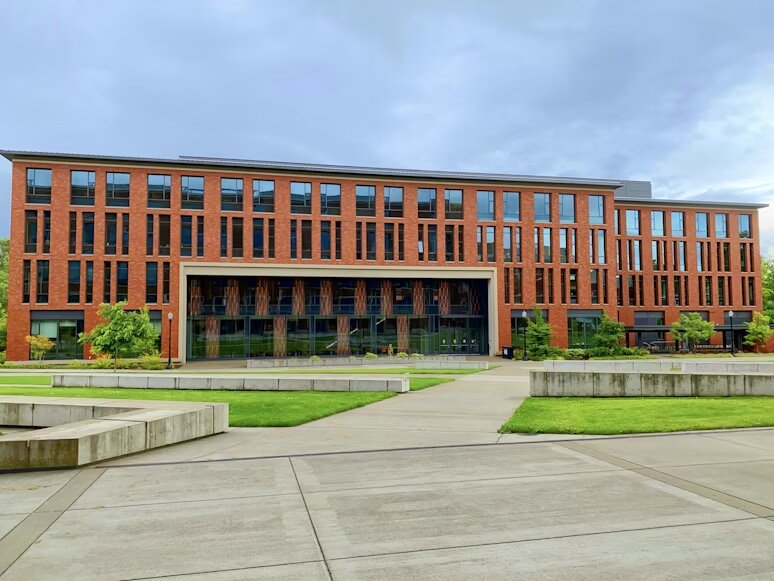
College has traditionally represented an avenue to opportunity, but the cost to attend has risen significantly. In the past 59 years, the cost of attending college for undergraduate education has nearly tripled. Even when corrected for inflation, this is a startling figure. In the early 1970s, a Baby Boomer attending a public college paid roughly $3,519 (inflation adjusted). By 2023, the cost had risen 177% to $9,750. Even private education has seen a corresponding rise; costs have increased 158%, from $13,639 to $35,248.
The reality of what students actually pay after grants and financial aid paints a different picture, despite the fact that the sticker price captures all the headlines. The inflation adjusted net prices have fallen in some instances, especially within public institutions. However, small decreases are offset by other ancillary costs, such as room and board, textbooks, technology fees, and transportation, expenses that remain hidden and keep growing. As a result, the average student loan debt for public university graduates reached roughly $30,000 by 2025, while graduates of private nonprofit colleges often carried balances closer to $35,000 or more.
Though tuition costs have experienced occasional dips — most notably between 1973 and 1980 and again between 2020 and 2022 — they have trended upward overall for several decades. These brief periods of decline, often driven by economic slowdowns or temporary enrollment shifts, did little to alter the long-term trajectory of rising costs. Over time, consistent increases in tuition have outpaced both inflation and median household income, meaning that even when growth slows, affordability does not meaningfully improve. As a result, each new cohort of students faces a higher financial threshold to access higher education, reinforcing the perception that college is no longer a universally accessible pathway to mobility but an increasingly costly investment with uncertain returns.
More than cost, the promise of the degree itself has shifted. A college diploma no longer guarantees stable employment or a middle-class income. Degree inflation — the rising tendency for employers to require higher credentials for jobs that once required less education — has raised barriers to entry across many fields. Students are therefore paying more for qualifications that often yield diminishing returns, further eroding education’s role as a reliable engine of upward mobility.
Housing: A Growing Barrier to Homeownership

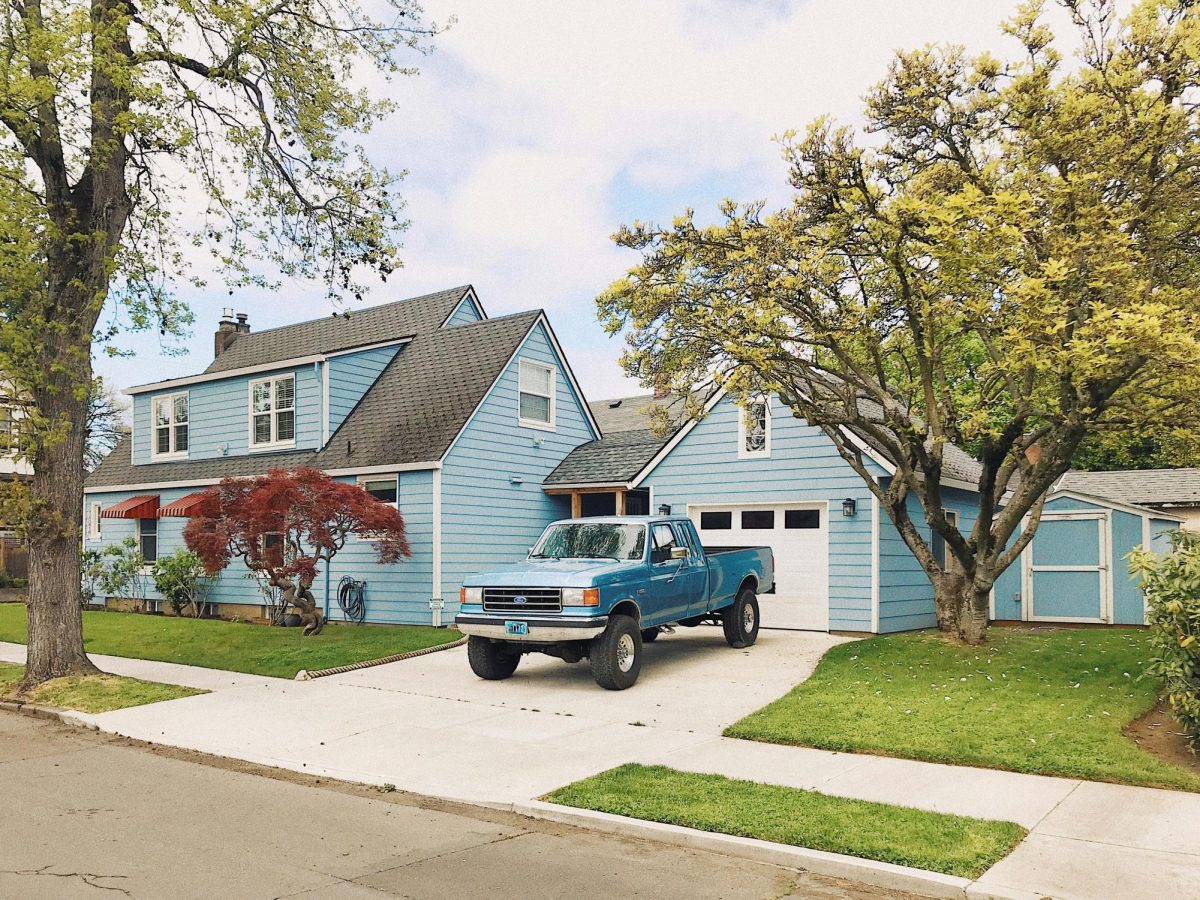
Housing costs, a key facet of the American Dream, have also risen significantly. From 2014 to 2024, U.S. home prices rose sharply, with some metropolitan regions experiencing increases approaching or exceeding 100 %, for example, parts of Orange County, California (Anaheim–Santa Ana‑Irvine) saw prices roughly double, a roughly 100 % increase over that decade. Nationally, the average price of a new home climbed from about $347,700 in 2014 to $415,200 in 2024. That number does not fully capture regional disparities: in the broader San Francisco Bay Area and parts of Southern California, median prices increased by 30–50 % or more since 2020, while markets adjacent to New York City saw double‑digit gains as well.
The COVID-19 pandemic accelerated trends that were already in motion. Since March 2020, home prices have increased by about 30%, making the purchase of homes unaffordable for many middle and lower income families. Interest rates, though still lower than historical highs, have increased severely since 2022 and have not kept up with price increases. As Michael Coon, an Associate Professor of Economics at the University of Tampa, mentions, “price increases, coupled with interest rate hikes since 2019, mean buyers would pay approximately twice the monthly mortgage payment if they bought the same house today compared to five years ago.” Insurance premiums also continue to rise, with homeowners paying upwards of 23% more since 2019, adding another layer to the financial squeeze.
For many generations, the American Dream included not only owning a home but also using that ownership to build wealth. Today, that path has become much harder. High rents and steep down payments make buying a house out of reach for many, even those with stable jobs. For a growing number of Americans, homeownership, once a cornerstone of financial security, is no longer attainable.
The Rising Costs of Mobility
One factor that sometimes gets missed in debates over economic progress is transportation. Transportation plays a critical role in economic mobility, as it determines access to employment, education, healthcare, and housing. Increases in transportation costs are equivalent to a mobility tax. Without transportation, chances to improve or increase mobility financially becomes scarce.
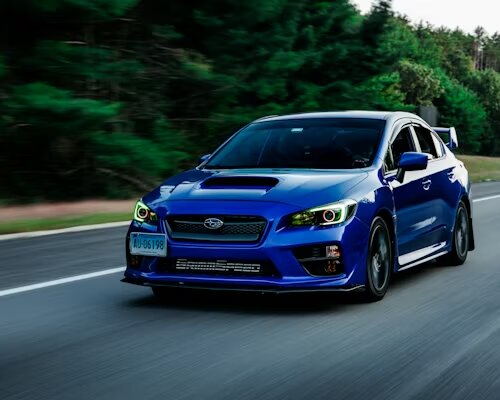
Transportation costs have also added to American families’ financial burdens. The cost of a new car has increased by around 60% in recent years, with costs now rising higher than $50,000 for the first time during the last decade or so. The global semiconductor shortage also added to other car costs. Car companies also opted to increase their sales of higher priced models of autos such as SUVs and trucks in recent years.
From January 2020 to August 2025, car ownership costs rose 40.6% according to the COCO Index, compared to a 24.8% increase in overall consumer prices. While short-term increases, like the 0.8% rise between late 2024 and August 2025, or the small monthly jumps in new cars (0.28%), used cars (1.04%), gas (1.91%), and repairs (5%) may seem minimal on their own, their cumulative effect is substantial. Car ownership is a major household expense, and these incremental increases quickly add up, forcing families to allocate more of their income to transportation. For someone on a tight budget, even a seemingly small rise in gas prices or repair costs can delay saving for a home, education, or retirement. In other words, the “small” percentage increases translate into real financial strain, amplifying the broader challenges to economic mobility and making access to jobs, schools, and essential services more expensive over time.
Job Market and Economic Stability
The labor market shows some improvement, though broader economic challenges remain. According to the United States Bureau of Labor Statistics, total employment has grown steadily over the past decade, rising from 148.8 million in 2015 to approximately 161.2 million in early 2025. Meanwhile, the unemployment rate, the percentage of the labor force actively seeking work, has fluctuated significantly: it hit a record low of 3.5% in February 2020, surged to 14.7% at the peak of the COVID-19 pandemic, and has since settled at just over 3.9% in recent years.
Quantity doesn’t replace quality: while the labor market has added jobs over the past decade, many are concentrated in lower-wage service sectors, with roughly 80% of hourly-wage workers in roles like retail and food service that offer limited benefits. Gig and contract work, which now makes up about 16% of the workforce, often comes with unstable pay and few protections. Wage growth has remained modest, around 2–3% per year, while the cost of living has risen faster, eroding real income gains. Meanwhile, middle-skill jobs in manufacturing and logistics have declined by roughly 10%, pushing displaced workers into lower-paying positions. The result is that many Americans work more hours yet experience less job security and financial stability, making upward mobility increasingly difficult.
The Burden of Debt
Debt has emerged as a key characteristic of modern American life. Household debt in aggregate in the United States stood at a massive $18.59 trillion in the third quarter of 2025. Adjusted for inflation, debt has surged by 50% over the past two decades. Housing debt comprises a large proportion at $13.07 trillion, with a share of $1.65 trillion from student debt.
Student loan debt has significantly altered life trajectories, and its impact is amplified by rising tuition. Graduates face larger debts while entering a labor market where many jobs are low‑wage, gig-based, or offer limited benefits. This forces many to postpone buying a home, starting a family, or saving for retirement just to make monthly payments. While education remains a route to opportunity, it is increasingly tied to financial risk, turning what was once a launchpad for upward mobility into a heavy financial anchor.
Generational Divide and Inequality
One of the most interesting features of today’s American Dream phenomenon is the tremendous divide seen between the generations: Boomers, along with many in Generation X, have successfully built wealth in a time of increasing purchase power and economic growth. Conversely, Millennials and Gen Z are seeing a world in which prices are higher, debt grows, and safety nets disappear. Studies on intergenerational mobility indicate that fewer young Americans today are expected to out earn their parents than in recent decades.
This problem is further exacerbated by racial and geographical inequalities. Communities of color have historically faced barriers to wealth building, and today, economic opportunity is increasingly concentrated in a small number of cities such as San Francisco, San Jose, Austin, Boston, Seattle, Los Angeles, New York, and Washington, D.C. These cities share common features: a strong presence of high-paying industries like technology, finance, and professional services; well-established universities and research institutions; and infrastructure that attracts talent and investment. Meanwhile, many other regions — particularly rural areas and older industrial cities — have seen slower job growth, lower investment, and population declines, limiting residents’ access to well-paying jobs and making upward mobility far more difficult.
Is the American Dream Truly Gone?
In spite of this, it would be wrong to conclude that the American Dream is completely dead. Opportunity still exists, but equal opportunity does not. For example, new forms of mobility come through entrepreneurship, technological innovation, and alternate career routes. These avenues, though, require resources, networks, and risk tolerance not everyone possesses.
From being an attainable hope by an entire society, the American Dream has evolved into an individual risk taken on by the few. While success is still within the realm of possibility, if the opposite occurs, the price suffered is much higher, and the room for mistakes has dramatically decreased. While the Dream has by no means disappeared, it has certainly moved further away and is more elusive than ever before and more based upon factors outside the control of the individual trying to attain it.
The Future of the American Dream
The American Dream in 2026 has not vanished, but it has certainly changed. Rising costs for education, housing, and transportation, combined with growing debt and an uncertain labor market, have altered the path to social mobility. What was once broadly attainable for most Americans has now become conditional, precarious, and harder to achieve.
Reviving the American Dream will require not only actions and efforts of individuals, but also systemic transformation. Investments and provisions in affordable education and housing will greatly form part of it. Without such reforms, the American Dream risks becoming a relic of the past rather than a promise for the future.
Ultimately, the question is not whether Americans are willing to work hard, but whether hard work alone is still enough. Until the gap between effort and reward narrows, the American Dream may survive in theory, but it remains increasingly elusive in practice.
The American Dream in 2026 has not vanished, but it has certainly changed. Rising costs for education, housing, and transportation, combined with growing debt and an uncertain labor market, have altered the path to social mobility. What was once broadly attainable for most Americans has now become conditional, precarious, and harder to achieve.