
We live in a world where unlimited information is available at our fingertips. Through the internet, people are able to see places and animals from all over the world, including those which they may not have had the opportunity to see otherwise. Just by sitting at home, we can appreciate nature’s splendor, and the beauty of tigers, pandas, dolphins, and many more types of creatures. Sadly, these images may soon be the only evidence left that these critters existed at all.
There are so many species of animals around the world whose numbers are rapidly diminishing, and some have already disappeared. Despite efforts from wildlife conservationists, many types of fauna have gone extinct, especially in recent years. We often think of extinction as a thing of the past, an irrelevant and inevitable ending to animals that has little correlation to our own lives. But humans and the changing world have pushed many species to extinction just in the past twenty years. Some animals that have fallen into this unfortunate category are the Pinta Island Tortoise, Eastern Cougar, and the Formosan Clouded Leopard.
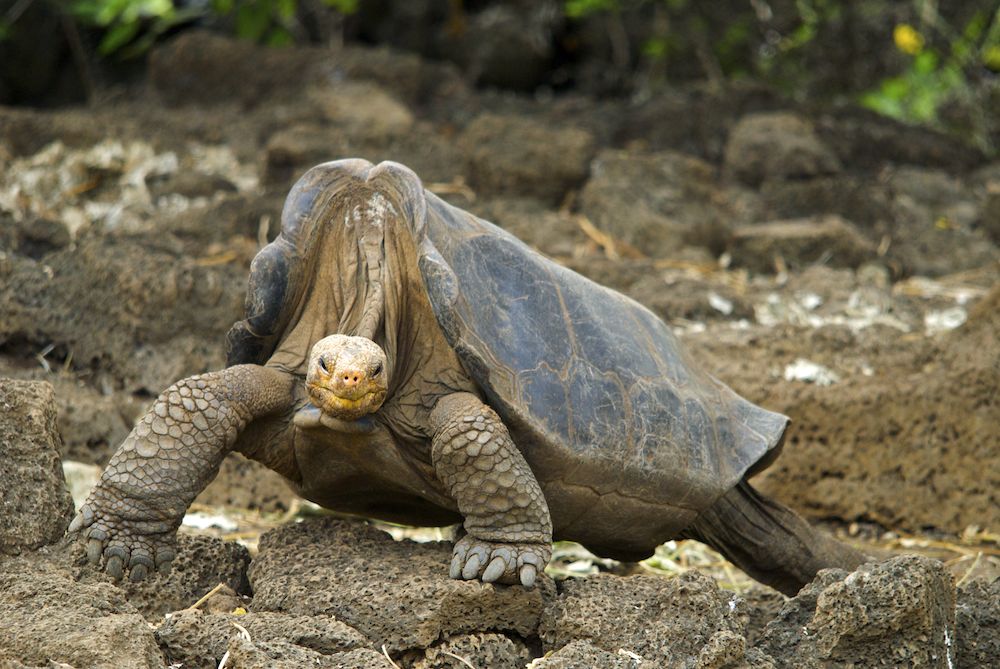
Prior to the 1850s, the Pinta Island Tortoises were a thriving species. However, when the tortoise’s habitat in the Galapagos was invaded by fishermen and goats not native to the region, the species suffered. The goats completely took control of the island, overrunning the tortoise’s natural habitat. In addition to this, mariners would capture tortoises from their home and kill them for food on sea voyages. A combination of these factors led scientists to believe they had gone extinct in the 1900s. Then, in 1970, to the researchers’ delight, they found a singular Pinta Island Tortoise still alive which they named George. Scientists searched tirelessly for another individual of the species to mate with George to no avail. In 2012, George died at the Tortoise Breeding and Rearing Center after a long life, marking the end of the Pinta Island Tortoises. However, in recent years, a related species of tortoise has been found on Isabela Island. This new species of tortoise appears to have descended from the Pinta Island Tortoise, and scientists hope to reproduce genetically similar animals through breeding programs.
The Eastern Cougar was first reported as endangered in 1975, and 36 years later was marked as extinct in 2011. Once abundant animals, Eastern Cougars populated the area from Southern Canada all the way down to South America. They were extremely adaptable, able to swim, climb trees, and jump large distances. Their food source was primarily white-tailed deer, but they were also known to eat porcupines, as well as eastern elk, another species that has unfortunately gone extinct. When Europeans settled in North America, the Eastern Cougars’ numbers rapidly dwindled because of hunting. In 2011, the U.S. Fish and Wildlife Service conducted a study on these mammals, and the results were extremely discouraging. They were not able to find any evidence to support the existence of the Eastern Cougar, and although some people claimed to have seen cougars in their habitat, it is likely not the specific sub-species. In fact, the last confirmed Eastern Cougar sighting was in the 1930s, and researchers believe that they went extinct for quite some time before anybody even thought to look.

Known for their incredible climbing skills and distinctive “cloud patterns” on their pelts, The Formosan Clouded Leopard was declared extinct in 2013 when a years-long search to spot one on camera finally failed. The leopard was last officially spotted in 1983, and although there have been reported sightings since then, nothing has been confirmed. The clouded leopard lived amongst evergreen tropical rainforests and the species’ numbers declined due to a combination of poaching and a loss of its natural prey. Although a related species of clouded leopards still lives in the Himalayas, scientists are fearful that they may be headed towards extinction for the same reasons. However, there may still be hope for these animals. Recently, rangers in Taiwan have reported sightings of the Formosan Clouded Leopard. The cats are known to be elusive creatures, and it is possible that they have simply escaped human notice this whole time. While these sightings are not confirmed, many scientists still hold hope that the leopards are out there.
Through all this destruction, it can be hard to believe that conservation efforts even matter. Yet, humans have the power to save animals from extinction, even if it is sometimes difficult to see. Take the sea otter. In the eighteenth and nineteenth centuries, these furry animals were hunted to near extinction. This was detrimental for the nearby environment, as sea otters help keep the sea urchin population in check, and are vital to keeping the ecosystem balanced. However, sea otters have repopulated much of their original natural habitat, in large part thanks to marine protected areas and laws like the Endangered Species Act. Fortunately, sea otters have fought their way back from the brink of extinction. They are helping to restore balance to key ecosystems such as eelgrass beds and forests.
It is important to note that the otters were saved through the actions of everyday individuals. Although scientists and politicians played a huge part, the fundraising drives, education, and rallies that everyday people held and shared played a crucial role in the sea otters’ return.
After all, the actions of normal citizens are often the most powerful. It may not seem like it, but there are ways that you can help prevent countless species of animals from going extinct.

The first step to help endangered species is to simply learn about them. By educating yourself and those around you about the many fascinating and interesting creatures slowly disappearing from the planet, you can help spread empathy and awareness. Learning about animals can help foster a sense of connection towards them, and people will work harder to protect parts of nature they understand and appreciate.
The second step is supporting local businesses and organizations working to help save threatened species. There are countless people around the world working hard to protect endangered species, but unfortunately, many do not have the resources necessary to make the impact they desire. If you have the financial ability, consider donating to organizations near you so they are better able to strengthen your community and defend all forms of life. If you are not able to donate, you can instead lend your time and aid by volunteering and spreading awareness for groups near you, as well as advocating for stronger laws that help protect the environment through sending petitions and letters to government officials.
You can even help save endangered species in your own home. There are many ways to make your house or apartment safer for wildlife, and one is as simple as decorating your windows. Up to one billion birds die each year due to collisions with windows, and it causes great harm to bird populations, including those of endangered species. Birds do not perceive windows as a barrier in their minds, and unfortunately, most bird and window collisions are fatal. However, designs that you can place on your window, like decals, are fun and are an easy way to help save species from going extinct.
Additionally, if you have access to an outdoor area in your home, you can assist by planting flora that attracts native insect species. Many native species die out because they have to compete for resources, so by fostering the growth of more plants outside, you are helping to create a safe haven for local animals!
Extinction is a permanent and immediate problem. If we do nothing to stop this now, soon it will be much too late. The loss of a species does irreparable damage to the ecosystem it lives in and produces a chain reaction that affects all life around it. Each animal plays a unique role in the performance of life, and we have the power to protect these creatures. We have delayed our help for long enough, and now it is time to save all animals’ futures, including our own.
Through all this destruction, it can be hard to believe that conservation efforts even matter. Yet, humans have the power to save animals from extinction, even if it is sometimes difficult to see.