

With a simple listen to a song on the radio, anyone can notice that in pop music, a new trend has slowly been arising. In some of the most played songs on the radio, compelling lyrics can be heard. Although there is a common belief that songwriting is becoming increasingly simple, the opposite is true. In recent years lyricism specifically has become more complex, thought provoking, and meaningful. In today’s society, music is a major part of pop culture. Pop music now consists of many different backgrounds and cultures. Expression and storytelling are portrayed through the lyrics of a song, causing the meteoric rise of singer/songwriters. The rise of singer/songwriters has caused a greater audience demand for emotional and personal music. A very prominent tendency as well, is the comeback of using music to bring awareness to social injustices and commentary. These trends can be seen in some of the most currently acclaimed artists such as Phoebe Bridgers, Maisie Peters, Noah Kahn, Billie Eilish, and so many more. This recent trend has also caused a new pattern, which is the current dominance of women in the music industry, which is traditionally a male dominated field.
Pop music has always served as a vessel and platform for social commentary and advocacy. In previous generations, artists such as Bob Marley and Marvin Gaye used their music to advocate for social and political issues. This is now experiencing a comeback, as in recent years, a combination of rising political tensions and hostile government attitudes has caused singers to use their lyrics to provide awareness for change on a large platform fueled by the media of pop culture. Artists and songs that include these messages of advocacy and hope are ‘Alright’ by Kendrick Lamar, and ‘Formation’ by Beyonce.
‘Alright’ by Kendrick Lamar serves as an example of advocacy as he describes the situations and racial injustices such as police brutality, that catalyzed the Black Lives Matter movement. ‘Formation’ by Beyonce is an anthem that preaches the act of self acceptance and disregarding harmful and ignorant stereotypes. There are many other songs that advocate for causes and inspire hope in the face of adversity.
However, during the early 2000’s, popular music was defined as a genre that focused on upbeat music with lyrics that served as a phonetic instrument. This was due to the advances of digital recording software and the catering towards the rising club/partying audience. Many hit songs were made for the purpose of being danceable and easily memorable, such as ‘Shake it Off’ by Taylor Swift and ‘StarShips’ by Nicki Minaj. Therefore, the quality of lyrics generally regressed, reduced to be understood or primarily functioning to create memorable catch phrases, and to match the melodies as the music itself was prioritized.
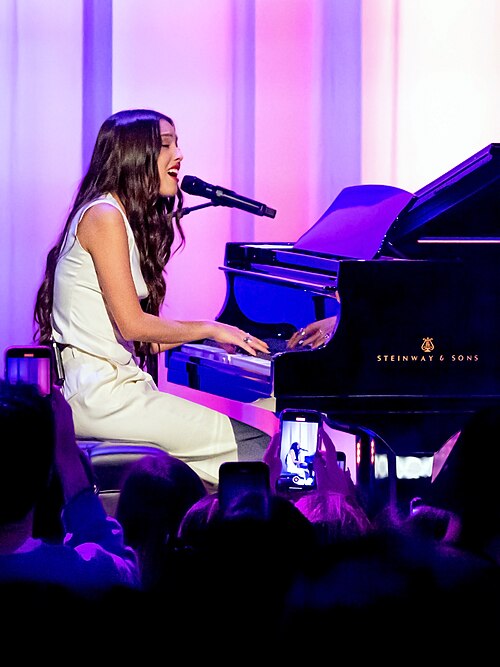
Award winning concert pianist and the 2022 DOE Big Apple Award recipient, Jean Kim, kindly shared her stance on this topic with me. When asked about the stylistic changes of pop music in recent years, she shared, “Although this is just one area of the genre, I think pop has become more introspective overall. Modern pop songs also blend genres more freely.” Pop songs are showing influences from Afro-beats, folk music, and punk rock, in recent years. “For example, Olivia Rodrigo often borrows stylistic elements from other artists and Billie Eilish experiments with different genres to create her own unique musical identity.” She also shared how the musicality of the pop genre has evolved. “There are many musical elements seen more and more in recent years that contribute to a song’s emotional impact. Repetition, whether it’s in a lyrical phrase or a musical refrain, can leave a lasting impression. Timbre (the color or texture of the voice), instrumentation, tempo, and dynamics all shape the emotional feel of a song. Music can enhance the meaning of lyrics, just like how a scene in a movie feels completely different with music in the background.” She then gave specific examples of these elements in songs that are popular in recent music charts. In ‘I Know the End’ by Phoebe Bridgers, the song begins with a quiet, nostalgic guitar accompaniment that matches her soft, subtle voice. This draws listeners to the storytelling in the lyrics. As the song progresses, the percussion picks up with the line “the end is near,” and through repetition and percussive instruments, the music builds in intensity. Her screaming vocals in the middle feels like an emotional release, as if she’s letting go of fears, worries, and inner turmoil, followed by her final breath at the very end, signaling closure to her story. In ‘TV‘ by Billie Eilish, the mood is more introspective and intimate. Her soft, whispery voice, slow tempo, and quiet dynamics make it feel as if the listener is being let into her inner thoughts. The one background guitar instrumentation makes the song feel more personal. Compared to ‘I Know the End,’ this song feels more internal and vulnerable.
Regarding the discourse over social commentary and politics existing within pop music. Kim shared her perspective as a youth educator, noting, “I once led a songwriting project with my fifth graders as part of a civic engagement unit. With structure and clear guidelines, my students created lyrics that reflected empathy, social awareness, and civic responsibility, and they also composed background tracks that matched the mood and message of their lyrics. Since pop music is so familiar and accessible to young people, it can be an excellent platform for sharing values, developing perspective, and encouraging advocacy in the world around them.”
The rise of provocative and personal lyricism goes hand in hand with the rise of intimate songwriting that reveals vulnerable and emotional aspects of the artist’s life experiences. As seen in artists such as Phoebe Bridgers and Olivia Rodrigo, some of their highest performing songs aren’t the ones that focus on catchy upbeat music, but the songs that focus on highly emotional and relatable experiences.
Megan Mitchell, a New York City English teacher, also gave helpful insight regarding this topic. When dissecting certain recent pop songs, she was able to find a multitude of examples of literary devices and references to separate known pieces of literature. In the song, ‘I Told You Things’ by Gracie Abrams, Mitchell focuses on the first lyric, “You’re the golden boy, and my worst regret”. She states, “So we have the opposite of a statement here, right, to everyone around them, this person seems like the golden boy, the perfect person, a good person, and to her, she’s her worst regret.” This lyric shows a juxtaposition and a foil that is used by Gracie Abrams to emphasize the amount of pain and distress she feels that was caused by the individual she is describing. Later in the verse, the lyric, “You were all at once till the fade to black” includes the use of a metaphor to depict a sense of betrayal and loss. Mitchell stated, “That is referencing T.V. shows or movies or theater, where at the end of a scene or at the end of the show, the screen usually fades to black. So that might be her saying, like, was this all an act to you? Was none of this real, right?”

Mitchell also makes the claim that beyond the use of literary devices, an aspect that is making the songwriting process more complex, is when artists refer to pieces of well known literature. By including other works throughout song lyrics, artists are able to portray complex messages and instill a more profound understanding of the issue within the audience. Mitchell describes an example of this in the song ‘History of Man’ by Maisie Peters. Within the lyrics, “Yeah, I’m sure there was heartbreak, inside the walls of Jericho,” “So Samson blamed Delilah/ but given half the chance I, I would have made him weaker too,” and “The men start wars yet Troy hates Helen,” there are multiple references to highly regarded works of literature. The first and second quote refer to Biblical stories to emphasize how old and repetitive the issue of sexism and inequality is, as it dates back to the beginning of Christianity. In the third lyric, Maisie Peters refers to Homer’s The Iliad to create a metaphor portraying how deeply rooted societal judgements towards women are. Mitchell ssaid, “Maisie Peters is brilliantly depicting the story of how the men throughout history have been responsible for starting wars, yet women are so quick to receive blame. Peters is giving the example of how the people of Troy blame Helen for the Trojan war even though it wasn’t her fault. She didn’t do it. Someone did it because of their love for her, but it wasn’t on her.” The use of these references catalyze the listeners to form their own personal interpretations on the matter, as they are forced to analyze and inquire about familiar stories.
Ultimately, the revival of progressive and personal lyricism is becoming a powerful form of art within itself. Lyrics are becoming a more common expression of vulnerable raw emotions, and a space for advocacy and social commentary. Lyricism will continue to improve and evolve the quality and artistry of pop music.
With a simple listen to a song on the radio, anyone can notice that in pop music, a new trend has slowly been arising. In some of the most played songs on the radio, compelling lyrics can be heard. Although there is a common belief that songwriting is becoming increasingly simple, the opposite is true.